Why Are There Only a Few Internet Providers in My Area (2026)?
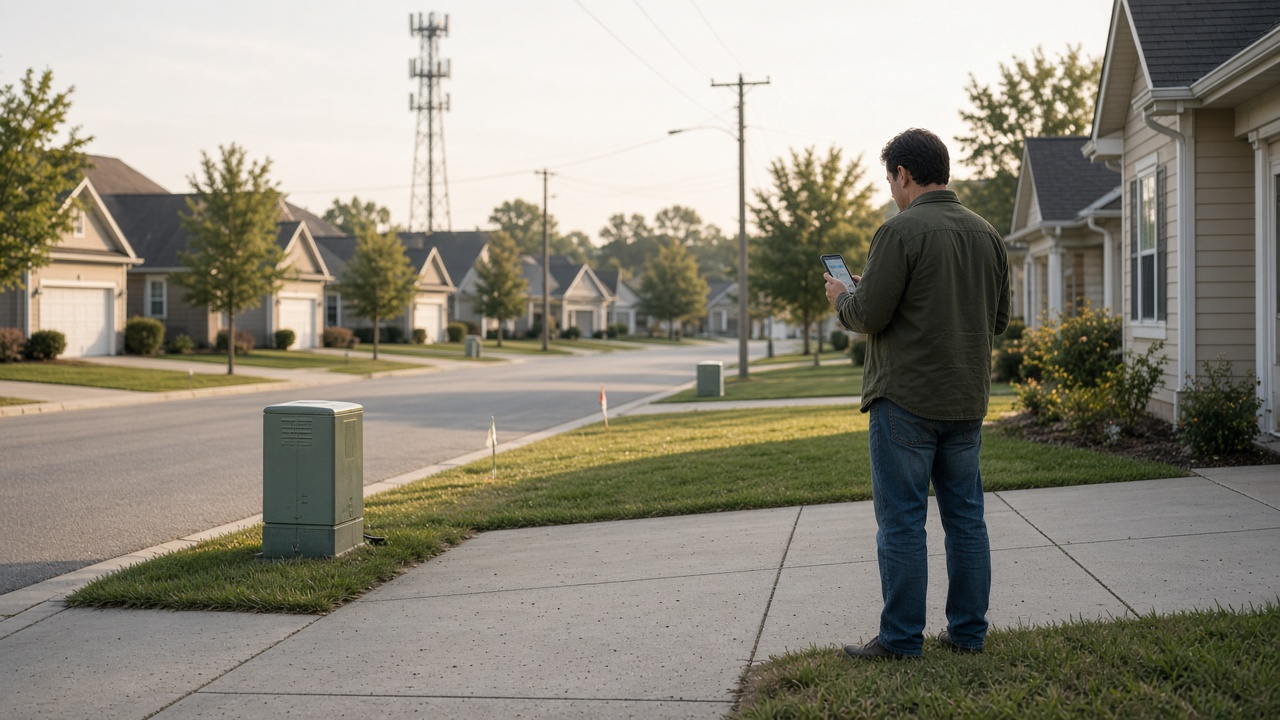
Across the United States, countless residents find themselves facing a frustratingly short list of internet options—often limited to just one or two providers. If you've ever wondered why your zip code only brings up Comcast or AT&T, you're far from alone. This limited competition isn't just inconvenient. Fewer providers mean slower speeds, higher bills, constrained customer service, and less incentive to innovate. In a digital economy where connectivity drives everything from work to entertainment, these limitations have serious consequences. So what’s actually behind this lack of choice?
Market Power: How Monopoly Shapes Your Internet Options
In many U.S. neighborhoods, choosing an internet provider isn’t a choice at all. A single Internet Service Provider (ISP) often controls the entire local market, especially when it comes to high-speed broadband access. This doesn't happen by accident. It’s a direct result of monopolistic and oligopolistic structures that constrain competition and curb technological advancement.
Limited Players, Limited Choices
According to the Federal Communications Commission’s 2023 Broadband Progress Report, 42 million Americans live in areas where only one ISP offers speeds of at least 25 Mbps download and 3 Mbps upload. In practice, this means millions must either accept that provider’s terms—or go without modern internet access altogether.
Large providers don’t merely serve these areas; they dominate them. Comcast and AT&T are two of the most prominent examples. Comcast operates as the sole high-speed provider in substantial areas of the Northeast and Midwest, while AT&T maintains similar dominance across much of the Southern U.S.
Why Competition Doesn’t Breed Here
- High entry barriers: The capital required to build broadband infrastructure—particularly fiber—is substantial, dissuading new companies from entering contested territories.
- Exclusive agreements: Some ISPs strike contracts with landlords or municipalities, prohibiting other providers from offering service to that location.
- Predatory pricing tactics: Incumbent ISPs may temporarily slash prices when new entrants attempt to compete locally, only to raise them again once the threat has been eliminated.
Stale Networks, Stagnant Service
Where monopoly or duopoly conditions exist, investment slows. There’s little to no pressure to upgrade aging infrastructure or introduce faster speed tiers when customers have nowhere to turn. A 2021 study by the Institute for Local Self-Reliance found that areas with only one provider typically experience higher average prices and lower average speeds compared to regions with three or more ISPs.
Without the push from rivals, innovation stalls. Gigabit fiber, symmetrical upload/download speeds, and customer-friendly policies remain rare perks, not standard features. Market dominance ensures profitability—but not progress.
ISP Mergers and Acquisitions: Shrinking the Competitive Map
Decades of Deals Have Shaped Today's Internet Landscape
Over the past 30 years, the U.S. broadband industry has experienced a steady stream of consolidations. Large telecommunications and cable companies have repeatedly absorbed smaller ISPs, with the goal of expanding customer bases, reducing operational costs, and removing regional competitors. This deliberate strategy has trimmed the number of standalone providers. In many areas, only one or two companies now control broadband access.
From Local Operators to National Giants
In the 1990s and early 2000s, thousands of local ISPs operated independently. They served niche markets, often tailoring services to regional needs. However, as data demands increased and infrastructure costs grew, acquisition became a more efficient growth tactic than direct competition. Major players like Comcast, Charter, and AT&T began acquiring regional networks en masse.
- Charter Communications acquired Time Warner Cable and Bright House Networks in 2016, creating the country’s second-largest cable operator at the time.
- Verizon sold off chunks of its wireline business to Frontier Communications, then refocused on wireless and fiber.
- AT&T merged with DirecTV in 2015 and later restructured again through divestitures, consolidating control over bundled broadband and television services.
The result? Fewer corporate owners control a larger percentage of the national broadband footprint. In a 2023 report by the Institute for Local Self-Reliance, just four ISPs—Comcast, Charter, AT&T, and Verizon—served more than 76% of all broadband subscribers in the United States.
Impact on Local Choice
When large firms acquire small, regional ISPs, they often standardize offerings and eliminate overlapping infrastructure. This erases the hyperlocal customization that smaller providers once offered. Many neighborhoods that previously had access to three or four providers now see only one viable cable or fiber option.
In rural towns, the effect can be even more dramatic. If the only small ISP in a region is bought out and its services discontinued or merged under an unfriendly pricing structure, the community may be left with no wired broadband options at all. Consolidation reduces provider diversity and creates virtual monopolies in thousands of ZIP codes nationwide.
Franchise Agreements & Service Territories: The Legal Framework Behind Limited ISP Choice
In many cities and counties across the United States, the presence of just a few internet providers—or sometimes only one—is not coincidental. It's the result of long-standing franchise agreements between local governments and internet service providers (ISPs). These legal arrangements outline who can offer cable-based services in a given area and under what terms.
A franchise agreement effectively grants an ISP exclusive rights to build and operate its network infrastructure within a defined geographic boundary. In simple terms: one provider is authorized to serve a city or a section of a county, and competitors are contractually locked out of the area. These aren't private deals made in backrooms—local boards or commissions typically approve them, shaping who can access the market and who cannot.
This kind of exclusivity results in what's called a regulated monopoly. While meant to encourage investment by guaranteeing a return for laying out expensive infrastructure, this arrangement has rarely incentivized competition or innovation. Instead, it leads to stagnant markets where customers are left with little to no choice.
Take Comcast, for example. The company has signed hundreds of franchise agreements across the country. According to company data and filings with local franchising authorities, Comcast serviced more than 25 million broadband customers in areas supported by franchise contracts as of 2023. In many of those areas, no other cable provider legally operates, due entirely to the contractual boundaries drawn under these agreements.
Although the original intent behind franchise agreements centered around preventing redundant infrastructure and enabling system maintenance, the effect—decades later—has been to limit consumer choice. In practice, if you live in an area governed by such a contract, the list of available ISPs shrinks dramatically. Ask your local government: who signed these deals, when do they expire, and what negotiations—if any—are under way?
How Local Government Regulations Limit Your Internet Choices
Zoning Restrictions Block Infrastructure Access
Internet service providers rely on physical infrastructure—fiber lines, wireless towers, data hubs—to deliver service. Local zoning laws determine where and how that infrastructure can be built. In many municipalities, these regulations are outdated or overly restrictive, limiting the locations where providers can place equipment. When zoning codes disallow installation in key residential or commercial zones, providers are forced to either lobby for exceptions or abandon the area altogether.
Franchise Approval Processes Create Gatekeeping
Before an ISP can legally offer service in a city or town, local governments often require franchise agreements—legal contracts that grant permission to use public rights-of-way. These agreements involve negotiations that can take months, sometimes years. In cities where incumbent providers already have franchise deals, newcomers face complex approval chains to gain access. The result: long delays and limited market entry.
Policy Inconsistencies Discourage Network Investment
Each municipality operates under its own governance with unique permitting rules, application fees, and review timelines. This patchwork of policy creates a logistical nightmare for ISPs looking to scale operations. A provider expanding in one county may face streamlined permitting, while a neighboring town applies a more restrictive code with no relation to network load or public demand. The uncertainty slows expansion strategies, particularly in non-urbanized areas.
Permitting Delays Freeze Infrastructure Development
Even with zoning and franchise approvals in place, utility permitting adds another layer that can grind progress to a halt. Some municipalities require review by multiple departments—transportation, environmental services, city planning—each with their own timelines and protocols. Delays of six to twelve months are not uncommon, with some projects stalled longer due to legal reviews or public comment periods. These extended timelines reduce the financial viability of entering smaller markets.
If you're wondering why your neighborhood still lacks high-speed options despite living in a densely populated area, start by asking this: What do my city’s permitting timelines look like? The answer might hold more weight than market demand itself.
Zoning and Permitting Challenges Limit ISP Expansion
Internet providers can’t simply lay new fiber optic lines or install wireless towers whenever and wherever they want. Each project must pass through a web of local zoning laws, permit applications, and municipal approvals. This process varies significantly from one jurisdiction to another, and it consistently slows down or blocks new market entry—especially for smaller or emerging ISPs.
Approval Requirements Stall Infrastructure Projects
Before breaking ground, an ISP must submit detailed engineering plans, demonstrate compliance with environmental regulations, and attend public hearings. Local councils or zoning boards evaluate each project individually. In some urban districts, gaining permit approval can take over a year, delaying deployment and often inflating project costs by tens of thousands of dollars.
- New fiber installation might require right-of-way approval from multiple departments.
- Wireless towers must meet structural and visual impact standards, especially near residential areas.
- Historic districts often have added constraints to preserve aesthetics and cultural value.
Even densely populated cities with strong demand for better internet face significant delays. Although the demand exists, the infrastructure can't move forward until every zoning and permitting box is checked. In Washington, D.C., for instance, small cell infrastructure applications for 5G deployment go through five separate agencies before construction can begin.
High Costs and Bureaucracy Deter Competition
Permit fees alone can become a major roadblock. Some cities charge as much as $5,000 per mile of new fiber trenching, not including supplemental fees for traffic coordination or sidewalk restoration. Add to that the administrative burden of navigating convoluted approval systems, and the incentives for new ISPs start to dwindle.
Larger providers usually absorb these costs through economies of scale. Smaller ISPs, however, often find the expenses unjustifiable, particularly if subscriber density doesn’t guarantee immediate revenue. As a result, many opt out of deploying services in these zones entirely, reinforcing limited provider presence.
Rural Areas Face Zoning Complexity Without Scale
In rural regions, the permitting process becomes even more challenging due to fragmented zoning rules across county lines and townships. A single fiber buildout may require coordinating with five or more local boards, each applying different standards and timelines. And without high household density to recoup upfront costs, providers cite zoning complexity as a deal-breaker.
The end result: long-standing gaps in service coverage persist, not due to lack of demand, but because regulatory barriers raise the entry cost too high for most new ISPs to consider.
High Infrastructure Costs Deter New Providers
Expanding an internet network isn't a simple matter of laying cable and flipping a switch. It demands massive capital outlays, long project timelines, and a labor-intensive rollout—especially in areas with lower population density. This combination drives providers to make strategic decisions about where and when to invest.
Fiber and Cable Installation Carries Multimillion-Dollar Price Tags
Deploying fiber optic networks can cost between $27,000 and $117,000 per mile, according to estimates from the Fiber Broadband Association. The wide range accounts for variables like terrain, labor costs, existing infrastructure, and permitting requirements. Coaxial cable installations—used in older broadband networks—fall slightly cheaper but still require extensive trenching and construction.
For a new provider to enter a market, it must either build its own physical infrastructure or lease access to existing lines, both of which are capital-intensive ventures. In remote regions without pre-existing networks, providers face the daunting task of funding the entire installation from scratch.
Population Density Drives Investment Decisions
Network builders calculate return on investment down to the parcel level. Densely populated urban blocks might generate returns within a few years due to higher subscription rates and easier access. In contrast, rural areas lack the population density required to justify the same upfront costs.
- Fiber spread across a suburban neighborhood may connect 500 homes in one mile.
- In a rural county, that same mile might only reach 10 to 20 households.
- Less revenue per mile increases the time needed to recoup investment.
As a result, providers frequently deprioritize expansion into low-density areas, leaving residents with legacy networks or no service at all.
Cost-Prohibitive Upgrades Stall Progress
Even where service exists, high upgrade costs can delay improvements. Replacing copper lines with fiber requires re-engineering the physical layout, rewriting service agreements, and coordinating with contractors, all while maintaining uptime for active users. Each of these steps adds cost and complexity.
Without subsidies or external incentives, many providers postpone major infrastructure overhauls, particularly if customer growth is stagnant in the area.
Consider this—when Comcast upgraded portions of its network in 2023, the focus remained on major cities like Chicago and Philadelphia, where customer density could support the investment. Similar upgrades haven’t reached many mid-sized or rural towns due entirely to projected cost-recovery limitations.
The effect is a patchwork national broadband footprint, where access and quality depend not just on geography, but on whether it's economically feasible to improve the infrastructure beneath your street.
Why Urban Areas Thrive While Rural Communities Lag in Broadband Deployment
Broadband Abundance in the City
Urban centers present a radically different landscape for internet access. Competition drives up quality and lowers prices. In New York City, for instance, residents often choose from at least three to five providers offering speeds exceeding 1 Gbps. This variety results from dense populations, strong return on infrastructure investment, and streamlined permitting processes. Providers roll out high-speed fiber, 5G home internet, and traditional cable with confidence that customer density will support the costs.
Private companies prioritize cities because revenue potential aligns closely with deployment expenses. A mile of fiber in Manhattan may connect hundreds of customers within a single apartment complex. In contrast, the same mile in a rural area might serve fewer than ten homes.
Why Rural Areas Are Left Behind
Federal Communications Commission (FCC) data from 2023 confirms the disparity: while 97% of urban residents have access to broadband at speeds of 100 Mbps or higher, only 65% of rural households enjoy the same. Physical distance between homes, rugged terrain, and lower income averages complicate returns on investment for ISPs.
Laying fiber in sparsely populated states like Wyoming or Montana can cost over $20,000 per mile. If only a few households lie along that stretch, economic logic halts expansion. With fewer choices, rural consumers often rely on satellite services such as Starlink or HughesNet. These solutions provide connectivity but often lag in reliability and latency compared to terrestrial broadband.
Fixed wireless options also fill the gap—especially when line-of-sight access to a tower exists—but these require ongoing spectrum availability and favorable geography. The result? Limited choices, slower speeds, and higher costs per Mbps.
Incentives and Economics Shape the Divide
- Urban competition: Multiple ISPs battle for market share, resulting in aggressive promotions and frequent upgrades.
- Rural consolidation: One or two providers, often legacy telecom companies, dominate with little motivation to innovate.
- Infrastructure ROI: Urban investments pay off faster due to higher population density and faster adoption of new technologies.
Think about your town or neighborhood—how many providers offer true high-speed broadband? In cities, the answer includes big names and startups alike. In rural areas, that list can shrink to one or none.
How Federal and State Initiatives Are Trying to Expand Internet Access
Over the past decade, federal and state governments have launched a series of broadband initiatives designed to address the uneven availability of internet service across the country. These programs aim to bridge the digital divide, with a focus on underserved and rural regions where private investment has historically been sparse.
Key Programs: Targeting Underserved Areas
The Federal Communications Commission’s Rural Digital Opportunity Fund (RDOF) is among the most notable efforts. Launched in two phases, RDOF allocates over $20 billion in funding to incentivize providers to build out high-speed broadband networks in areas lacking adequate coverage. The first phase, completed in 2021, awarded more than $9.2 billion to providers pledging to serve nearly 5.2 million homes and businesses.
Other initiatives include the Broadband Equity, Access, and Deployment (BEAD) Program and state-level grants matching federal dollars. States like California, New York, and Minnesota have created their own vehicles for broadband investment, often targeting regional gaps not fully covered by federal awards.
Uneven Progress Across States
Despite substantial funding, the rollout of broadband infrastructure through these programs remains inconsistent. Several factors affect the pace and reach of deployment:
- Administrative Delays: Award disbursement often experiences holdups due to eligibility disputes or mapping inaccuracies.
- State-by-State Execution: Some states actively coordinate with ISPs and streamline permitting; others lack infrastructure planning capacity, leading to underutilized funds.
- Oversight Challenges: Instances have emerged where providers failed to deliver on coverage promises even after receiving public funding.
As a result, while initiatives like RDOF have laid the groundwork for expanding service availability, their real-world impact varies sharply between communities. The promise of high-speed internet reaches some areas swiftly; others continue waiting for basic connectivity. What’s happening in your state? Does the local broadband map reflect recent improvements—or is the gap still wide?
Exploring Alternative Internet Options: What’s Available Beyond Traditional ISPs?
When major providers overlook entire neighborhoods or leave rural communities disconnected, emerging technologies begin to fill the gap. These alternatives—driven by innovation rather than legacy infrastructure—are reshaping how people get online. Here’s a breakdown of the most prominent options and how they compare.
Satellite Internet: Reaching Remote Areas from Orbit
Traditional satellite internet relied on geostationary satellites with high latency and limited throughput. New players like Starlink, operated by SpaceX, have redefined the category by using low Earth orbit (LEO) constellations to dramatically reduce lag times and improve speeds.
- Speed: Starlink users report download speeds between 25 Mbps and 100 Mbps, with latency as low as 20–40 ms—on par with DSL.
- Coverage: High global reach, including underserved and remote regions where fiber or cable doesn't exist.
- Limitations: Weather disruptions still affect signal stability. Equipment requires open sky visibility and a clear line of sight, which can be problematic in dense forests or urban high-rise zones.
5G Home Internet: Riding the Mobile Network
Telecom providers like Verizon, T-Mobile, and AT&T are leveraging their 5G rollouts for residential broadband. Using a home router that connects to nearby 5G towers, customers can get fast internet without wired infrastructure.
- Speed: Peak speeds can surpass 300 Mbps in optimal conditions, though real-world averages hover between 100–200 Mbps.
- Setup: Installation is often as simple as plugging in a device—no technician visits, no trenching, no delays.
- Downsides: Performance varies based on distance from the nearest tower and local traffic on the network. Signal strength degrades indoors, especially in buildings with thick walls or metal structures.
Fixed Wireless Access (FWA): Localized Radio-Based Delivery
Fixed wireless operates by transmitting a broadband signal from a central ground-based antenna to a receiver at a customer’s home. Typically used in rural communities, FWA depends heavily on line-of-sight technology.
- Speed: Variants range from 10 to 100 Mbps, with some providers offering up to 1 Gbps using millimeter-wave spectrum.
- Reliability: Low latency and competitive speeds when deployment is well-designed and maintained.
- Constraints: Terrain, trees, and physical obstructions can disrupt service. Cloud cover and environmental interference also impact performance.
What’s the Catch?
Although these alternatives bypass traditional wired limitations, they introduce new trade-offs. Speeds don't rival symmetrical fiber. Stability varies with geography, weather, and network demand. Data caps and pricing can fluctuate across providers. Still, they represent tangible progress—practical options where fiber and cable remain unavailable.
How viable are these in your region? Start by checking local availability—coverage maps from Starlink, 5G carriers, and regional fixed wireless providers offer a clear picture of what's realistically in reach today.
The Road Ahead: Expanding Internet Service Options Across the U.S.
Why are there only a few internet providers in your area? The short answer lies at the intersection of geography, regulatory policy, and long-standing economic barriers. These three forces continue to shape—not merely influence—availability and competition in the internet service sector across the U.S.
Rugged topography and sparsely populated regions deter infrastructure investment. Regulatory frameworks, such as local franchise agreements, limit which companies can deliver internet service in specific territories. The economics of network construction, especially for high-speed fiber, tip the scales in favor of incumbents like Comcast and AT&T, who already control much of the market. As a result, entire zip codes remain locked in with a single provider, or at best, a duopoly.
However, signs of change are beginning to surface. Federal and state broadband initiatives are injecting billions into infrastructure. Through programs like the FCC’s Rural Digital Opportunity Fund and the BEAD (Broadband Equity, Access, and Deployment) Program, previously underserved communities can expect better connectivity in the coming years. These initiatives prioritize long-term investments over temporary fixes, with particular focus on fiber deployment and rural access.
At the same time, alternative technologies are filling in coverage gaps. Fixed wireless solutions from regional providers, emerging 5G home internet from T-Mobile and Verizon, and satellite internet from players like Starlink are beginning to provide meaningful competition—especially in areas where running fiber remains cost-prohibitive.
- Fixed wireless requires less physical infrastructure, making it ideal for suburban and exurban fringes.
- 5G home internet is expanding rapidly in metro and adjacent suburban zones, offering speeds comparable to cable with flexible pricing.
- Satellite internet delivers access where terrestrial networks fail, especially in mountainous or remote rural locations.
Still, major shifts will not occur overnight. Infrastructure build-outs span years, not months. Franchise agreements remain locked in place for decades in some municipalities. And despite political momentum, true broadband equity demands not just funding, but coordination across local, state, and federal entities.
What does this mean for the consumer? More providers will become available over time, and new technologies will redefine how people in both dense cities and remote areas access the internet. While change won't be immediate, it's already underway and moving, slowly but decisively, toward broader access and faster speeds across the U.S.