Starlink Internet Alabama 2026
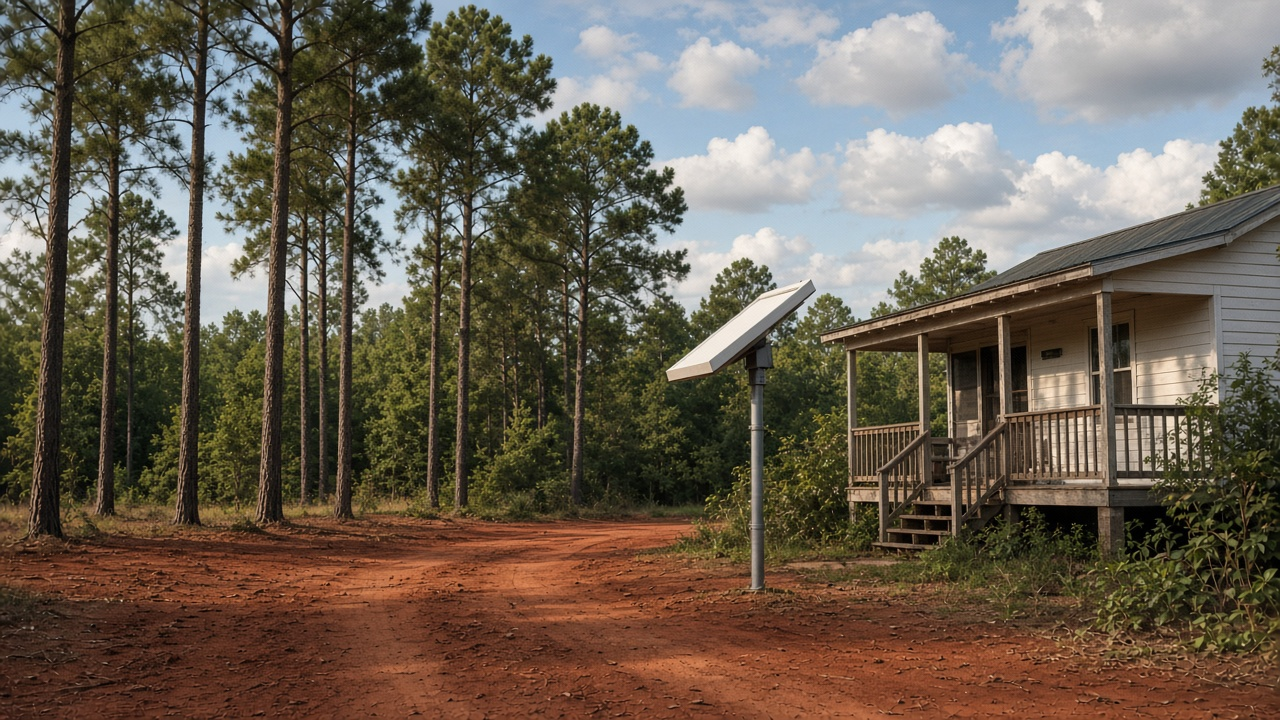
SpaceX's satellite internet service, Starlink, continues to expand across the United States, with Alabama experiencing steady improvements in regional coverage. Availability varies widely by location: while many rural and underserved areas in the state have gained access, more densely populated urban regions may still be listed as "coming soon" or placed on a waitlist.
In most cases, those in rural Alabama can already sign up for standard residential service. Urban users, however, will need to verify availability before proceeding. Wondering where your home or business stands? Start with the official Starlink coverage map. Enter your address to view the real-time availability status for your ZIP code—this tool pinpoints whether you’re eligible to sign up immediately or need to reserve a spot on the waitlist.
Once confirmed, Starlink allows users to register online by creating an account and placing a refundable deposit. If service is pending in your area, you'll be notified as soon as equipment can be shipped and activated. Alabama residents looking for an alternative to traditional providers can now explore this satellite internet option based on precise location-based availability.
Starlink Internet Speed and Performance in Rural Alabama
Download and Upload Speeds: What Users Are Seeing
Across rural communities in Alabama, Starlink users report download speeds typically ranging between 50 Mbps and 150 Mbps. Upload speeds tend to fall between 10 Mbps and 20 Mbps, depending on location, obstruction levels, and satellite availability. Speeds fluctuate based on network load, but most users achieve performance levels far exceeding those of traditional DSL and fixed wireless services common in underserved regions.
Data from Real-World Speed Tests
Speedtest.net results collected from users in counties like Bibb, Clarke, and Coosa show peak downloads reaching as high as 180 Mbps, with worst-case scenarios dipping into the 40–60 Mbps range during heavily congested periods. These figures consistently outperform legacy satellite providers, where downloads often max out at 25 Mbps and uploads fall below 3 Mbps.
In a 2023 survey conducted by the Alabama Rural Broadband Coalition, 87% of Starlink users in counties with minimal terrestrial coverage rated their connection speeds as “satisfactory or better,” citing the ability to stream HD video and attend virtual meetings without major interruptions.
Network Consistency Throughout the Day
Unlike terrestrial broadband services reliant on distant infrastructure, Starlink’s low Earth orbit (LEO) architecture provides more uniform coverage. That said, usage spikes during peak evenings—typically between 6:00 PM and 9:00 PM—can produce temporary slowdowns, dropping average throughput by 20–30 Mbps. Despite this, performance generally remains stable enough for simultaneous data-heavy activities such as streaming and file transfers.
Low Latency and Its Effects on Interactive Use
Latency on Starlink averages between 40 and 60 milliseconds, a significant improvement over traditional geostationary satellite connections that exhibit latencies upwards of 600 ms. This lower delay has a direct impact on tasks that need fast data exchange.
- Video Conferencing: Platforms like Zoom and Microsoft Teams function with minimal lag, even with multiple participants on a call in rural homes.
- Online Gaming: Real-time multiplayer gameplay becomes feasible, with only occasional packet loss during high congestion.
- Telehealth: Remote consultations via video have become more reliable, helping residents access healthcare providers without leaving home.
This level of interactive reliability simply hasn’t existed before in many parts of Alabama lacking fiber or cable infrastructure.
What Does Starlink Internet Cost in Alabama?
Initial Setup Costs and Monthly Subscription Rates
For residents in Alabama, the upfront cost to get started with Starlink includes the equipment kit and shipping. As of early 2024, the standard residential service requires a one-time payment of $599 for the satellite dish, router, mounting tripod, and power cables. Shipping charges add roughly $50 to the total, bringing the setup cost close to $649.
Monthly, users pay $120 for unlimited high-speed internet on the residential Starlink plan. This rate remains consistent across the state, whether you're in coastal Gulf Shores or remote Black Belt communities.
Comparing Monthly Starlink Costs to Other Internet Options
Traditional DSL and cable providers in Alabama, such as Spectrum or AT&T, offer plans ranging from $50 to $90 per month. However, availability and speed decline sharply outside cities like Birmingham, Huntsville, or Montgomery. In contrast, mobile data plans using hotspots can cost $60–$100 for limited monthly data, often throttled after usage caps of 50 GB or less. Starlink doesn’t throttle or enforce data caps, making it a viable high-bandwidth option most satellite or mobile plans can’t match.
Optional Accessories and Add-On Expenses
Additional costs depend on location-specific needs and user preferences. Wall mounts or pole mounts for the satellite dish range from $35 to $120. A mesh Wi-Fi extender costs about $130 if users seek broader in-home coverage. In cases where professional mounting is required—common in areas with tree cover or difficult roof access—installation labor can range between $200 and $500.
Assessing the Value of Starlink in Alabama’s Underserved Areas
In counties where fixed broadband either caps below 25 Mbps or is entirely unavailable, Starlink fills a critical gap. For many rural Alabamians—especially in regions like Wilcox, Choctaw, or Clay Counties—the $120 monthly fee grants access to speeds above 100 Mbps with low latency, something unachievable through local ISPs. This pricing becomes highly competitive when factoring in the consistent performance gains and broad service footprint.
How Starlink Internet Stacks Up Against Other Providers in Alabama
Speed, Latency, and Performance: Starlink vs. the Rest
Starlink delivers consistent download speeds ranging from 25 Mbps to 220 Mbps across most of Alabama, with latency between 20 ms and 50 ms. This performance places it well above traditional satellite options like HughesNet and Viasat. HughesNet, for example, offers speeds up to 25 Mbps with latency often exceeding 600 ms—unsuitable for video conferencing or online gaming. Viasat's top-tier plans may reach 100 Mbps on paper, but real-world speeds frequently lag due to data caps and network congestion.
Compared to DSL services, such as those from AT&T or CenturyLink, Starlink provides significantly higher bandwidth in rural areas. Many DSL users in Alabama still receive sub-10 Mbps speeds, particularly where aging copper infrastructure hasn’t been upgraded.
Fixed wireless providers like Rise Broadband or local cooperatives offer competing latency levels, often under 50 ms, but struggle with line-of-sight limitations and limited capacity, especially in hilly or forested parts of the state.
Availability Where Others Fall Short
Large swaths of rural Alabama remain underserved by wired ISPs due to the high cost of infrastructure deployment in low-density areas. While fiber networks continue to expand in suburban zones, more than 400,000 Alabamians still lack broadband access by FCC standards, according to the 2023 Alabama Broadband Map.
Starlink bypasses land-based limitations entirely. Its low-Earth orbit satellite network covers virtually all of Alabama, including isolated pockets where even mobile broadband fails. This geographic reach gives Starlink a unique position among all current providers.
Who Benefits Most from Starlink?
For households located beyond the reach of cable or fiber, Starlink introduces streaming capability, real-time communication, and cloud-based productivity for the first time. It’s similarly ideal for remote workers, online learners, and telehealth users who cannot rely on the latency or stability of legacy satellite systems.
Even in regions where fixed wireless providers operate, outages during storms or foliage interference make Starlink’s all-sky connection model more appealing. Unlike terrestrial networks that depend on antennas or buried lines, Starlink connects to any open sky, reducing physical vulnerability.
Customer Satisfaction and Trends
- Starlink: Continues to earn high marks for ease of installation and service quality. In 2023, a survey by PCMag ranked Starlink highest for rural ISP satisfaction nationwide.
- HughesNet and Viasat: Frequently score lower, with recurring complaints around data overage penalties and buffering issues.
- Fixed Wireless: Mixed responses due to signal disruptions and limited support infrastructure in deep-rural settings.
The contrast in user experience becomes especially visible when multitasking or during peak usage hours. For Alabamians seeking real broadband—without legacy bottlenecks—Starlink fills a void traditional ISPs haven’t yet closed.
Transforming Connectivity: Starlink’s Impact on Rural Broadband Access in Alabama
Bridging the Digital Divide in Underserved Communities
Across vast stretches of rural Alabama, where dense pine forests and rolling farmland once marked the limit of broadband access, Starlink has opened new lanes of digital opportunity. Areas in counties like Wilcox, Greene, and Lowndes—long considered internet deserts—now stream, conference, and upload with low latency and previously unavailable speeds.
Unlike terrestrial ISPs that avoided low-population areas due to high infrastructure costs, Starlink sidesteps this limitation with its constellation of low-Earth orbit satellites. When ground-based networks stall at the edge of paved roads, Starlink beams connectivity directly to homesteads separated by miles of pasture.
Community-Level Change Driven by Connectivity
In Perry County, the introduction of Starlink facilitated the launch of a remote telehealth pilot in 2023. With over 22% of residents lacking access to a car, the ability to consult with physicians online reduced missed appointments by 37%—a shift documented by the Rural Health Medical Program.
In Chilton County, a local produce co-op extended its customer base to state-wide farmer’s markets and online grocers after Starlink enabled seamless e-commerce operations. Transactions previously jammed by unreliable upload speeds now process in real time, leading to a 24% increase in year-over-year sales.
Voices From the Field: Testimonials from Starlink Users
- Jessica Holloway, high school sophomore in Clay County: “I used to download PDFs at school and bring them home because we didn’t have signal. Now I attend AP calculus tutoring sessions via Zoom without lag.”
- Cedric Owens, cattle farmer in Marengo County: “Before Starlink, I filled out USDA forms by hand and mailed them in. Now I file everything online in minutes and track real-time weather data that helps plan grazing rotations.”
- Karen Dao, remote software developer in Escambia County: “I moved here to be close to my parents but kept my job in Birmingham thanks to Starlink. I code, deploy builds, and attend standups like I never left the city.”
Unlocking Education and Economic Potential
Persistent broadband access yields measurable gains in key sectors. A 2022 report by the Alabama Department of Commerce projected that bringing high-speed internet to rural areas could generate up to $4 billion in additional GDP over the next decade. Starlink’s operational model accelerates this by removing the infrastructure lag tied to fiber optics or DSL rollouts.
Libraries are expanding their digital literacy classes. Community colleges have launched online certificate programs targeted at adults holding daytime jobs. Newly connected broadband zones have attracted interest from small tech startups seeking affordable land without sacrificing network performance.
Starlink has shifted what it means to live in rural Alabama—not by urbanizing it, but by delivering the bandwidth to thrive in place. The digital divide no longer feels permanent when gigs, classes, and critical services arrive through the sky, not a trench dug one mile at a time.
What Alabama Users Really Think: Reviews and Real-World Experiences with Starlink
Everyday Performance Stories from Across the State
Across Alabama, from the Black Belt to the Appalachian foothills, Starlink users are sharing first-hand accounts of how the satellite internet service performs in their daily lives. In rural Blountsville, one user reported consistent speeds between 90–150 Mbps, even in the evening hours when traditional ISPs tend to throttle bandwidth. Another resident in Wilcox County—a region that previously had access to only spotty DSL—mentioned being able to stream Netflix in 4K without buffering for the first time in years.
Home-based professionals in Shelby County described a dramatic shift after switching to Starlink. A remote IT consultant noted that Zoom calls now run smoothly without dropped audio or frozen screens. Parents in Coosa County also shared that their children can attend virtual school sessions on multiple devices simultaneously without lag.
What Users Like—and What They Don’t
- Strong Points: Users consistently praise the high speeds and low latency, especially in areas where legacy providers top out at 3–10 Mbps. Several comments commend the relatively simple setup process and the compact design of the Starlink dish.
- Drawbacks: A handful of reviews mention issues with customer support response times. Since there’s no direct phone support line, response via the Starlink app may take a few days. Additionally, some users in heavily wooded parts of Talladega County report intermittent signal drops due to obstructions.
Stories from Underserved Regions
In Greene County, where traditional broadband infrastructures haven’t reached many households, several residents highlighted Starlink as a transformative tool. One retired teacher called it a “lifeline,” explaining how she now hosts virtual tutoring sessions for students dozens of miles away. Further south, a timber farmer outside Andalusia remarked that with Starlink, he finally ditched his unreliable satellite DSL and now monitors weather data and market trends in real time.
Consistent across dozens of reports is a clear message: Starlink is elevating the digital standard in Alabama’s underserved regions. For families, professionals, and students alike, it's closing an access gap that has persisted for decades.
Service Reliability and Weather Impact in Alabama
Weather Events and Their Effects on Starlink Performance
Alabama's climate brings a mix of challenges for satellite internet systems. Between humid summers, frequent thunderstorms, and occasional winter snow, Starlink must operate under diverse weather conditions. Performance can degrade during periods of heavy rain or dense cloud cover due to signal attenuation—commonly known as rain fade. In practical terms, users may experience reduced speeds or momentary signal loss during severe storms.
Data from early adopters in central and northern Alabama indicates that rain-induced slowdowns are occasional but typically brief. Snow accumulation on the dish presents more of a problem, although Starlink dishes are equipped with a self-heating feature that actively melts snow.
How Starlink Compares to Other Internet Technologies Under Weather Stress
Legacy satellite providers such as HughesNet and Viasat show more sensitivity to adverse weather conditions. Their geostationary satellites, located about 22,000 miles above Earth, introduce higher latency and suffer from longer signal paths—both of which magnify weather-related disruptions.
Starlink’s low-earth orbit (LEO) network, with satellites orbiting roughly 340 miles up, significantly reduces latency and shortens signal travel time. This results in faster recovery after storm-related interruptions. Compared to terrestrial internet—like DSL or cable—Starlink still carries higher weather vulnerability, but it outperforms traditional satellite services during inclement weather in Alabama.
Best Practices for Maximizing Uptime and Signal Quality
- Clear view of the sky: Users should place the dish in an open area, free from obstruction by trees, buildings, or towers. Even partial blockages can disrupt signal reception, especially at low elevation angles.
- Elevated mounting: Installing the dish on rooftops or dedicated poles reduces potential obstructions and improves line-of-sight to the satellites.
- Use of surge protection: Alabama sees frequent lightning; integrating a robust surge protector between the power source and the Starlink equipment mitigates electrical damage.
- Regular maintenance: Keeping the dish clean and removing debris or snow buildup ensures consistent signal performance.
How Starlink Handles Outages and Support Requests
When service drops occur—whether due to satellite transitions, local obstructions, or atmospheric disruptions—Starlink generally restores connectivity within minutes. The network dynamically shifts connections to nearby satellites, limiting downtime. According to user reports in Jefferson and Madison counties, most outages last less than 5 minutes and are often resolved automatically without user intervention.
Starlink provides support through its mobile app and an online ticketing system. Response times typically range from a few hours to 24 hours, depending on issue complexity. Users have noted improvements in customer service since late 2023, when Starlink expanded its U.S. support teams and updated its troubleshooting interface with real-time diagnostics.
Mapping the Future: Starlink’s Coverage and Expansion in Alabama
Current Starlink Coverage Across Alabama
As of 2024, Starlink provides coverage across the majority of Alabama's 67 counties. Based on data from SpaceX's publicly available service map, seamless availability spans both urban hubs and remote regions. Cities with full access include Birmingham, Montgomery, Mobile, Huntsville, and Tuscaloosa. Meanwhile, rural areas like Clarke County, Marion County, and Pickens County register consistent connectivity, where DSL and cable services often falter.
This breadth reflects Starlink’s strategy—maximize low-population area coverage using its constellation of low-Earth orbit (LEO) satellites. With over 5,500 Starlink satellites in orbit as of Q2 2024, according to the Union of Concerned Scientists Satellite Database, Alabama remains within the midlatitude sweet spot. This ensures strong line-of-sight to the satellite fleet throughout most of the state.
Ongoing Expansion Timetable
SpaceX released its latest rollout outline in January 2024. It projects signal density improvements by Q4 2024 with over 8,500 total satellites targetted by mid-2025. For Alabama, that means multi-user households, farms, and low-income communities especially in Wilcox, Choctaw, and Greene counties can expect reduced latency and more bandwidth per user by early 2025.
- Q3 2024: Enhanced service optimization in northwestern counties
- Q1 2025: Full bandwidth upgrade in Black Belt region, including Dallas and Perry counties
- Q2 2025: Dedicated business-grade service tier anticipated for suburban clusters outside Huntsville and Auburn
Unlocking Growth in Underserved Regions
The expansion carries more than just technical benefits. For counties listed among Alabama’s bottom quartile in digital equity—like Lowndes and Sumter—better access translates into measurable educational and economic impact. The Alabama Department of Economic and Community Affairs (ADECA) pinpoints broadband access as a leading driver of student performance in state-funded eLearning pilots. As Starlink scales, home-based learners gain parity with their urban counterparts.
On the employment front, improved internet in rural zones allows for scalable remote work. According to the U.S. Bureau of Labor Statistics, remote and hybrid jobs now account for over 30% of Alabama's white-collar occupations. Starlink’s bandwidth reliability in low-density zip codes unlocks remote hiring opportunities that were previously limited by poor connectivity.
Providers like AT&T, Comcast, and Spectrum often avoid these areas due to high infrastructure costs. Starlink bypasses this obstacle. With a self-contained terminal and direct satellite link, it places no fiber in the ground and connects within an hour of installation.
In short: Starlink isn't just mapping coverage. It's redrawing the boundaries of digital inclusion across Alabama.
Public Funding and Broadband Programs Featuring Starlink in Alabama
Federal and State-Level Broadband Programs
The most significant federal initiative involving Starlink is the Federal Communications Commission’s Rural Digital Opportunity Fund (RDOF). This $20.4 billion program was launched to expand high-speed internet to underserved rural communities across the United States. During Phase I of the RDOF auction in 2020, SpaceX's Starlink secured $885.5 million in awarded subsidies over 10 years to deploy service in 35 states, including Alabama.
However, in August 2022, the FCC reversed its initial decision and withdrew Starlink's RDOF support, citing concerns over the provider’s ability to deliver promised speeds within regulatory benchmarks. Despite this, Starlink remains eligible for other federal support under alternative broadband initiatives and proposals, especially through the BEAD (Broadband Equity, Access, and Deployment) Program, funded by the Infrastructure Investment and Jobs Act of 2021.
On the state level, Alabama operates its own program: the Alabama Broadband Accessibility Fund (ABAF). Managed by the Alabama Department of Economic and Community Affairs (ADECA), this program focuses on expanding broadband in unserved areas through public-private partnerships. While fiber builds remain the primary focus, satellite internet has been included in the conversation for hard-to-reach regions where wired infrastructure is cost-prohibitive.
Starlink's Participation in Alabama Broadband Initiatives
While Starlink does not currently receive funding directly from the ABAF, it remains part of planning discussions, especially for communities with no immediate prospects for fiber or cable deployment. Several county governments and broadband task forces in Alabama have mentioned Starlink as a short-term solution in grant proposals and community outreach sessions.
For example, in early 2023, Marion County officials discussed leveraging low-earth orbit (LEO) satellite technology to close last-mile gaps while more permanent infrastructure is under construction. Starlink’s ready-to-deploy model fits within that strategy, offering immediate connectivity where physical trenching or tower builds are years out.
Accessing Subsidies or Discounted Starlink Plans
Alabama residents can offset Starlink subscription costs through the federal Affordable Connectivity Program (ACP). This initiative provides up to $30 per month toward internet service for eligible households—those meeting income thresholds or receiving benefits such as SNAP, Medicaid, or free/reduced school lunch.
- Apply directly at GetInternet.gov using proof of eligibility.
- Once approved, select Starlink as the provider and add the ACP benefit to the user’s account in the Starlink portal.
- Starlink will automatically reduce the monthly bill based on the subsidy amount.
Notably, Starlink also participates in the Lifeline program in limited capacities, offering additional support for qualifying individuals in remote parts of the state. However, ACP remains the broader and more universally applicable channel for Alabama residents looking for discounted Starlink service.
Reshaping Alabama’s Internet Infrastructure
Short-term stopgaps aside, Starlink's presence is already influencing broadband policy discussions. State economic development boards are incorporating LEO satellite options like Starlink into layered solutions—hybrid models combining fiber, fixed wireless, and satellite access points. This shift diversifies Alabama’s digital infrastructure strategy and reduces dependence on a single technology type.
In territories once considered infrastructure dead zones—forested Black Belt counties, foothills of Appalachia, or sprawling farmland in the Wiregrass—Starlink introduces a feasible high-speed solution. As state and federal grant deadlines approach, broadband mapping projects now include LEO satellite overlays, signaling formal recognition of Starlink’s role in closing Alabama’s digital divide.
Starlink Is Reshaping How Alabama Connects
Starlink’s presence in Alabama marks a foundational shift in the way communities across the state experience the internet. Families in remote counties, telecommuters in underserved areas, teachers in mobile classrooms, and small businesses operating beyond cable and fiber service lines—all stand to gain extensive benefits from this low-Earth orbit satellite service. Previously disconnected zones are now seeing download speeds exceeding 100 Mbps, with installation possible in places telecom companies have long ignored.
Combining wide-reaching availability with solid performance, Starlink effectively challenges the limited options offered by DSL or legacy satellite providers. Where HughesNet often peaks below 25 Mbps with higher latency, Starlink handles video conferences, gaming, and large file transfers with far greater efficiency. Its technology doesn’t rely on aging ground infrastructure, enabling consistent expansion and improvement regardless of local telco investment.
For Alabamians considering a shift to satellite broadband, the next move is clear: check your location on the official Starlink coverage map. If your home or business is within range, the sign-up process can be completed in minutes. That’s a small step—and one that may permanently eliminate buffering, lag, and connection dropouts from daily life.
Already using Starlink? Share your experience in the comments or leave a review—your input can help others in Alabama make an informed choice.
Need details about Starlink’s privacy practices? Visit the Privacy Policy page for comprehensive information.