Fiber Map of the World 2026
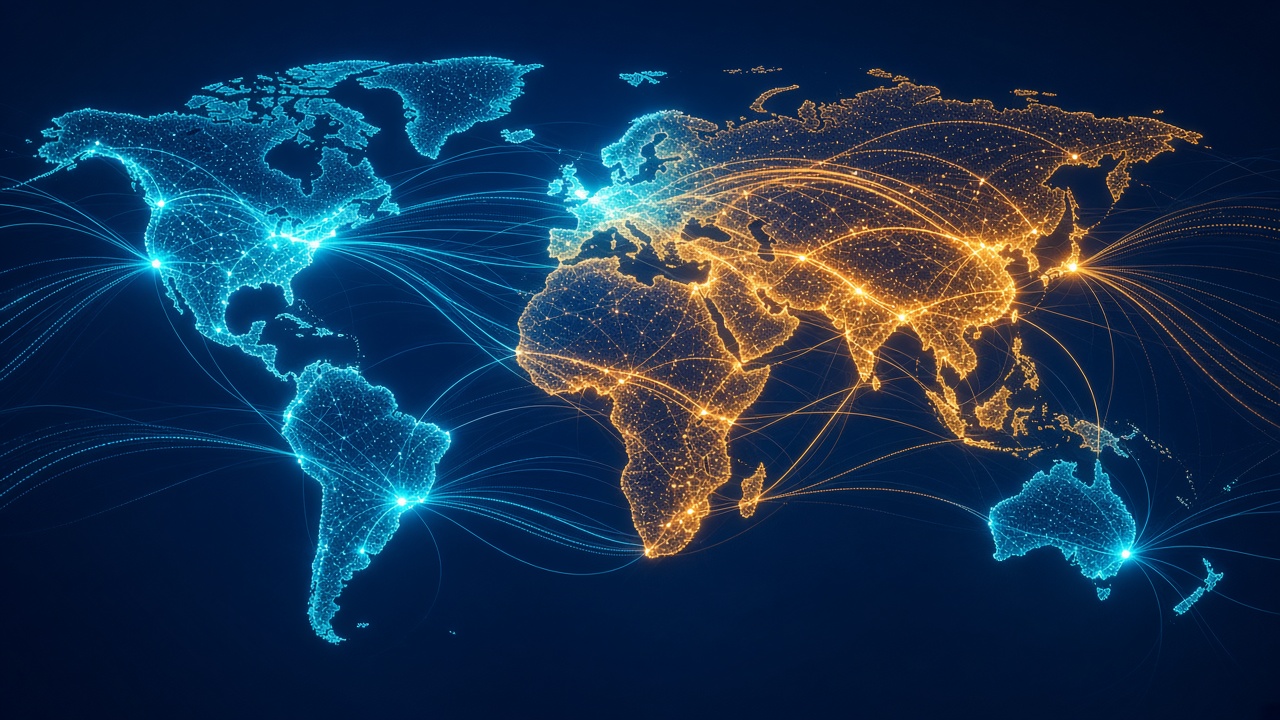
Submarine and terrestrial fiber optic cables form the backbone of modern global communication, carrying data across continents at incredible speeds. These networks enable internet access, support financial markets, and connect billions of people worldwide. Without them, seamless international communication would be impossible.
Understanding fiber maps provides insight into the scale and complexity of telecommunications infrastructure. These maps reveal how data flows between countries, highlight strategic connectivity hubs, and expose regional digital divides. Governments, businesses, and engineers use fiber maps to plan expansions, optimize networks, and improve redundancy in critical communications.
The Evolution of Submarine Fiber Optic Cables
Historical Development and Technology of Submarine Cables
The first successful transatlantic submarine cable began operations in 1866, allowing telegraph messages to cross the ocean in minutes rather than weeks. These early cables used copper conductors insulated with gutta-percha, a natural latex material. Over time, higher-quality insulating materials, improved amplifiers, and better manufacturing processes increased transmission reliability and speed.
By the mid-20th century, coaxial cables with vacuum tube amplifiers enabled voice transmissions across continents. The introduction of fiber optics in the 1980s revolutionized submarine communication by providing significantly higher bandwidth. Modern cables use dense wavelength-division multiplexing (DWDM), allowing multiple data streams to be transmitted simultaneously over a single fiber. As of 2024, commercial submarine cables can exceed capacities of 100 terabits per second (Tbps), facilitating global internet traffic.
The Project Endeavors That Paved the Way for Today's Underwater Routes
Several landmark cable systems laid the groundwork for global connectivity. The TAT-8, operational in 1988, was the first fiber-optic submarine cable linking North America and Europe. It offered a major leap in capacity compared to earlier electrical cables. This success led to rapid expansion, with numerous transoceanic connections deployed in the 1990s and 2000s.
Projects such as SEA-ME-WE (Southeast Asia - Middle East - Western Europe) and FLAG (Fiber-Optic Link Around the Globe) established intercontinental fiber-optic routes, bridging entire regions with high-speed data links. The expansion of these systems continues to shape the global fiber-optic network, with newer deployments like the Grace Hopper cable between the US and Europe, and the Equiano cable enhancing Africa's connectivity.
Major technology firms now finance large-scale submarine cable projects to improve network resilience and reduce latency. Google, Meta, and Amazon are among the prominent investors in next-generation undersea fiber systems, ensuring the continuous expansion of high-capacity routes.
Terrestrial Fiber Networks and Their Expansion
How Cities Around the World Are Connected by Land-Based Fiber
Terrestrial fiber optic networks form the backbone of global telecommunications, linking major cities, data centers, and critical infrastructure. Unlike submarine cables that span oceans, land-based fiber follows roadways, railway corridors, and energy pipelines, ensuring reliable connectivity across regions.
In North America, extensive fiber routes interconnect urban hubs such as New York, Chicago, and Los Angeles via multi-terabit networks operated by companies like Lumen Technologies and Zayo. These networks integrate dense metro rings and long-haul fiber to support business, residential, and cloud services.
Europe maintains one of the most interconnected terrestrial fiber landscapes, with routes linking London, Frankfurt, Amsterdam, and Paris. The DE-CIX interconnection platform in Frankfurt handles over 15 terabits per second of peak traffic, facilitated by robust terrestrial fiber infrastructure.
Asia boasts high-capacity fiber corridors connecting cities like Tokyo, Shanghai, and Singapore. China’s backbone consists of major domestic operators such as China Telecom and China Unicom, while India’s National Optical Fiber Network (NOFN) aims to provide rural broadband by extending land-based fiber to over 250,000 village councils.
In Africa, terrestrial fiber networks are rapidly expanding. The ongoing development of One Africa Network (OAN) aims to link 15 African nations through a single cross-border fiber network. Meanwhile, projects such as Liquid Intelligent Technologies’ pan-African footprint connect major cities with high-speed fiber routes.
Ongoing Projects Aimed at Enhancing Terrestrial Routes
Governments, telecom operators, and private consortia are continuously expanding fiber infrastructure to support growing bandwidth demands. Projects focus on closing connectivity gaps, increasing route diversity, and improving reliability.
- Google’s Equiano Fiber Network: A subsea cable complemented by terrestrial fiber expansions across Africa, enhancing connections between Nigeria, South Africa, and Namibia.
- Digital Silk Road Initiative: China’s initiative integrating fiber-optic infrastructure across Central Asia, linking Beijing to Europe through high-capacity land-based routes.
- EU's Connecting Europe Broadband Initiative: Investment in high-speed fiber deployment to increase coverage in underserved European regions, particularly in rural areas.
- USA’s BEAD Program (Broadband Equity, Access, and Deployment): A $42.5 billion initiative aimed at expanding fiber-optic broadband to unserved and underserved communities across all 50 states.
- Latin America's ARBR System: A terrestrial and subsea fiber project linking Argentina to Brazil, ensuring lower-latency network access for the region’s financial and technology sectors.
The expansion of terrestrial fiber networks continues to shape global connectivity, enabling higher data speeds, reduced latency, and increased reliability. As demand for cloud services, IoT, and AI applications escalates, new fiber corridors will play an integral role in sustaining digital transformation worldwide.
Visualizing Global Internet Connectivity
Mapping Fiber Optic Networks with GIS and Data Analytics
Geographic Information Systems (GIS) and advanced mapping technologies translate raw network data into comprehensive visual representations. These tools integrate data from various sources, including satellite imagery, undersea cable operators, and terrestrial infrastructure databases, producing a dynamic and interactive fiber map of the world.
High-resolution GIS datasets provide precise geospatial details of fiber optic routes, while real-time data integration allows updates on network expansions and new cable deployments. Organizations such as Telegeography and the International Telecommunication Union (ITU) compile and distribute refined visualizations that reflect the constantly evolving state of global internet infrastructure.
How Mapping Enhances User Understanding of Connectivity
Network maps serve as a bridge between abstract infrastructure concepts and tangible global connectivity. A fiber map doesn't just show where cables run; it highlights the pathways that enable data to travel securely and efficiently across continents.
- Connectivity Awareness: Visual representations illustrate how networks link cities, nations, and continents, offering a clear perspective on internet accessibility.
- Network Resilience: Redundant routes and critical chokepoints become apparent through fiber maps, helping analysts assess potential vulnerabilities.
- Investment Insights: Telecommunications companies and policymakers use detailed maps to guide infrastructure development and expansion strategies.
Interactive mapping platforms, such as Google Earth’s fiber optic layers and cloud-based GIS dashboards, enable users to explore network infrastructures in real time. These platforms evolve with new data inputs, reflecting the ever-changing nature of global connectivity.
Network Redundancy and Diversity for Reliability
The Role of Map Visualization in Redundancy Planning
Fiber network maps provide the foundation for redundancy planning. Engineers rely on these visualizations to identify single points of failure, optimize traffic distribution, and plan alternative routes in case of outages. Without detailed mapping, detecting vulnerabilities in global infrastructure becomes nearly impossible.
For example, heavy reliance on a single submarine cable system increases the risk of network degradation if disruptions occur. Overlaying terrestrial and submarine cable maps reveals alternative pathways for re-routing traffic, ensuring uninterrupted communication. By analyzing these maps, network operators integrate multiple layers of redundancy, balancing capacity across different geographies.
Diverse Network Paths for Continuous Operation
Global fiber networks rely on diverse routing to maintain service during disruptions. When physical infrastructure extends across different terrains, fault tolerance increases. Operators invest in multiple pathways, distributing data loads across distinct network segments.
- Transatlantic Connectivity: The Atlantic Ocean hosts multiple fiber routes connecting North America and Europe. Major cables such as Dunant, MAREA, and AEC-1 ensure alternate paths in case of outages.
- Submarine-Terrestrial Integration: Singapore’s connectivity benefits from diverse paths. Subsea systems like SEA-ME-WE 5 and terrestrial fiber corridors through Malaysia create redundancy options.
- Continental Crossings: Fiber backbones spanning continents, such as the Europe-Asia terrestrial link through Russia and Central Asia, function as failover connections when undersea cables experience failures.
These examples illustrate how fiber mapping informs infrastructure expansion and disaster recovery strategies. By studying fiber maps, network architects design failover mechanisms that enhance global connectivity reliability.
Understanding Data Transmission and Bandwidth
Fiber Maps and Their Role in Data Route Optimization
Fiber maps visualize the global network of fiber optic cables, showcasing how data moves across continents and under oceans. Telecommunications providers rely on these maps to optimize routing, reduce latency, and enhance redundancy. Analyzing fiber paths helps network engineers identify the most efficient routes for high-demand applications, such as financial transactions and cloud services.
Operators use fiber maps to determine the most effective routes for optimizing bandwidth allocation. A direct path minimizes transit hops, reducing the risk of packet loss. For example, fiber routes between New York and London often prioritize cable infrastructures with the lowest latency, benefiting algorithmic trading firms that depend on millisecond-level advantages.
Compression algorithms, wavelength-division multiplexing (WDM), and adaptive routing protocols further refine data transmission. With more than 1.3 terabits per second (Tbps) flowing through a single modern undersea cable, understanding fiber maps ensures that this capacity is strategically utilized across global networks.
Real-World Implications for Customer Data Needs and Expectations
End users experience the impact of optimized data routes through faster load times, reliable video streaming, and low-latency cloud interactions. Businesses require stable network performance to support real-time applications such as autonomous vehicle navigation, telemedicine, and global e-commerce operations.
High-density urban regions demand expansive fiber infrastructure to meet rising data consumption. Cities with extensive fiber backbones sustain gigabit-speed internet, while remote areas often depend on satellite or microwave links as alternatives. Fiber maps indicate network density, helping enterprises choose data center locations that align with their performance requirements.
- Streaming Services: Platforms like Netflix and YouTube rely on fiber-optic backbones to distribute high-resolution content with minimal buffering.
- Financial Transactions: Stock exchanges and banking institutions optimize fiber paths to execute trades with microsecond precision.
- Cloud Computing: Providers such as AWS, Google Cloud, and Microsoft Azure distribute workloads based on fiber map insights, ensuring data flows through the most efficient routes.
Advancements in fiber optics continue to redefine data transmission. Higher-capacity cables, better fault tolerance, and real-time network monitoring refine bandwidth utilization globally. A well-structured fiber network supports not only internet users but also the backbone of digital economies.
Critical International Data Exchange Points
Pinpointing Key Nodes in the Global Fiber Network
International data exchange points function as the backbone of global internet traffic. These locations serve as critical nodes where vast volumes of data converge, facilitating efficient routing between different geographic regions. Networks rely on these hubs to interconnect providers, ensuring seamless global communication.
Several data exchange hubs stand out due to their network capacity and strategic geographic positioning:
- Frankfurt (DE-CIX) – The largest internet exchange point (IXP) by peak traffic, exceeding 15 terabits per second (Tbps), interlinking Europe, Asia, and North America.
- Amsterdam (AMS-IX) – One of the oldest IXPs, with a peak traffic capacity surpassing 10 Tbps, facilitating connections across European, Asian, and American networks.
- London (LINX) – A major hub for transatlantic internet traffic, offering key interconnection services between North America, Europe, and beyond.
- Singapore (SGIX and Equinix SG1) – A pivotal exchange point for the Asia-Pacific region, handling massive data flows between Asia, Australia, and global submarine cable networks.
- New York (NYIIX) – A critical point for North American and international interconnections, serving as a gateway for European and Latin American traffic.
- Tokyo (JPNAP) – Central to data exchanges across Asia, with links to major submarine cables bridging connectivity between the Pacific and the rest of the world.
How These Nodes Appear on a Fiber Map and Their Strategic Significance
On a fiber connectivity map, international exchange points manifest as major convergence locations where multiple submarine and terrestrial fiber cables interconnect. These hubs stand out due to the density of fiber links converging within data centers and exchange facilities. Their strategic positioning maximizes data flow efficiency while minimizing latency.
The significance of these exchange nodes extends beyond physical interconnection. They influence content delivery efficiency, cloud service accessibility, and financial data transmission. Networks leverage these points to optimize traffic distribution, reducing bottlenecks and latency across diverse regional demands.
Geopolitical considerations also shape the role of these international hubs. Operators diversify their exchange locations to mitigate disruptions due to regulatory shifts, geopolitical tensions, and natural events. A fiber map illustrates strategic redundancy, showing how network planners interconnect multiple exchange nodes to enhance global data flow resilience.