Demarc Point: Definition 2026, Types & Troubleshooting
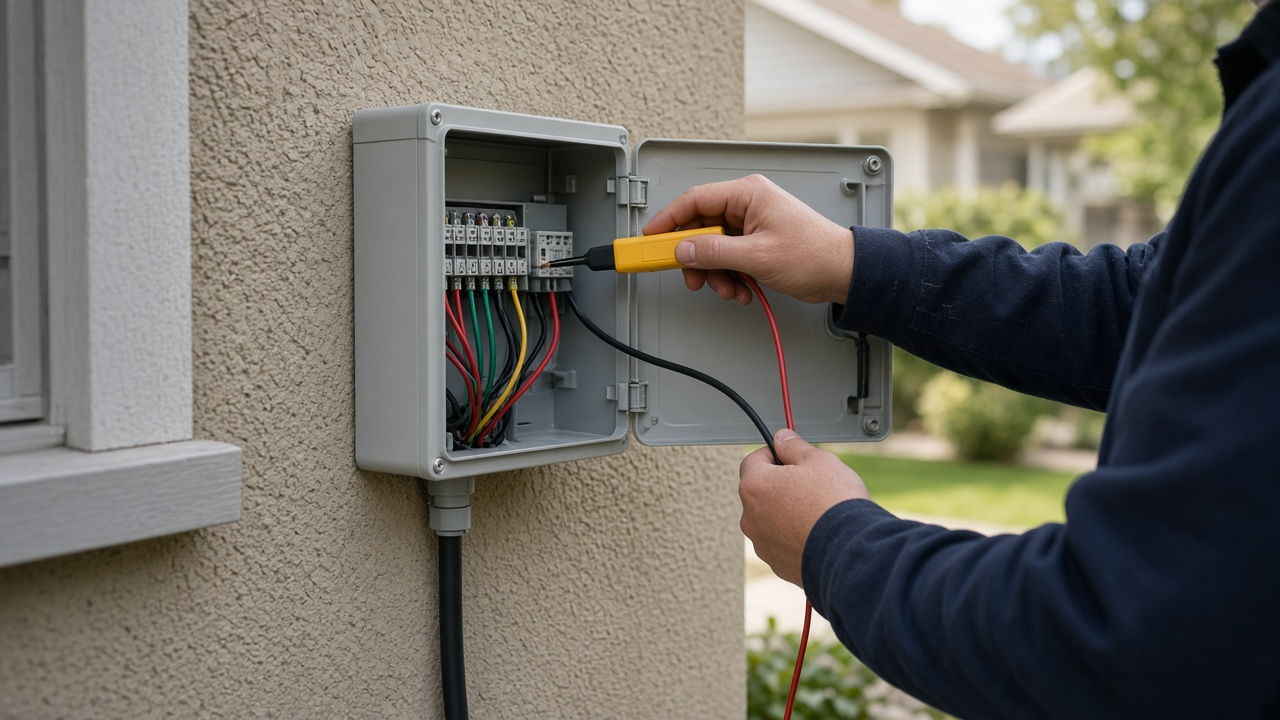
In the world of telecommunications, a demarcation point—often shortened to demarc—represents the physical boundary where a service provider's network ends and the customer's responsibility begins. This handoff typically occurs at a network interface device (NID), which is commonly mounted on the outside of a building in the United States.
For American businesses and residential customers, the demarc point clarifies who maintains which part of the network infrastructure. Service providers can define service responsibilities with precision, while customers gain control over their internal networks without ambiguity. This separation also streamlines troubleshooting, simplifies service upgrades, and legally defines accountability when managing telecommunications faults or outages.
The Evolution Behind the Wall: A Look at the Historical Context of the Demarc Point
From Bell System Boundaries to Network Ownership Lines
The concept of the demarcation point, now commonly known as the demarc, emerged during the early development of the public switched telephone network in the 20th century. Initially, telephone companies in the United States, dominated by the Bell System, owned and maintained every component of the telephone line—from the central office down to the handset in a customer's home.
This changed dramatically after the 1982 antitrust legislation that led to the breakup of AT&T. When the U.S. Department of Justice ruled to dismantle AT&T into seven Regional Bell Operating Companies (RBOCs), regulatory frameworks began to draw a distinct boundary between the telephone company network and customer-owned equipment. That boundary became the demarcation point.
In 1984, the Federal Communications Commission (FCC) formalized this concept by mandating that telephone companies install a Network Interface Device (NID) at the customer’s premises. This physical device marked the endpoint of the provider’s legal and operational responsibility.
Shifting Boundaries: The Internet and IP Era
The arrival of broadband, DSL, and fiber technologies in the late 1990s reshaped how networks interfaced with residential and commercial buildings. While the initial use of the demarc point focused on analog voice, the explosion in data traffic turned the demarc into a convergence site for multiple services—voice, video, and internet. What had once been a passive point on the wall evolved into a more sophisticated handoff, often integrating smart diagnostics and modular connectivity.
Voice over IP (VoIP) further complicated the story. Carriers no longer required traditional copper lines to provide voice services. Instead, a customer’s internet connection became the delivery method for both data and voice. This redefined the logical demarc point. In many VoIP scenarios, the demarc shifted inside the premises to devices like routers, optical network terminals (ONTs), or telephony gateways, depending on the architecture chosen by the provider.
Across global markets, regulatory bodies followed suit. In Europe, for example, the European Telecommunications Standards Institute (ETSI) helped define demarc points within structured cabling standards and building regulations. In regions such as Japan and South Korea, where fiber penetration soared in the early 2000s, the demarc evolved into fiber termination boxes that support symmetric gigabit services.
- Pre-1984: Demarcation was informal; telcos maintained the entire line up to the handset.
- Post-1984: FCC regulations required installation of a Network Interface Device (NID) at the premises edge.
- 1990s–2000s: The rise of broadband moved the demarc into multi-service interfaces.
- 2000s–Present: VoIP and fiber reshaped physical and logical demarcation, decentralizing its location within the premises.
Want to understand what your building’s demarc point looks like today? Take a look at your NID or optical network terminal. That’s more than just a box on the wall—it’s the end of the line for the carrier, and the start of everything you control.
Types of Demarcation Points in Telecommunications
Demarcation points, often abbreviated as demarc points, appear in multiple configurations tailored to different service environments. Their design hinges on whether the setting is residential, commercial, or part of a larger infrastructure network. The type used determines how responsibilities are split between the service provider and the end user, and how network access is structured physically and logically.
Standard Network Interface Device (NID)
This is the most common demarc point for residential and small business installations. Mounted on the exterior or interior of a building, the NID serves as the physical handoff from the telephone company to the user’s internal wiring. Typically, it contains:
- A test jack: Allows quick isolation of issues inside or outside the premises.
- Surge protection: Shields the network from electrical spikes.
- Individual line modules: Each subscriber line has a dedicated connection point.
In most cases, technicians and homeowners access the NID to carry out troubleshooting or upgrades. Since the 1980s, this device has become ubiquitous thanks to FCC regulations in the United States that standardized demarcation practices.
Smartjack
Used extensively in digital service environments, particularly T1 and T3 lines, the smartjack goes one step further than a basic NID. It acts as an intelligent device capable of loopback testing and signal regeneration. Telecommunications providers prefer smartjacks for locations that require bandwidth guarantees and service-level agreements (SLAs).
Unlike traditional NIDs, smartjacks require power and may include:
- Built-in diagnostics that facilitate remote testing.
- Alarm indication signals for fault detection.
- Regeneration circuits to boost digital signals before handoff.
Most commonly found in medium to large businesses, smartjacks allow for minimal service interruption and rapid fault isolation without on-site technician visits.
Main Distribution Frame (MDF)
Within large facilities like campus networks, office towers, or data centers, the main distribution frame serves as the central demarc. It sits inside telecom closets or equipment rooms and links external service provider lines to internal wiring systems.
The MDF supports complex switching and routing configurations. Key characteristics include:
- Racks of punch-down blocks or terminal strips arranged by service group.
- Incoming trunks from various telecom carriers.
- Connections to intermediate distribution frames (IDFs).
Only qualified personnel access and manage MDFs, given the high density and critical nature of the connections they handle.
Optical Network Terminal (ONT)
As fiber-to-the-premises (FTTP) adoption grows, the optical network terminal emerges as the new standard for fiber-based demarcation. Installed at the subscriber location, the ONT converts optical signals from the provider into digital signals used by the customer's devices.
- Supports high-speed internet, IPTV, and digital voice.
- Includes battery backup or external power supply.
- Acts as the central switching point for multiple services.
ONTs are typically wall-mounted inside garages, utility closets, or structured media enclosures — bridging the glass of passive optical networks (PON) to copper Ethernet or coaxial outputs used in customer networks.
Virtual Demarcation
In software-defined networking (SDN) and carrier Ethernet deployments, demarcation may no longer reside in a single physical device. Virtual demarcation points use programmable interfaces, allowing service termination and policy enforcement inside dynamically provisioned network functions.
This type often appears in cloud CPE models or in managed services for multi-site enterprises. It offers advantages like:
- End-to-end service visibility and remote configurability.
- Flexible deployment without truck rolls.
- Programmable SLA enforcement at the software layer.
Virtual demarcation facilitates faster deployment cycles and aligns with the fluid architecture of modern networking.
Comparing Residential and Business Use Cases
While types like ONTs and NIDs dominate residential use, businesses often rely on smartjacks and MDFs for their more complex needs. In contrast, virtual demarcation is increasingly favored by enterprises seeking to scale or decentralize operations.
Think about where each type fits: small home, bustling office, data-intense enterprise. Correspondingly, the variation in demarc point reflects the unique demands, security thresholds, and operational scale of each environment.
Demystifying the Network Interface Device (NID)
What Is a Network Interface Device?
The Network Interface Device (NID) operates as the physical boundary between a telecommunications provider's network and a customer’s internal wiring system. As the most common type of demarcation point in residential and small commercial setups, the NID facilitates service delivery while creating a clear separation of responsibility between the telco and the end user.
Usually mounted outside the premises or in a utility room, the NID connects the incoming copper or fiber feed from the provider to the building’s internal cabling. Its architecture allows direct access to both input and output terminals without disrupting the service, simplifying installation, repairs, and upgrades.
Inside the NID: Equipment and Connectivity
The construction of a NID comprises several integral components engineered to manage physical connections and signal integrity:
- Customer Access Module (CAM): This section provides the interface for the customer's internal telephone wiring. Technicians and property owners access this without disturbing the provider’s section.
- Telco Protection Module: Storm surges and electrical anomalies can damage both provider and consumer equipment. Built-in protection circuits, often featuring carbon or gas tube surge protectors, prevent this.
- Test Jack (or RJ-11 Test Port): A diagnostic feature built into the NID. From this port, users and technicians can test line quality directly from the provider’s signal path, helping to isolate external vs. internal wiring issues.
- Wiring Terminals: Secure screw-down or punch-down terminals connect the building’s wiring to the provider’s service entry. These are usually color-coded for fast identification during troubleshooting or installation.
NIDs for DSL or fiber deployments expand functionality beyond copper circuitry. For instance, Optical NIDs include fiber transceivers and power sources, delivering both internet and IP-based telephone services. When power is lost, many of these devices include rechargeable batteries to preserve emergency services communication.
Variations like the Smart NID handle advanced diagnostic functions, including remote access and signal performance analytics. These units enable real-time monitoring by the provider and can trigger automated alerts for signal loss, line attenuation, or hardware faults.
In multi-dwelling units (MDUs), a single enclosure often houses multiple customer interfaces. Each is segmented to maintain individual tenant access while centralizing the service hub for efficiency in network management and space utilization.
The presence of a properly configured NID eliminates guesswork during maintenance and ensures fast fault resolution by clearly delineating network boundaries. If connectivity falters, knowing where the provider’s jurisdiction stops and the customer's begins drastically shortens the diagnostic path.
The Gateway to Connectivity: How Demarc Points Enable Internet and VoIP Services
Behind every reliable internet or VoIP connection stands a demarcation point—the precise boundary where the telecommunications provider’s infrastructure hands off service to the customer’s internal network. This handoff isn’t symbolic. It forms the physical and operational border that governs not just delivery, but performance, diagnostics, and upgrades.
Core Functionality in Internet and VoIP Systems
Demarc points play a pivotal role in facilitating data flow for both internet access and VoIP (Voice over Internet Protocol) communications. At this junction, service providers terminate their public networks and connect them to customer premises equipment (CPE). Whether it's a fiber optic line, DSL circuit, or coaxial cable, the demarc point ensures that signal integrity is preserved up to the customer’s facility.
In internet setups, routers, modems, or gateway devices typically link directly to the demarc interface—either through a Network Interface Device (NID) for copper lines or an Optical Network Terminal (ONT) for fiber. Similarly, VoIP systems rely on uninterrupted data flow from the provider’s network to IP-enabled phones or PBX systems housed inside the premises. The demarc point isolates external transmission errors from on-site hardware issues, narrowing troubleshooting efforts when signal loss occurs.
Impact on Service Quality and Management
A well-maintained and properly configured demarc point minimizes latency, jitter, and packet loss—factors that directly impact VoIP call clarity and real-time internet applications. For providers, it enables focused monitoring and better remote diagnostics. If degradation or disconnection arises, technical teams can test up to the demarc point to pinpoint whether the issue lies on their side or within the customer’s internal cabling or equipment.
This clear split of control leads to more efficient service restoration and minimizes disputes in managed contracts or Service Level Agreements (SLAs). Furthermore, demarc extension units allow telecommunications companies to deploy services deeper into large buildings or campuses while maintaining responsibility boundaries, all without sacrificing signal performance.
- For service providers: Faster remote diagnostics and reduced truck rolls due to pinpoint testing capabilities at the demarc level.
- For customers: Clear ownership of internal network management, leading to improved coordination during troubleshooting or upgrades.
- For VoIP systems: Stable connectivity with thresholds held at the point of demarcation, promoting consistent voice quality and call reliability.
Demarcation points do more than define responsibility—they frame the entire customer experience for internet and VoIP users. By establishing a clean, testable handoff location, they ensure everyone is aligned on where connectivity begins and where it should, without exception, be maintained at optimal performance.
Legal and Regulatory Considerations of Demarc Points
FCC Regulations and Industry Standards
The Federal Communications Commission (FCC) defines and regulates demarcation points under Title 47 CFR § 68.3. This regulation clearly separates the responsibilities between telecommunications carriers and end users. The demarcation point marks the boundary where a carrier's obligation ends and the customer's equipment begins. This distinction determines maintenance responsibilities, service guarantee liabilities, and access rights.
In practice, premises wiring beyond the demarc point falls under the control of the customer, while the service provider controls infrastructure leading up to it. The FCC's Part 68 rules mandate that providers must install and maintain the demarcation device in a way that complies with safety, accessibility, and interface standards set by the Administrative Council for Terminal Attachments (ACTA).
For multi-dwelling units (MDUs), a 1993 modification allows the demarcation point to be extended up to 12 inches inside the tenant’s premises or to a common network interface panel in the building. This rule reflects adjustments for higher-density environments while preserving clarity over ownership and maintenance responsibilities.
The Role of Local and State Codes
While federal guidelines outline the foundational structure, local and state-level regulations often introduce additional requirements. These may address issues like grounding and bonding, fire safety, and access during maintenance windows. Building codes, especially in commercial developments, sometimes stipulate panel access dimensions or specify materials for conduits and circuit protection at demarcation points.
- California Public Utilities Commission (CPUC) enforces additional standards for residential demarcations in earthquake zones.
- New York State Division of Consumer Protection has published recommendations promoting clear landlord-tenant demarcation boundaries to resolve billing disputes.
Public Responsibility in Regulatory Compliance
End users, especially in hosted or leased environments, carry a compliance burden as well. Installing non-compliant devices, modifying wiring past the demarc point, or impeding technician access can result in service terminations or fines. Landlords and property managers must provide unrestricted access to carriers for inspection and upkeep within reason, as specified in FCC guidelines.
Customers must also ensure that any equipment connected to the network meets Part 68 technical criteria. Failure to adhere can introduce hazards that affect not just the user’s system, but the broader telecom infrastructure. Technicians—whether private or carrier-employed—are expected to maintain audit trails and carry out inspections in alignment with these technical mandates.
Ownership and Responsibility: Demarcation Point Dynamics
Who Owns the Demarcation Point?
The demarcation point, often abbreviated as demarc, acts as the dividing line between the telecommunications service provider's infrastructure and the customer’s internal network. Ownership of the cabling, equipment, and connectivity up to this line belongs to the provider. Everything beyond it falls under the domain of the end user—whether residential, commercial, or governmental.
This line of separation isn't just metaphorical; it's physical and legal. For instance, in the United States, the Federal Communications Commission (FCC) specifies that the service provider is responsible up to the minimum point of entry (MPOE) or Network Interface Device (NID), whichever applies. From that socket or enclosure onward—wires, terminals, patch panels, routers—it becomes customer territory.
Service Provider Responsibilities
- Installation and Activation: Providers install the external line and ensure that it’s properly connected to the demarcation point and operational when initiating service.
- Line Maintenance: Any disruptions, decay, or failure of the connection up to the demarc involve the provider’s intervention.
- Periodic Testing: Technicians might perform loopback or continuity tests up to the demarc during support calls or service optimization routines.
Any issue found upstream of the demarc is not just their responsibility—it’s their liability. Until that boundary, their service level agreements (SLAs) apply, including uptime guarantees, fault response times, and scheduled maintenance notifications.
Customer Responsibilities
- Internal Cabling: From the demarc onward, the user manages all cabling inside walls, under floors, across ceilings, or within communication closets.
- Owned Equipment: Routers, switches, PBX systems, servers, and wireless access points fall within the customer’s scope.
- Troubleshooting and Repair: Faults that originate past the demarc require in-house tech support or external contractors, not the provider.
When connectivity issues arise, pinpointing whether the fault lies before or after the demarc determines who pays and who responds. If the culprit is inside the customer premises, service providers may still assist—but expect additional charges.
Shared Components and Gray Areas
Some nuances muddy the distinction. Buildings with multiple tenants often have shared Main Distribution Frames (MDFs), and in such cases, the property owner or building manager may assume responsibility for wiring from the MDF to individual demarcs. Additionally, any equipment leased from the provider (like modems or ONTs) might technically belong to them but reside on the customer’s side of the demarc.
Responsibility, therefore, aligns along both physical line and contractual agreement. Clarity in service contracts—detailing exact points of ownership and response procedures—prevents dispute and delays, especially in business-critical environments.
Frequent Problems at the Demarc Point That Impact Connectivity
The demarcation point, though often overlooked, can become a nexus of operational disruption when faults occur. Whether the issue lies at the carrier side or within customer infrastructure, the impact can be immediate and far-reaching.
Typical Problems That Disrupt Service at the Demarc Point
- Corroded or damaged terminals: Exposure to moisture or extreme temperatures can degrade the physical interface, especially in outdoor Network Interface Devices (NIDs).
- Loose or faulty wiring: Poorly terminated cables or aging copper leads can lead to intermittent signals, packet loss, or total service loss.
- Unauthorized modifications: Tampering by unqualified personnel may introduce unsafe changes or misconfigurations that breach service agreements or violate standards.
- Equipment mismatch or obsolescence: Demarc devices must align with the telco’s latest standards. Legacy hardware often lacks compatibility with modern VoIP or high-speed internet services.
- Environmental impact: Water ingress, insect infestation, or rodent damage can compromise cables or internal electronics within exterior-mounted NIDs.
- Power supply interruptions: Integrated intelligent NIDs or demarc routers require consistent power—failures here can mimic upstream outages.
- Cross-talk and signal interference: In multi-tenant buildings, inadequate shielding or high electromagnetic interference (EMI) near electrical systems can degrade signal integrity at the demarc point.
Consequences on Business and Connectivity
What happens when the demarc point fails? Businesses quickly face cascading effects. Internal networks that depend on upstream connectivity will experience latency, downtime, or complete failure to route traffic. VoIP calls drop, VPN tunnels break, and cloud-based applications become inaccessible.
In customer-facing environments such as call centers, retail operations, or managed IT service providers, a degraded demarc point translates into lost revenue, customer complaints, and service-level agreement (SLA) penalties. Even short outages can disrupt transaction processing or real-time communications, especially in sectors like finance, healthcare, and logistics.
Have you identified a recurring outage at specific times or weather conditions? That often traces back to the demarc point's environmental exposure or signal degradation under fluctuating loads—precisely the types of patterns that emerge in this critical handoff zone.
Basic Troubleshooting Steps for Demarc Points
Start with the Obvious: Physical Inspection
Begin by checking physical connections at the demarc point. Look for loose cables, corrosion, or visible damage. On most Network Interface Devices (NIDs), a standard screwdriver can open the customer access section. Inside, confirm that the network cabling is properly terminated and undamaged.
- Verify all cable connections: Coaxial, twisted pair, or fiber should be securely connected to their respective ports.
- Inspect for environmental damage: Moisture, insects, or UV exposure can degrade plastics and jackets, especially in outdoor installations.
- Check for tampering: Any signs of unauthorized access or modifications may point to the root cause of service issues.
Test for Signal at the Demarc
If equipment is functional but no service reaches the premises, connect a known-good test device directly to the demarc point. For DSL or POTS lines, plug a standard telephone into the test jack inside the NID. If there’s dial tone at the demarc but not within the home or office, the fault lies in downstream cabling.
- Voice lines: No dial tone at the NID indicates a provider-side issue. Dial tone at the NID but not at wall jacks signals a problem with internal wiring.
- Internet service: Use a DSL modem or ONT test tool. LEDs can indicate sync status and help isolate the issue.
Power Cycle Connected Equipment
Before escalating, reboot routers, ONTs, and modems linked to the demarc point. Power interruptions or minor faults may be resolved by a full power cycle. Leave devices off for at least 30 seconds before restarting.
Bypass Interior Wiring
To eliminate customer-side wiring as a variable, perform a direct connection test. Disconnect internal wiring and hook the service line directly to the test device—this isolates the local loop from inside wiring.
Use Line Splitters and Filters Properly
For DSL services, improper or missing microfilters can cause signal degradation and disconnects. Confirm that each voice device shares a line with a filter and that the DSL modem has a direct, unfiltered path to the demarc.
Log Results and Compare Against SLAs
Record each step and note what changed. Compare outcomes against service level agreements if available. For example, if a business SLA guarantees uptime or latency levels, this information anchors follow-up conversations with the provider.
Still no resolution? Then what would you check next? Layer deeper by identifying signal loss, attenuation, or impedance mismatches with advanced tools—covered in the next section.
Advanced Troubleshooting Techniques for Connectivity Issues
When basic diagnostics fail to identify the root cause of connectivity issues at the demarcation point, an escalation to advanced troubleshooting becomes necessary. Technicians apply a targeted approach using specialized tools, waveform analysis, and deeper layer inspection of both local and provider infrastructure.
Layered Testing Approach for Persistent Failures
Rather than attempting blanket tests, segmenting the network into logical layers produces faster and more accurate fault isolation. This methodology starts from the customer premises and works back toward the provider network or vice versa, depending on the symptoms.
- Physical Layer Verification: Use a Time Domain Reflectometer (TDR) to detect impedance discontinuities, short circuits, or cable damage. TDR graph response visualizations will indicate signal reflections that pinpoint fault locations down to the foot.
- Link Layer Diagnostics: Apply a line tester capable of DSL, xDSL, or Ethernet handshake monitoring. Identify issues in auto-negotiation, link speed errors, or duplex mismatches causing flapping or degraded performance.
- Protocol Emulation: Insert a portable protocol emulator between the demarc and customer edge equipment. Emulate CPE behavior to determine service delivery consistency and measure latency, jitter, and packet loss under controlled conditions.
Using Spectrum Analyzers and Oscilloscopes
For environments affected by electrical interference or crosstalk, spectrum analyzers provide real-time RF visualization. Spurious signals, overlapping channels, or environmental noise sources like HVAC systems can be identified and mitigated. In wired networks, oscilloscopes detect waveform distortion and verify signal integrity beyond what multimeters capture.
Loopback Testing and Signal Injection
To isolate faults within the demarc interface, deploy loopback plugs or execute remote loopback commands (for managed interfaces). Pair this with signal injection tools that send a known frequency or digital signature through the line to confirm continuity and path stability. Engineers often rely on this technique in VoIP or T1 circuits to confirm whether termination points are responsive under simulated load.
Cross-Verification with Provider Systems
Synchronization with the service provider's monitoring infrastructure eliminates guesswork. Pulling port stats, interface counters, or error logs from the central office side helps validate or refute local suspicion. For example, if CRC errors or excessive FEC corrections are tracked upstream, the problem exists before the demarc—even if local termination seems intact.
Pattern Recognition from Historical Data
Technicians familiar with a site’s long-term performance data use trend analysis to detect deteriorating line quality. Comparing signal metrics over time surfaces intermittent issues caused by temperature fluctuations, spliced cabling, or aging connection points. This technique works especially well when combined with SNMP traps and Syslog exports operating pre-failure event horizon detection.
How often do you see connectivity problems that seem to vanish the moment support arrives? Consider scheduling tests during peak degradation periods, or use network taps and persistent monitoring modules to capture live data autonomously.
Essential Tools and Equipment for Demarc Point Troubleshooting
Efficient troubleshooting at the demarcation point depends heavily on the quality and type of tools used. Service providers and network technicians rely on a specific set of instruments to diagnose, isolate, and resolve connectivity issues swiftly. Each tool serves a distinct purpose in maintaining uninterrupted communication between customer premises equipment (CPE) and the service provider's infrastructure.
Core Diagnostic Tools Used in the Field
- Multimeter – Technicians use digital multimeters to verify voltage levels and continuity in cabling. When a line shows no dial tone or grounding issues are suspected, a multimeter will detect open circuits, shorts, or reversed polarity.
- Telecom Test Set (Butt Set) – The classic testing handset connects directly to telephone lines. By clipping into the line at the demarc, a technician can test dial tone availability and place or receive calls to confirm line functionality.
- Line Tracer and Tone Generator – To identify where a copper pair terminates, this tool sends a tone down one end of the wire. With a probe, the user traces the signal through walls, junctions, or patch panels to locate breaks or misrouted connections.
- Cable Tester – Used for both copper and fiber lines, these testers validate wiring integrity. In structured cabling environments, they detect miswiring, splitter issues, or cable length inconsistencies that affect network performance.
- Optical Time-Domain Reflectometer (OTDR) – In fiber optic systems, OTDRs measure the time and intensity of light reflecting back from breaks or loss points in the fiber, precisely locating faults and signal degradation.
Support Equipment for Efficient Demarc Service
- Network Analyzer – Often paired with laptops or handheld devices, these tools analyze bandwidth usage, jitter, packet loss, and latency. They’re valuable for troubleshooting VoIP or broadband performance issues at the demarc.
- Screwdrivers and Punch Down Tools – Manual tools like 110 or 66 punch down tools remain staples for terminating wires onto blocks within the NID. Accurate punch downs produce solid, reliable connections with minimal signal bleed.
- Fiber Inspection Microscope – Dust and debris on fiber connectors can significantly degrade signal quality. These microscopes inspect the fiber end-face to ensure cleanliness before retermination or testing.
- Labeling System – In facilities with multiple terminations, a handheld label maker helps technicians keep ports, cables, and interconnects organized—minimizing guesswork during diagnostics or upgrades.
Why Tools Shape the Success of Troubleshooting
The choice of equipment directly dictates how quickly faults at the demarc point can be identified and resolved. For example, when using OTDRs with high resolution, fiber faults as small as one meter in length become instantly visible. Similarly, with tone generators and probes, technicians can distinguish between active and dormant lines in seconds—eliminating guesswork that slows down service calls. When every minute of network downtime impacts revenue or user productivity, these tools become the unsung backbone behind seamless service continuity.
What would take hours to trace manually with trial-and-error gets resolved in minutes with the right diagnostic set. That’s why professional teams prioritize investing in calibrated, field-tested instruments for every demarc job.
Solidifying Telecom Reliability Starts at the Demarc Point
The demarcation point—commonly referred to as the demarc—is the physical boundary where the telecommunications service provider’s responsibility ends and the customer’s begins. It serves as more than a handoff location; it’s a diagnostic reference, a regulatory construct, and a foundation for service reliability.
Proper understanding and handling of the demarc point consistently improve service uptime, simplify troubleshooting, and reduce finger-pointing between parties. Whether overseeing a corporate network or managing a single-family installation, actively maintaining the demarc ensures smoother transitions during upgrades, fewer service disruptions, and faster issue resolution.
Customers who monitor changes at their demarc point—such as equipment upgrades, wiring wear, or changes in carrier interfaces—position themselves to respond quickly when issues arise. Businesses benefit from formal documentation and regular audits, aligning internal IT readiness with external provider demands.
Want fewer downtimes and faster support?
- Audit your demarc point — Identify its location, equipment installed, and ownership responsibility for each component.
- Verify access procedures — Ensure authorized personnel have clear instructions on how to reach and troubleshoot the demarc area.
- Coordinate with your telecom provider — Share what you’ve documented, ask for updates on recent work, and request clarity on response expectations.
Networks evolve, and so do responsibilities. Proactive engagement with the demarc point keeps your telecommunications infrastructure aligned with business and consumer demands.