Your home Wi-Fi isn't as private as you think - ways to tighten its security
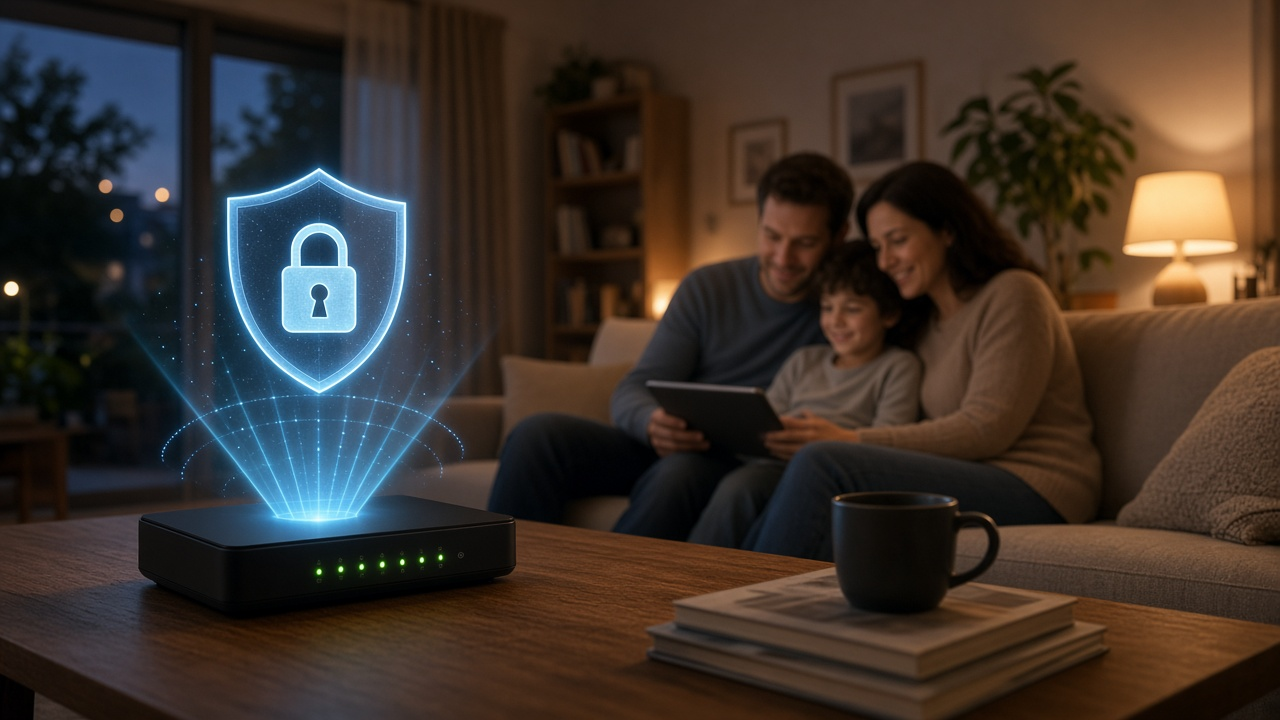
Behind the comfort of streaming movies, sharing files, and working remotely, your home Wi-Fi network may be quietly exposing more than you realize. Using a password doesn’t guarantee privacy, and assuming otherwise leaves critical vulnerabilities unchecked. Sophisticated attackers can exploit even lightly protected networks—just one weak setting can invite unauthorized access.
Open or poorly encrypted wireless networks (those running WPA or WEP) leak data during transmission. Credentials, browsing activity, and personal communications can be intercepted. When router firmware isn't updated regularly, known security loopholes remain unpatched, creating persistent entry points for intrusion.
The implications are direct and far-reaching. Intercepted DNS queries reveal websites visited in real time. Connected devices—phones, laptops, smart speakers—become available targets. Without HTTPS or a VPN in place, unencrypted traffic gives anyone on the same network a clear window into what should be private activity. And yet, many users still believe that setting a Wi-Fi password seals the perimeter. It doesn’t. Security extends far beyond a single field in your settings panel.
Ready to test your assumptions and reinforce your digital walls? Let’s cover six no-cost steps that significantly change how secure your home network really is.
Free Fix #1: Use Strong Wireless Encryption Protocols
Outdated Encryption Opens the Door — Shut It
Old encryption standards like WEP (Wired Equivalent Privacy) and the original WPA (Wi-Fi Protected Access) offer minimal protection against modern wireless attacks. WEP can be cracked in under a minute using free software. WPA, although stronger, still relies on algorithms vulnerable to brute-force attacks. Many routers continue to ship with WEP or WPA enabled by default, especially older models.
Switching to WPA2 or WPA3 immediately improves Wi-Fi privacy. WPA2, introduced in 2004, uses AES (Advanced Encryption Standard) which significantly boosts encryption robustness. WPA3, released in 2018, goes further by encrypting traffic between the device and router individually, even before authentication completes. If your router supports WPA3, prioritize it. Otherwise, select WPA2 with AES.
How to Change Wireless Encryption Protocols in Your Router
Accessing your router's admin interface gives you full control over encryption settings. Here's how to find and update the protocol:
- Connect to your Wi-Fi network, then open a browser window.
- Enter your router’s IP address in the address bar — common ones include 192.168.1.1 or 192.168.0.1.
- Log in with your admin credentials. If unchanged, these may still be the factory defaults — plan to change those next.
- Navigate to the Wireless Settings or Security tab.
- Locate the field labeled Security Mode or Encryption Type.
- Select WPA2-PSK (AES) or WPA3-SAE if available.
- Save settings and reboot the router if prompted.
Sidebar Tip:
Always choose AES over TKIP. TKIP (Temporal Key Integrity Protocol), once used in combination with WPA, uses weaker cryptographic algorithms and can degrade network performance. AES not only improves security — it's also more efficient, leading to faster data transfer rates on modern devices.
Checking your wireless encryption protocol takes less than five minutes. That small step places a significant barrier between your personal data and wireless snoopers.
Free Fix 2: Change Default Router Configuration Settings
Routers arrive from manufacturers with default settings intended for easy setup, not long-term security. Leaving these configurations unchanged creates an open invitation to cyber intruders. The credentials used to manage routers—commonly “admin” for both username and password—are widely documented and searchable online. Anyone with basic knowledge can exploit these defaults to gain control over your network.
That control doesn’t stop at changing your Wi-Fi password. With access to your router’s admin panel, an attacker can install malicious firmware, reroute traffic through rogue DNS servers, or shut you out entirely. All of these risks stem from ignoring one initial task: proper router configuration.
What to Change First?
- Router Login Credentials: Replace the default username and password with a strong, unique combination. Use a password manager if needed, since these credentials don’t have to be recalled daily.
- SSID (Network Name): Rename your wireless network to something unrelated to your identity or location. Including personal data like your surname or apartment number helps attackers target you more precisely.
The admin panel for most consumer routers can be accessed by typing 192.168.0.1 or 192.168.1.1 into a web browser. If unsure, check the base of your router for login instructions or consult the manufacturer’s support documentation.
Bonus Tip: Disable WPS
WPS, or Wi-Fi Protected Setup, was designed to make connections simpler. It does that—but at significant cost. WPS PIN authentication can be cracked using automated brute-force attacks, many of which complete in a matter of hours. Unless you rely heavily on push-button device pairing, this feature should remain off. Disabling it removes one more pressure point attackers could exploit.
Updating your router’s configuration doesn’t require any new equipment. It only demands a few targeted changes in your device’s current settings panel—small adjustments that dismantle a giant vulnerability.
Free Fix 3: Update Router Firmware Regularly
When manufacturers discover vulnerabilities in their routers, they push out firmware updates. These updates are not just performance tweaks — they directly patch security holes that attackers actively exploit. Ignoring them leaves your home network exposed to known risks.
Cybercriminals analyze outdated firmware, identify weak points, then deploy malware or launch brute-force attacks to gain unauthorized access. Once inside the network, they can monitor traffic, extract login credentials, or hijack your DNS settings. Keeping your router’s firmware current blocks these entry points before they can be used.
How to check and update your router firmware
Start by logging into your router’s admin panel. The address typically begins with 192.168.x.x and the login credentials — unless changed — may still be the default. The exact location of firmware settings varies by manufacturer, but you’ll usually find it under a tab labeled “Firmware,” “Update,” or “Administration.”
- Manually check for updates by clicking the built-in “Check for new firmware” button.
- Some routers support automatic updates — enable this setting if available for hands-off protection.
Before applying any update, back up your current configuration. This way, if the process resets your custom settings — like port forwarding rules, DHCP reservations, or firewall tweaks — you can restore them in seconds.
Firmware updates don’t just increase security; they can also improve stability, unlock new features, and extend hardware compatibility. Yet many users overlook them, assuming their router “just works.” If your router hasn’t been updated in the last six months, dig into its admin panel now and take control.
Free Fix 4: Set Up a Guest Network
Not every device that connects to your Wi-Fi should have full access to your primary network. This is where a guest network becomes invaluable. By creating a separate wireless channel, you eliminate direct pathways between less-trusted devices and the core of your digital life.
Why a Guest Network Strengthens Security
- Network isolation: Devices on the guest network can’t communicate with your main network’s devices. That means smart TVs, visitor phones, or any potentially compromised gadgets can’t reach your computers, NAS drives, or work-from-home setups.
- Smaller attack surface: Only essential traffic passes through the primary Wi-Fi. Guest networks reduce the number of entry points to your main system.
- User access control: You decide who connects and when. No guessing which device belongs to whom — visibility stays clear and manageable.
How to Set Up a Guest Network: Step By Step
Log into your router’s admin interface — the address typically looks like 192.168.0.1 or 192.168.1.1. You’ll find the exact address on a sticker under the router or in the manual.
- Navigate to the Wireless Settings or Guest Network section.
- Enable the Guest Network option. Give it a distinct name, something easily recognizable like “Home Guest.”
- Activate WPA3 or at least WPA2 encryption. Never leave your guest Wi-Fi open — authentication still matters.
- Set bandwidth controls to limit how much traffic guest devices can use. This prevents visitors from taking up too much bandwidth while streaming or downloading.
- Use time restrictions to automatically disable access at night or after a few hours. This keeps connections short-lived unless regularly reviewed.
When Is a Guest Network the Right Tool?
Anytime an untrusted device requests access, route it here. Guest networks are perfect for:
- Visitors, whether friends dropping by or service technicians needing a quick connection.
- Smart home equipment like security cameras, robotic vacuums, and internet-connected light bulbs, many of which have poor security standards.
- Devices with limited updates — old phones, media boxes, or IoT gadgets no longer supported by the manufacturer.
This separation keeps your core network lean and protected while still offering Wi-Fi access to the peripherals of everyday life. Think about what’s currently connected to your main Wi-Fi — how many of those truly need unfettered access?
Free Fix 5: Enable and Configure Firewall Settings
Firewalls don’t just belong on enterprise networks or corporate desktops. Most home routers include basic firewall features, but they often come disabled by default. Turning them on activates a first layer of defense between your local network and the open Web.
Built-In Firewall Capabilities
Explore your router’s admin console—not all interfaces look the same, but the firewall or security section is usually easy to locate. If your router includes a Stateful Packet Inspection (SPI) firewall, enable it. It's designed to track connection states and block unexpected or suspicious incoming traffic. Some routers even allow you to define specific rules based on IP addresses or protocols.
Tips on Setup
- Block suspicious incoming connections: Incoming traffic that doesn’t match an outbound request from inside your network should be rejected. Activate rules designed to identify and drop unsolicited connection attempts.
- Customize for ports and extensions: If you're running services like a home server or remote desktop, open only the exact ports you need. Keep the rest closed and log connection attempts for monitoring.
An active firewall won’t correct every threat, but it strips away a massive part of opportunistic attacks, including random port scanning and botnet probing.
Layer It with Smart HTTPS Habits
Pairing firewall settings with better browser behavior gives your network another edge. Here’s the core distinction:
- HTTP: Transmits data in plaintext. Anyone intercepting can read the information.
- HTTPS: Encrypts the data during transmission—useful for login credentials, personal info, and any online activity you'd rather keep private.
Browse with HTTPS wherever possible. Most modern sites default to it, but when they don’t, browser extensions like HTTPS Everywhere will force the encrypted version if available. Combine this with firewall filtering, and even if a request slips through, it reveals much less.
Have you checked your router's firewall settings before? If not, log into the admin panel today and change that default.
Free Fix 6: Monitor Network Traffic and Connected Devices
Hidden within the steady hum of a home network, unauthorized devices can leech bandwidth, snoop on data, or act as entry points for larger attacks. To uncover these silent intrusions, visibility into your network traffic and connected devices is not optional—it’s the operational baseline for securing Wi-Fi.
Why Every Device on Your Network Should Be Accounted For
Every laptop, smart speaker, or printer on the network broadcasts its presence. Monitoring these connections tells you who or what is using your bandwidth, revealing:
- Uninvited devices—a neighbor piggybacking on your connection to stream or download content.
- Suspicious activity—a router log that shows an unfamiliar IP routinely querying your DNS could indicate embedded malware or a compromised IoT device.
Ignoring network visibility opens a door to freeloaders and data sniffers. Monitoring closes it.
Your Router's Admin Dashboard: The First Line of Insight
Start with the router’s admin interface—usually accessed via a browser through a local IP such as 192.168.1.1 or 192.168.0.1. Once inside, locate the section labeled Connected Devices or Device List.
This log will typically show:
- Device names (if available)
- Assigned IP and MAC addresses
- Connection status (wired/wireless)
Cross-reference each listed device with what you personally own. Anything unfamiliar? Investigate it. Kick it off. Change your password.
Free Tools That Give Granular Traffic Analysis
To go deeper than the basic router dashboard, use network analysis tools that provide real-time monitoring and historical usage patterns. Consider the following free applications:
- GlassWire (Windows): Offers visual illustrations of bandwidth usage by app, IP address, and individual host connections.
- Wireshark (cross-platform): Captures and inspects packets flowing through your network, letting you dissect DNS queries or detect unusual outbound traffic.
- Fing (iOS/Android): Scans your network to identify devices, alert you to new users, and display potential security risks.
Each one can be set to trigger alerts when a new device joins or when traffic patterns deviate from the norm. For households with multiple smart home devices, setting these alerts levels the playing field—no rogue thermostat or camera can sneak under your radar unnoticed.
Real-World Scenarios That Start with Monitoring
Imagine checking your router logs and spotting an active connection broadcasting from your garage. Your car isn’t Wi-Fi enabled. That identifier belongs to something else. Or maybe your internet slows to a crawl every evening from 7 to 9 PM. You monitor traffic and find a device named “Chromecast_Bedroom” pulling multiple gigabytes nightly. You don’t own a Chromecast, and your bedroom doesn’t have a TV.
These aren’t hypothetical anomalies—they're common outcomes when monitoring is ignored. Each data point tells a story; without watching, you'll never read it.
Your Router Doesn’t Protect You — You Do
Every Wi-Fi network starts with a router, but not every network ends in security. Locks don’t keep threats out — people do. Your home Wi-Fi isn’t as private as you think, but six free fixes will raise the bar dramatically.
Revisiting the Essentials
Done correctly, each of the following steps shields your data and reduces open paths into your network:
- Strong encryption: Activate WPA3 if your router supports it, or at the very least, WPA2 with a long, unique passphrase.
- Secure configuration: Change default admin usernames, disable remote access, and hide your SSID if not needed publicly.
- Regular firmware updates: Patch known vulnerabilities by checking for and applying firmware updates from your router’s admin panel.
- Guest networks: Segregate devices by creating isolated access for visitors, which prevents cross-network exposure.
- Firewalls and HTTPS: Activate your router’s built-in firewall and prioritize using HTTPS websites to secure traffic flow.
- Traffic monitoring: Keep tabs on connected devices and scan for anomalies — unknown MAC addresses signal freeloaders or intrusions.
Privacy Is a Practice, Not a Setting
No router offers full protection out-of-the-box. That’s not a flaw — that’s a design choice that puts control in your hands. The smartest move isn’t buying a new router, it’s understanding how yours behaves and shaping it to your needs.
Think about it: when was the last time you checked your router’s control panel? Or reviewed who’s connected? Each of those choices — encryption level, firmware upkeep, traffic logs — defines whether your Wi-Fi network serves your household or compromises it.
The power isn’t in the hardware. It’s in the decisions made daily. The web brims with threats, but with a few changes and consistent habits, you regain command.
Take the Next Step
- Router Guides by Brand: View setup instructions for TP-Link, Netgear, Asus, Linksys, and more
- Wi-Fi Privacy Boost Starter Kit: Download the checklist PDF and do a 15-minute privacy audit today
- Who's On Your Wi-Fi? Use Fing or Wireshark to scan connected devices and get clarity
- Advanced tweaking tools: Power users can explore OpenWRT or DD-WRT for custom firmware control
FAQs
- What’s the difference between WPA2 and WPA3? WPA3, introduced in 2018, uses SAE (Simultaneous Authentication of Equals) for stronger password-based authentication and protects against offline brute-force attacks — unlike WPA2, which remains more vulnerable without a complex password.
- How do I know if someone is using my Wi-Fi? Log in to your router’s dashboard and check the list of connected devices, comparing MAC addresses against your known devices. Unfamiliar entries mean someone is on your network.