You Can Now Rent a Dish From Starlink (2026)
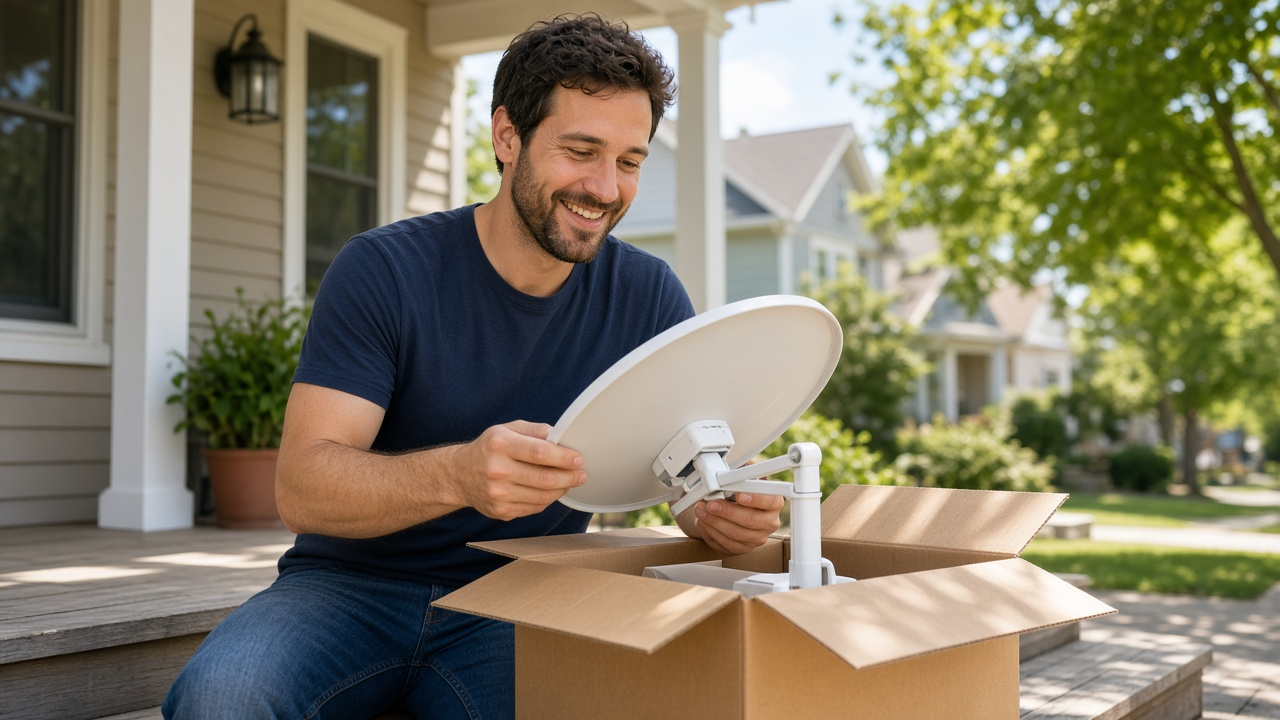
Starlink is a low-Earth orbit (LEO) satellite internet service developed by SpaceX, designed to deliver high-speed broadband across the globe—including in areas where traditional internet infrastructure doesn’t reach. Unlike conventional satellites that orbit far above Earth, Starlink’s constellation sits closer to the surface, reducing latency and enabling a more responsive online experience. Thousands of small satellites work together using advanced phased array antennas and optical interlinks to beam reliable internet access directly to user terminals on the ground.
SpaceX, the aerospace company founded by Elon Musk, launched the Starlink initiative to tackle the connectivity gap worldwide. Since deploying its first operational satellites in 2019, SpaceX has scaled the network rapidly. As of early 2024, more than 5,500 Starlink satellites orbit the Earth, forming a high-capacity, low-latency mesh network. Now, with the introduction of a rental model for Starlink equipment, users have a new entry point to tap into this expanding global service.
The New Dish Rental Model: What’s Changing?
Before: A Buy-Only Approach to Starlink Hardware
Until 2023, users looking to access SpaceX’s Starlink satellite internet service had only one option—purchase the Starlink Kit upfront. This kit included the phased-array dish (also known as Dishy McFlatface), a Wi-Fi router, power supply, and mounting hardware. Pricing varied by location but typically started at $599 for residential users in North America, not including shipment and taxes. This hardware cost often acted as a barrier for users in remote or underdeveloped regions who needed high-speed satellite internet the most.
Now: A Monthly Rental Option with Lower Entry Costs
Starlink has introduced a hardware rental option that removes the requirement of a full upfront payment. Launched as a pilot program and now expanding across select markets, the model allows users to rent the Starlink Kit by paying a fixed monthly fee. As of early 2024, the rental fee in the U.S. is approximately $15–$30 per month, depending on the region and user category. This is in addition to the standard Starlink monthly service charge, which ranges from $90 to $120.
The rental agreement includes use of all necessary equipment, with continuous access dependent on service subscription status. Starlink covers hardware replacement for faulty units while under rental—creating a dynamic, low-risk point of entry for users who previously hesitated due to high equipment costs.
Who Benefits from the Rental Plan?
- Travelers and RV Users: Individuals using Starlink Roam (formerly Starlink for RVs) can now trial the service without committing to a full hardware purchase. This is especially attractive to vanlifers, seasonal workers, and digital nomads.
- Rural and Underserved Households: Communities without fiber, cable, or reliable mobile broadband now have a financially accessible path to high-speed internet. Renting eliminates the need to invest hundreds of dollars just to try out the system.
- Remote Professionals: Engineers, researchers, field workers, and rural educators who need temporary connectivity can scale their internet needs without permanent infrastructure.
- Planned or Temporary Users: Homeowners in seasonal locations, construction managers, or disaster response teams can activate service only when it's needed, using rented hardware that doesn’t sit idle for most of the year.
Rather than locking users into high upfront hardware commitments, this rental model promotes flexibility—adapting Starlink's connectivity promise to the realities of modern, mobile, and rural lifestyles.
How Renting a Starlink Dish Works
Accessing the Rental Option Through Your Account
To begin the rental process, sign in to your Starlink account at Starlink.com. Once logged in, navigate to the service plan management section. If the rental option is available in your region, you’ll see “Rent Hardware” listed alongside hardware purchase options. Select it and follow the prompts to initiate the order.
Understanding the Starlink Rental Agreement
Under the rental model, users get access to Starlink hardware—specifically the satellite dish and modem—for a fixed monthly fee. The contract includes equipment usage only; it does not factor in the monthly satellite internet service fee, which is billed separately.
- Monthly Hardware Rental Cost: As of May 2024, the rental fee is $15 per month in the United States. In some markets, promotional pricing may apply.
- Setup Requirements: Installation remains self-guided. Starlink ships the dish with a mounting base, power supply, and cable assembly. A clear view of the sky is mandatory for optimal signal acquisition.
Before finalizing the rental, Starlink requires payment information and agreement to the terms, which include proper care of the hardware and timely returns if service is canceled. A late return or damaged equipment incurs additional fees as stated in the rental terms.
Shipping, Returns & Managing Equipment
Once the agreement is confirmed, Starlink ships the kit directly to your address, typically within 1–2 weeks. Shipping time can vary based on availability and location.
- Shipping Cost: A one-time shipping and handling fee of $15–$50 may apply, depending on destination.
- Return Process: If canceling the rental, sign in to your account and initiate the return. Starlink generates a return shipping label. You’ll need to repackage the equipment in the original box and drop it off at the designated carrier.
To begin the rental process or check eligibility in your area, visit the official Starlink rental registration and account setup page at Starlink.com.
Evaluating the Cost: Renting vs Buying a Starlink Dish
Analyzing the Financial Commitment
Purchasing a Starlink kit requires a one-time payment of approximately $599 for the hardware. This includes the satellite dish (commonly referred to as “Dishy”), a Wi-Fi router, cables, and mounting hardware. After the initial investment, the monthly internet service fee remains consistent for all users at around $120.
With the new rental model, users pay a much lower entry cost. Instead of purchasing the hardware, renters pay a recurring $15 per month hardware rental fee. This is added on top of the internet service subscription, bringing the total monthly charge to roughly $135.
Renting for Flexibility
Running the numbers brings a clearer picture:
- Buying: $599 upfront cost + $120/month for service
- Renting: $15/month for hardware + $120/month for service = $135/month
After approximately 40 months (~3 years and 4 months), the cumulative cost of renting surpasses the purchase cost. For users planning long-term use, ownership saves money in the long run.
When Renting Makes Sense
Renting offers a compelling value for those exploring Starlink’s capabilities short-term. Individuals testing reception in remote areas, seasonal residents spending limited time off-grid, or businesses operating temporary field camps benefit from the low upfront cost.
Consider a summer cottage rental scenario: a user needs broadband for only three months a year. Renting allows them to pay $405 total ($135 x 3 months) rather than making a $599 hardware purchase plus monthly service, which would remain idle outside the season.
For early adopters unsure about Starlink's suitability in their location, renting offers a try-before-you-buy path. It also eliminates the need to resell hardware if users discontinue the service.
Which Option Fits Your Use Pattern?
Calculate expected usage duration—will it exceed 3 years? Factor in mobility, temporary needs, and whether the site is a permanent dwelling or a rotating location. Choosing between renting and buying hinges on projected time horizon and service continuity. For permanence, purchase wins. For flexibility, rental is the tool.
Bringing Connectivity to the Edge: Internet Accessibility in Remote Areas
The Starlink dish rental model directly addresses a long-standing barrier to connectivity in remote and underserved locations: upfront cost. When equipment buying prices reach $599 or more, many rural households and isolated communities opt out, not for lack of interest, but affordability. By offering equipment through a rental model, Starlink opens the door to fast, low-latency broadband in places where traditional ISPs don’t operate.
Closing the Connectivity Gap for Farmers
For agricultural operations in rural regions, internet access isn't a luxury—it’s a requirement for managing precision farming equipment, accessing weather data, and monitoring crops through smart tech. Still, many farm properties lie far outside DSL or cable coverage. With a rented Starlink dish, farmers can deploy stable internet service across wide acreage without the burden of a significant capital expense. Monthly rental lowers the barrier to modernizing operations.
Linking Remote Villages to the Global Grid
In places with sparse infrastructure—mountain villages, island settlements, and inland territories—there’s often no wired network to tap into. The rental model eliminates the need for costly initial investment, allowing local governments or NGOs to pilot broadband networks in these areas faster. Starlink’s satellite constellation covers latitudes and longitudes where laying fiber has proven economically unfeasible.
Supporting Off-Grid Communities
Communities choosing to live without municipal utilities now gain access to a communications lifeline. Whether in forests, deserts, or extreme climates, off-grid residents can rent Starlink kits and tap into the constellation without long supply chains or installation complications. For emergency alerts, remote education, or freelance work, Starlink provides infrastructure without relying on public trenching projects.
Paving the Way for Global Expansion
Starlink’s flexible pricing supports regional rollouts in developing nations and low-income zones. Offering monthly billing with equipment rental streamlines partnerships with governments and nonprofits aiming to boost digital inclusion. The model also scales more smoothly, allowing phased deployments and adjustments to user demand as coverage expands.
- Cost hurdle eliminated: No $599 hardware fee required up front.
- Accessible to thousands more: Monthly pricing opens access for low-income users.
- Quick deployment: Remote zones activate broadband without waiting for infrastructure.
- Competitive latency and bandwidth: Matches or exceeds terrestrial options in isolated locations.
Who benefits first? Those at the edge—people left behind by conventional networks. With rental accessibility, Starlink shifts from an exclusive solution to a scalable, equitable infrastructure model.
Getting Started: Setup Requirements for Home Internet via Starlink
Essential Equipment for Home Setup
Starlink's home internet service requires users to have specific hardware, all of which is included with the rented dish package. The core components consist of:
- Starlink Dish (Dishy): This phased-array antenna connects directly to Starlink's satellite constellation in low Earth orbit.
- Wi-Fi Router: A Starlink-branded router to distribute internet within the home.
- Mounting Equipment: Standard mounts come with the kit, though specialized mounts for rooftops, poles, or surfaces may need to be purchased separately.
- Power Supply and Cables: All necessary cables for power and connectivity are included.
Installation: Mount, Connect, Align
The installation process follows a simple structure. First, determine where to mount the dish. A roof, open yard space, or tall pole tends to work best. The key requirement—an unobstructed view of the sky. Starlink provides an installation guide, but here’s a direct overview:
- Use the Starlink mobile app to identify an optimal mounting location using its augmented reality feature, which checks for obstructions.
- Securely mount the dish to the chosen location using the provided or separately purchased mount.
- Connect the dish to the router using the included cables and power it up.
- Allow the dish to automatically orient itself. Starlink dishes have built-in motors that align to satellites without manual adjustment.
Within minutes, the system establishes a connection to the Starlink satellites and begins delivering broadband internet.
Line-of-Sight: The Non-Negotiable Variable
Performance hinges heavily on a clear line-of-sight to the sky. Trees, buildings, and even tall vehicles can degrade or block signal transmission, introducing latency and packet loss. Because Starlink relies on LEO (low Earth orbit) satellites that move across the sky rather than geostationary satellites, any horizontal obstruction causes repeated signal interruptions. The dish dynamically tracks satellites, but it cannot compensate for blocked sky segments.
For best results, place the dish in a position with more than 100° of sky visibility. Any less reduces available satellite coverage and causes speed dips and outages during handoffs between satellites.
Setup Resources and Technical Support
Starlink’s user interface is centered on its app and web portal, both of which guide users through setup and monitor performance. Additionally:
- Mobile App: Offers real-time signal strength, obstruction detection, and location tips.
- Knowledge Base: Starlink Support provides detailed articles on mounting, connectivity problems, and firmware upgrades.
- Customer Support: In-app support tickets enable direct communication with Starlink representatives.
Installation doesn't require a professional technician. However, in complex setups—like angled roof installs or when trenching is needed for buried cables—hiring a third-party installer may simplify the process.
Performance & Reliability with Rented Equipment
Rented vs Owned Starlink Dish: No Difference in Performance
Starlink doesn’t downgrade performance for rented users. The rented dish uses the same phased-array antenna technology as the purchased version, delivering near-identical latency, bandwidth, and throughput. Whether renting or owning, users connect to the same constellation of over 5,000 low Earth orbit satellites—ensuring consistent access to the Starlink network.
Internal hardware specs remain unchanged between the two, including GPS receivers, motors for automatic alignment, and the same thermal regulation systems. Firmware updates roll out simultaneously to both owned and rented units, maintaining parity in system optimizations and security enhancements.
Consistent Bandwidth Across Rental Plans
Real-world tests conducted by users across North America and Europe report nearly identical download and upload speeds with rented dishes. According to performance metrics aggregated by Ookla's Speedtest Intelligence for Q1 2024:
- Download speeds: 40–220 Mbps depending on network demand and geographical location
- Upload speeds: 8–25 Mbps on residential plans
- Latency: Typically ranges between 25–50 ms
These rates apply across both residential and roaming (Starlink RV) services, and do not differ based on whether hardware is owned or leased. The decision to rent does not put users into a lower priority tier on the Starlink network.
Weather Resistance Remains Strong
Storms, snow, and heavy cloud coverage can disrupt traditional satellite systems, but Starlink dishes—rented or not—demonstrate solid reliability in most conditions. The dishes are equipped with heating elements to prevent snow accumulation, and real-world users consistently report minimal service drops during adverse weather.
For instance, during a February 2024 storm in Ontario, multiple users on Reddit's r/Starlink community shared signal degradation of under 10% during peak snowfall. Rural users in Iceland and Montana describe “momentary buffering” during sleet or hail, but no sustained outages.
Support Experience for Rental Subscribers
Starlink offers full service parity in support responsiveness to rental customers. The help interface in the Starlink app includes 24/7 ticketing, guidance on signal optimization, hardware troubleshooting, and firmware reset procedures. Rental users also have access to dish replacement if hardware issues occur, with the same processing time as owned equipment policies.
Waiting times for support queries in Q1 2024 averaged under 6 hours for initial response, based on independent user data collected from over 300 support tickets via unofficial community trackers.
Renting the dish does not introduce delays or limitations in accessing Starlink’s technical infrastructure or maintenance services.
Renting as a New Broadband Alternative
As legacy internet service providers continue to lag behind in underserved markets, renting a Starlink dish presents a direct alternative to traditional broadband and cellular options. It bypasses legacy infrastructure with a self-contained, satellite-powered network that offers reliable service even in areas where fiber or cable lines remain decades away.
Cost, Speed, and Latency in Head-to-Head Comparison
Starlink’s performance with rented hardware matches the expectations set by its owned systems. Download speeds range between 25 Mbps and 220 Mbps, with upload speeds from 5 Mbps to 20 Mbps based on Ookla’s 2023 Q4 speed data. Latency averages between 25ms and 60ms, depending on geographic location and network congestion, which aligns more closely with wired broadband than with mobile LTE connections.
In contrast, rural DSL services typically offer under 20 Mbps down with latencies exceeding 100ms, while LTE-based mobile data plans suffer from network congestion and data caps, making them unsuitable for consistent home use. Cable broadband delivers high speeds but isn’t available in many non-urban areas. Starlink, operating in over 60 countries, remains unaffected by terrain or locality.
When accessing via rental, the monthly service fee remains the same as for dish owners—$120/month in the U.S. as of 2024. The main distinction lies in the dish rental fee, which starts at $15/month, a cost significantly lower than the up-front purchase price of $599 or more. This makes short- or medium-term use cases financially reasonable without long-term commitment.
Who Benefits Most from the Rental Model?
- Digital nomads who need reliable bandwidth on the move. Whether parked in a rural cabin or working from a desert outpost, they can operate outside urban infrastructure without sacrificing connection quality.
- RV owners who travel across state lines or camp outside cell coverage benefit from the roaming capability of Starlink. With a portable dish and a flexible subscription, staying online becomes seamless.
- Temporary home setups—such as short-term rentals, construction trailers, or field operations—gain immediate connectivity without waiting on installation schedules or contract constraints.
Each of these user profiles values one thing above all: autonomy. Renting from Starlink supports movement, change, and flexibility in ways no traditional ISP currently matches.
Where Starlink Dish Rentals Are Available Now
Current Availability Across the United States
SpaceX has initiated the rental model for Starlink dishes exclusively within the United States. As of Q2 2024, not every state has access to rentals, but the rollout has prioritized underserved and rural regions where traditional broadband infrastructure remains limited. States across the Midwest—including Iowa, Nebraska, and Kansas—have seen early availability. Portions of the Pacific Northwest, such as Oregon and parts of Washington, are also included.
In high-demand dense markets like California, New York, and Florida, access is phased, with priority given to customers in zones classified by the FCC as having "unserved" or "underserved" broadband coverage. The phased approach ensures satellite bandwidth remains stable while expanding coverage responsibly.
Global Expansion Plans
Starlink's rental service is set to expand beyond the U.S. in the second half of 2024. According to filings with regulators in Canada, the UK, and Australia, SpaceX plans to launch pilot rental programs in each region before a full-scale rollout. Latin America and parts of Sub-Saharan Africa, regions identified by the ITU as having less than 25% fixed broadband penetration, are targeted for future deployment under the rental model.
In Europe, early testing in rural Germany and southern Italy has begun through partnerships with local ISPs. These trials are designed to evaluate latency performance and assess dish return logistics under the rental structure.
How to Confirm Availability in Your Area
To find out whether Starlink dish rentals are available in your location, existing and prospective users can consult two official sources:
- Starlink Availability Map: This interactive online tool at starlink.com/map allows users to enter their address and view real-time availability by geographic zone. Color-coded layers indicate whether rentals are open, waitlisted, or in future planning stages.
- User Account Dashboard: Registered users can log into their accounts and receive service eligibility details based on their shipping address. If rentals are available, the dashboard displays estimated delivery times and subscription options.
Availability updates weekly, and new counties and regions are added based on satellite capacity and ground-station integration progress. Those in pending areas can opt into notifications when the service opens in their zip code.
The Road Ahead: Starlink’s Expanding Rental Model
SpaceX's Vision: Global Access Without Barriers
Starlink's rental initiative aligns with SpaceX's larger ambition—global broadband coverage with fewer entry barriers. By switching from an upfront hardware purchase to a manageable monthly fee, the rental model removes one of the biggest cost hurdles. This shift allows individuals in underserved regions and mobile users—such as RV travelers or remote workers—to join the network without significant initial investment.
Elon Musk has consistently pointed to affordable and ubiquitous internet access as central to Starlink’s mission. The renting option plays directly into that blueprint by broadening the demographic spectrum eligible for high-speed satellite internet, including transient populations, rural communities, and low-income users.
Exploring New Business Models
Subscription flexibility appears next on the roadmap. Analysts tracking satellite broadband adoption expect modular pricing tiers to emerge—daily rentals for travelers, seasonal plans for remote work camps, or enterprise-grade packages with bulk rental units. SpaceX may also integrate usage-based pricing, charging higher rates for heavy data consumption while offering discounted rates for basic connectivity users.
Watch for bundled services, too. In areas where Starlink becomes primary infrastructure, bundled VoIP, video conferencing solutions, and off-grid power options could enter the rental ecosystem. This positions Starlink not only as an ISP but as a full-service provider for remote digital life.
Technology Evolution Will Accelerate Model Adjustments
With each Starlink satellite generation comes improved bandwidth and reduced latency. Expect hardware requirements to shrink alongside this. As phased array antenna designs become more compact and cost-efficient, the rental program could evolve into a fully portable plug-and-play system: self-aligning dishes, lighter materials, lower power draw.
Firmware updates pushed over-the-air will reduce the need for manual support. As dishes become smarter and more autonomous, renters will benefit from simplified setup and troubleshooting, further reinforcing the appeal of a temporary contract over a long-term purchase.
User Feedback: The Engine Behind Model Refinement
Early adopters of the rental model are providing actionable data. Downlink stability in high-latitude zones, setup success in poor weather, and average support ticket resolution times—all of these metrics feed into iterative improvements. SpaceX’s tight feedback loops mean user experiences will directly shape future service enhancements.
- Expect real-time data analytics to influence regional pricing decisions.
- Watch for hardware iterations based on environmental stress testing by renters in extreme locations.
- Engagement through user communities will inform streamlined onboarding processes, especially in regions with low digital literacy.
As demand patterns and usage behavior crystallize, Starlink's rental model will continue to adjust—faster than traditional ISPs—because it was built to evolve. The infrastructure is orbiting overhead. The missing piece was accessibility. With rentals now live, that gap is closing.
You Can Now Rent a Dish From Starlink: Empowering the Unconnected with a Flexible Model
Rewriting the Access Playbook
The Starlink dish rental model reframes high-speed internet not as a static luxury, but as an adaptable utility for communities historically left behind. Instead of a high upfront equipment fee, users can now tap into Starlink satellite internet with a monthly equipment rental. This removes one of the key financial barriers that previously locked out rural, transient, or underserved populations.
By transforming dish ownership into an optional choice, the model aligns with modern subscription habits seen in streaming, cloud storage, and software. Flexibility becomes the offer, and access becomes the outcome.
Cracking Open Remote Possibilities
With the rental option, Starlink closes gaps in the broadband landscape. Remote villages, seasonal work camps, disaster response zones, and rural schools can now connect in weeks instead of months. No waiting on fiber, no trenching cable, no dependence on outdated copper lines.
- The USA’s rural Midwest now sees increased Starlink coverage, with dish rentals enabling internet to farms far from telecom backbones.
- In Alaska and parts of Canada, fishing lodges and native communities are accessing streaming-quality broadband without permits for infrastructure.
- Field hospitals and humanitarian organizations can deploy rapid communications with a single dish and solar setup.
These aren’t edge cases — they are the signal of a systemic shift. Starlink's rental model transforms access from a government-dependant grant initiative into a market-driven solution available today.
What Happens When Access Meets Ease?
Early adopters voice a consistent theme: the setup takes less than one hour, and the throughput supports Zoom, Netflix, email, and even online gaming with latency under 100ms in most locations. With usage no longer tied to property ownership or permanent installations, a larger cross-section of the population can now participate in digital economies.
The invitation is open. Want to trial Starlink in a remote cabin, compare it against unreliable DSL, or plug it in at your next work site? Rent the dish, install it yourself, and stream from the stars — all without waiting for a technician or cutting a trench in your property.
⭐ Starlink Rental at a Glance
- Monthly Rental Fee: $15
- Internet Speed: 25–100 Mbps (download), 5–15 Mbps (upload)
- Latency: 25–65 ms
- One-Time Setup Fee: $99 (includes shipping and activation)
- Installation: DIY setup with mobile app guidance in under 1 hour
🛠️ Support Resources
- Starlink Support Center
- User Discussions on Reddit
- Third-Party Mounting and Accessory Retailers
🌐 Global Internet Expansion Tracker
As of Q2 2024, Starlink services are now live in over 70 countries, with recent network onboarding in Peru, Morocco, Indonesia, and parts of sub-Saharan Africa. Each addition means new communities connected, new possibilities unlocked, and fewer digital shadows across the map.