Why is My Hotspot Not Working (July 2026)?
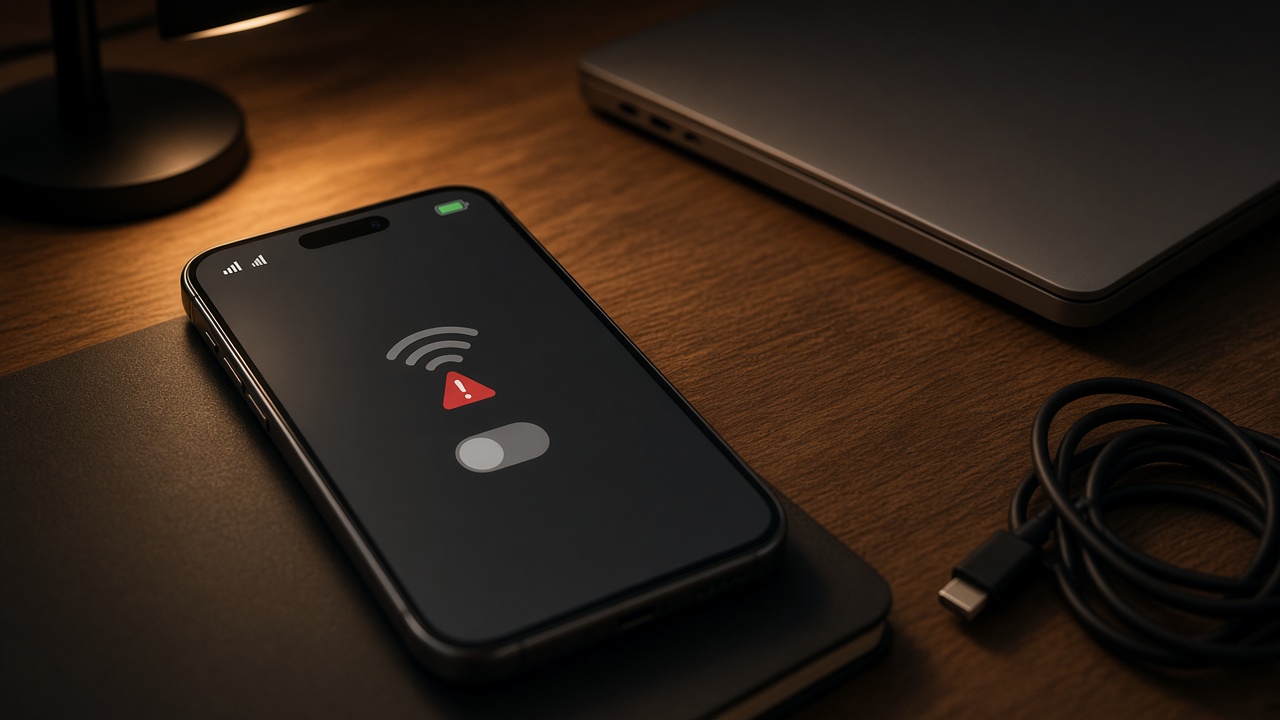
A mobile hotspot turns your smartphone into a miniature wireless router, allowing other devices to connect and use your mobile data plan. This tethering process supports several methods—Wi-Fi for cable-free convenience, Bluetooth for low-energy connections, and USB for faster, more stable data exchange.
Whether you're using Android or iPhone, branded as “Personal Hotspot,” the feature relies heavily on multiple layers working together: active mobile data, a strong network signal, and hardware-level compatibility between the host and connected devices. When even one of these factors breaks down, so does the hotspot.
Check Mobile Data Availability First
Ensure Cellular Data is Turned On
Every mobile hotspot—whether created through a smartphone or a dedicated device—depends entirely on a functional mobile data connection. Disabling cellular data, even unintentionally, immediately severs that bridge. On iPhone, go to Settings > Cellular and verify the Cellular Data toggle is enabled. Android users should head to Settings > Network & Internet > Mobile Network and check the Mobile Data switch.
In some cases, turning Airplane Mode on and off resets the radio settings and re-establishes the cellular data connection without needing a full reboot.
Check for Poor Signal or “No Service”
A mobile hotspot can only broadcast internet if the host device has something to share. Low signal, unstable 4G/5G connectivity, or "No Service" zones block data flow entirely. Move to a location with stronger reception; ideally three to five signal bars. If the device consistently shows one bar or frequently drops to zero, hotspot performance will be unreliable or nonexistent.
In rural areas or buildings with thick concrete, signal attenuation can severely impact data transmission. Try stepping outside or closer to a window to capture a clearer signal.
Confirm Mobile Plan Includes Hotspot Data
Not all mobile data plans support tethering. Some offer generous on-device data, but restrict or throttle hotspot access. For example, in the U.S., T-Mobile’s Magenta plan includes 5GB of high-speed hotspot data before reducing speed to 600 kbps, while AT&T’s Unlimited Starter plan excludes hotspot usage completely.
Check your carrier account online or review the terms of your plan. Look for phrases like “Mobile Hotspot Enabled” or “Tethering Usage” in your data breakdown. If unavailable, the hotspot feature may appear to activate but won’t deliver usable internet.
Also, consider data caps. Even if the hotspot is technically supported, exhausting your designated hotspot allowance results in deliberate slowdowns that cut streaming, limit browsing, and sometimes block connections altogether.
Correcting Missteps in Your Hotspot Settings
Check Your Configuration: Not Just a Flip of a Switch
Devices won’t connect correctly if the hotspot settings aren't properly configured. Both iPhones and Android phones provide native interfaces to manage these settings, but misconfigurations are common and can block connections entirely.
For iPhone Users
Navigate to Settings > Personal Hotspot. Once inside:
- Ensure “Allow Others to Join” is turned on. Without this toggle enabled, the phone won't broadcast a usable signal.
- Verify the Wi-Fi password. A mismatch or omission leads to failed connections. Use a password that’s easy to communicate but hard to guess.
- Take note of the network name (SSID). By default, it uses your iPhone's device name. If it was changed, ensure your connecting device searches for the correct SSID.
iOS does not allow name changes for the hotspot directly within the Personal Hotspot settings—renaming the device under Settings > General > About > Name updates the SSID.
For Android Users
The typical path is Settings > Network & Internet > Hotspot & Tethering > Wi-Fi Hotspot. Here’s what to confirm:
- The Wi-Fi hotspot toggle must be switched on. It may auto-disable if there's a power-saving mode active.
- Review your SSID (network name). Rename if necessary so the connecting device can detect it accurately.
- Set or recheck a secure password. Avoid using default strings like "12345678"—some devices reject insecure networks.
- Tap on “Advanced” (available on many Android versions) to access broadcasting frequency options. If your connecting device doesn't support 5 GHz, switch to 2.4 GHz.
Android allows network name customization directly within the Hotspot section, granting more flexibility.
Consistency Across Devices
Whether on iOS or Android, misalignment between hotspot settings and what the connecting device expects leads to a silent failure—no connection, no error message. Look into SSID name conflicts, password mismatches, and compatibility between generated frequencies and supported device standards.
Already confirmed all of the above and still can’t connect? Then it’s time to move past device-side settings and explore compatibility and network-level issues.
Check Device Compatibility Before You Troubleshoot Further
New Standards, Old Devices: A Disconnect
Devices manufactured before 2015 often fall short when paired with modern hotspot technologies. Most current smartphones broadcast Wi-Fi using IEEE 802.11ac or 802.11ax standards, also known as Wi-Fi 5 and Wi-Fi 6. If a device supports only 802.11a/b/g/n, it won’t detect or connect reliably to newer signals. In these cases, the connection often fails silently, leading users to check the wrong settings.
Upgrading the connecting device’s wireless card or using an external Wi-Fi adapter can resolve the mismatch in some laptops and tablets. With smartphones or embedded systems, however, the lack of compatibility ends the road unless a new device is introduced.
iOS and Android: Not Always on the Same Frequency
Cross-platform hotspot sharing—particularly between Android and iOS—introduces additional friction. Android devices often default to a 5 GHz hotspot band for faster connections. iPhones, especially models prior to iOS 14, tend to prioritize 2.4 GHz SSIDs for Wi-Fi compatibility. If one device is transmitting using 5 GHz and the other supports only 2.4 GHz, they won’t establish a link.
Changing the broadcast frequency manually helps. On most Android phones, users can navigate to Settings > Network & Internet > Hotspot & tethering > Wi-Fi hotspot > AP band, and switch from 5 GHz to 2.4 GHz. iOS users have limited control over this setting. However, when the Personal Hotspot is active, iPhones typically auto-adjust the band, unless connecting to devices that enforce strict band protocols.
- Verify which frequency (2.4 GHz or 5 GHz) each device supports.
- Attempt connection using both frequency settings, starting with 2.4 GHz.
- Review your device’s wireless capabilities in the official technical specifications online.
Compatibility issues go beyond frequency. Authentication methods and encryption protocols like WPA3, common in newer phones and tablets, may not be supported by older firmware. As a result, the two devices simply refuse to “speak” the same security language.
Struggling with Hotspot? Check Your Network Coverage and Signal Strength
Hotspot functionality depends heavily on stable mobile network connectivity. When signal strength drops, your device may fail to maintain or even initiate a reliable hotspot session. Intermittent performance, sudden disconnections, and painfully slow speeds often trace back to weak signal reception.
Low Signal Reduces Hotspot Performance
In areas with poor 4G or 5G coverage, mobile data transmission weakens. This directly limits the bandwidth available for sharing via hotspot. Even when the hotspot appears active, connected devices may be unable to access the internet efficiently. Signal issues can stem from geographic obstructions, distance from the nearest cell tower, or congestion on the network.
- Urban dead zones: High-rise buildings can block or reflect signals, leading to inconsistent service.
- Rural locales: Long distances between towers often result in weaker reception.
- Indoor barriers: Concrete, metal, or thick walls degrade signal penetration, especially in basements or large structures.
Test in a Location With Better Coverage
To isolate signal-related issues, move the hotspot device to an open area or closer to a window. Check the signal strength indicator—generally, three to four bars correlates with acceptable hotspot performance. If coverage improves and the hotspot begins functioning normally, the issue lies with reception, not the device or settings.
Use Airplane Mode to Re-Establish Signal
Forcing a manual reconnection to the nearest tower can also resolve connectivity issues. Turning airplane mode on and off resets the network connection and prompts the device to re-register with the carrier’s strongest nearby signal node.
- Enable airplane mode for 10–15 seconds
- Disable it and wait for full signal restoration
- Restart hotspot sharing and re-test the tethered connection
When signal strength improves after this process, network interference or temporary congestion likely played a role in degrading the original hotspot performance.
Carrier Rules and Plan Limits: Hidden Barriers to Your Hotspot
Even with a strong signal and the right hotspot settings, your mobile hotspot might still fail to connect—because your carrier says so. Every mobile plan comes with its own set of terms, and tethering isn’t always part of the deal.
Review Your Plan’s Fine Print
Start by checking whether your current mobile plan supports tethering. Not all plans do. Carriers commonly restrict hotspot usage on basic or prepaid plans, reserving full tethering functionality for higher-tier subscriptions. Some might allow it but cap the amount of tethered data you can use—10GB, 15GB, or another number—after which they might block access or slow down the connection significantly.
Watch for Carrier Communication
Has a message popped up recently warning you about data limits? Carriers often send alerts when hotspot usage approaches or exceeds plan allowances. These can come in the form of push notifications, SMS messages, or in-app banners. If you're seeing one of these, the carrier’s backend system might already be throttling or disabling your hotspot feature.
Subscription Requirements and Hidden Blocks
In certain cases, the Personal Hotspot feature itself stays hidden until an additional service is activated. Carriers like AT&T, Verizon, or T-Mobile sometimes require the user to add a specific hotspot add-on—this could cost $10–$20 per month—or switch to an eligible plan tier. Interestingly, the hardware can support tethering just fine, but unless the carrier’s internal provisioning system enables it, the option won’t show on your phone at all.
- Verify your plan's hotspot support by logging into your carrier account or calling customer service.
- Look through your monthly bills or recent emails for mentions of data usage thresholds.
- If your phone's Personal Hotspot toggle is greyed out or missing, check for carrier configuration profiles that must be updated or unlocked with their help.
The block isn't technical, it's contractual. No amount of resetting, toggling, or rebooting will fix a carrier-side hotspot restriction without adjusting your plan.
Operating System Updates or Bugs: How They Affect Your Hotspot
Unexpected glitches in your device’s hotspot functionality often trace back to the operating system. Both Android and iOS platforms periodically push updates, some of which alter how connectivity features behave—including mobile hotspot performance.
Check for the Latest OS Version
Start by verifying your phone runs the most recent version of its operating system. On iPhones, go to Settings > General > Software Update. On Android devices, it varies slightly by manufacturer, but typically exists under Settings > System > System Updates. Manufacturers optimize each update for performance and compatibility, and missing a version can leave your device with unresolved bugs or outdated wireless protocols.
Recent Updates Might Introduce Bugs
Vendors sometimes release builds that inadvertently disrupt hotspot functionality. For example, iOS 14.5 introduced cases where users reported personal hotspot auto-disconnects after a few minutes of inactivity. Android 12 had similar issues with certain Pixel devices where shared connections would time out prematurely. These bugs often resolve quickly with either a minor patch or a carrier settings update, but until then, they interfere with stable connections.
Restart After Updating
Every update modifies system-level components. Without a fresh boot, new configurations don’t always settle properly. After installing a software update—major or minor—power-cycle your phone. This single step reinitializes components and resolves a number of post-update issues, including malfunctioning tethering services.
- iOS Users: Expect hotspot stability improvements in iOS 16.4 and above, according to Apple’s patch notes.
- Android Users: Android 13 includes enhanced hotspot performance and battery optimization protocols which may affect tethering, especially in One UI and MIUI variants.
Still stuck? Compare your device’s OS version with the latest supported version on the manufacturer’s website. If you’re already up to date, track known bug reports via community forums or developer platforms like Apple's Developer Support or the Android bug tracker. Patterns often emerge quickly after major releases.
How Software Conflicts and App Interference Disrupt Hotspot Performance
When a mobile hotspot fails to work as expected, third-party apps and software modifications often go unnoticed as the root cause. Apps that manage network traffic or alter device behavior can directly interfere with hotspot functionality, especially during tethering operations.
Common App Types That Can Disrupt Hotspot Connectivity
- VPN Applications: These reroute internet traffic through encrypted tunnels, which can break the flow of data required for the hotspot to function correctly. Some VPNs also block local connections between devices.
- Firewall Utilities: Apps like NetGuard or AFWall+ on Android can restrict background apps and block tethering protocols if not configured properly.
- Network Optimizers and Data Savers: Apps designed to compress data or limit background usage (like Samsung's Data Saver or iOS's Low Data Mode) sometimes identify tethering traffic as unnecessary background activity and halt it.
- Battery Management Tools: Some third-party tools aggressively stop background services to conserve power, and hotspot features may be among the first to be disabled.
Troubleshooting With Safe Mode or System Modifications
To isolate whether a particular app is causing interference, Android users can reboot their device into Safe Mode. This disables all third-party applications, allowing you to test if the hotspot works without interference.
On iPhones, there's no direct equivalent to Safe Mode, but similar results come from manually closing background apps and disabling system features such as Low Power Mode and Restrict Background Data. After closing excess running apps, reattempt hotspot activation and connection from a client device.
For a deeper test, disable or uninstall network-related apps one by one and check hotspot behavior after each change. When the underlying conflict is resolved, hotspot functionality will return immediately — no reboot required.
Battery Optimization Settings Can Disable Your Hotspot
Low Power Modes Disrupt Tethering Functions
Both Android and iOS devices prioritize battery life when power-saving features are active, and personal hotspot functionality becomes a casualty of that prioritization. On iPhones, Low Power Mode reduces background activity and can temporarily disable personal hotspot, especially when the screen is locked or the device is idle.
On Android, the situation depends on the manufacturer and version of the operating system. Battery Saver mode limits network usage for apps and can automatically turn off tethering services to conserve resources. Some Android devices also employ aggressive background restrictions or app-specific optimizations that cut off the mobile hotspot when the screen is off or when usage thresholds are crossed.
Adjusting Power Settings to Keep Hotspot Active
- On iOS, go to Settings > Battery, and toggle off Low Power Mode to restore full functionality.
- On Android, open Settings > Battery or Power Saving Mode, and deactivate Battery Saver.
- Check individual app settings if your device uses an OEM skin (like Samsung’s One UI or Xiaomi’s MIUI), as they often include additional battery optimization options. Disable those for Settings or Hotspot-related processes.
- Prevent the device from entering deep sleep while tethering by turning off features like Adaptive Battery or Put apps to sleep.
If your hotspot shuts off the moment your screen locks or dims, the power optimization settings are most likely interrupting tethering. Keeping your device plugged in and screen on during use can also prevent auto-shutdown in power-saving modes.
Tethering APN Settings: A Hidden Key to Hotspot Functionality
Access Point Name (APN) settings form the blueprint your mobile device uses to connect to your carrier’s network for data services, including tethering. While most devices configure these automatically, Android users often need to fine-tune APN settings to enable hotspot features.
Start with the Right APN Configuration
On Android, tethering sometimes fails not because of network problems, but due to missing or incorrect APN values. This becomes especially relevant if you've recently switched carriers or inserted a new SIM card. Here’s how to check:
- Navigate to Settings > Network & Internet > Mobile Network > Access Point Names.
- Look for the APN profile currently in use. Tap to edit.
- Scroll down to find the APN type field. If this field doesn’t include tether, the system won’t support hotspot usage.
- Add dun or tether (values vary by carrier) to the APN type field. Separate multiple values with a comma.
- Save the changes and restart the device.
Skipping this step results in a connection that works for mobile browsing but fails during hotspot setup. Android’s default configurations often omit these fields, especially on unlocked or international models.
Carrier-Specific APN Profiles
Some wireless providers require a specialized APN for tethering to function. For example:
- AT&T (US): APN type must include default,mms,supl,hipri,fota,dun.
- Vodafone (UK): Tethering generally uses the standard APN, but urban users report success only after adding dun.
- Jio (India): No manual changes needed, but deleting and re-adding the APN profile can trigger proper configuration for tethering.
Missing entries in these fields will prevent the mobile data connection from routing properly to tethered devices. Not sure of your carrier settings? Most providers publish detailed APN specifications on their support portals. Copy these values exactly, since even one misplaced character — like a hyphen or space — will break the configuration.
Properly configuring your APN ensures the handset and network speak the same language when it comes to tethering. If your hotspot won’t activate, this setting deserves a closer look.
Firewall or Security Software May Be Blocking Your Hotspot
Firewalls and antivirus software are designed to protect devices from unwanted access, but they can sometimes interfere with legitimate network activity. If your hotspot isn't working as expected, the security software on your host device—or even on the device trying to connect—could be silently denying the connection.
How Security Tools Block Hotspot Connections
Firewalls manage incoming and outgoing network traffic, applying rules to prevent access from unauthorized sources. When a device attempts to join your hotspot, some firewalls interpret this as a potential security breach and block the communication port involved in tethering.
Similarly, comprehensive antivirus suites often include network protection features. These can stop unknown devices from connecting to your machine’s hotspot network, especially if the security profile is set to "public" or "untrusted."
Diagnosing the Problem
- Check if your hotspot network appears on the other device but fails to connect. This pattern suggests a silent block rather than a broadcast issue.
- Disable the firewall or antivirus software temporarily on the host device and attempt the connection again.
- Inspect firewall logs, if available, for denied connection attempts on hotspot-related ports.
- Change the network profile of your hotspot to "Private" in your operating system’s settings—some software enforces different rule sets depending on network classification.
What to Do Next
If disabling the security software momentarily resolves the issue, the next step is to configure exception rules to permanently allow hotspot traffic. This avoids having to turn off crucial protection every time. In enterprise environments, group policies or managed settings might also need adjustments by IT administrators.
Blocking behavior varies significantly between vendors like Norton, McAfee, Kaspersky, and Windows Defender. Revisiting your software’s documentation can reveal how to whitelist tethered connections or trusted devices.
Not seeing any change after all of this? Then the problem probably lies elsewhere — possibly with the device trying to connect, or another hotspot configuration detail.