What is the $200 deal with Starlink?
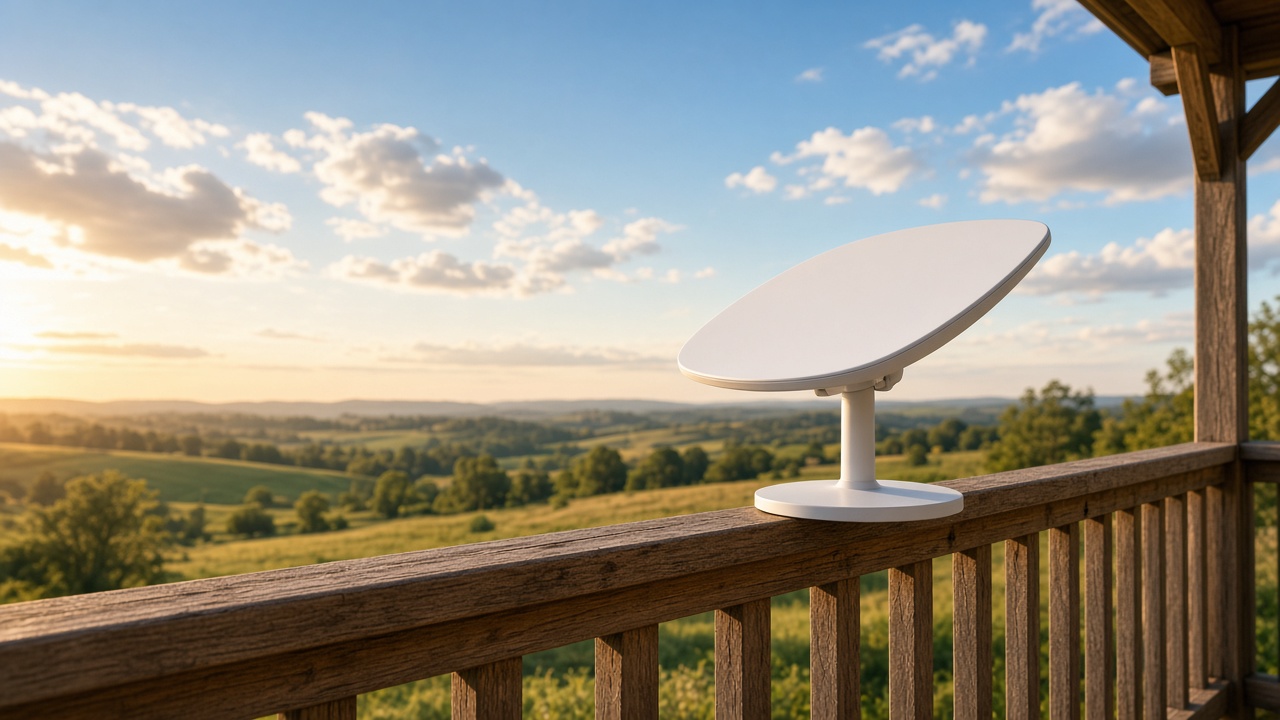
Starlink, the satellite internet service developed by SpaceX, has quickly moved from quiet deployment to widespread buzz in both rural communities and tech forums. Leveraging a fast-growing constellation of low Earth orbit satellites, Starlink delivers high-speed internet access to users in areas with limited or no connectivity.
Over the past year, a specific offer—often referred to as the "$200 deal"—has generated attention among cost-conscious consumers and early adopters alike. Mentions across Reddit threads, TikTok reviews, and tech news outlets have left many wondering: what exactly does the $200 Starlink deal offer, and how does it compare to standard pricing?
This article outlines the details behind the promotion. You'll find a breakdown of the service itself, the exact pricing structure, what equipment is bundled in, and the step-by-step process to order. Whether you're considering Starlink for everyday use or just trying to cut through the marketing noise, the clarity starts here.
Starlink Internet Service: How It Works and Why It Stands Out
What Is Starlink and How Does It Work?
Developed by SpaceX, Starlink is a satellite internet constellation designed to deliver broadband connectivity using a network of low Earth orbit (LEO) satellites. Each satellite orbits at approximately 550 kilometers above Earth, far closer than traditional geostationary satellites, which operate at around 35,786 kilometers. This proximity reduces signal latency significantly.
A user on the ground connects to the Starlink network through a small, phased-array dish—referred to as a "user terminal"—which communicates with the LEO satellites overhead. These satellites then relay the data to ground stations and back to the user, enabling two-way internet communication.
The Role of Satellite Communication in Global Internet Access
In regions where fiber optics or cable infrastructure is unfeasible—such as remote deserts, mountainous terrain, or isolated islands—satellite internet plays a pivotal role. It bypasses the challenges of terrestrial infrastructure by beaming internet access directly from orbit. As of June 2024, Starlink has launched over 5,000 satellites, with plans to eventually reach a constellation of up to 42,000 units, according to filings with the FCC.
By leveraging satellite communication, Starlink extends internet coverage to users in over 60 countries, including underserved markets in sub-Saharan Africa, rural North America, and polar regions where traditional ISPs cannot reach.
How Starlink Differs from Traditional ISPs
- Infrastructure: Starlink requires no underground cabling, telephone lines, or fiber installations. Instead, it operates a network of rapidly orbiting satellites.
- Latency: While traditional satellite internet providers often deal with latency above 600 ms due to high-altitude geostationary satellites, Starlink routinely achieves response times between 20 and 40 ms.
- Deployment Speed: Establishing Starlink in remote areas only involves installing the user terminal and powering it up. Conventional ISPs may require months to lay new lines or install remote towers.
- Availability: Coverage with Starlink relies on satellite visibility, not terrestrial infrastructure, giving it a geographic flexibility that legacy ISPs can't match.
- Scalability: The modular satellite constellation can expand rapidly with SpaceX’s Falcon 9 rocket launches, unlike fixed-grid ISPs bound by physical infrastructure limits.
This model transforms broadband access, particularly for rural households, maritime vessels, scientific outposts, and emergency services operating beyond the reach of cable or fiber networks.
Inside the $200 Starlink Deal: What You Need to Know
Description of the Limited-Time Promotion
Starlink introduced a $200 equipment promotion targeting new residential customers in select markets. This deal applies to the hardware — the standard Starlink Kit — which normally retails at $599. That’s a direct discount of $399, offered as a one-time upfront price reduction.
The offer doesn't cut corners on quality or components. Users receive the full hardware kit, making it possible to access Starlink’s low-earth-orbit satellite internet with no compromise in terms of functionality or performance.
Who Is Eligible and How Long the Deal Is Available
The $200 offer focuses on geographic areas labeled as “low-capacity zones” by Starlink, where the network has fewer active users. Eligibility is based on the service address entered during checkout. Availability flags automatically based on demand and infrastructure capacity, and therefore changes without prior public notice.
Starlink hasn’t specified an exact expiration date. Instead, the company set this up as a “limited-time” offer, active only while supplies last or until local network areas reach predefined activity thresholds. As capacity fills up, the promotion disappears from those zip codes.
Direct Links to Starlink’s Offer Page and Sign-Up Form
To verify eligibility for the $200 deal, visit the official site:
- Starlink Offer Page
- Sign-Up Form — Requires valid service address
Connection to Starlink’s Mission of Expanding Connectivity
The offer supports Starlink's broader initiative: scaling access in underserved regions. Instead of concentrating bandwidth in urban hubs, the $200 equipment discount channels new customers toward underutilized satellite network zones, improving efficiency while expanding global high-speed internet reach. This strategic move reflects the core of SpaceX’s satellite program — to make fast, low-latency connectivity available where traditional infrastructure fails to deliver.
Breaking Down the Cost of Starlink’s $200 Deal
Equipment Cost vs. Standard Pricing
Under Starlink’s typical pricing structure, the full equipment kit—comprising the satellite dish, Wi-Fi router, cables, and mounting hardware—retails at $599. The $200 deal slashes this upfront hardware cost by more than 65%, bringing the total down to just $199. This isn’t a rental; customers own the equipment outright after purchase. The reduction reflects a limited-time or targeted promotion, often aimed at expanding coverage in underserved or rural areas.
Monthly Service Fee Explanation
The discounted hardware cost doesn’t apply to Starlink’s monthly service charges. Subscriptions under the Residential plan continue to operate at the standard rate of $120 per month in the U.S. This fee covers satellite internet access, which includes unlimited data, no long-term contracts, and access to Starlink’s customer support and maintenance infrastructure.
One-Time vs. Recurring Charges
- One-time charge: $199, billed upon ordering the hardware kit.
- Recurring charge: $120 per month for internet service; the user can pause this monthly billing through their Starlink account.
There are no hidden equipment rental fees, as the $199 covers outright ownership. However, any future hardware upgrades would be optional and involve additional fees.
Shipping and Activation Costs
Shipping fees vary by location, but Starlink typically charges $50 for domestic U.S. delivery. Activation doesn't carry an extra charge—the system activates as soon as it’s installed and connected to power and has a clear sky view. Buyers are not required to pay installation fees if choosing to self-install, which is the norm with Starlink kits.
To summarize the initial outlay:
- Equipment: $199 (discounted from $599)
- Shipping: Approximately $50
- First month of service: $120
- Total upfront cost: Around $369
No deposits or additional activation payments apply beyond this.
What’s Inside the Starlink $200 Kit: Equipment You Actually Get
Unboxing the Starlink Kit: What You’ll Find
Starlink’s $200 package includes a streamlined set of hardware designed to work right out of the box. The contents focus on functionality and rapid deployment. Here’s what comes with the purchase:
- Starlink Dish (Dishy McFlatface): A phased array antenna that automatically aligns with Starlink’s satellites.
- Wi-Fi Router: A compact dual-band router that manages connectivity across devices locally.
- Power Supply: A mounted adapter designed specifically for the Starlink system’s energy demands.
- 25-75 ft Cables: Pre-installed or bundled, ensuring enough length for realistic setup scenarios.
The entire kit ships in a single box, organized for immediate access and sequential installation. Starlink pre-configures each component to communicate seamlessly upon powering up, eliminating the need for manual pairing or firmware updates.
Engineered for Harsh Conditions
Each component in the kit uses materials selected for durability and performance. The dish operates reliably in conditions as low as -30°C and as high as 50°C. It’s sealed to prevent water ingress and resists snow accumulation, supported by a built-in heating element that actively melts frost. The router casing is impact-resistant with an IP54 rating, offering protection from dust ingress and splashing water from any direction.
From Checkout to Connectivity
After placing an order online, Starlink typically ships the kit within 1 to 2 weeks, depending on regional inventory. The packaging is minimal but intentional—branded corrugated board with fitted compartments holding the dish, router, and accessories. Setup instructions come printed and embedded in the mobile app user interface. Following unpacking, the average user reaches first signal lock in under 15 minutes.
Inside the Hardware: Starlink Router and Dish Specifications
Starlink Dish: Engineering for Precision and Resilience
Officially named Dishy McFlatface by SpaceX, the Starlink dish incorporates a phased-array antenna and a self-orienting motorized mount. This motorized alignment enables rapid satellite tracking, allowing the dish to adapt in real time as satellites move across the sky. Unlike fixed-direction antennas, this system automatically adjusts its angle without user intervention.
Built for endurance, the unit holds an IP54 rating. It withstands dust, rain, snow, and temperatures ranging from -30°C to +50°C (-22°F to 122°F). The external chassis, composed of high-durability thermoplastics, is engineered for long-term exposure to extreme weather without performance degradation.
Router Capabilities: Dual-Band and Direct Control
Bundled with the dish, the Starlink router supports both 2.4 GHz and 5 GHz WiFi bands, enabling efficient device distribution and reduced interference. The router facilitates beamforming and MU-MIMO, allowing simultaneous high-throughput connections to multiple devices.
Users gain access to router customization through the Starlink app, which offers real-time network stats, device prioritization, and parental controls. Developed as a managed system, it minimizes dead zones and adapts to congestion by intelligently allocating bandwidth.
Power Draw and Operating Range
The entire system—dish and router combined—draws an average of 50 to 75 watts during typical operation. Peak startup mode may briefly exceed 100 watts, primarily powering the dish’s de-icing and orientation motors. A standard AC power source via the included power adapter is required.
Wireless coverage spans approximately 1,000 to 2,000 square feet in open layouts. In multi-story homes or enclosed concrete structures, range reduces. Users can extend this range by integrating multiple mesh units.
Ports, Setup, and Expansion Options
The Starlink router includes a single ethernet port via its power supply unit, supporting direct-to-device connections or external network equipment. The Gen 2 router abandoned multiple LAN ports for streamlined setup, but remains compatible with third-party WiFi mesh systems such as Eero and Google Nest via bridge mode.
- Mesh-Ready: Connects with additional Starlink mesh nodes for expanded coverage.
- Simple Installation: QR code-guided pairing through the Starlink app eliminates manual IP configuration.
- Power over Ethernet (PoE): Integrated between router and dish via a unified power cable.
Want to boost performance with a custom network setup? Users can bypass the Starlink router entirely by enabling bridge mode and connecting their own mesh or enterprise-grade routers.
Understanding One-Time Costs vs. Monthly Charges with Starlink
The $200 One-Time Equipment Fee
The $200 deal refers specifically to the upfront cost for purchasing the Starlink hardware package. This one-time fee covers the Starlink Kit, which includes the satellite dish, Wi-Fi router, cables, and mounting base. Unlike traditional ISPs that sometimes lease hardware with monthly surcharges, Starlink users retain full ownership of the equipment after paying this amount.
Ongoing Monthly Service Fee of $120
After hardware purchase, users subscribe to Starlink’s residential service for $120 per month. This subscription provides unlimited data with no throttling or slowdowns based on usage. The monthly rate remains constant across most regions within the continental U.S., with exceptions and variations in pricing outside that zone.
Any Hidden Fees or Additional Commitments?
Starlink operates without contracts or long-term commitments. Users can pause or cancel service at any time through the Starlink portal. There are no activation fees, cancellation penalties, or mandatory leasing charges. The only standard costs involve:
- $200 one-time payment for hardware (new customers only)
- $120 recurring monthly fee for internet access
Shipping for the equipment may incur a minimal additional charge, typically around $50, depending on location. Taxes and fees vary by state and region, but no hidden service surcharges apply. Users retain the ability to manage and modify their plans online without needing to contact support directly.
Analyzing Internet Speed and Performance with Starlink
Average Download and Upload Speeds
User-submitted speed tests and crowdsourced analytics from platforms like Ookla and Reddit communities provide consistent insight into Starlink’s real-world performance. As of Q1 2024, residential Starlink users in the U.S. report average download speeds ranging between 50 Mbps and 150 Mbps and upload speeds near 10 Mbps to 20 Mbps. Peaks beyond 200 Mbps have been recorded in locations with optimal satellite coverage and low user density.
However, these figures are not static. Network performance fluctuates based on location, time of day, and number of active users per cell. Urban fringe areas tend to see slower speeds compared to rural regions where subscriber saturation is lower.
Latency: Starlink vs. Traditional Providers
Measured latency with Starlink frequently ranges from 25 ms to 50 ms. While this does not match the consistency of fiber optic providers — which routinely offer latencies under 10 ms — it stays competitive with DSL and cable services. Rural subscribers switching from geostationary satellite internet (where latency regularly exceeds 600 ms) experience an immediate and noticeable improvement.
For applications such as Zoom calls, VPN access, and live streaming, latency under 50 ms keeps interactions responsive and stable. Gamers may notice a slight edge delay compared to fiber, but for casual multiplayer use, most report smooth gameplay.
Support for Streaming, Gaming, and Remote Work
- Streaming: Starlink handles 4K UHD streaming on platforms like Netflix, YouTube, and Hulu without buffering when signal integrity holds. Households running multiple high-resolution streams simultaneously may experience a short drop in quality during peak hours.
- Gaming: While competitive esports gaming relies on ultra-low latency connections, titles like Fortnite, Apex Legends, and Call of Duty perform reliably on Starlink. Lag spikes can occur during periods of network congestion, especially in serviced-overlap zones.
- Remote Work: For Zoom, Teams, and other video conferencing tools, Starlink maintains stable uplink speeds and latency to support clear audio and video streams. File uploads via cloud platforms like Google Drive or OneDrive typically complete without interruption.
In fieldwork tests, Starlink users on boats, cabins, and RVs have reported seamless mobile productivity, as long as line-of-sight with the sky remains unobstructed.
Where Can You Use Starlink? A Look at Coverage Areas
Current Availability: U.S., Canada, Europe, and Growing
Starlink currently delivers internet service across extensive regions, including the continental United States, much of Canada, and selected areas throughout Europe. Specifically, nationwide service is active in all 50 U.S. states and nearly all Canadian provinces. Across Europe, customers in countries such as the United Kingdom, Germany, France, Spain, and Italy report stable connectivity.
Beyond North America and Europe, Starlink has also rolled out service in parts of Oceania (notably New Zealand and eastern Australia), select regions in South America (such as northern Chile and southern Brazil), and small portions of Africa. Availability continues to evolve as more satellites enter operation and regulatory approvals progress.
How Starlink Covers the Globe: The LEO Advantage
Unlike traditional satellite internet that depends on a few geostationary satellites positioned roughly 35,786 kilometers above Earth, Starlink uses a constellation of thousands of low Earth orbit (LEO) satellites flying at altitudes between 340 km and 1,200 km. This proximity significantly reduces latency and enhances signal strength.
The system is designed for scalability. Each launch adds dozens more satellites to expand geographic reach and fill in network gaps. By mid-2024, SpaceX had deployed over 5,500 operational satellites, with more being planned through future launches. This infrastructure supports real-time data routing across neutral orbiting nodes, enabling seamless connections even in previously unreachable areas.
Check Service Availability With the Interactive Coverage Map
Want to know if service is live in your area? Use Starlink’s interactive coverage map. It offers real-time status updates and regional availability based on user location. Hover over your region to view current performance metrics and waitlist information, if applicable.
- Live service: Marked regions indicate immediate availability and shipping.
- Coming soon: Light gray zones show targeted expansions launching soon.
- Waitlist areas: High-demand zones requiring users to reserve hardware in advance.
As new satellites come online, expect broader access and reduced wait times, even in remote or traditionally underserved regions. Every month, the frontier expands.
Setting Up Starlink: Installation Process and Requirements
DIY Installation or Professional Help?
The Starlink kit arrives pre-configured for self-installation, and most users complete the process without professional assistance. The included equipment — dish (Dishy), Wi-Fi router, cables, and mounting base — comes ready to assemble. New users typically activate service within an hour of unboxing. However, scenarios involving complex mounts or challenging roof access may require hiring a local installer.
What You Need to Set Up the System
You’ll need basic tools and a stable ladder if mounting off the ground. The most used tools include:
- Drill with a 1/4" bit or appropriate for your surface type
- Socket wrench or adjustable spanner
- Level or leveling app
- Smartphone with the Starlink app
The app enables signal testing and helps select the most optimal placement for Dishy. Most installs don’t require specialized gear, but optional accessories like the Volcano Roof Mount or Ground Pole Mount can simplify positioning in non-standard environments.
Key Consideration: Line of Sight
Starlink operates with Low Earth Orbit (LEO) satellites that require a clear, unobstructed view of the sky. The system struggles with interference from trees, chimneys, power lines, or nearby buildings. The Starlink app scans the intended site for obstructions using AR, helping to locate a zone with minimal sky obstruction across a 100-degree field of view.
Without adequate line of sight, connection drops or prolonged downtime will occur, reducing overall performance. Elevating the dish can mitigate these interruptions.
Elevation Angles and Satellite Coverage
Mounting elevation varies depending on latitude but typically ranges between 25° and 55°. In northern latitudes, the dish tilts toward the southern sky; in southern latitudes, expect it to face slightly northward. Starlink automatically adjusts the angle and orientation to maintain contact with satellites, so manual calibration isn’t required.
Mounting Options and Flexibility
The base kit includes a stand for temporary or ground-level setups, but long-term use benefits from a more secure mount. Starlink offers a lineup of mounting accessories:
- Roof Mount: Suited for pitched or flat roofs, providing the highest elevation.
- Wall Mount: A good choice where roof space is limited or inaccessible.
- Ground Pole Mount: Popular in open yards or rural locations without obstructions overhead.
For each mount type, anchoring securely and sealing cable entry points is essential for durability. Users can route the dish cable through a roof vent, exterior wall, or attic venting — the key is ensuring weatherproofing and avoiding sharp cable bends.
How Starlink’s $200 Deal Stacks Up Against Other Internet Providers
Price-to-Service Comparison with Leading ISPs
Starlink positions its $200 hardware deal and $120 monthly service fee within a market crowded by legacy providers and cellular-based solutions. Comparing with the major players—Verizon, AT&T, HughesNet, and Viasat—places Starlink’s offer into sharper perspective.
- Verizon Home Internet (5G FWA): Verizon’s fixed wireless access plans start at $50/month with autopay. That includes no equipment fees or data caps. However, average speeds range between 85–300 Mbps depending on proximity to towers.
- AT&T Internet Air (5G FWA): Similar in pricing to Verizon, AT&T offers service at $55/month with average speeds around 100–140 Mbps, again dependent on 5G availability and network congestion.
- HughesNet: HughesNet’s satellite service starts at $64.99/month for just 15 GB of priority data and drops to 3 Mbps post-cap. Even its Premier 200 GB plan, priced at $149.99/month, offers far slower speeds (25 Mbps) and strict data usage thresholds.
- Viasat: Viasat offers satellite plans starting around $69.99/month for 60 GB at ~25 Mbps, with throttling post-limit. Unlimited plans can reach $169.99/month or more, depending on location and bandwidth needs.
Starlink, by contrast, charges $120/month for unlimited data and average speeds ranging from 25–220 Mbps. Its flat-rate model avoids tiered data limits, which makes it especially favorable for users with higher bandwidth demands.
Speed and Data: Starlink vs. Competitors
Real-world data reveals the speed divide across technologies. According to Q4 2023 statistics from Ookla’s Speedtest Intelligence:
- Starlink: Median download speeds of 68.9 Mbps in the U.S., with latency around 60 ms.
- Verizon 5G FWA: Median download speeds reached 141 Mbps; however, speeds vary greatly by location and tower traffic.
- AT&T 5G FWA: Similar performance to Verizon with slightly lower consistency in rural markets—averaging around 110 Mbps.
- HughesNet and Viasat: Speeds cap at 25 Mbps for both, with latency regularly exceeding 600 ms due to geostationary satellite lag.
Starlink's LEO satellite constellation directly impacts both latency and stability. While cellular FWA can outperform it in urban areas, Starlink maintains greater reliability off the grid where towers are few and far between.
Starlink or Cellular FWA: Which One Delivers More?
Cellular fixed wireless access offers a compelling value in metro-heavy regions—but only where 5G signal penetration is robust. Starlink’s advantage becomes clear once you look beyond major metropolitan zones. It sustains high-speed connections across deserts, mountains, and rural farmland, where 5G and fiber coverage fail to reach.
Moreover, while FWA providers subject customers to variable speeds depending on network congestion, Starlink delivers a more consistent experience due to its dedicated satellite bandwidth and growing LEO constellation.
Think about your use case: gaming, frequent video calls, or streaming in rural areas? Starlink works where terrestrial options taper off. That’s the equation changing broadband dynamics across underserved communities.
Deciding on Starlink's $200 Deal: Is It Worth Your Investment?
The Starlink $200 offer lands at a price point few satellite internet providers can match—especially when factoring in hardware, speed, and coverage. Users get the full kit: phased-array dish, router, mounting base, and cables, pre-configured for quick setup. No backorders, no waiting lists—just accessible, high-speed internet delivered via one of the most advanced low Earth orbit satellite constellations ever deployed.
When dissecting the value, three variables dictate the outcome: performance, location, and usage habits. In performance tests, Starlink sustains download speeds ranging from 50 Mbps to over 220 Mbps, depending on network congestion and latitude. Latency frequently falls within the 20–40 ms range—more than adequate for video calls, file transfers, streaming, and even competitive gaming in many instances.
For rural households cut off from fiber or cable providers, the deal enables immediate connectivity with no trenching, permitting, or months-long ISP installations. Similarly, remote workers relying on stable video conferencing and file sync find in Starlink a compelling alternative to cellular hotspots or DSL lines. Meanwhile, digital nomads benefit from portability: with "Roam" service active, Starlink becomes an always-on companion, even in off-grid sites.
Starlink is not just serving underserved areas—it’s reshaping what's possible. Traditional satellite internet required compromise; Starlink flips that model by blending performance, speed, and hardware accessibility into a single, scalable offering. With launch cycles continuing monthly through SpaceX missions and laser inter-satellite links reducing latency between global zones, the infrastructure is designed not just for today’s demands, but tomorrow’s markets as well.
Buying into the $200 deal means more than just a one-time discount. It means accessing a rapidly growing network backed by one of the most aggressive space and communication technology portfolios in history.