Verizon shifts 5G buildout from coverage to satisfaction, revenue for 2026
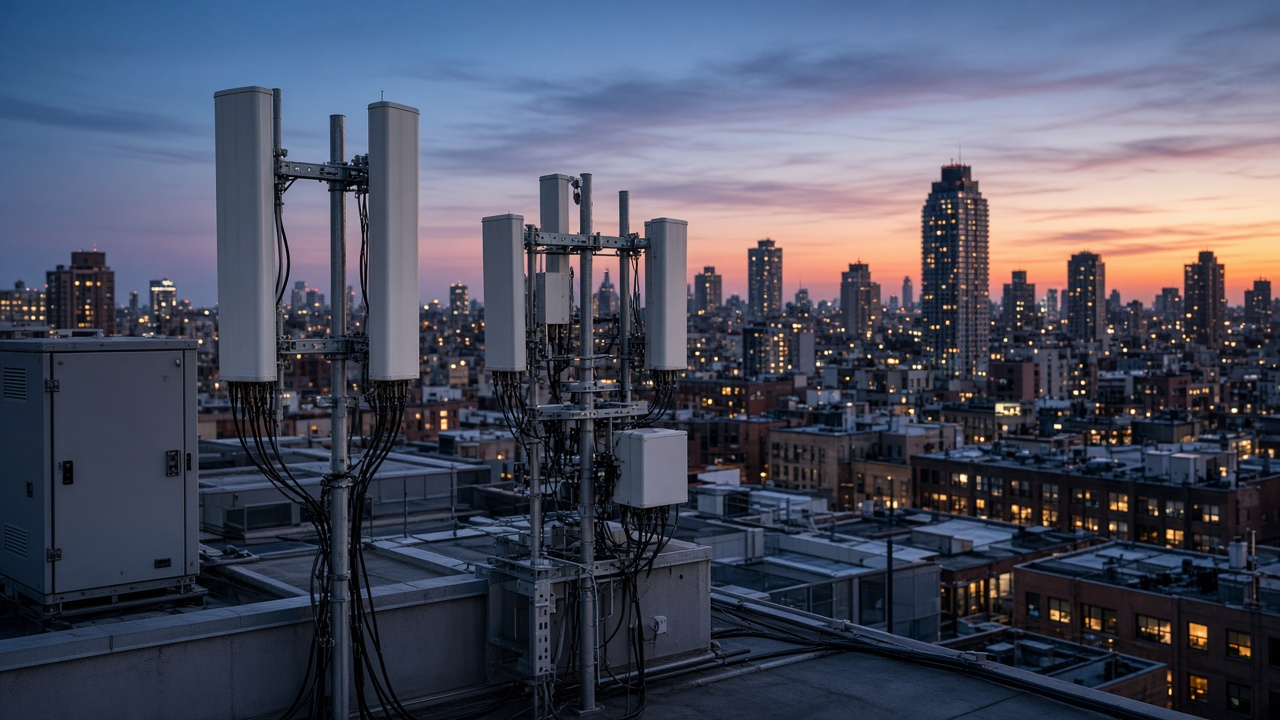
Verizon’s Strategic Turn: Fostering 5G User Satisfaction and Revenue Growth
Exploring Verizon's 5G Evolution
Verizon has been navigating the complex 5G landscape, propelling the technology from its nascent stages to widespread adoption. The company now faces the challenge of refining the network's infrastructure to extend beyond coverage, focusing on user satisfaction and revenue generation. Acknowledging the pivotal role of customer experience in the era of next-generation connectivity, Verizon appears ready to enhance the quality and reliability of its services.
Insights into the US Telecommunications Terrain
The telecommunication domain in the United States presents a dynamic and competitive arena. With multiple players vying for market dominance, strategizing for customer retention through improved service quality stands as a necessary adjustment. Observers have witnessed numerous carriers deploy various tactics, from aggressive pricing to expansive coverage; Verizon's latest move signals a deeper investment in customer relationship management.
Light Reading's Role in Documenting Industry Trends
As a specialized analytical resource, Light Reading offers a lens into the shifting patterns within the telecommunications sector. Tracking Verizon's strategic directions, among others, contributes to a greater understanding of how industry leaders adapt to evolving market demands and technological advancements.
Verizon's Evolutionary 5G Strategy Shift: Enhancing Customer Satisfaction and Revenue
As Verizon continues deploying 5G technology, a strategic shift is underway. No longer is the aim primarily to expand network coverage; the focus now includes enhancing the customer experience. This direction aligns with the intuitive understanding that customer satisfaction drives loyalty and revenue.
The 5G rollout by Verizon began with the promise of high-speed connectivity and reduced latency. Since its inception, Verizon has been aggressively expanding its 5G network, striving to provide groundbreaking coverage. This rapid deployment has been instrumental in establishing the company as a trailblazer in the 5G realm.
Comparatively, Verizon is navigating its 5G journey alongside fierce competitors like AT&T, which has also been emphatic about the significance of 5G. Both providers recognize the transformative potential of this technology. However, Verizon’s recalibrated focus on customer experience signifies a nuanced approach, aiming not only to meet but exceed user expectations in the network's reliability, speed, and overall performance.
- Shifting investment from the magnitude of coverage to enhancing user interfaces and network reliability,
- Identifying customer needs and adapting services to meet these effectively,
- Contrasting these strategies with those of competitors to highlight the uniqueness of Verizon's approach.
The evolution in Verizon’s 5G strategy illuminates the company’s understanding of the critical relationship between customer satisfaction and business success. Revenue growth is expected as a byproduct of an exemplary user experience, facilitated by a resilient and comprehensive 5G network.
Broadening the 5G Network Buildout
Verizon initially focused on dense urban areas for its 5G deployment, aiming to cover territories where the highest number of users could benefit. The initial phase highlighted the establishment of a substantial presence in major cities, ensuring that a foundation was set for widespread adoption. To achieve a comprehensive network, this deployment utilized both millimeter wave (mmWave) spectrum for high-speed data and lower frequency bands for greater coverage.
Scaling Beyond Coverage—Next Steps into Network Performance
For Verizon, merely expanding coverage is no longer the sole focus. Instead, administrative efforts are now gearing towards enhancing the performance of their existing 5G infrastructure. Tweaks and upgrades are in motion to elevate network capabilities, ensuring faster data rates, reduced latency, and higher reliability. This directly translates into improved upload and download speeds, seamless streaming, and more responsive internet experiences.
What This Means for Customer Satisfaction and Service Quality
- Customers anticipate swift and reliable connections; thus, with enhanced performance metrics, user experience receives a substantial boost.
- Service quality ascends as network congestion decreases and data transmission becomes smoother, lessening instances of dropped connections or service interruptions.
- Engagement with advanced applications such as virtual reality (VR), augmented reality (AR), and Internet of Things (IoT) receives a solid infrastructure backing, amplifying customer satisfaction.
Expansion into broader network capabilities signifies Verizon's transition from a quest for quantity in coverage to nurturing the quality of each connection. Service enhancements align directly with consumer expectations, as they increasingly rely on robust, high-speed internet for both professional and personal use. With this pivot, the provider not only reinforces its commitment to leading-edge technology but also sharpens its edge in customer service excellence.
Prioritizing Customer Satisfaction with 5G
Verizon understands that the foundation for growth in the 5G era rests firmly on customer satisfaction. In a landscape where advanced connectivity is becoming the norm, the company recognizes that customers seek more than mere access; they require enriching experiences.
Delivering experiences, not just connections
Customers today expect seamless integration of technology into their lives. Verizon's 5G network is designed to meet these expectations by providing not just faster speeds but also enhanced experiences whether they are streaming high-resolution videos, engaging in augmented reality (AR) or utilizing smart home devices. This paradigm shift from focusing solely on coverage to enhancing user experience will drive customer loyalty and retention.
Integrating customer feedback into service improvements
Continual improvement is the cornerstone of customer satisfaction. Verizon actively solicits and incorporates user feedback to refine its services. To illustrate, network updates and customer support have been augmented after carefully analyzing customer input, ensuring that the services not only meet but exceed user expectations. This feedback loop helps Verizon stay responsive and adapt its 5G offerings to real-world needs and preferences.
Case studies: Businesses leveraging Verizon's 5G for better customer experiences
- A retail company has tapped into Verizon’s 5G network to implement virtual fitting rooms, resulting in a more engaging shopping experience and increased sales.
- A healthcare provider uses Verizon's 5G to transmit large imaging files quickly, thus reducing wait times and improving patient care.
- An industrial enterprise has deployed Verizon's 5G solutions to enhance its manufacturing automation, leading to higher productivity and faster delivery times for customers.
These examples demonstrate how Verizon's 5G solutions are being utilized by businesses to not only enhance their operational efficiencies but also to deliver superior client experiences, which in turn drives business success.
Unlocking New Revenue Streams with 5G
Verizon's strategic shift towards enhancing customer satisfaction through its 5G network opens up an array of new revenue opportunities. By diversifying 5G services, Verizon targets unique needs across various market segments. Tailoring products and connectivity solutions for specific industries, Verizon not only extends its market reach but also presents customers with a compelling reason to choose its network for their varied 5G needs.
Businesses stand to benefit from Verizon's 5G services, which offer low-latency connectivity critical for real-time analytics and IoT applications. The manufacturing industry, for example, leverages 5G for efficiency improvements through smart factory implementations. In healthcare, high-speed 5G connections enable telemedicine and remote patient monitoring, expanding Verizon's footprint in this critical sector.
Consumers, conversely, experience the advantages of 5G in entertainment and home automation. Enhanced mobile broadband supports streaming services with high-quality video and virtual reality gaming, creating potential revenue sources from content distribution deals and partnerships with technology providers.
5G’s influence extends to nascent services and applications. Innovations in augmented reality (AR) applications, smart cities, and autonomous vehicles are becoming more viable with Verizon's advanced 5G network. As these industries develop, Verizon's infrastructure is poised to support the burgeoning demand, leading to fresh income streams from sectors that are on the brink of transformation.
- 5G enables service providers to offer tailored solutions for industries where speed and reliability can unlock efficiency and new capabilities.
- The expansion of telemedicine and e-health services necessitates robust 5G networks, and Verizon is positioned to cater to this surge.
- With 5G, real-time entertainment, especially in augmented and virtual reality, becomes more immersive, urging Verizon to tap into this sphere.
- Urban development and the rise of smart cities rely on 5G connectivity, giving Verizon a pivotal role in this technological evolution.
- The advancement of autonomous driving technology depends on 5G networks, presenting new partnership opportunities for Verizon.
5G's integral role in enabling technologies of the future paves the way for Verizon to establish a sustainable revenue model that transcends mere connectivity. By fostering relationships with innovators in tech-driven sectors and understanding the specific needs of distinct market segments, Verizon not only supports but propels the advent of a 5G-centric ecosystem.
Network Performance and Coverage Optimization
Verizon's 5G rollout strategy incorporates a rigorous focus on network performance with an equilibrium between speed, reliability, and reach. By optimizing each of these factors, Verizon not only enhances the current delivery of 5G services but ensures a robust framework for future technological integrations.
The overall efficacy of 5G for users hinges largely on coverage that affects how applications—ranging from simple web browsers to demanding real-time streaming services—perform on their devices. Seamless coverage underpins the experience, dictating whether Verizon customers can enjoy uninterrupted video calls or swiftly load web pages.
Furthermore, anticipation of future demands compels Verizon to future-proof the network. Adaptations and upgrades in the network's infrastructure today are strategic steps in preparation for emergent technologies that will require even more advanced 5G capabilities.
- Deploying advanced antennae technology increases network capacity and diminishes latency.
- Investing in fiber optic backhauls ensures that the network backbone can handle the surge in data traffic.
- Utilizing machine learning algorithms refines predictive maintenance, leading to higher network reliability and uptime.
By incorporating such forward-thinking enhancements, Verizon not only supports current 5G demands but also lays a strong foundation for the arrival of technologies like augmented reality (AR) and the expansion of the Internet of Things (IoT).
Unlocking the Potential: Verizon’s Solid Investment in 5G
Verizon bolsters its commitment to a 5G-powered future by allocating significant financial resources to its infrastructure. This steadfast investment is designed to amplify network capabilities and enhance user experiences. Collaborations between Verizon and industry-leading technology firms, alongside infrastructure providers, are pivotal in scaling these advancements.
Strategic partnerships are a cornerstone of Verizon's approach, creating synergies that intensify innovation and optimize the construction and operation of its 5G network. This includes joining forces with companies that specialize in hardware, software, and various technologies underpinning the emergent 5G ecosystem. The goal is clear: to translate the substantial investment into measurable enhancements in network performance and customer satisfaction.
- Financial projections underscore Verizon's commitment as the company steers a portion of its budget towards scaling 5G.
- Partnerships with tech giants become game-changers in driving efficiency and network strength.
- Verizon’s investment strategy is sharply focused on delivering long-term value through an advanced, reliable 5G network.
Current Trends in Telecommunications Industry with Verizon’s Pivot
As the telecommunications industry evolves, key trends emerge, shedding light on consumer demands and technological capacities. The shift towards enhancing consumer satisfaction and maximizing revenue marks a significant movement within the sector. This shift is reflected in Verizon's strategic adjustments, aligning its 5G buildout to more than just expansive coverage.
Analysis of Key Patterns in the Telecom Sector
The telecom sector is witnessing a surge in data usage, an acceleration of digital transformation, and the integration of Internet of Things (IoT) devices, all of which heavily rely on robust and reliable connectivity. Consumers demand not only comprehensive coverage but also consistent quality and seamless user experiences. Providers like Verizon are responding with network upgrades designed to accommodate these evolving needs.
Verizon's Response to Industry Trends with Their Strategy Shift
Verizon acknowledges these industry trends, particularly the emphasis on user experience, by reorienting its 5G network endeavors. By investing in technologies that enhance the quality and performance of its 5G services, Verizon aims to offer a differentiated service that resonates with customer satisfaction, ultimately steering toward increased loyalty and revenue.
Anticipated Trends Prompted by 5G Advancements
The expansion and improvement of 5G networks are anticipated to catalyze a host of emerging trends. Enhanced mobile broadband, ultra-reliable low latency communication, and massive machine-type communications will shape the future, dramatically expanding the landscape of digital services and solutions. Verizon's pivot is a strategic move to pre-emptively address and capitalize on these forthcoming developments. Questions arise as to how this approach will influence user behaviors, service standards, and revenue models in the near future.
Crafting Superior Consumer Experiences with 5G
Verizon orchestrates a transformative journey for consumers as 5G technology enables the personalization of services like never before. Customizable plans and targeted content delivery, driven by the high-speed and low-latency capabilities of 5G networks, allow users to mold their digital experience to their personal needs and preferences. Instead of a one-size-fits-all approach, service tailoring stands as a key differentiator in elevating consumer satisfaction.
With 5G, enhancements permeate through numerous daily activities; users experience significant improvements in browsing, streaming, and gaming. High-definition video loads instantaneously, and cloud gaming services benefit from near-zero lag, transforming smartphones into handheld consoles with unprecedented performance. Responsive real-time interactions become the norm, thereby escalating the quality of virtual social interactions and even remote work efficiencies.
- Expect more immersive media as 5G augments streaming services, delivering content at speeds and resolutions that were unthinkable with previous generations.
- Gaming enthusiasts revel in the seamless integration of VR and AR, powered by 5G, which introduces an era of interactive gaming with virtually no delay.
- Consider the revolution in smart home technology as 5G connectivity ensures the instantaneous operation of devices, creating a more responsive and intuitive living environment.
Moreover, the advancement of 5G initiates a surge in connected devices, an ecosystem extending beyond traditional smartphones and tablets. The Internet of Things (IoT) becomes more robust and sophisticated, as 5G's capability to connect millions of devices per square mile turns smart cities from a concept into reality, with every appliance and street lamp potentially becoming a node in a vast network.
Verizon's commitment to harnessing 5G for enhancing consumer experiences does not cease with personal entertainment and convenience. Telemedicine, powered by 5G, enables remote medical consultations and procedures with reliability and clarity, contributing to the betterment of healthcare services. The speed and efficiency that 5G introduces to daily life transcend mere connectivity—it reshapes how consumers interact with technology and how technology, in turn, enriches lives.
Unraveling the Competitive Terrain of 5G Providers
At the forefront of the 5G race, Verizon has carved a remarkable reputation. The company's standings among its contemporaries spotlights the robustness of its 5G network. Despite evolving consumer expectations and tech advancements, Verizon maintains a top tier position. A deep dive into the competitive landscape reveals strategies that set Verizon apart in the U.S. 5G leaders cluster.
Strategic maneuvers of Verizon and AT&T often draw comparisons. AT&T emphasizes expansive coverage, resulting in its broad network footprint. Verizon, conversely, now accentuates customer satisfaction and anticipates this will stimulate revenue growth. Each company’s strategy underscores a distinct approach in a bid to dominate the 5G space.
Verizon’s pivot in strategy underscores the dynamic nature of the 5G race. Where once the scramble focused on coverage, now providers are engineering experiences and customized solutions. This adaptive approach by Verizon signals a deeper understanding of market demands, preparing it for the nuanced future of connectivity.
- Verizon sustains impressive standings among U.S. 5G leaders, marking its edge in network performance.
- AT&T's wide-reaching coverage contrasts with Verizon's customer-centric approach.
- Verizon's strategic shift reveals an adaptive, responsive engagement with the 5G market’s evolution.
Telecommunication giants continue to vie for supremacy in a sector driven by innovation and customer needs. Parsing through Verizon’s strategies, juxtaposed with its competitors, offers rich insight into the future of 5G deployment and the telecom industry.
Leaps in 5G Technology: Innovations and Developments
5G technology continues to advance with breakthrough innovations shaping the future of telecommunications. These developments are not merely incremental; they represent significant strides in speed, latency, and network efficiency. Advances in Massive MIMO (Multiple Input Multiple Output) antennas, for instance, have allowed networks to handle more data at greater speeds and support a higher number of concurrent users. Additionally, the adoption of network slicing enables a single physical network to be partitioned into multiple virtual networks, allowing for more tailored services and improved security.
The influence of Artificial Intelligence (AI) and Machine Learning (ML) in optimizing network traffic and predicting maintenance needs cannot be understated. AI algorithms analyze vast amounts of data, enabling proactive management of network resources. This leads to a more reliable service that adapts in real-time to user demands.
Verizon Integrates Cutting-edge 5G Innovations
Verizon stands at the forefront, integrating these technological leaps into its network. The telecommunications giant utilizes dynamic spectrum sharing (DSS) which allows for the simultaneous transmission of 4G LTE and 5G signals over the same band of spectrum. This lets them leverage existing infrastructure while rolling out 5G services more efficiently.
The company has also embraced the use of mmWave technology for its 5G network, especially in densely populated urban areas. This high-frequency band offers unprecedented speed and capacity, essential for supporting an ecosystem of connected devices and high-bandwidth applications such as virtual reality (VR) and augmented reality (AR).
Moreover, Verizon is proactively deploying small cells, which are essential for the dense network grids required by 5G for enhanced coverage and capacity, especially in urban environments where traditional large towers are not feasible.
- Massive MIMO antennas drastically improve network capacity and efficiency.
- Network slicing crafts bespoke solutions for different service requirements, elevating security and efficiency.
- Artificial Intelligence fosters a self-optimizing network that enhances reliability and anticipates user demands.
- Dynamic spectrum sharing by Verizon underscores a strategic deployment of 5G alongside existing 4G services.
- mmWave adoption paves the way for ultra-fast speeds catered toward high-density areas and advanced applications.
- Small cell technology deployment to address the intricacies of urban network requirements for 5G.
As 5G innovations take form in the real world, an intricate tapestry of technology comes to life, poised to carry digital connectivity into a new era. With these advancements, Verizon does not simply evolve; it transforms the very fabric of 5G networks, setting a new standard in connectivity and service offerings meant to match the pace of today's digital demands.
Navigating the Regulatory Maze: How Policy Shapes Verizon's 5G Rollout
The landscape of 5G regulation in the United States has emergent challenges and opportunities for carriers such as Verizon. Federal requirements, alongside state and local policies, shape the deployment of advanced networks. Considering this, Verizon aligns its rollout initiatives with the regulatory environment, to both comply with established standards and to advocate for beneficial policies.
Assessing the Policy Framework for 5G in the US
The Federal Communications Commission (FCC) has laid out a blueprint to accelerate 5G deployment, which influences Verizon’s rollout strategy. Policies such as the Spectrum Frontiers Order have made additional millimeter wave spectrum available, thus providing Verizon with the resources to expand its 5G network. Additionally, the FCC’s efforts to streamline the approval process for wireless infrastructure, particularly small cells, are critical to Verizon’s rapid deployment timeline.
Verizon's Stance on Compliance and Advocacy
Verizon not only adheres to federal and local telecommunications regulations but actively participates in policy discussions. The company advocates for regulatory decisions that support the widescale deployment of 5G technology, such as advocating for the modernization of infrastructure policies that facilitate faster and more efficient network buildouts.
- By participating in spectrum auctions, Verizon secures the bandwidth necessary for expansive and robust 5G services.
- Engagement with regulatory bodies ensures that Verizon’s deployment strategies are in sync with evolving telecommunications policies.
- In local jurisdictions, Verizon collaborates with policymakers to overcome challenges such as zoning or right-of-way regulations that can impede the installation of 5G equipment.
Through understanding and navigating the policy framework that governs telecommunication services in the United States, Verizon is able to sculpt its 5G network rollouts to not only reflect current standards but to also potentially influence future regulatory conditions to the benefit of industry growth and innovation.
Forging Alliances: The Drive for Comprehensive 5G Connectivity
Verizon understands that the proliferation of 5G requires more than just individual corporate efforts. Consequently, the company has engaged in partnership strategies that foster a holistic approach to network expansion. These alliances are multifaceted, encompassing infrastructure providers, tech innovators, and various businesses that complement the 5G ecosystem.
These collaborative projects serve as a cornerstone in Verizon's progressive 5G agenda. For instance, collaborations with city governments facilitate the deployment of small cells that are critical for the dense network infrastructure 5G demands. Partnerships with equipment manufacturers ensure the integration of the latest technologies within the network, thereby enhancing its efficiency and capacity.
In tandem with other industry participants, Verizon has participated in the development and standardization of 5G technologies. This has expedited the release of compatible devices and services, thus accelerating consumer and business adoption rates.
Pioneering initiatives with software firms also play their part, optimizing network capabilities through advanced algorithms and machine learning, which lead to improved network management and service delivery to end-users. These relationships not only underpin Verizon's 5G success but are also indicative of a greater industry-wide trend towards shared innovation to navigate the complex technical and logistical challenges that 5G presents.
- Partnerships with infrastructure entities ensure a robust 5G framework with expanded coverage.
- Collaborations with tech firms drive the deployment of cutting-edge network technologies.
- Engagement with regulators and policy makers helps align 5G rollouts with public policies and standards.
- Strategic alliances with content creators and service providers enable a diverse range of 5G applications, enhancing user engagement.
A coherent partnership ethos is integral to fulfilling the promise of 5G as a transformative force. Through these endeavors, Verizon not only extends its network but also enriches the 5G landscape with innovative applications and services designed to meet consumer and business needs.
Forward Look: Projecting the Future of Verizon's 5G Networks
An exploration into Verizon's growth trajectory in 5G reveals an array of forecasts. With the telecom giant's current trajectory, the ongoing expansion of their 5G infrastructure is expected to serve as a catalyst for enhanced network performance and the proliferation of new user experiences. At a foundational level, the advancement of 5G technology heralds more efficient data transmission, decreased latency, and amplified capacity for high-speed data services.
Market analysts anticipate that Verizon's investment in 5G will enable the company to tap into novel revenue streams. These may include, but are not limited to, offerings in fixed wireless access, edge computing services, and integration with the Internet of Things (IoT). Moreover, this initiative stands to solidify Verizon’s position against competitors by diversifying its portfolio and delivering robust enterprise solutions.
As Verizon propels forward, challenges parallel opportunities. Ensuring network reliability amidst rapidly increasing data usage demands adept management. Equally, the continuous need to deploy infrastructure capable of supporting advanced 5G applications necessitates substantial capital and operational resources. Meeting these requirements will call for strategic investments and alliances within the tech ecosystem.
In the face of these trials, Verizon's historical commitment to innovation positions it to effectively navigate the complex landscape. The company's initiative in developing spectrum efficiency reinforces its ability to maintain a leadership role in the 5G domain. Verizon's active collaboration with regulators ensures compliance with policy changes and positions the telecom leader to shape future regulatory environments favorable for the growth of 5G networks.
Looking ahead, consumer demand for seamless connectivity and digital services will propel the continuous evolution of Verizon's 5G network. Customers anticipating new levels of engagement and interactivity will drive the telecom to refine user experiences further. As a result, the project of widening 5G adoption encapsulates not just the expansion of coverage but also a profound transformation in how digital connectivity intertwines with daily life.
As the dawn of 5G matures into day, Verizon stand at the helm, steering towards a future marked by high-speed connectivity, immersive digital experiences, and technological innovations that reshape societal interactions with the digital realm.
Ensuring Quality of Service (QoS) in Verizon's 5G Deliverables
Quality of Service (QoS) stands as a cornerstone in the realm of 5G networks. Within this framework, network carriers like Verizon ensure that data traffic management protocols are in place to meet the varying demands of applications, thereby guaranteeing that latency-sensitive services receive the priority they necessitate.
Defining QoS in the Age of 5G
5G brings new dimensions to QoS, encompassing parameters such as latency, throughput, and reliability. Diverse applications, ranging from immersive virtual reality experiences to autonomous vehicles, depend on robust QoS to function optimally. Verizon strategizes to deliver differentiated service levels catering to the critical needs of these applications.
Mechanisms Verizon is Employing to Maintain High QoS Standards
Verizon utilizes a suite of advanced technologies to uphold QoS. Network slicing is a key approach, enabling the creation of multiple virtual networks on a single physical infrastructure. Each 'slice' is tailored to service specific requirements, allowing for precise resource allocation and traffic prioritization.
- Dynamic Spectrum Sharing (DSS) enables Verizon to leverage its existing spectrum more effectively, dynamically allocating bandwidth between 4G and 5G users according to real-time demands.
- Software-Defined Networking (SDN) contributes to QoS by making the network more agile and responsive to traffic demands, optimizing the flow and reducing bottlenecks.
- Network Function Virtualization (NFV) allows for the rapid deployment and scaling of network services, promoting efficient network management and facilitating the maintenance of high QoS.
Data analytics and machine learning play pivotal roles in predicting network load and identifying potential QoS degradation. Proactively responding to these insights, Verizon can adjust resources and configurations to avert service disruptions.
Deploying Small Cells enhances network capacity and coverage, particularly in dense urban areas where high data traffic could otherwise lead to degraded service quality. This improves user experiences by ensuring consistent and reliable connectivity.
Verizon's approach to QoS transcends conventional practices. With the implementation of these mechanisms, Verizon customers are poised to experience unparalleled 5G service quality, paving the way for groundbreaking applications and consistent connectivity.
5G Transformation: Business Success Stories with Verizon
Businesses across sectors have witnessed a revolution in operations and services thanks to 5G networks. While numerous carriers are racing to deploy the technology, a closer examination of those tapping into Verizon's network offers compelling insights into the transformative power of 5G.
Manufacturing Industry Leaps with Enhanced Connectivity
A manufacturing giant transformed its production line into a seamless operation using Verizon's 5G. With near real-time data processing, the company tracks and adjusts manufacturing workflows instantly, leading to a marked increase in production efficiency and a reduction in machine downtime. This leap in operational performance directly correlates with improved revenue.
Healthcare Sector: Pioneering Remote Diagnostics
In the healthcare sector, a clinic incorporated Verizon's 5G to pioneer remote diagnostics, substantially increasing patient throughput. The high-speed and low-latency network facilitates swift transmission of high-definition medical imagery, allowing for accurate diagnoses from remote experts. Consequently, the clinic has seen a rise in patient satisfaction scores and expanded service offerings.
Retail Innovation with Immersive Experiences
Retailers on Verizon's 5G network are redefining customer experiences. An apparel brand introduced virtual fitting rooms powered by the high bandwidth of 5G, resulting in enriched customer engagement and an uptick in online sales. This strategic innovation not only elevated the brand's market presence but also drove substantial revenue growth.
Logistics: Real-time Fleet Management
Logistics companies harnessing Verizon's 5G have achieved new efficiency standards. One such enterprise now conducts real-time fleet management and predictive maintenance, sharply reducing operational disruptions. The impact on this business is quantifiable in the substantial savings on maintenance costs and improvements in delivery times.
The businesses mentioned, among others leveraging Verizon’s 5G solutions, are testimonies to the technology's potential to spur growth and redefine operational capacities. The shift in Verizon's 5G buildout from coverage to satisfaction and revenue demonstrates a commitment to providing tangible benefits that underscore the practical implications of 5G advancements on business performance.
Redefining the 5G Landscape
Verizon's strategic maneuver departs from a primary focus on coverage and ushers in a new era that emphasizes customer satisfaction and revenue growth. With this pivot, Verizon does more than just expand its 5G network; the company reimagines what the technology can do for consumers and businesses alike.
By shifting to user experience, Verizon sets a new benchmark in telecommunications service. Competitors may soon follow suit, acknowledging that the end-user experience drives market success, not merely the size of network coverage. A superior user experience leads to higher retention rates, loyalty, and ultimately, greater revenue streams.
Consumers, on the other hand, benefit from the improvements in service quality. Verizon's initiative signals a future where 5G technology meets the specific needs of its users, transcending its role as a mere connectivity upgrade.
The industry observes as this shift promises to create a domino effect, altering customer expectations and the competitive landscape. Providers may focus on innovative applications of 5G, potentially sparking a wave of new, user-centric services and technologies.
Connect with Verizon's Enhanced 5G Today
Join the ranks of customers experiencing the advanced capabilities of Verizon's 5G network. Now focusing on refined performance and customer satisfaction, Verizon extends an invitation to individuals and businesses alike to explore the robust benefits of their 5G services.
- Engage with industry-leading 5G technology designed to empower your connectivity needs.
- Discover how Verizon's strategic shift can potentially transform your everyday communication and data sharing activities.
- Seize the opportunity to leverage Verizon's 5G for your business, ensuring you are at the forefront of telecom innovation.
Are you ready to experience the next level of mobile networking? Begin your journey with Verizon's superior 5G network, where consistent performance and dedicated customer support await to exceed your expectations. Explore the plans that Verizon offers and find the perfect match for your connectivity demands. Make a decision today that will augment your digital interactions and elevate your access to the expansive world of data.