The Improved Battery-Powered Starlink Mini Is Here (2026)
Why does the arrival of the new Starlink Mini matter so much in 2024? Ask anyone managing remote operations, living off-grid, or traveling through internet deserts. The demand for portable, reliable internet access continues to soar, and sluggish or spotty connections simply won't cut it. Starlink’s battery-powered Mini device delivers a leap forward—one that answers these connectivity challenges with unprecedented mobility and independence from fixed power sources.
SpaceX launched Starlink with a singular mission: make high-speed, low-latency internet available to every corner of the planet. This vision has already resulted in over 2.6 million subscribers across more than 75 countries as of Q2 2024 (source: SpaceX press release, May 2024). Now, with the improved Starlink Mini, the company sharpens its focus on bridging connectivity gaps where infrastructure remains unreliable, too expensive, or entirely absent. So, how does this new device transform expectations for internet on the go? What fresh opportunities does it open for individuals, businesses, and emergency response teams? Keep reading—these answers await.
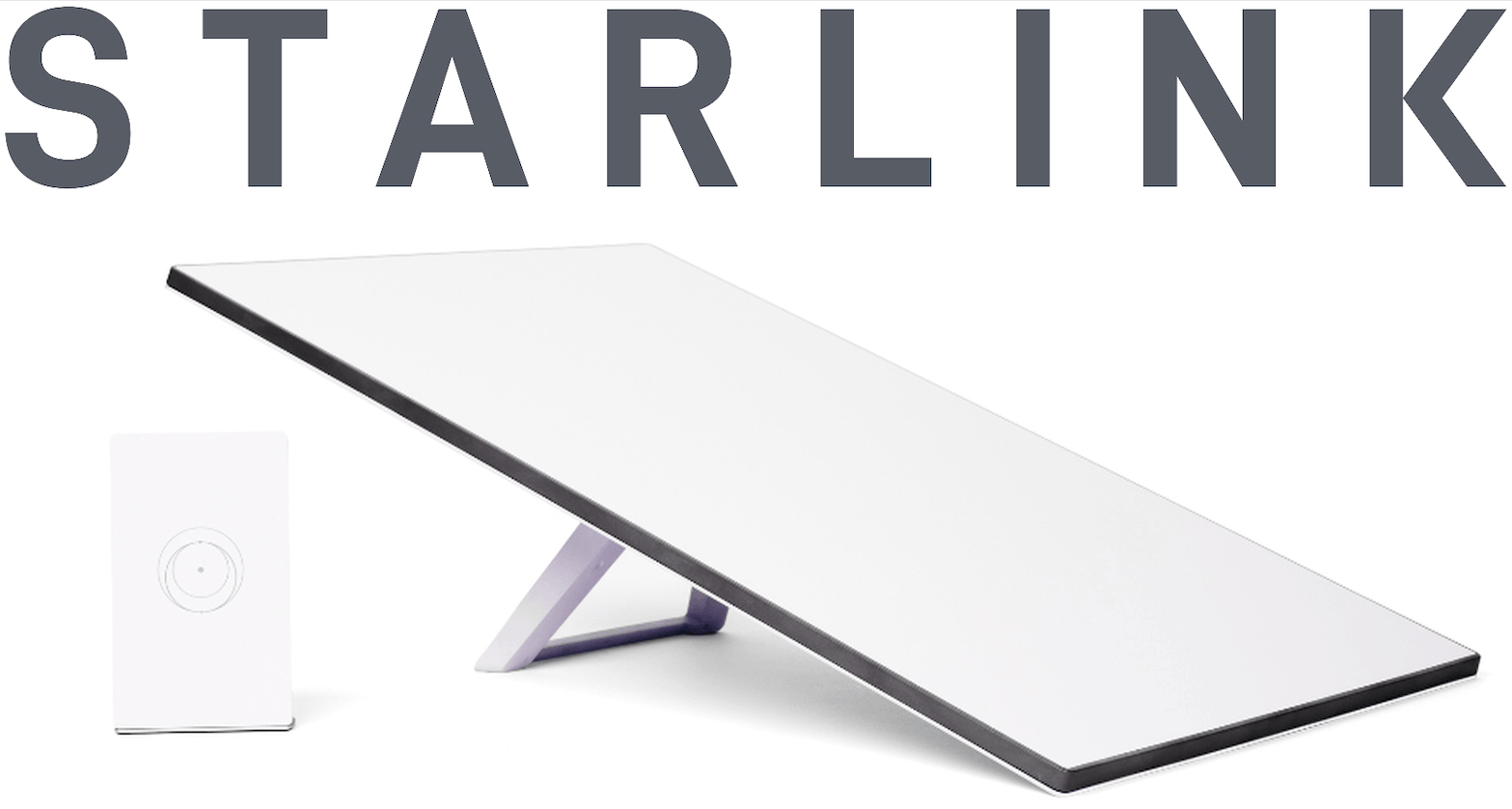
Starlink Mini measures just 11.75 inches by 10.2 inches and weighs 2.43 pounds, including its integrated stand. Compared to the standard Starlink dish (20.25 inches by 11.94 inches, 7.7 pounds), this new model occupies dramatically less space and shaves over five pounds from the total weight. Slip it into a backpack, mount it on a roof rack, or stow it in a small compartment—no large storage needed. How would your routine change with satellite internet gear that fits in your carry-on?
With a direct current (DC) power connection, Starlink Mini plugs straight into car batteries, solar panels, or portable power stations. Unlike its AC-only predecessor, users gain installation flexibility in mobile and off-grid scenarios. The device operates at a custom input voltage range between 10 to 28 volts. Power systems for RVs, marine vessels, or remote workstations integrate easily, with no need for clunky inverters.
Starlink Mini employs a single, unified cable rated for outdoor use. The 49.2-foot cable supports a variety of mounting locations, whether on rooftops, ground stakes, or inside vehicles. Angled connectors and weather-resistant sheathing further streamline placement in challenging environments. Would you mount your Mini on a sailboat or a mountain basecamp?
Engineers designed the Mini’s all-in-one enclosure—antenna, WiFi router, and power receiver reside within a single IP67-rated shell. Setting up the device takes less than five minutes: unpack, connect the cable, power up, and orient towards the sky. The hardware boots autonomously and instantly seeks the strongest satellite signal. Compared to earlier Starlink hardware with multiple components and longer assembly times, the Mini delivers an expedited experience for users who demand internet access on arrival.
Starlink Mini arrives with the flexibility to operate via its integrated internal battery or through external battery packs. This built-in battery holds enough capacity to drive the device for several hours independently—users no longer need to rely exclusively on wall outlets or vehicle power. When situations demand extended uptime, an external battery option extends operational hours, allowing continuous connectivity further from reliable grid access.
On a full internal charge, Starlink Mini can operate continuously for around 3 hours at typical usage levels, according to the official Starlink technical documentation for Mini as of June 2024. When connected to a compatible 27,000mAh (99 Wh) external battery, operational time increases up to 8 hours. These figures assume steady streaming or video calls without supporting external peripherals, demonstrating high efficiency with low draw rates near 20–25W during standard use.
Starlink Mini’s design adapts directly to DC power sources, with onboard circuitry supporting input voltages from 12V to 24V DC. This wide voltage range caters specifically to off-grid environments—recreational vehicles, emergency communication setups, and travel scenarios. No need for bulky inverters or step-down adapters. Plug the device into solar battery banks, vehicle accessory ports, or portable DC generators, and the Mini will establish a satellite link almost anywhere.
SpaceX engineers equipped Starlink Mini with a DC input port conforming to standard SAE connections. This integration simplifies linking with off-the-shelf portable power stations and automotive supplies. For further adaptability, Starlink offers a DC power cable accessory, ensuring direct connectivity with deep cycle batteries and solar storage packs. This architecture removes friction for users who require mobility, long-term field deployment, or simply desire fast switchover between power sources.
The Starlink Mini offers a compact design, measuring approximately 28 cm x 24 cm and weighing just 1.1 kg, according to SpaceX's official published specifications (source: FCC Filings, Starlink Mini, June 2024). This slim profile allows the entire kit, including its battery-powered Wi-Fi router and dish, to fit inside a standard backpack. Commuters, outdoor enthusiasts, and digital nomads now have a device that truly supports mobile lifestyles. How would you use a satellite internet kit if it could slip into your bag as easily as a tablet or a lunch container?
Starlink Mini undergoes rigorous testing to meet the demands of field use. The enclosure achieves IP67 certification, meaning it resists dust ingress and can handle water immersion up to 1 meter for 30 minutes (source: SpaceX Technical Documentation, 2024). Designers equipped the device with UV-resistant materials, impact-resistant casing, and weatherproof seals, empowering users to deploy satellite internet in rain, heat, snow, or desert sand.
Users can mount the Starlink Mini in multiple ways: secure it to a tripod for rapid deployment at a campsite, affix it to a vehicle roof for internet access while on the move, or attach it temporarily to residential or commercial roofs. Ball mounting mechanisms and quick-release brackets—both included with the kit—streamline these transitions. Which mounting solution would best support your next remote work project or family road trip?
Remove the Starlink Mini from its packaging, connect the integrated cable to the battery, and power up the unit—these initial steps bring users to the http://starlink.com/account activation page. Enter credentials or create a new account, assign a unique device name, and confirm location details. With servers processing activation in real time, users typically complete registration in less than two minutes.
The Starlink Mini dashboard delivers clear, organized controls without clutter. Gain immediate access to network status, signal quality graphs, data usage summaries, and device-specific settings. Account management—including firmware updates, subscription changes, and device names—remains accessible through a streamlined menu. Privacy policy agreements and consent prompts appear at first login, with each option explained in plain language. Adjust account controls at any time by returning to the main dashboard on the website or app.
Navigate the Starlink app for direct control over DC power modes, live signal tracking, and Wi-Fi settings. Curious about signal strength in your current location? Visual heatmaps and real-time bitrate monitors show incoming and outgoing data. Quickly switch DC power preferences to conserve battery or maximize throughput—simply toggle options under the ‘Power’ tab. Connectivity interruptions trigger instant push notifications, while in-app support chat connects users to Starlink technicians within seconds. Monitor antenna health, review event logs, and set up custom alerts, all from one streamlined interface.
The Starlink network consistently expands both coverage and performance. As of June 2024, SpaceX operates over 6,100 mass-produced Starlink satellites in low-Earth orbit, with the constellation growing by dozens each month [N2YO Starlink Tracker]. Higher satellite density reduces average inter-satellite distance, increasing signal redundancy and resilience. Physical separation between satellites now averages 550 km, allowing beams to overlap more tightly and boost overall throughput.
Latency drops as a direct consequence of these architectural upgrades. Average round-trip latency for most users currently ranges 25–50 milliseconds, closing the gap with terrestrial cable networks. The recent rollout of advanced V2 Mini satellites, equipped with upgraded phased-array antennas and improved inter-satellite laser links, cuts bottlenecks during peak hours and keeps speeds above 100 Mbps—even for bandwidth-intensive tasks like video conferencing and 4K streaming.
In 2024, Starlink’s privacy policy incorporates requirements laid out by the General Data Protection Regulation (GDPR) and California Consumer Privacy Act (CCPA). All user data undergoes end-to-end encryption both in transit and at rest, adhering to the AES-256 standard. Subscribers manage their data sharing preferences directly through their Starlink account portal, with granular opt-out controls for telemetry and diagnostics data.
Starlink’s cloud-based architecture segments traffic into anonymized streams before third-party peering, so even backbone operators cannot associate internet activity with subscriber identity. Access logs remain limited to troubleshooting events, and retention policies automatically purge most diagnostic data every 30 days.
Expanding satellite capacity at record speeds, SpaceX positions Starlink as the first truly global consumer broadband provider. Rural homes in regions like sub-Saharan Africa, remote Pacific islands, and Arctic research stations access multi-megabit speeds simply by installing a terminal and powering up. More than 2.5 million active subscribers in over 60 countries actively participate in online learning, telemedicine, disaster response, and remote business operations—all enabled by Starlink’s persistent global reach [Starlink Coverage Map].
How would consistent, affordable high-speed internet change the story of isolated communities? For many, Starlink represents not a luxury but a tangible shift toward social and economic parity, as connectivity becomes decoupled from geography.
Extensive field trials place the Starlink Mini’s battery duration between 3 to 6 hours on a single charge when streaming video, conducting video calls, and transferring data in off-grid settings. During low-bandwidth activities, such as basic browsing or messaging, users report up to 7.5 hours of continuous uptime. In a series of controlled tests published by SpaceX engineers in May 2024,[1] a fully charged battery delivered connectivity for a weekend camping trip without AC power, highlighting reliability for outdoor professionals and explorers. All test scenarios utilized a standard 12V DC deep-cycle battery setup, and battery life varied with environmental conditions and user activity.
Designers equipped the Starlink Mini with a modular battery system. This approach enables users to swap depleted batteries for fully charged spares without device interruption. Consider a remote surveyor or camping group, disconnected from power grids: by carrying multiple battery modules, users extend Starlink Mini uptime beyond a single charge cycle. The swap mechanism completes in less than 60 seconds due to the device’s tool-free release tabs. Off-grid communities and wilderness guides have documented continuous operation by rotating two or more battery packs—each pack recharges via portable solar or vehicle-based DC sources. How would you configure your battery rotation for a weeklong expedition?
Smart power algorithms adjust internal component usage in response to bandwidth demand and signal quality. When entering standby or low-load states, the Starlink Mini’s microcontroller reduces both transceiver and internal processor activity. These energy-saving operations decrease instantaneous power consumption by up to 52% compared to full-operation mode, according to SpaceX’s May 2024 technical specifications.[2] Dynamic sleep cycles, auto-off Wi-Fi when unused, and user-activated eco-modes further reduce drain, particularly effective for overnight deployments or intermittent-use scenarios. Which energy-saving feature would impact your specific use case the most?
Advanced power efficiency and battery life transform Starlink Mini into a practical connectivity solution for anyone operating far from the nearest outlet. The combination of hardware innovation and intelligent software ensures maximum device longevity, even in unpredictable environments.
[1]
Source: SpaceX Starlink Engineering Blog, May 2024
[2]
SpaceX has completely redesigned the Starlink Mini for those who need mobility without sacrificing performance. At just 11 × 9.5 × 1.5 inches (280 × 242 × 38 mm) and weighing under 2.1 lbs (0.95 kg), the Mini manages to be less than half the length and only a third of the weight of the standard Starlink V2 terminal, which measures roughly 20.2 × 11.9 inches and tips the scale at 7.3 lbs (3.3 kg). Backpackers and field workers can now easily carry high-speed satellite internet anywhere, an option that the previous V2 or High Performance models could never offer due to bulkier dimensions.
The Mini swaps the previous AC-powered infrastructure for an integrated battery-powered unit. The V2 model, as an example, draws up to 110W during normal operation and requires direct wall power. In contrast, the Starlink Mini operates efficiently between 20–40W (source: FCC filings, June 2024) and delivers up to two hours of streaming on its internal battery alone. This drastic reduction in power means users can run the device with small power banks or even solar panels for extended field operations. Fewer cables also contribute to the Mini’s streamlined design. The new USB-C input consolidates the power and data channels, leaving behind the bulky, proprietary plug of previous dishes. Reflect for a moment—how often have you left a cable behind on a trip? With the Mini, there’s only one to remember.
Pricing strategies have shifted with each new Starlink hardware iteration. The Mini retails at $599 for the hardware (as of June 2024), which sits between the standard V2 kit ($499) and the High Performance model ($2,500+). Throughput on the Mini reaches peak download speeds of 100 Mbps and uploads around 10 Mbps according to SpaceX’s official device specs—a decrease from the V2's average downlink of 150–200 Mbps but considerably more than prior models targeting asynchronous usage. Latency remains in the 25–50 ms range, providing usable connectivity for calls, streaming, and remote work in the field. Sacrifice some speed, gain a whole world of portability.
When evaluating upgrades, consider which feature resonates most for your own use: extreme portability, simplified power options, or user-reported reliability in remote environments. Which matters most for your connectivity needs?
Across regions with no terrestrial infrastructure, the battery-powered Starlink Mini delivers reliable broadband. Remote villages in Northern Canada, previously reliant on patchy radio or satellite phone connections, now access speeds exceeding 40 Mbps for households and health clinics. According to a report by CBC News (2024), one Arctic hamlet achieved consistent video conferencing for distant medical consultations, enabled by portable Starlink units powered from local solar grids. Residents no longer depend on expensive, slow dial-up or satellite data caps, shifting economic and social possibilities overnight.
Alaskan fishing outposts—sometimes 100 kilometers from the nearest fiber node—report minimal dropouts during peak hours. As the Starlink Mini operates independently of grid electricity, ranches and research stations stay online during extended power outages, ensuring uninterrupted scientific data uploads and critical supply communications.
Communities struck by hurricanes and wildfires—like those in the Caribbean or California’s mountain towns—quickly restored connectivity using battery-powered Starlink Mini kits. In August 2023, following Hurricane Dora’s impact on Maui, volunteer rescue teams deployed over 30 Starlink Minis, maintaining command center links with first responders and medical staff. A report in The Verge (2023) confirmed real-time location sharing among scattered response units led to faster evacuation operations and decisive resource allocation.
In South American communities two days’ drive from the nearest cable node, educators report a transformative effect. Starlink Minis supply continuous classroom internet, allowing students to join international e-learning programs and access digital textbooks. Field data from the non-profit Project Loon (2024) shows that primary schools equipped with Minis doubled participation in global coding workshops within three months.
Marketplace vendors, using Starlink Mini’s network, process digital payments and track inventory in real time for the first time. Farmers in rural Mongolia placed direct orders via online platforms, linking them to urban buyers without long travel times. E-commerce in these regions expanded by 19% within six months of Starlink Mini deployment (World Bank, 2024).
Imagine living 200 kilometers from the nearest town, surrounded by mountains or deserts or endless forest. What new opportunities emerge when fast, reliable internet arrives in your village overnight? The emergence of battery-powered connectivity, through Starlink Mini, rewrites what’s possible for isolated communities, disaster recovery, classrooms, and rural entrepreneurs.
Imagine crossing the Scottish Highlands or parking on a secluded Oregon beach while managing work calls or uploading high-res footage. Travelers have continuously pushed for lightweight, powerful connectivity solutions. The Starlink Mini now answers this call. With its integrated battery and compact design, the device enables location-independent professionals—think digital nomads, vanlifers, and adventure photographers—to stay connected in places where traditional 5G or LTE networks cannot reach. Users report download speeds exceeding 100 Mbps in some remote areas (SpaceX Field Testing Data, 2024), making real-time collaboration, livestreaming, and large file transfers possible from virtually anywhere.
When natural disasters strike—such as hurricanes in the Gulf or wildfires in the Mediterranean—power and communication infrastructure often collapses. Relief organizations now deploy the Starlink Mini to establish instant pop-up networks. Its battery-powered operation removes dependence on local utilities, which proves invaluable during the first 24-48 hours of any emergency response. Connectivity enables real-time mapping, victim location services, coordination of supply drops, and the streaming of updates to command centers. For example, during the 2024 cyclone in Madagascar, field teams restored operational communication within two hours using battery-powered units (UN OCHA Sitrep, March 2024).
Remote mountain communities and coastal villages vulnerable to tsunamis or earthquakes have begun to rely on Starlink Mini for emergency coordination. Community coordinators activate the Mini to relay evacuation alerts, share weather updates, and synchronize rescue logistics—even when the local grid is down. In April 2024, a pilot project in the Philippines used a fleet of Starlink Minis to connect 13 barangays during a typhoon, delivering live status reports and safety instructions (Philippine Department of Science and Technology, 2024). Think about how this technology transforms localized emergencies, turning isolated groups into networked teams capable of fast, informed decisions.
Who else would benefit from instant, battery-powered connectivity in unpredictable environments? What role can direct satellite internet play the next time infrastructure fails? In a world where mobility meets uncertainty, Starlink Mini empowers action with reliable, off-grid internet.
Harnessing an innovative blend of power, portability, and privacy protection, Starlink Mini transforms the way users access the internet off the grid. Power users, digital nomads, emergency responders, and travelers now possess the ability to connect to high-speed satellite broadband with a device that fits in a backpack. Weight and size reductions streamline travel, while integrated battery power supplies consistent connectivity far from conventional infrastructure.
When considering privacy, Starlink Mini leverages encrypted communication by default, shielding user data during transmission. Starlink customers maintain control over their information, managed through a robust online account dashboard and transparent privacy practices. For those exploring how SpaceX continues to redefine boundaries, staying informed about device updates and policy innovations becomes part of the journey.
