Starlink Internet Michigan 2026
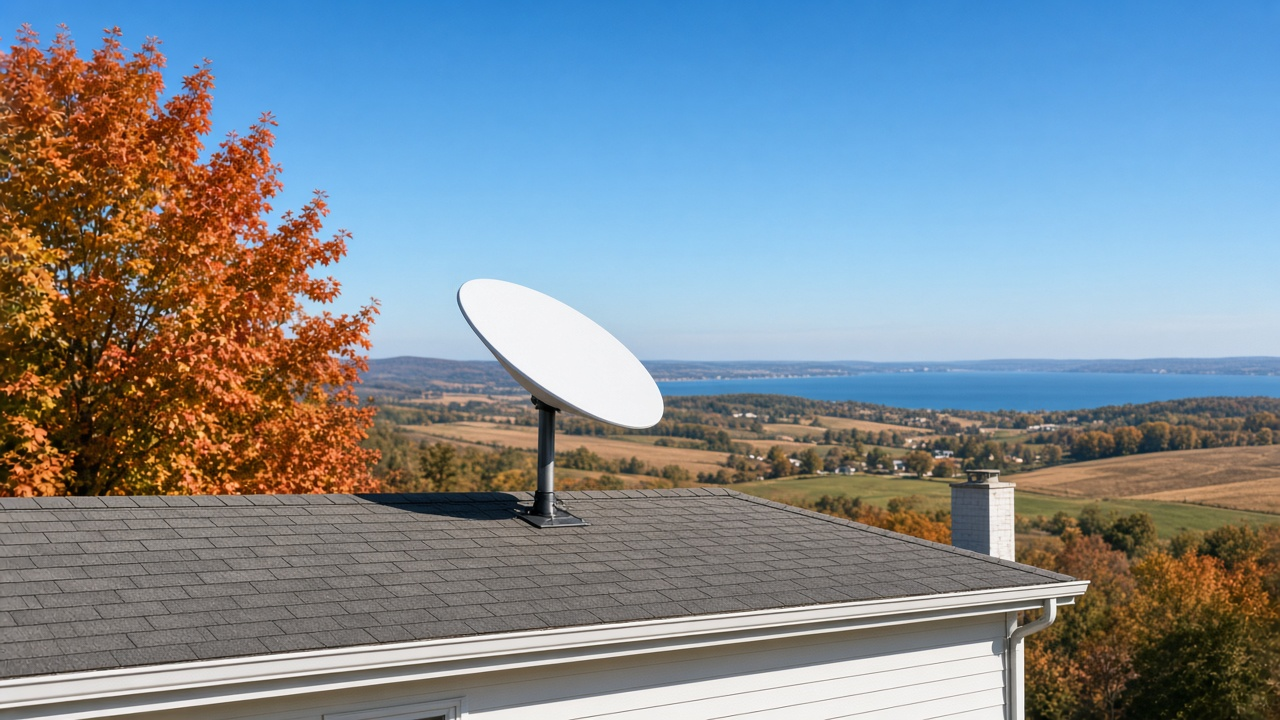
Michigan’s internet landscape tells two very different stories. In urban centers like Detroit, Ann Arbor, and Grand Rapids, residents typically enjoy fast, consistent internet access through fiber and cable-based ISPs. Yet cross into northern counties or travel deep into the Upper Peninsula, and the scene changes dramatically. In these rural areas, connectivity slows, infrastructure thins out, and many households still rely on aging DSL lines or mobile hotspots burdened with data limits.
This gap in service isn't just inconvenient—it stifles remote work, online education, telehealth services, and economic development. As more people seek to live and work outside city limits, the demand for high-speed, low-latency internet in Michigan’s most isolated regions grows stronger by the day.
Enter Starlink. Developed by SpaceX, Starlink deploys a constellation of low-Earth orbit (LEO) satellites, delivering high-speed internet directly to users, regardless of physical infrastructure limitations on the ground. For Michigan’s underserved communities, this satellite-based solution has become a promising alternative to traditional broadband.
Where Can You Get Starlink Internet in Michigan?
Current Starlink Availability in Michigan
Starlink has rolled out broadband internet service across most of Michigan, with a strong presence in rural and remote parts of the Upper and Lower Peninsulas. As of early 2024, residents in counties such as Marquette, Emmet, Presque Isle, Oscoda, Houghton, and Ontonagon are already reporting active Starlink service. In these areas, Starlink offers a practical alternative to limited DSL or satellite options that typically dominate underserved zones.
The service is not limited to remote federally designated broadband deserts. Even in suburban fringe regions, like those around Lapeer and Livingston Counties, residents have gained access to Starlink. Urban areas, due to denser cellular infrastructure, have less urgent demand, but coverage still exists.
Service Rollout Phases and County-Wise Deployment
Starlink's phased deployment strategy in Michigan focused first on high-latency zones identified by the FCC’s Rural Digital Opportunity Fund (RDOF). In Phase 1 (2021–2022), emphasis was placed on the northernmost counties and areas bordering Canada, where fiber expansion had been economically inefficient. Phase 2 (2023), extended deployment to rural parts of central and southern Michigan.
Key counties with documented Starlink users include:
- Alcona: Widespread installations reported along the Sunrise Coast.
- Delta: Significant adoption among households lacking fixed wireless coverage.
- Kalkaska and Oceana: High density of early adopters due to persistent DSL constraints.
- Chippewa: Active interest from tribal communities, where conventional broadband funding has fallen short.
How Michigan Residents Can Check Starlink Availability
Residents can verify Starlink coverage for their address by visiting the official Starlink website and using the availability lookup tool. Here's how the process works:
- Visit starlink.com/map
- Enter your service address or drop a pin directly on the interactive map.
- Review current availability, estimated waitlist timelines, and download speed projections based on your location.
Addresses within active coverage zones will receive an instant prompt to place an order, while those in pending zones will be invited to join a waitlist with a $99 deposit refundable at any time.
Reliable Sources for Starlink Coverage Data
While Starlink’s official website offers the most up-to-date coverage data, additional tools add layered insight. The FCC’s National Broadband Map provides county-level coverage overlays, including satellite-specific broadband data. Third-party aggregators like ISpott and user-generated sites like StarlinkStatus.space also help track real-time availability based on user reports and order status confirmations.
Starlink Internet Speeds and Performance in Michigan
Download and Upload Speeds Across the State
Starlink users in Michigan currently experience average download speeds ranging from 75 Mbps to 180 Mbps, depending on location and network congestion. Upload speeds generally fall between 10 Mbps and 25 Mbps. These figures align with aggregated data from Ookla’s Speedtest Intelligence Q1 2024 report, where Starlink showed a median download speed of over 106 Mbps across U.S. rural regions.
In comparison to fixed wireless providers and satellite competitors, Starlink consistently delivers faster speeds in rural Michigan counties, particularly in the Upper Peninsula and northern Lower Peninsula.
Latency: Starlink vs Traditional ISPs
Latency for Starlink in Michigan tends to stay within the 30–60 milliseconds range, significantly lower than legacy satellite networks like Viasat or HughesNet, which often exceed 600 ms. While still higher than most wired cable or fiber connections, Starlink’s latency supports video conferencing, VoIP calls, and online gaming—applications previously limited by high-ping satellite connections.
- Starlink latency: 30–60 ms
- Typical cable internet latency: 15–35 ms
- DSL latency: 40–100 ms, often with more jitter
- Legacy satellite: 600 ms or higher
Reports from Users in Michigan
Feedback from subscribers across Michigan paints a picture of highly variable results, often exceeding expectations in rural zones. Residents in Benzie, Alpena, and Emmet counties report uninterrupted HD streaming and remote work support, with stable speeds hovering around 120 Mbps down and 18 Mbps up. A user in Marquette noted maintaining a constant 135 Mbps on average during peak evening hours, which represents a significant improvement over the area's previous DSL offerings.
In contrast, anecdotal reports from parts of Oakland and Kent counties suggest temporary slowdowns during national peak times, especially when major software updates push increased traffic onto the system. Despite these dips, overall performance remains higher than traditional satellite alternatives.
Regional and Weather-Based Speed Variations
Regional terrain and foliage density in Michigan influence performance. Northern forested areas sometimes face brief signal degradation during heavy snow accumulation or leaf-on seasons in spring. Muskegon-area users near the lake have reported occasional fluctuation in upload speeds during storms, while those in flatter agricultural counties like Gratiot typically enjoy stable throughput year-round.
Performance dips linked to weather tend to be short-lived. Because Starlink’s phased array antennas auto-adjust for satellite positioning, connectivity usually restores within minutes after cloud cover or snow interference subsides.
- High performance stability in open areas like Lenawee and St. Clair counties
- Slight upload variation during snowstorms reported in Ironwood and Gaylord
- Consistent speeds year-round in flat, unobstructed farmland regions
Installing Starlink in Michigan: What to Expect
How to Order Starlink: Step-by-Step
Getting started with Starlink in Michigan follows a direct online process. Begin by visiting starlink.com and entering your service address on the homepage. If Starlink is available in your area, you'll receive the option to place an order immediately. If not, expect a reservation prompt along with an estimated availability date. Once confirmation arrives, proceed with:
- Creating an account using your email and billing address.
- Choosing your service plan—Residential is the default, but RV and Roam options are also available.
- Paying the upfront equipment fee of $599 (as of 2024) plus applicable taxes and shipping.
After purchase, shipping typically takes 1–2 weeks, though delivery times can vary based on demand and logistics within rural Michigan ZIP codes.
What Comes in the Starlink Kit
Every residential Starlink kit arrives with the core equipment needed for setup:
- Dishy McFlatface – the phased-array satellite dish that communicates with Starlink satellites.
- Wi-Fi router – pre-configured, dual-band, with built-in network management tools.
- Mounting tripod – suitable for ground setup on flat surfaces like open yards or decks.
- 75-foot cable – pre-connected between the dish and modem for flexible installation location.
The packaging includes a quick-start guide, but users frequently turn to community-sourced tips for mounting recommendations specific to Michigan’s varying terrain and roofing materials.
Self-Installation Guide for Michigan Homeowners
Starlink is designed for self-installation, and most Michigan users report completing setup in under an hour. Start by selecting a site with a full view of the sky—avoid tree cover or nearby buildings. Use the Starlink app's obstruction checker to scan the proposed dish location. Then:
- Mount the dish using the included tripod or compatible roof/pole mount.
- Connect the dish cable to the Starlink power supply, then to the router.
- Plug in the router and wait for the dish to auto-align and connect with Starlink satellites.
- Launch the Starlink app to finalize router setup and name your Wi-Fi network.
In areas like the Upper Peninsula or densely wooded counties such as Oscoda or Roscommon, installing the dish above tree-line level—such as on a chimney mount—can significantly improve signal lock and reduce latency.
Professional Installation vs DIY in Rural Michigan
While the system is tailored for DIY, certain locations in Michigan benefit from hiring professional installers—particularly for roof mounting on older homes or in deep-wooded lots. Local providers offer third-party Starlink mounting services, with pricing typically between $200 and $400 depending on structure type and mount complexity.
Professional installation also becomes practical when roof pitch is steep, shingle type is delicate (like slate), or when trenching is needed to run the cable safely from a distant mount point to the home.
Reddit User Feedback on Michigan Installations
Several Michigan-based users on subreddits like r/Starlink and r/Michigan regularly discuss setup experiences. One user from rural Alcona County noted, “Install was dead simple—cleared a spot by my barn roof, used the app, dish adjusted itself in 15 minutes.” Another from Grand Traverse reported challenges: “Had to get a 30-foot pole to clear the pines—excellent speeds since then.”
Common threads highlight that while Starlink’s plug-and-play system handles most situations smoothly, topographical challenges in Northwest Michigan and the Upper Peninsula sometimes require creative mounting solutions.
Breaking Down the Cost of Starlink Internet in Michigan
Monthly Fees and Upfront Equipment Charges
As of 2024, Starlink’s residential service in Michigan carries a fixed monthly subscription of $120. Beyond the subscription, users must invest in the proprietary Starlink Kit, which includes the phased-array dish, Wi-Fi router, cables, and mounting hardware. The one-time hardware cost is $599, payable at the start of service. Shipping and handling typically add another $50 to $75 based on location.
This initial setup fee positions Starlink as a premium option in the state, especially in northern and Upper Peninsula regions, where other wired infrastructure may be lacking or entirely absent. Users can manage all charges through their Starlink account dashboard, which supports automated billing and plan changes.
Comparing Residential and Roam Plans in Michigan
Starlink offers two primary service types in Michigan: Residential and Roam (formerly Starlink RV).
- Residential Plan: Designed for fixed locations. Once assigned a “service address,” the dish is locked to that area. Speeds are prioritized, and users experience fewer slowdowns during network congestion.
- Roam Plan: Costs $150/month and supports mobility. The dish can operate throughout Michigan and the continental United States, but with lower network priority, which may result in slower speeds during peak times or in densely served areas.
Setup equipment remains the same for both, though users on the Roam plan often purchase additional mounting kits for mobile installations, particularly for RVs or trailers.
Subsidies and Government Assistance Programs in Michigan
Eligible Starlink users in Michigan can apply the Affordable Connectivity Program (ACP) benefit, which provides a $30 monthly discount for qualifying households. Native American families on tribal lands may qualify for up to $75 monthly support. This subsidy brings the monthly cost of Starlink Residential down to $90 or $45, respectively.
Though Starlink had initially secured Rural Digital Opportunity Fund (RDOF) support, the FCC rejected its application for disbursement in 2022 due to questions about the network’s reliability and scalability—a move that affects broader federal funding in rural Michigan but not individual ACP eligibility.
Comparative Pricing With Other Michigan ISPs
Starlink’s base monthly fee of $120 positions it at the higher end of the spectrum. Here’s how it stacks up against other major providers in rural Michigan:
- AT&T Fixed Wireless: Starts at $70/month with equipment included, though speeds cap around 10 Mbps.
- HughesNet (Satellite): Plans range from $65 to $150/month, but impose strict data caps (15–75 GB) and throttling.
- Spectrum or Xfinity (Wired, where available): Often under $80/month for unlimited data and higher speeds, but not accessible in many rural zones.
- Local DSL Providers: Generally offer 3–15 Mbps speeds at prices between $45 and $75/month, though quality varies widely.
For homes beyond the reach of cable, fiber, or reliable DSL, Starlink consistently delivers superior bandwidth and latency in exchange for higher startup and monthly costs.
How Does Starlink Compare to Other Rural Internet Options in Michigan?
Starlink vs HughesNet vs Viasat: Satellite Showdown
Among satellite internet providers with service coverage in rural Michigan, Starlink outpaces both HughesNet and Viasat in every major performance category. The key difference rests in the technology. Starlink uses low Earth orbit (LEO) satellites, positioned roughly 550 kilometers above the Earth, which slashes latency and boosts speeds compared to the geostationary orbits—at 35,786 kilometers—used by HughesNet and Viasat.
- Speed: Starlink download speeds in Michigan frequently reach 50–150 Mbps, compared to HughesNet's 15–25 Mbps and Viasat's 12–100 Mbps (depending on plan and congestion).
- Latency: Starlink averages between 25-50 ms, while HughesNet and Viasat typically range from 600-700 ms, making real-time applications like video calls and gaming impractical with traditional satellites.
- Data Caps: HughesNet enforces strict limits—30 to 50 GB monthly in most plans. Viasat offers up to 150 GB "priority" data. Starlink currently has no hard cap, though high-usage households may face network management during peak hours.
Starlink vs DSL from AT&T and Frontier
DSL infrastructure remains widespread in Michigan's rural counties, often serviced by AT&T and Frontier. But the performance gap is substantial. DSL speeds depend on the customer’s distance from the provider’s central office, where degradation in speed and signal becomes inevitable.
- Typical DSL speeds: 5–25 Mbps in rural zones, with latency hovering at 40–70 ms.
- Upload limitations: DSL often tops out below 2 Mbps upload, affecting activities like video conferencing or cloud backups.
- Reliability: DSL is susceptible to line noise and degradation over aging copper lines, especially during wet conditions or freezing temperatures.
Starlink delivers superior bandwidth without reliance on terrestrial infrastructure, which becomes especially relevant in remote cabins, island communities, or river valley regions where DSL fails to serve consistently.
Starlink vs Fixed Wireless and Local ISPs
Fixed wireless internet provided by regional ISPs like Mercury Broadband and Point Broadband has grown in popularity across west and central Michigan. These services deliver internet via signals from ground towers rather than satellites or cables. While some fixed wireless networks can achieve respectable speeds—especially when located near the transmitter—they demand clear line-of-sight and suffer in wooded or hilly terrain.
Here's where Starlink excels: it bypasses the topographical limitations entirely. Trees or buildings may require mounting adjustments during installation, but once operational, connection is independent of ground-level obstructions.
- Speed variability: Fixed wireless can range between 10–100 Mbps, heavily dependent on location and tower proximity.
- Setup constraints: Fixed wireless often requires custom installations and may involve alignment with a single local tower, limiting mobility or changes in residence.
- Peak-time slowdowns: Congestion during evening hours is a known issue with some local ISPs due to oversold capacity.
Performance Comparison at a Glance
Review the table closely. Which trade-offs matter most in your location—speed, latency, cost, or installation ease?
Coverage Map and Signal Reliability Across Michigan
Where Starlink Reaches Across the Mitten and the U.P.
Starlink’s network blankets most of Michigan, including the entire Lower Peninsula and over 90% of the Upper Peninsula. On the interactive map provided by SpaceX’s customer portal, live availability status is visible down to specific ZIP codes. This visual tool confirms near-total coverage in counties like Kent, Washtenaw, and Marquette, while also marking areas with limited capacity such as Alpena and Schoolcraft counties.
The Upper Peninsula, with its sparse population and rugged topography, benefits from Starlink’s low Earth orbit (LEO) satellite array that minimizes long-haul latency. Detected latency remains between 25–50 milliseconds across most tested zones, comparable to wired broadband.
Signal Drop Areas by County
Not all regions maintain the same level of signal stability. In the northern edges of Luce and Alger counties, performance reliability can drop below the average due to ongoing hardware congestion and line-of-sight obstructions. In these zones, users have reported more frequent buffering during video streaming and occasional brief outages during satellite handoffs.
- Menominee County: Intermittent signal delay during peak evening hours.
- Baraga County: Forest canopy contributes to lower signal strength, especially in late spring and early summer.
- Missaukee County: Temporary dropouts linked to obstruction around lakefront properties.
Tree Coverage and Rolling Terrain: Hidden Variable in Performance
Michiganders living deep in wooded areas will notice a direct link between tree density and signal consistency. Starlink requires a line of sight to the sky with minimal obstruction. Thick foliage overhead or even a single tall pine within 100 feet of the terminal can create micro-outages or throttle speeds. Terrain also plays a role––homes located in valleys or shielded by ridgelines see reduced connection stability unless terminals are elevated or angled correctly.
Properties situated near open fields or on high ground tend to experience the most stable performance, often exceeding download speeds of 100 Mbps with minimal packet loss even during satellite transitions.
Why Michigan Is Geographically Aligned with Starlink’s Satellite Grid
Michigan falls within the latitude bands most heavily served by Starlink’s current constellation, which orbits between 53°N and 53°S. Given the state’s range between 41.7°N and 48.3°N, satellite density overhead remains consistently high throughout the day. As of Q2 2024, over 80% of Michigan locations fall within coverage zones serviced by at least three overlapping Starlink satellites at any given time. This redundancy boosts signal stability, particularly in rural and forested zones, where traditional providers often leave coverage gaps.
Weather Effects on Starlink Service in Michigan
Snow, Rain, and Cloud Coverage: What Happens to the Signal?
Weather interruptions hit Starlink differently than traditional satellite systems. Heavy snow can accumulate on the dish and obstruct the signal, especially during prolonged storms. Rain, while not as problematic as snow, can cause slight signal degradation due to increased water vapor in the atmosphere. Dense cloud coverage alone rarely interrupts service, but when coupled with precipitation, it can contribute to reduced download speeds and momentary outages.
Starlink uses low Earth orbit (LEO) satellites, positioned at about 550 km above Earth. This proximity shortens the signal path compared to geostationary satellites, which orbit at roughly 35,786 km. That advantage minimizes latency and reduces the impact of atmospheric interference, but local weather still plays a role—particularly in Michigan's varied climate.
Winter in Michigan: Testing the Limits of Equipment
Michigan winters challenge even the most resilient hardware. With temperatures regularly dipping below 0°F and snowfall averaging over 60 inches annually in areas like the Upper Peninsula, Starlink users need to be prepared. Fortunately, Starlink dishes come equipped with built-in heating elements designed to melt snow and ice. This feature activates automatically when sensors detect low temperatures combined with obstruction, allowing signal transmission to continue through storms.
The system’s resistance to frost accumulation has received praise from users across the state. However, in blizzard conditions or prolonged snowfalls, additional steps often become necessary.
Tips from the Field: How Users Keep Their Dish Clear
- Elevation Mounting: Many users report better uptime by mounting the dish several feet off the ground—on poles, rooftops, or gable ends—to reduce snow build-up.
- Manual Cleaning: When heaters can’t keep up, a soft broom or foam brush works well for gentle snow removal without damaging the dish surface.
- DIY Covers and Enclosures: Some users have constructed open-topped shelters or mesh hoods that minimize direct snowfall while preserving line of sight to the sky.
- Heater Boosting Mods: In Reddit forums, some Michigan users have modified power supplies to run heaters more aggressively, though this voids device warranties.
Conversations from Reddit: Weather Workarounds Shared by Michigan Users
Michigan-based discussions on r/Starlink fill with stories of hard freezes and slush-covered dishes. One Kalamazoo subscriber shared a timelapse showing snow melting within minutes thanks to the dish heater, while another user near Marquette posted photos of their snow-proof enclosure made with a clear acrylic dome. Multiple threads highlight the value of checking the Starlink app’s “Obstructions” tool regularly during winter months, as even a small drift slipping onto the dish can disrupt service.
Unconventional suggestions also surface frequently—such as applying silicone spray on the dish to reduce snow adhesion or using solar-powered CCTV systems to monitor obstruction buildup in real time. Not every idea works for every situation, but these exchanges foster a strong regional knowledge base for weatherproofing Starlink in Michigan’s unforgiving winters.
Starlink’s Impact on Rural and Underserved Communities
How Remote Michigan Towns Stay Connected and Competitive
In areas like the Upper Peninsula and rural parts of the Lower Peninsula, access to stable high-speed internet had long remained a luxury. With Starlink’s arrival, that changed. Reliable connectivity now exists in places where DSL topped out at under 5 Mbps and cellular internet sputtered on windy days. Starlink’s low-Earth orbit satellite network enables users to bypass traditional infrastructure entirely — running fast, uncongested internet directly from the sky to the cabin, farmhouse, or depot.
This direct access has cut the broadband gap dramatically. Take the case of Limestone, a remote town in Alger County with under 300 residents. According to community members, distance learning during the pandemic was nearly impossible before Starlink. Since installation, the local public school’s remote learning system stabilized, and teachers now support students in real time without interruption.
Digital Classrooms, Telehealth Visits, and Local Job Creation
Schools across Keweenaw, Luce, and Ontonagon counties report improved digital learning tools since integrating Starlink. With improved upload speeds — often exceeding 15 Mbps as per real-user speed tests — video conferencing platforms no longer disconnect mid-lesson. High school students in Baraga County now participate in dual-enrollment college courses that require consistent broadband access.
Hospitals and remote clinics rely heavily on telemedicine. In Chippewa County, access to mental health counseling and follow-up treatment for chronic conditions increased once telehealth appointments became viable. According to practitioners surveyed in early 2024, patient no-show rates dropped 28% after Starlink systems were installed in homes where wired services were unreliable or unavailable.
On the economic front, small businesses in Houghton and Iron counties leveraged Starlink connectivity to expand e-commerce and reduce supply chain interruptions. Previously, local shop owners hesitated to adopt cloud-based POS systems due to frequent outages. Now, businesses complete online orders efficiently while video conferencing with suppliers statewide and beyond.
User Case Study: “From Dial-up to Starlink” in the Upper Peninsula
Meet Jennifer Bryant, a freelance graphic designer based outside of Bergland, MI. Until late 2022, she'd depended on dial-up and occasionally tethered to her phone just to send print files. Deadlines were missed. Zoom client meetings? Unthinkable. Then she installed Starlink.
“Within 30 minutes of setup, I had 90 Mbps download and clear calls with clients in Detroit and San Francisco,” Jennifer said. “For the first time in twelve years, I can live where I want and work fully online.”
Her story isn’t unique. Across the Upper Peninsula, hundreds of remote workers now depend on Starlink for web development, content creation, IT services, and virtual consulting. Broadband once defined opportunity by ZIP code. Starlink erased that boundary line by line.