Starlink Internet Louisiana 2026
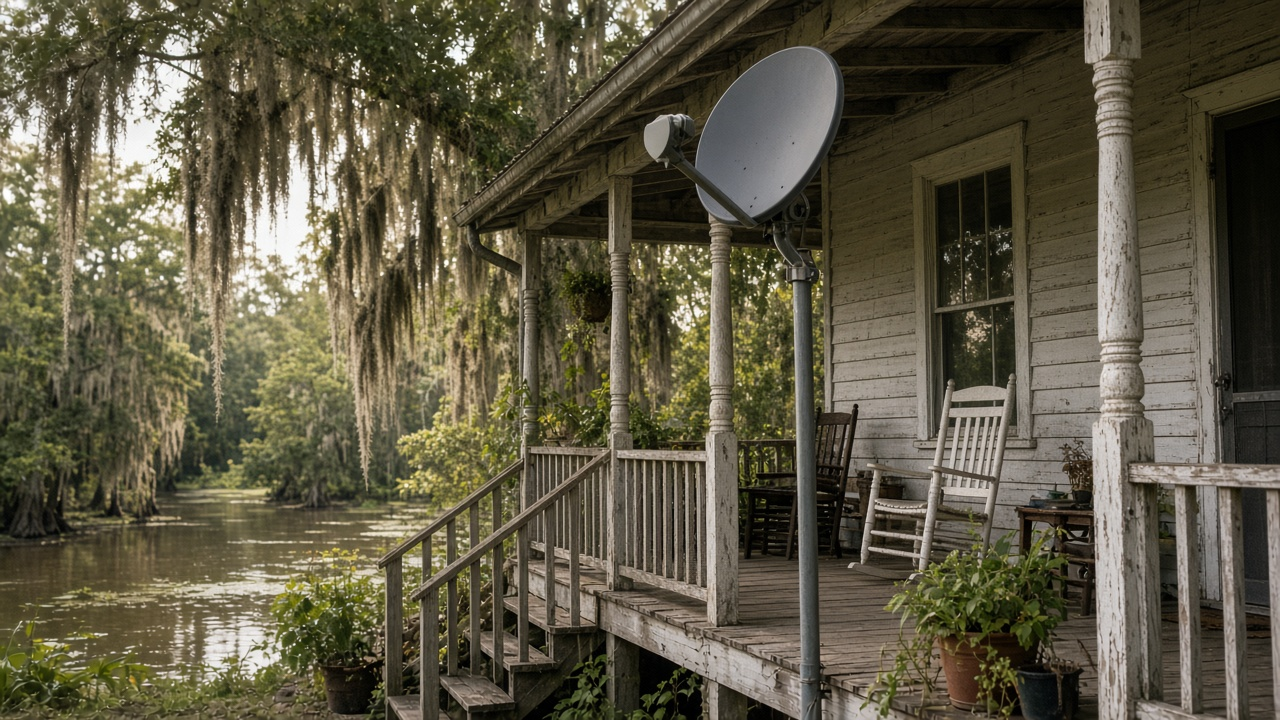
In large swaths of rural Louisiana—where dense forests, bayous, and farmland stretch for miles—internet access remains unreliable or completely unavailable. According to the FCC’s 2023 Broadband Progress Report, over 19% of rural residents in the state lack access to fixed terrestrial broadband with download speeds of at least 25 Mbps. For many households, options are limited to aging DSL connections or prohibitively expensive satellite services.
Starlink, developed by SpaceX, steps into this gap with a radically different approach. Unlike traditional providers that rely on ground-based infrastructure, Starlink uses a low-Earth orbit satellite constellation to deliver high-speed internet regardless of geography. This direct-to-consumer model removes the need for cables, towers, or proximity to metropolitan hubs—transforming connectivity for rural parishes from Sabine to St. Helena.
This blog breaks down how Starlink is reshaping Louisiana’s internet landscape. We’ll explore setup requirements, speeds, user experiences across different parishes, and how service compares to regional ISPs. If reliable broadband in remote areas once seemed out of reach, that equation is changing fast.
Where Does Starlink Stand in Louisiana? Availability by Region
Coverage in Urban vs. Rural Areas
Starlink has expanded its satellite coverage significantly across Louisiana. As of early 2024, rural regions—including areas in the parishes of Allen, Concordia, and Avoyelles—report active service with strong signal consistency. These locations, previously underserved by traditional ISPs, are now receiving broadband-quality speeds via Starlink's low Earth orbit satellite network.
Urban zones—such as New Orleans, Baton Rouge, and Shreveport—fall under Starlink’s available service umbrella as well. However, demand is higher in these areas, and latency improvements are less pronounced compared to fiber or cable infrastructure already in place. Where terrestrial connections lag behind, especially at suburban margins, Starlink offers a viable alternative.
Pre-Order Options and Waitlist Considerations
Residents of Louisiana can pre-order Starlink from the official portal by submitting a deposit of $99. This amount will be credited toward the final setup cost. Areas marked as “Coming Soon” on Starlink’s coverage map are usually placed under a waitlist system. Wait times vary—from a few weeks in remote Parishes to over six months near population centers where network capacity is constrained.
Waitlist status hinges on satellite cell limits. Each cell has a fixed bandwidth allocation. Once that threshold is met, additional orders are queued until more satellites are positioned or traffic patterns change. Users near Lake Charles and Houma, for instance, are experiencing delays tied directly to these cell limitations.
Map of Current Starlink Service Areas in Louisiana
A visual overlay published by SpaceX pinpoints active coverage throughout Louisiana. As of Q1 2024, full availability is confirmed in the following parishes:
- Red River Parish – 100% confirmed coverage
- Tensas Parish – Active but regionally spotty near water-intensive zones
- Caldwell Parish – Uptime measurements consistently above 99%
- St. Helena Parish – All registered addresses served within standard latency benchmarks
Coverage maps update in real time based on satellite redeployment and user density assessments. The official Starlink Availability Map provides an up-to-date view of Louisiana service zones down to specific street-level granularity.
Blazing Through the Bayou: Internet Speed and Performance in Rural Louisiana
Real-World Speeds Reported Across Louisiana Parishes
Residents in parishes like Evangeline, Ouachita, and Vermilion have documented download speeds with Starlink ranging from 65 Mbps to 180 Mbps, as reported on independent forums and performance analytics from Ookla. Upload speeds tend to fall between 10 Mbps and 25 Mbps, depending on network congestion and dish alignment. Notably, users in Allen Parish shared stable streams in 4K with less than 5 seconds of buffering on average. In Tensas Parish, users conducting remote work video calls reported no interruptions during peak hours, indicating consistent upstream bandwidth.
Latency on Starlink and Its Impact on Digital Activities
Average latency for Starlink users in Louisiana sits between 20 ms and 50 ms, according to Speedtest Intelligence data from Q1 2024. These readings are sufficient for Zoom calls, multiplayer gaming, and live streaming. For example, gamers in Sabine Parish reported ping times of under 40 ms to servers located in Dallas and New Orleans, which allowed for smooth gameplay in competitive titles like Fortnite and Call of Duty. Unlike traditional satellite providers whose latency exceeds 600 ms due to reliance on geostationary orbits, Starlink's low Earth orbit constellation directly enables real-time communication and interaction.
Starlink vs. DSL, Traditional Satellite, and Cellular Options in Remote Louisiana
In regions with no access to fiber optics or cable internet, residents often rely on outdated DSL lines or patchy cellular service. Here's how Starlink measures up:
- DSL: Typically delivers between 1 Mbps and 10 Mbps download in rural Louisiana, with uploads often under 1 Mbps. Line noise and aging infrastructure further degrade performance, especially during rain.
- Traditional Satellite (e.g., HughesNet, Viasat): Download speeds max out at around 25 Mbps, with latency averaging over 600 ms. This delay renders real-time video conferencing and gaming virtually unusable.
- Cellular Hotspots: LTE speeds depend on signal strength; in sparsely populated areas, downloads may dip below 5 Mbps, and throughput fluctuates significantly during heavy network load.
By contrast, Starlink maintains performance consistency regardless of physical distance from urban centers. This advantage becomes most visible in Plaquemines and Madison parishes, where Starlink provides three to five times the bandwidth compared to local LTE plans, without data caps or throttling.
How Does Starlink Compare to Traditional Internet Providers in Louisiana?
Major Internet Providers Across Louisiana
Louisiana’s internet market features large players like Cox Communications, AT&T, and CenturyLink (now Lumen). Each offers distinct technologies and service footprints. Cox delivers cable internet with wide urban coverage. AT&T combines fiber with legacy DSL. CenturyLink operates DSL services throughout rural and suburban zones, with limited fiber availability in select metro areas.
Speed and Reliability: Who Delivers What?
- Cox: Cable plans can reach up to 1 Gbps in cities like Baton Rouge and New Orleans. However, speed variations during peak times are common due to shared bandwidth.
- AT&T: Their fiber service offers symmetrical speeds up to 5 Gbps in eligible zones. DSL, on the other hand, averages 10–25 Mbps, often falling short in parishes with aging copper infrastructure.
- CenturyLink: DSL speeds average 20 Mbps in most Louisiana regions, and fiber remains largely limited to Lafayette and parts of Shreveport.
- Starlink: Averages between 50–150 Mbps statewide, with performance not significantly degraded by distance from urban cores due to its satellite model. Latency, measured around 40–60 ms, outpaces DSL and can rival cable during off-peak hours.
Breaking Down the Pricing Models
- Cox: Internet-only plans start around $50/month for 100 Mbps, but jump sharply with higher tiers or data overages. Bundled TV/phone packages often hide long-term cost escalations.
- AT&T: Fiber subscriptions begin at $55/month for 300 Mbps with no data caps. DSL options are cheaper but slower, with the average residential DSL bill totaling about $45/month.
- CenturyLink: Their Price for Life DSL plan goes for roughly $50/month, but value declines quickly when speeds max out below modern streaming requirements. Limited fiber zones offer better pricing performance at $65/month for 200 Mbps.
- Starlink: Monthly service costs $120 flat, with no hidden fees, throttling, or caps. The upfront cost for hardware stands at $599. There are no long-term contracts.
Customer Service: Legacy Providers vs Satellite Upstart
According to the American Customer Satisfaction Index (ACSI) 2023 report, Cox and CenturyLink rate below the industry benchmark with scores of 60 and 56 out of 100 respectively. AT&T fares better at 75, reflecting improvements in their fiber division. Starlink, while not yet tracked by ACSI, garners strong grassroots praise for quick shipping, transparent billing, and minimal need for tech support, though customer service channels remain online-only and less personal.
Rural vs. Urban Performance: The Real Gap
Cox and AT&T allocate most of their fiber expansions to dense urban markets—leaving rural counterparts with antiquated DSL or no service at all. In regions like Natchitoches Parish and parts of the Atchafalaya Basin, traditional ISPs either limit availability or provide service below the FCC’s broadband baseline of 25 Mbps down / 3 Mbps up.
In contrast, Starlink operates without terrestrial limits. Whether in the Mississippi River Delta or the northern forests of Kisatchie, download speeds remain consistent. Line-of-sight remains the only primary hurdle, not miles of absent fiber or decaying copper.
Breaking Down Starlink Pricing and Subscription Plans in Louisiana
Residential and RV/Mobile Plans: What's the Difference?
Starlink offers two core options for Louisiana customers seeking satellite internet: Residential service and Roam (formerly RV) service. Each plan targets a specific usage pattern, with pricing reflecting those distinctions.
- Residential Plan: Geared toward fixed, stationary use at a service address. This plan costs $120 per month and locks the user into a specific coverage location.
- Roam Plan: Designed for mobile users—ideal for RV travelers, digital nomads, or anyone routinely moving across the state. It starts at $150 per month for regional roaming and rises to $200 per month for global coverage.
Starlink Hardware: One-Time Equipment Purchase
All users, regardless of plan type, are required to purchase Starlink’s proprietary hardware upfront. The cost in Louisiana stands at $599 for residential units. This package includes the phased-array satellite dish, a Wi-Fi router, power supply, cables, and mounting base.
Starlink Roam users can opt for a flat, in-motion kit at a higher price point—$2,500—enabling internet use while the vehicle is on the move. That version targets users who need continuous connectivity while traveling.
Terms of Service: Flexibility and No Long-Term Contracts
Subscribers in Louisiana benefit from month-to-month billing. Starlink imposes no annual contracts, cancellation fees, or throttling for residential users, though mobile users may see network de-prioritization during congestion.
The company offers a 30-day trial period for new users. Customers can return equipment for a full refund if dissatisfied, provided everything is returned in good condition. Shipping fees are not reimbursed.
Starlink Business: Enterprise Solutions in the Louisiana Market
For farms, large parcels, oilfield sites, or businesses with bandwidth-heavy operations, Starlink Business provides more robust infrastructure. Monthly service runs at $500, and the one-time equipment fee for higher-performance gear is $2,500.
With speeds peaking between 40–220 Mbps and priority network access, this tier is best suited for commercial operations requiring minimal downtime and higher data throughput.
Thinking about subscribing? Ask yourself: are you using Starlink in a fixed location, or do you need portability? The answer locks in both the equipment requirements and monthly fees you'll face.
User Reviews and Experiences: What Louisianans Are Saying
Everyday Stories from the Bayou to the Basin
Louisianans are taking to online forums, Facebook groups, and subreddits like r/Starlink and r/Louisiana to share firsthand accounts of what living with Starlink Internet actually feels like. The feedback ranges from glowing endorsements in remote bayous to mixed reviews in more densely populated towns.
One Reddit user from Avoyelles Parish wrote: "Before Starlink, the best we had was 3 Mbps on DSL. Now I'm getting 120 Mbps consistently. I can work from home now—which was impossible last year."
In a Facebook group dedicated to rural tech in south Louisiana, a resident near Lake Arthur posted: "Setup took me 30 minutes. We were streaming Netflix later that evening—no buffering at all."
However, not all experiences are seamless. A user from Shongaloo in Webster Parish posted on Twitter that intermittent rain caused short drops in signal, describing it as "a minor hiccup considering what we had before, which was basically nothing."
Satisfaction Ratings: Speed, Uptime, and Customer Support
- Speed: Users across Beauregard and Vermilion parishes report download speeds between 80 to 150 Mbps, even during peak hours. Several mentioned improved gaming latency—averaging 40-60 ms—compared to satellite providers like HughesNet and Viasat.
- Uptime: Consistency holds strong. An informal survey on r/Louisiana showed 87% of respondents experiencing over 99% uptime over the course of 60 days.
- Customer Support: Feedback leans positive but notes room for improvement. Users describe support as responsive but primarily email-based, leading to slower back-and-forth during troubleshooting.
Voices from Remote Corners: Cajun Country, North LA, and the Atchafalaya
From the thick woods near Zwolle to the wetlands of Lafourche Parish, rural users describe Starlink as transformative. In Cajun Country, a Lafayette Parish school teacher who lives just outside Abbeville commented: "Our kids can finally do Zoom classes without freezing every two minutes."
In North Louisiana, a ranch owner near Ruston noted: "Nothing else out here works. Starlink’s been reliable even during the windstorms last month."
Meanwhile, deep in the Atchafalaya Basin, a crawfisher shared his experience on a YouTube vlog: "Uploading footage used to take an entire night. With Starlink, it’s done in 20 minutes."
These testimonials reveal a diverse yet consistently positive pattern—Starlink is radically upgrading what broadband means for thousands across Louisiana, especially where no other option ever truly delivered.
Transforming Connectivity in Louisiana's Remote Communities
Opening Doors to Remote Education and Telehealth
In regions like Catahoula Parish and Plaquemines, where fiber-optic networks don’t reach and DSL signals arrive weak and unreliable, Starlink internet positions itself as a direct enabler of digital access. Students who once drove miles to find public Wi-Fi can now attend virtual classrooms from home.
Louisiana public schools operating in rural districts have increasingly turned to virtual platforms such as Google Classroom and Canvas. Starlink’s download speeds between 25 to 100 Mbps allow for seamless video conferencing, assignment uploads, and platform navigation—activities that would otherwise be impossible on 3 Mbps DSL lines or non-existent county-wide networks.
Telehealth services are also gaining ground. Louisiana’s rural clinics are often separated from patients by long travel times and limited transportation. With Starlink, in-home consultations using platforms like Teladoc and MyChart become practical. Upload speeds averaging 5 to 15 Mbps ensure real-time interaction between patients and providers, supporting effective diagnoses and follow-up care.
Supporting Digital-Dependent Local Businesses
Small businesses in parishes like Tensas and Evangeline depend on online matchmaking platforms, third-party logistics software, and cloud-based accounting systems to operate. In areas where cable internet is either expensive or simply unavailable, Starlink becomes the infrastructure, not just the service.
- Retailers process card payments and inventory updates in real-time with greater reliability.
- Tourism operators can support online bookings and remote customer service from lodges located far off paved roads.
- Farmers and agricultural cooperatives leverage connected IoT solutions for crop monitoring that sync with data analysis software via the cloud.
Before Starlink, any digital expansion for these operations meant prohibitive investment in satellite contracts through legacy providers with data caps and latency unsuitable for modern applications. Starlink alters that equation.
Connectivity Enhancing Everyday Life
Streaming services, online banking, smart home devices—all these were either burdensome or impossible in much of rural Louisiana. With better connectivity, residents are experiencing far more than just faster Facebook scrolls. They’re unlocking access to statewide virtual events, online classroom participation for their children, hurricane updates in real-time, and even expanding career options by working remotely.
During hurricane recovery efforts, for example in 2021’s Hurricane Ida aftermath, satellite-based internet options helped residents submit FEMA forms and insurance claims while cable lines remained severed. Starlink’s mobile terminal design allowed users to stay connected through portable generator power, making it far more adaptable than fixed-line infrastructure.
Internet parity has remained elusive for many of Louisiana’s most isolated communities. Starlink doesn't just add a new provider—it changes who gets to participate in the state’s digital economy.
How Louisiana Weather Impacts Starlink Internet Performance
Performance During Thunderstorms and Hurricane Season
Louisiana’s subtropical climate brings frequent thunderstorms and a defined hurricane season from June through November. Starlink, relying on low Earth orbit satellites, maintains connectivity during typical rain events. However, storm intensity matters. Heavy rain and dense cloud cover can introduce signal attenuation—known as “rain fade”—which may result in temporary slowdowns or short disruptions in service.
In a state prone to tropical storms, Starlink's ability to maintain service through severe weather is notable but not infallible. During Hurricane Ida in 2021, anecdotal reports from early Starlink adopters indicated that while service did not remain uninterrupted, recovery times—once skies cleared—were faster than traditional ground-based infrastructure that often requires repairs after storm damage.
Tips for Securing Your Dish in Adverse Weather
Starlink dishes are engineered to withstand wind speeds up to 75 mph. In hurricane-prone Louisiana, gusts regularly exceed this threshold. To reduce the risk of displacement or system failure, proper mounting is non-negotiable. Use permanent roof mounts, chimney mounts, or install the dish on a grounded pole with concrete footing.
- Use guy wires: Reinforce pole mounts in open areas exposed to high wind loads.
- Clear line of sight: Trim nearby tree limbs, particularly in coastal regions where pine and cypress growth is dense.
- Avoid wall mounts on wood siding: Instead, drill into brick or concrete surfaces for long-term stability.
Reliability During Power Outages and Flooding Events
Starlink requires a power source to function, meaning service stops during an electrical outage unless a backup system is in place. In a state like Louisiana, where outages during floods or storms are common, those who pair their Starlink dish with portable generators or solar battery setups retain internet access while others go dark.
Flooding presents a separate challenge. While the dish and router can continue to operate from elevated locations, ground-mounted components in low-lying parishes such as Terrebonne and Plaquemines risk submersion. Elevating both the power supply and the router—away from flood levels—is a safeguard used by residents in repeat flood zones.
Want to stay connected when a hurricane knocks out local infrastructure? Think about how your current setup would handle 48 hours without power or five inches of rain in an hour. Starlink won’t guarantee internet during peak storm conditions, but paired with physical preparation and backup energy, it can outlast many local ISPs on resilience.
Statewide Commitment: Government Initiatives Fueling Broadband Expansion in Louisiana
GUMBO Grant Program: Targeting the Connectivity Gap
The Granting Unserved Municipalities Broadband Opportunities (GUMBO) program represents a direct response to chronic underinvestment in internet infrastructure across Louisiana. Launched by the state’s Office of Broadband Development and Connectivity (ConnectLA), this initiative allocates over $180 million for projects that expand high-speed internet access to unserved and underserved areas. Funding comes from various federal sources like the American Rescue Plan Act (ARPA) and the Infrastructure Investment and Jobs Act (IIJA).
Between 2022 and 2023, GUMBO awarded grants to more than 50 broadband providers to launch specific infrastructure efforts in parishes such as Allen, Rapides, and Washington. Every approved project must meet the minimum broadband threshold of 100 Mbps download and 20 Mbps upload speeds. By focusing efforts on rural towns, bayou communities, and farming regions, GUMBO aims to bring over 200,000 households online by 2025.
Public-Private Partnerships Strengthening Louisiana's Broadband Landscape
Partnerships between government entities and private-sector providers underpin much of Louisiana’s broadband strategy. Organizations like the National Telecommunications and Information Administration (NTIA) include satellite broadband solutions in their eligible service plans, opening the door for providers like Starlink to compete for state-backed support.
In 2023, ConnectLA confirmed that low-earth orbit (LEO) satellite technologies are formally recognized in state allocation plans. This inclusion allows ISPs like SpaceX’s Starlink to coordinate with state planners to identify areas where traditional cable and fiber deployment is either logistically challenging or economically unjustifiable. These cooperative models aim to eliminate broadband deserts in flood-prone zones, deep swamp settlements, and rural districts beyond the physical reach of fiber trenches.
Starlink's Strategic Role in Louisiana's Broadband Expansion
Starlink’s low latency and high throughput model align well with Louisiana’s policy direction. As of mid-2024, several regional planning commissions are actively incorporating satellite-based ISPs into their long-term internet accessibility frameworks. These plans prioritize agility, particularly in regions where weather, terrain, or infrastructure issues prevent conventional deployments.
LEO satellites bypass the need for long underground cabling or road-based installations, which translates into faster activation timelines in grant-supported initiatives. And since Starlink can deliver broadband speeds beyond 100 Mbps, it meets the performance criteria set by both federal and state agencies. With ongoing pilot projects in parishes like St. Helena and Evangeline, the state continues studying the long-term role of Starlink in supplementing terrestrial networks.
Want to see where your parish sits in Louisiana’s connectivity roadmap? Dive into the GUMBO grant interactive project map available through ConnectLA and compare planned fiber rollouts with active satellite service zones. Which model works better for your community? That’s where local action and informed choices make the biggest difference.
Starlink in Louisiana: The Right Choice for the Right Resident
Starlink delivers what many Louisiana residents in hard-to-reach areas have been waiting for—real high-speed internet without the clutter of legacy infrastructure or the spotty service of underdeveloped networks. With download speeds ranging from 25 to over 200 Mbps depending on location and congestion, the service closes the gap where DSL, cable, and even fiber can't reach.
Satellite-based connectivity sidesteps the swampy terrain, low-density towns, and unpredictable hurricane seasons that complicate other ISPs' expansion plans. Installation requires only a clear view of the sky, eliminating the need for existing wiring or underground cabling. Once connected, the simplified, app-driven system handles firmware updates and network optimization automatically.
Who Gets the Most Value from Starlink?
- Rural families along the Red River or deep in Kisatchie National Forest find new educational and entertainment options unlocked—with beams of bandwidth that were never there before.
- Remote professionals from Baton Rouge to Bogalusa stay reliably connected for Zoom meetings, cloud-based workflow, and real-time collaboration without losing synchronization due to signal drop.
- Coastal residents in Plaquemines Parish or Grand Isle overcome the geographic isolation that made stable internet nearly impossible pre-Starlink.
Final Verdict and Where to Get Started
For Louisiana residents outside urban infrastructure, Starlink delivers dependable, high-throughput service at a fixed monthly cost with no data caps. The modern design, ease of setup, and consistent coverage make it the most practical internet solution in much of the state.