Metronet Begins Construction on Fiber Network in Bolingbrook, Illinois
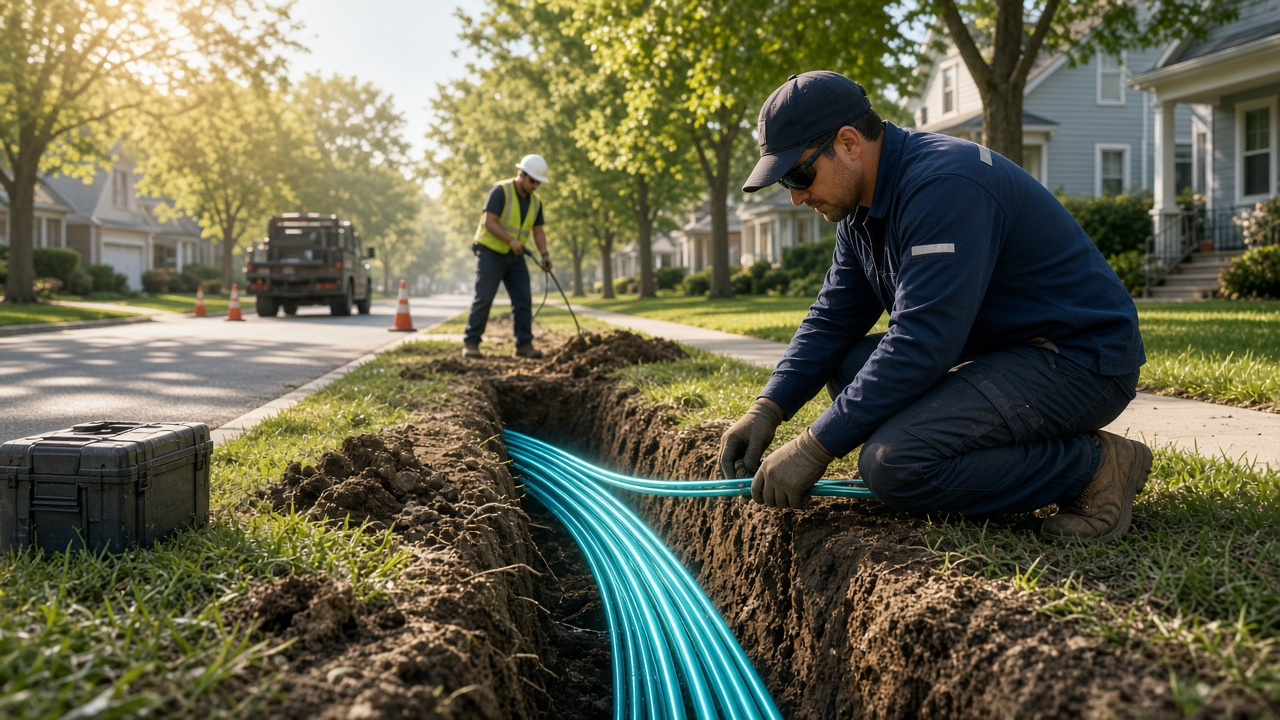
Metronet has officially launched the construction of a 100% fiber-optic network in Bolingbrook, Illinois, marking a major infrastructure upgrade for residents and businesses. Unlike traditional broadband options such as DSL and cable, fiber-optic internet transmits data through strands of glass using light signals—resulting in dramatically faster speeds and lower latency. While cable networks generally offer download speeds up to 1 Gbps under optimal conditions, fiber-optic systems routinely deliver symmetrical download and upload speeds exceeding 1 Gbps—ideal for remote work, 4K streaming, online gaming, and large file transfers without delay or degradation.
This new network gives Bolingbrook customers an alternative to legacy copper-based services, which often struggle with bandwidth sharing and signal interference. Fiber connections offer consistent performance even during peak usage times and across larger distances. In real-world applications, users can expect minimal buffering, instant cloud-syncing, and seamless videoconferencing. As the foundation of next-generation connectivity, fiber-optic technology doesn’t just enhance speed; it redefines reliability.
Metronet’s Strategy in Expanding Next-Generation Infrastructure
Shaping the Digital Landscape: Metronet’s Track Record
Since its founding in 2005, Metronet has consistently positioned itself as a leader in fiber-optic infrastructure deployment across mid-sized communities in the United States. Headquartered in Evansville, Indiana, the company has expanded its presence to more than 250 communities across 16 states. Through private investment and strategic engineering, Metronet builds entirely fiber-optic networks that offer symmetrical internet speeds up to 10 Gbps, positioning itself ahead of legacy cable providers struggling with bandwidth limitations.
In cities like Ames, Iowa and Lexington, Kentucky, Metronet has demonstrated a replicable model—design, build, deploy, and operate fully fiber networks without reliance on outdated copper or hybrid solutions. These implementations deliver near-zero latency, enabling cloud applications, remote collaboration, and digital education without bottlenecks.
Targeted Development in Bolingbrook
Metronet’s entrance into Bolingbrook, Illinois aligns with its mission to bridge the infrastructure gap in underserved and mid-sized municipalities. The company is deploying a 100% fiber-optic network backed by private capital, with no financial burden placed on the city. This initiative will place Bolingbrook alongside other Metronet-powered communities that now benefit from some of the fastest residential and commercial internet speeds in the country.
Network construction in Bolingbrook includes micro-trenching and directional boring methods to minimize disruption, streamline installation, and complete neighborhood rollouts in phases. Metronet’s engineering team prioritizes scalability, ensuring the infrastructure can handle increasing data consumption without requiring significant overhauls in the coming decades.
Proven Success across Diverse Markets
From college towns like Iowa City to suburbs such as Franklin, Tennessee, Metronet has executed projects with tangible, quantifiable results. In Huntington, Indiana, businesses reported a 27% efficiency gain after transitioning to fiber, citing reduced downtime and faster cloud operations. In Tallahassee, the rollout of a symmetrical gigabit service spurred the growth of tech co-working hubs and remote-first startups.
The company enters each new market with a localized approach, maintaining permanent, regional operations teams. These are not satellite efforts—they’re long-term infrastructure commitments. For Bolingbrook, that means Metronet is not just laying fiber; it’s embedding itself into the broadband ecosystem of the village, expanding connectivity options and preparing the town for the bandwidth requirements of the next decade.
Bolingbrook, Illinois: A Community in Transition
Dynamic Demographics and a Strong Business Landscape
Home to over 73,000 residents, Bolingbrook ranks as the second-largest village in Illinois. Situated in both Will and DuPage counties, the village reflects a diverse and steadily expanding population. According to the U.S. Census Bureau’s 2020 data, the racial makeup includes 32% White non-Hispanic, 24% African American, 21% Hispanic or Latino, and 17% Asian residents. This multifaceted community supports a variety of cultural institutions, local enterprises, and public services.
Bolingbrook’s economy thrives on a blend of retail, logistics, manufacturing, and office-based services. Global corporations such as Ulta Beauty, WeatherTech, and G&W Electric have established operations in the area. Additionally, the I-55 Corridor provides distribution and warehousing access that connects local businesses to national supply chains. With this infrastructure, the village positions itself as a strategic node within the Chicago metropolitan area.
Existing Internet Infrastructure: A Mixed Performance Landscape
Despite its position as a commercial hub, Bolingbrook's current broadband ecosystem reflects uneven performance. Fixed-line internet access relies heavily on legacy copper and coaxial infrastructure, particularly in residential zones. Although providers such as Comcast Xfinity and AT&T offer high-speed plans, actual speeds fluctuate based on network congestion and legacy hardware. According to the Federal Communications Commission’s 2023 Broadband Map, large portions of the village register median download speeds below 100 Mbps.
For local businesses—especially startups, remote workforces, and digital-first operations—the lack of symmetrical gigabit speeds limits productivity and inhibits scalability. The result is a digital bottleneck: demand for faster and more reliable internet outpaces what existing networks can deliver.
Unlocking Economic Momentum and Technological Innovation
Bolingbrook has the fundamental ingredients for economic acceleration: a young, educated population, a business-friendly environment, and access to regional transportation assets. However, unlocking the next tier of growth requires digital infrastructure that matches modern demands.
The introduction of a fiber-optic network offers a direct path forward. Gigabit-level upload and download speeds will enable real-time data processing, uninterrupted cloud integration, and scalable telehealth or e-learning options. Businesses that previously hesitated to expand within Bolingbrook due to digital constraints will be able to reevaluate site selection. Startups and remote employees, once limited by local bandwidth caps, will gain operational latitude.
The potential outcomes will vary: enhanced job creation in tech-adjacent fields, increased competitiveness in regional economic development strategies, and amplified attractiveness to digital entrepreneurs. Can Bolingbrook become a smart city prototype in Illinois? With fiber laid beneath its streets—spearheaded by Metronet—this transformation moves from idea to implementation.
Fiber Connectivity and Economic Growth: What Bolingbrook Gains
High-Speed Internet as a Catalyst for Economic Development
Communities with advanced broadband access consistently show higher rates of business formation, job creation, and GDP growth. According to a 2020 report by the Federal Reserve Bank of Richmond, counties that adopted high-speed internet between 2010 and 2018 experienced employment growth that outpaced non-adopting counties by 1.4 percentage points annually. In the same period, those areas also saw wage increases and higher property values, pointing to a direct relationship between improved connectivity and economic vitality.
Small businesses, startups, and remote workers thrive in fiber-connected environments thanks to reliable and scalable bandwidth. This infrastructure supports real-time collaboration tools, cloud computing, and seamless teleconferencing—an operational advantage that translates into profitability and sustainability.
Examples of Cities Transformed by Fiber Infrastructure
Chattanooga, Tennessee offers a compelling case study. After launching citywide fiber in 2010, it became known as “The Gig City.” A 2020 University of Tennessee at Chattanooga study showed that the city’s fiber network generated an estimated $2.69 billion in economic benefits over the first ten years, including 9,516 new jobs. Manufacturers and tech startups moved in, drawn by the promise of symmetrical gigabit speeds and low latency.
Similarly, Cedar Falls, Iowa, after investing in municipal fiber, attracted data centers and saw an uptick in home-based businesses. The unemployment rate dropped to 2.9% in 2018—well below the national average at the time—reflecting how internet infrastructure stimulates labor markets.
What to Expect in Bolingbrook
Bolingbrook stands to benefit substantially from Metronet’s fiber deployment. As businesses in the area gain access to multi-gigabit internet, sectors like logistics, healthcare, and tech services can expand operations or enter the market. Real estate values near fiber-connected zones could rise; a 2015 study by the Fiber to the Home Council Americas found that access to a fiber connection increases home values by up to 3.1%.
- Commercial expansion: Faster connectivity will make Bolingbrook more attractive to out-of-state companies looking for suburban Chicagoland locations with modern infrastructure.
- Workforce flexibility: With higher speeds, remote work becomes viable for a greater percentage of the population, boosting labor force participation, particularly among caregivers and people with disabilities.
- Entrepreneurship growth: High-speed internet lowers entry barriers for digital startups and home-based businesses, from e-commerce enterprises to professional services.
Every new connection lays the groundwork for sustained digital transformation. Bolingbrook residents won’t just stream faster—they’ll build faster, hire faster, and innovate faster.
Metronet Lays the Groundwork: Construction Phases for Bolingbrook’s Fiber Future
Comprehensive Project Schedule for Full-Fiber Installation
Metronet initiated construction of its ultra-high-speed fiber-optic network in Bolingbrook in early Q2 of 2024. The full-scale deployment spans approximately 18 to 24 months, depending on terrain conditions, permitting timelines, and weather variables. Crews follow a tightly sequenced schedule, with progress updated via Metronet's local construction portal to ensure transparent communication with residents and businesses.
The initial planning and design phase concluded in March 2024, involving digital surveying, infrastructure mapping, and permit acquisition. Field construction began in April, with representatives providing advance notice to neighborhoods slated for installation.
Deployment Phases: From Trenching to Light-Up
- Phase 1 – Preliminary Engineering and Utility Coordination: This phase involved route assessments and coordination with utility companies to identify existing underground infrastructure. Locators marked gas, electric, and water lines to prevent service interruptions.
- Phase 2 – Mainline Build-Out: Fiber backbone installation commenced along major roadways and thoroughfares. Directional boring equipment minimized surface disruption, while temporary restorations followed each segment completion.
- Phase 3 – Neighborhood Access Deployment: Construction moved into residential zones with localized fiber routing. Individual fiber drops to properties begin once the mainline is completed in a block segment, ensuring stepwise activation capability.
- Phase 4 – Customer Connections and Network Activation: Technicians perform home and business fiber installations, followed by network testing and service activation. This phase will roll out progressively as zones complete the build-out.
Minimizing Construction Disruptions with Coordinated Logistics
To limit community disturbance, Metronet embeds mitigation strategies directly into its operations. Construction crews conduct door-to-door outreach before digging begins, with multilingual notices distributed to affected addresses. Work hours are restricted to ensure compatibility with residential routines—typically 8 a.m. to 5 p.m. on weekdays, with no weekend activity unless required by municipal allowance.
Metronet partners with Bolingbrook's public works and utilities departments to synchronize trenching activity with ongoing civic infrastructure work. In cases where trenchless boring is not feasible, crews use open trench methods with rapid soil backfill and temporary asphalt patching, followed by final restoration 30 to 45 days later.
Real-time construction maps, updated weekly, give residents geographic clarity on fiber deployment zones and estimated durations. This digital transparency allows users to anticipate work in their area and plan accordingly.
Transformative Effects of High-Speed Internet Access in Bolingbrook
Enhancements in Quality of Life for Residents
Reliable fiber-optic internet shifts digital routines from frustration to seamless efficiency. Residents experience uninterrupted high-definition streaming, faster downloads, and responsive online services. For households integrating smart home systems—thermostats, security devices, lighting—high-speed connectivity ensures these technologies operate without latency. Telehealth services, now a permanent fixture in healthcare delivery, rely on robust internet to support video consultations, medical device integration, and instant file transfers. Fiber connections allow these services to function without delay or dropped connections.
Digital inclusion also improves. With symmetrical upload and download speeds, every household member—even in multi-person homes—can videoconference, stream, game, or work simultaneously without interference.
Opportunities for Local Businesses and Services
Small businesses and local service providers operate more competitively when backed by gigabit-speed internet. Operations that depend on cloud-based tools—ranging from remote support platforms to CRM systems—become more efficient. Retailers can update inventory in real time, process digital payments faster, and enhance customer service with cloud-based chatbots or video consultations. Professional service providers—accountants, architects, consultants—gain a clearer path to deliverables via seamless data sharing and collaboration platforms.
- Restaurants enable faster online orders and delivery logistics.
- Fitness studios stream virtual classes with high video clarity.
- Local media outlets upload HD content without bottlenecks.
As a result, businesses retain customers, increase outreach, and strengthen digital resiliency—key success factors amid evolving consumer behaviors.
Long-Term Educational and Work-from-Home Advantages
Remote work and e-learning environments demand bandwidth-intensive applications, such as Zoom, Google Classroom, or Microsoft Teams. Families without fiber limitations can support overlapping sessions—students attending virtual lectures while parents participate in meetings—all without lag or audiovisual distortion. This synchronicity leads to higher productivity and fewer digital barriers.
Students also benefit from greater cloud access, enabling them to collaborate on shared documents, upload coursework, and access advanced online labs or simulations that would be unmanageable over a weaker connection. For adult learners, high-speed internet opens pathways to continued education, certification programs, and online degrees, strengthening the workforce over the long term.
In a town like Bolingbrook, where demographics range from working professionals to families and retirees, fiber access creates a shared baseline—one where every connected household gains speed, reliability, and access to new possibilities.
The Strategic Role of Public-Private Partnerships in Fiber Infrastructure
Understanding Public-Private Partnerships in Infrastructure
Public-private partnerships (PPPs) function as long-term collaborations where public sector entities join forces with private companies to finance, construct, and operate infrastructure projects. These arrangements shift traditional funding models by blending public oversight with private-sector efficiency, cutting red tape while leveraging innovation.
In broadband expansion, PPPs lower financial risk for municipalities and accelerate deployment by accessing private capital and expertise. The Brookings Institution has documented how cities using PPP models have seen faster project execution and improved ROI on digital infrastructure investments.
Specifics of the Bolingbrook Partnership
The Bolingbrook fiber network project represents a direct collaboration between Metronet and local public authorities. While Metronet fully finances the build—without drawing on taxpayer revenue—the company works closely with the village to coordinate construction timelines, access necessary rights-of-way, and prioritize service to underserved areas.
Village officials facilitate permitting and community outreach, ensuring minimal disruption during rollout. In return, Metronet commits to delivering symmetrical multi-gigabit speeds and open-access infrastructure that promotes competition and future-proofing.
Shared Value: Government, Business, and Community
- Local Government: Gains advanced infrastructure with no upfront cost and minimal fiscal exposure. Municipal agencies benefit from upgraded connectivity critical to public safety, education, and digital services.
- Metronet: Secures streamlined access to build in a high-growth suburb, strengthening its Midwestern network presence and long-term customer base.
- Community: Residents and businesses access faster, more reliable internet—unlocking economic opportunity, reducing the digital divide, and fostering innovation ecosystems.
With this PPP structure, Bolingbrook maximizes impact while minimizing risk. The alignment of public responsibility and private innovation sets the groundwork for scalable, sustainable broadband infrastructure that serves every layer of the local economy.
Customized Fiber Internet Solutions from Metronet
Residential Services Designed for Speed and Reliability
Households in Bolingbrook will access a range of fiber-optic internet plans that eliminate buffering, slow downloads, and connection instability. Metronet delivers symmetrical speeds—upload and download at the same rate—which is critical for video conferencing, gaming, streaming, and large file sharing.
- Basic plans start at 100 Mbps symmetrical, ideal for browsing, email, and small household needs.
- Mid-tier options offer 500 Mbps for multi-device streaming and remote work setups.
- Premium gigabit service delivers up to 1 Gbps, handling everything from 4K streaming to smart home ecosystems without interruption.
Residential customers also benefit from unlimited data with no throttling or usage caps, 24/7 local customer support, and optional additions like whole-home Wi-Fi systems and managed router services.
Scalable Services for Small to Enterprise-Level Businesses
Metronet’s business portfolio responds to the specific needs of operations ranging from home offices to large campuses. Unlike copper-based solutions, fiber guarantees higher bandwidth and lower latency, which are non-negotiable for cloud computing, VoIP telephony, and real-time collaboration tools.
- Fiber Internet for Small Businesses: Symmetrical speeds up to 1 Gbps, static IP addresses, firewall management, and prioritized support.
- Business Ethernet: Dedicated connections with 10 Gbps capabilities, suited for data-heavy industries like healthcare, manufacturing, or media.
- Hosted Voice Solutions: Cloud-based phone systems with enterprise features such as auto attendant, call analytics, and mobile integration.
- Disaster recovery & failover services: Guaranteed uptime and business continuity support through redundancies and failover protection.
Exclusive Features Elevating the Subscriber Experience
Metronet differentiates itself by offering more than just raw speed. Subscribers gain access to a package of service advantages built around performance and support.
- TrueFiber™ Technology: End-to-end fiber delivery, not a hybrid or shared system, ensures consistent speed and service quality.
- No long-term contracts: Residential plans come without mandatory long-term commitments, offering flexibility with month-to-month billing.
- Local customer care teams: Support centers based in the region provide faster resolutions and community-based service familiarity.
- SmartNet Wi-Fi: Advanced mesh routers optimize connectivity in every room, with app-based network control for households and administrators.
These offerings position Metronet as a full-service provider capable of adapting to both residential and business internet needs with speed, reliability, and user-first design.
Fueling a Statewide Tech Evolution: Innovation and Technology Growth in Illinois
Illinois has actively positioned itself as a burgeoning hub for innovation. From Chicago’s fast-growing tech startup scene to mid-sized cities building digital infrastructure, the commitment to creating a connected, tech-literate economy runs deep. The state’s strategic investments in broadband expansion serve not just to enhance connectivity—but to empower innovation ecosystems across sectors.
Illinois's Push Toward a Digitally Advanced Economy
The Illinois Department of Commerce and Economic Opportunity launched the Connect Illinois initiative with a $420 million investment in statewide broadband access. This program aims to deliver universal access to high-speed internet, enabling every community to fully participate in digital modernization. The initiative directly supports sectors like telemedicine, smart manufacturing, agritech, and digital education.
Multiple regional tech incubators—such as 1863 Ventures in Chicago and the Research Park at the University of Illinois Urbana-Champaign—now rely on fiber-backed infrastructure for high-speed data transfer, real-time collaboration, and remote venture capital engagement. These ecosystems thrive only when gigabit-capable networks support them with ultra-low latency and consistent uptime.
The Role of Metronet in State-Tech Advancement
With Metronet extending its fiber footprint into Bolingbrook, the company strengthens Illinois’s broader digital strategy by filling proliferation gaps in suburban and semi-urban areas. These are not fringe communities—they serve as critical links between dense metro tech zones and rural development corridors. By delivering fiber-optic infrastructure with symmetrical upload/download speeds, Metronet creates the physical foundation for high-scale digital use cases: cloud computing, IoT deployment, and edge AI operations.
The introduction of 100% fiber connectivity in areas like Bolingbrook enables streamlined scaling of remote workforces, SaaS startups, and hybrid learning environments. This decentralization of access, from city-center clusters to suburban nodes, aligns tightly with the state’s intent to democratize innovation infrastructure.
Connectivity Catalyzing Success: Use Cases Across the State
- Peoria Innovation Hub leverages fiber internet to support 3D printing facilities, VR-based design labs, and remote prototyping services—all of which require consistent gigabit speeds and minimal latency.
- SIU School of Medicine expanded its telehealth offerings across underserved regions by relying on broadband infrastructure enabled through projects like Metronet’s. Patient consultations, diagnostics, and electronic health records transmission now operate in real time.
- In Rockford Manufacturing Campus, advanced CNC machines and sensor-based monitoring systems feed production data to cloud platforms—processes that break down under traditional DSL or cable-based connections.
Each of these examples reflects a tangible outcome: fiber infrastructure drives innovation not conceptually, but operationally. Bolingbrook’s inclusion in this momentum reaffirms a simple truth—when infrastructure meets ambition, measurable transformation follows.
The Community's Journey to Connectivity
Lessons from Connected Cities: Voices from the Metronet Network
In Evansville, Indiana, where Metronet completed its fiber buildout in 2020, business owners speak plainly about the shift. Download speeds exceeding 1 Gbps changed workflows overnight, enabling real-time collaboration without lag and reducing cloud computing downtime dramatically.
Julie Martinez, who runs a graphic design firm in Evansville’s downtown district, described the transformation with clarity: “Before Metronet, uploading large design files was a bottleneck. With fiber, my team shares 4K video assets in seconds — not hours.”
Residents tell their own version of the story. Multiple users streaming 4K content while working or studying from home has become routine. John Beveridge, a high school physics teacher, said his household of five uses over 2 TB of data a month: “Fiber just works. No buffering, no slowdowns. I can assign online labs and know all my students will be able to access them at home.”
Anticipation Builds in Bolingbrook
In Bolingbrook, the dialogue around broadband has visibly shifted. Local forums, business councils, and school board meetings now include fiber access as a recurring agenda item. Residents expect more than fast internet. They expect transformation.
- Small business owners anticipate faster payment processing, secure cloud backups, and 24/7 customer service through improved communications.
- Remote professionals and hybrid workers look forward to cutting commute days and increasing productivity from home-based offices.
- Parents speak of supporting digital homework in real time, without competition for bandwidth during peak hours.
- Gamers and content creators highlight the promise of symmetrical upload speeds, enabling live streaming and online collaboration without compromise.
Excitement isn’t limited to households. Bolingbrook’s Chamber of Commerce has launched a monthly “Fiber Forward” meetup, inviting tech leaders, educators, and entrepreneurs to envision new possibilities. Early discussions center on tech incubation spaces, digital learning hubs, and interactive public Wi-Fi installations.
What Comes Next for Bolingbrook
Following Metronet’s groundwork, Bolingbrook stands on the threshold of digital reinvention. City officials outline a vision built around deep connectivity: smart traffic systems responsive to real-time data, public safety networks interconnected across agencies, and high-resolution surveillance linked directly into emergency operations centers.
Local schools will gain bandwidth for artificial intelligence-driven learning tools, interactive AR/VR experiences, and scalable cloud-based curriculums. Healthcare providers see potential in telemedicine services that can extend care without geographic restrictions.
By aligning infrastructure with high-bandwidth applications, Bolingbrook positions itself as a regional leader in digital readiness. Connectivity isn’t the end goal — it’s the platform from which new services, ideas, and innovations can emerge.
A Turning Point for Bolingbrook: Metronet’s Fiber Network Breaks Ground
Metronet’s decision to begin construction of a fiber-optic network in Bolingbrook, Illinois marks a major inflection point in the village’s digital transformation. This infrastructure investment doesn’t just add capacity — it redefines what’s possible for local households, businesses, and institutions.
The project introduces symmetrical, gigabit-speed internet access that eliminates common connectivity bottlenecks and positions Bolingbrook to compete with leading tech-forward communities across the country. With up to 1 Gbps speeds for both downloads and uploads, Metronet enables bandwidth-intensive applications — video conferencing, cloud computing, telehealth, remote learning — to perform reliably and without interruption.
Beyond raw speed and reliability, this build signals the arrival of future-proof infrastructure built to scale. Fiber-optic networks, unlike traditional copper lines or coaxial cable, can handle growing data demands for decades to come without needing replacement. That distinction places Bolingbrook on solid footing for long-term economic competitiveness and innovation.
Get Involved: Help Shape a More Connected Bolingbrook
Local engagement accelerates the benefits of this investment. Community members can participate in several ways:
- Track real-time progress by visiting Metronet’s Bolingbrook project page, where construction updates and map visuals are regularly posted.
- Provide feedback or raise specific neighborhood concerns through Metronet’s online contact channels and customer service center.
- Subscribe to email alerts and community newsletters to receive timely announcements about service availability, pricing, and features as the network goes live in stages.
Metronet’s fiber deployment opens new channels for education, remote work, and commerce — but how those outcomes take shape depends on community participation. The infrastructure is coming. The next step: connect, engage, and take full advantage of a network built to transform how Bolingbrook lives, works, and grows.