How to Share Internet with Neighbors Legally and Securely (2026)
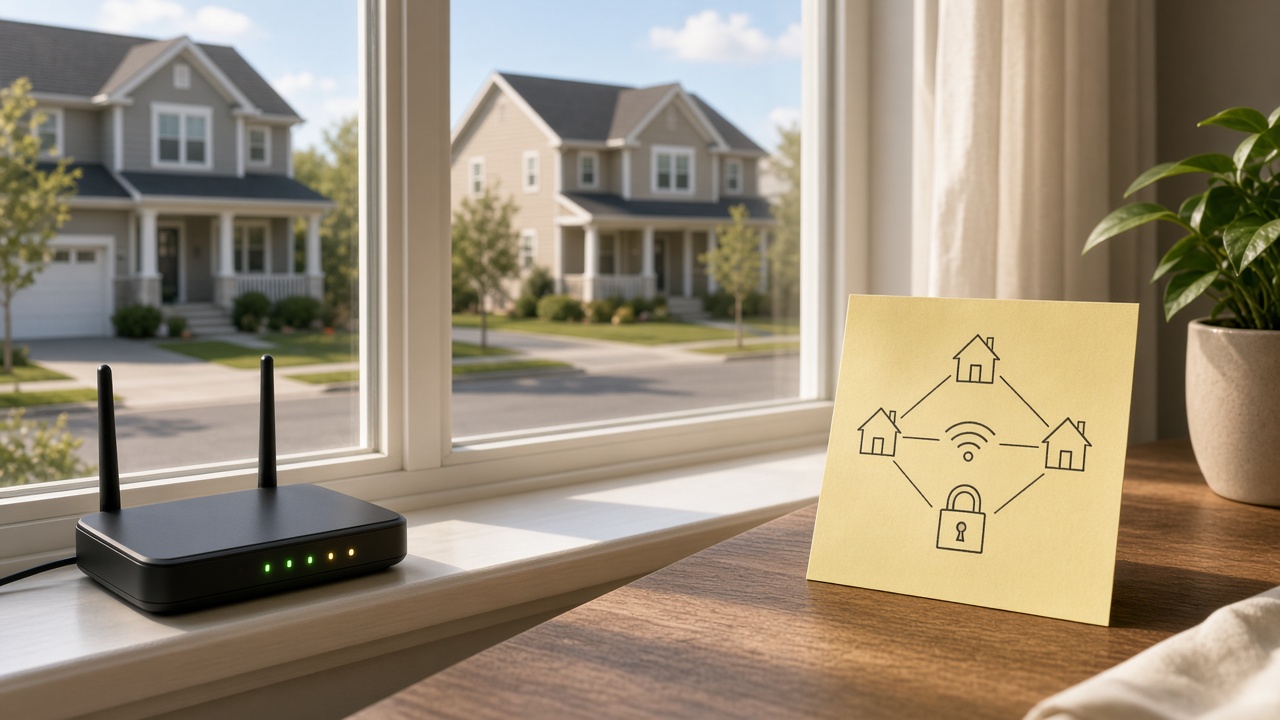
Sharing an internet connection with your neighbor isn’t uncommon—especially in places where homes are joined wall-to-wall. Whether you're living in a duplex, a townhouse, or a multi-unit apartment complex, the idea of splitting the cost of internet service and maximizing bandwidth efficiency appeals to many. But running a cable under the fence or handing over your Wi-Fi password isn’t enough.
Unprotected and unauthorized sharing can lead to legal violations, data exposure, and service disruptions. To avoid these pitfalls, a few technical and administrative steps must follow legal requirements and sound cybersecurity principles.
In this article, you'll find clear answers on what your ISP allows, how to configure your network securely, and which equipment and permission setups keep both parties compliant and protected.
Know Your Internet Connection Before Sharing It
What Is an Internet Service Provider (ISP)?
An Internet Service Provider (ISP) delivers internet access to homes and businesses through various technologies. Common ISPs in the U.S. include Comcast Xfinity, AT&T, Spectrum, and Verizon, each offering different plans, speeds, and policies.
Types of Internet Services
Not all internet services are created equal. The delivery technology directly affects speed, capacity, and feasibility for sharing across multiple households.
- Fiber: Uses fiber-optic cables and generally provides the fastest and most reliable connection. Symmetrical speeds (equal upload and download) make it ideal for shared usage.
- Cable: Delivered via coaxial TV cables. Offers fast download speeds but often slower uploads. Shared bandwidth within neighborhoods can lead to peak-time slowdowns.
- DSL: Runs over traditional telephone lines. It's widely available but typically much slower and more sensitive to distance from the provider's central hub.
Key Terms: Access, Limitations, and Definitions
Before exploring shared access, understand three critical terms in your service plan:
- Site Access: Refers to the physical location(s) where service may be used. Many providers limit access to a single residential address.
- Service Restrictions: Can include prohibitions on commercial use, reselling bandwidth, or extending access to third parties.
- Data Caps: ISPs like Xfinity may impose monthly data limits—commonly 1.2TB. Exceeding these can lead to throttled speeds, extra charges, or temporary service suspension.
Review ISP Terms of Service (ToS)
ISPs outline permitted usage in their ToS, but most subscribers never read them in full. Skipping this step introduces serious consequences when sharing internet with others nearby.
- Restrictions on Sharing: Many ISPs explicitly prohibit sharing your internet with individuals outside your immediate household or property line. For example, Spectrum’s Residential Services Agreement states that the customer may not “resell, share, or distribute the Services.”
- Consequences of Violation: Breaching your ISP’s policy can trigger enforcement actions. These may include suspension, permanent account termination, loss of promotional pricing, or administrative fines. Providers such as AT&T and Cox Communications reserve the right to charge business-level rates if residential service is used for extended sharing or networking.
Still not sure what your contract allows? Look up your provider's ToS online and perform a keyword search for terms like “share,” “resell,” or “multi-dwelling.” What does it say?
Understand Legal Conditions Before Sharing Internet with Neighbors
Local Laws on Internet Sharing
Before setting up any shared internet arrangement, check municipal and state laws. In some jurisdictions, sharing internet—even voluntarily and without profit—can violate statutes related to telecommunications or utility regulation. For example, states like California and New York classify unauthorized distribution of internet to third parties, even non-commercially, as a potential breach of service classification rules. Local ordinances may view your network as a "commercial provider" if more than one household uses it, especially across property lines.
Potential Legal Liability for Network Activity
Any network activity traced back to your IP address falls under your responsibility. If your neighbor engages in illegal downloading, copyright infringement, or cybercrime, the first line of legal inquiry targets you—the account holder. In 2023, the Copyright Enforcement and Rights Organization (CERO) documented over 15,000 complaints across North America where IP owners were legally contacted over third-party misuse of shared internet connections.
Responsibilities of the Primary Account Holder
You’ll remain legally and contractually accountable for everything transmitted through your network. Internet Service Providers (ISPs) associate activity logs directly with account holder information. That means any violations—whether unintentional data misuse or deliberate criminal activity—trigger enforcement mechanisms against you first. Your ISP can suspend your access, throttle bandwidth, or even terminate your account in response to policy violations stemming from shared use.
Consulting Local Jurisdictions and Legal Counsel
Legal interpretations vary. In dense urban settings with overlapping buildings, some cities allow limited communal use as long as no fees are exchanged. In rural municipalities, cooperative infrastructure arrangements through neighborhood associations can bypass restrictions altogether. Consult your city’s regulatory office or a telecommunications attorney to define boundaries clearly. Local broadband commissions, consumer protection boards, and housing associations often have published position statements available online or by request.
Creating a Simple Written Agreement with Neighbors
Protect all parties by drafting a clear written agreement. Specify bandwidth limits, payment schedules (if applicable), permitted devices, and usage policies. Include clauses that assign responsibility for illegal behavior. While not all agreements carry legal weight in court, they document clear intent and offer a point of reference if disputes arise. For added legitimacy, have each participant sign and date the document, and store digital copies securely. Consider referencing your ISP’s Acceptable Use Policy directly within the agreement to demonstrate compliance.
Crafting a Clear and Secure Cost-Sharing Agreement with Your Neighbors
Discuss Shared Expectations and Responsibilities
Before any money changes hands or passwords get shared, sit down with neighbors to define expectations. Outline who will use the connection, how often, and for what purpose. Streaming? Remote work? Casual browsing? Agreeing on use cases reduces conflict and anticipates potential overuse or throttling.
Set clear boundaries. Will the internet be used just by adults in the household, or will children have access too? Are smart home devices part of the equation? Clarity at this stage prevents misunderstandings later.
Payment Terms and Collection Method
Split costs according to usage or evenly across participating households—whichever feels fair and manageable. To streamline payment collection:
- Use digital tools such as Venmo, PayPal, or Zelle for monthly transfers.
- Align due dates with the billing cycle to ensure timely payments.
- Designate a single account holder responsible for paying the internet service provider and managing incoming payments.
Keep the agreement in writing. Even a simple document, signed and shared via email, sets expectations and holds everyone accountable.
Define Access Level: Entire Network vs. Guest Network
Offering neighbors unrestricted access to your main network poses both security and management risks. Opt for guest network access to isolate devices and prevent unauthorized sharing of local files or printers.
On a guest network, you retain control of your core devices while still offering reliable internet access. If neighbors need to access smart devices or shared drives, revise the access structure and permissions accordingly but proceed with caution.
Decide Who Manages the Network
Choose a single point of contact to manage router access, firmware updates, security settings, troubleshooting, and password changes. This streamlines decisions and avoids technical conflicts.
If you're hosting the router, offer transparency by sharing login screens during setup or walkthroughs. But avoid giving out admin-level access unless you fully trust the other party and can define limited roles.
- Set ground rules: Will passwords change every few months?
- Determine who will handle upgrades or replacements.
- Agree on protocols for outages or internet service issues.
When everyone knows who makes the calls, management becomes smoother—and so does your professional relationship as internet co-users.
Build a Network That Delivers: Infrastructure That Works for Shared Internet
Choose the Right Router for Shared Access
When sharing internet with neighbors, standard consumer routers won’t cut it. They often lack the processing power, memory, and traffic management features required to support multiple households. Look for routers with a dual-core or quad-core CPU, at least 256MB of RAM, and Quality of Service (QoS) controls built-in. Models from brands like Ubiquiti, TP-Link's Omada line, or ASUS's Pro line offer scalable options with advanced traffic prioritization.
Differences Between Personal and Commercial-Grade Routers
Personal routers focus on user-friendliness, not on handling multiple concurrent connections at scale. In contrast, commercial-grade routers support:
- Higher concurrent device limits – often over 100 devices, compared to 25–30 on residential routers.
- Advanced firmware – allowing VLAN segmentation, firewall customizations, and centralized management.
- Better heat control and durability – designed for 24/7 non-stop performance.
Costs for these devices range from $100 to $600, depending on scalability and features. In multi-home sharing scenarios, investing in a professional-grade router prevents slowdowns and security vulnerabilities.
Consider a Mesh Wi-Fi System
What Is Mesh Wi-Fi?
Mesh Wi-Fi replaces a single router with a network of interconnected nodes placed throughout different locations—ideally, each house or unit gets at least one node. These nodes communicate wirelessly (or via Ethernet backhaul) to form a seamless blanket of coverage.
Benefits: Seamless Coverage Across Multiple Homes or Units
- Consistent signal strength – Mesh automatically routes devices to the strongest node, eliminating dead zones.
- No manual login shifts – users stay connected across the network without switching SSIDs.
- Scalability – easy to add more nodes as more users join or coverage area expands.
Netgear Orbi, Google Nest Wi-Fi Pro, and Ubiquiti UniFi Mesh kits provide robust signal continuity in multi-house environments.
Placement of Wi-Fi Nodes
Placement determines performance. To ensure a strong handoff between nodes, install them:
- Within 30–50 feet of each other, depending on wall materials and interference.
- At elevated, open spaces—on shelves or high tables, not behind metal or brick structures.
- In locations central to each unit, reducing the signal travel distance between devices and nodes.
Using a network planning tool like NetSpot or Ekahau HeatMapper helps visualize signal strength and identify optimal node locations before drilling holes or running cables.
Lock Down Your Router: Configuration Steps That Matter
Change the Default Administrator Password Immediately
Routers ship with factory-set credentials like admin/admin or admin/password. These combinations appear in public manuals and hacker databases, making them a security hole. As soon as access is gained to the router’s admin interface, replace the default password with a strong, unique passphrase—ideally a mix of upper and lowercase letters, numbers, and symbols, extending beyond 12 characters.
Use Anonymous SSID Naming Conventions
Broadcasting a network name like SmithFamilyWiFi or 123MainStreet reveals personal information that can be abused. Create a neutral SSID that doesn’t link back to your household or location. Avoid using names that indicate your service provider or device manufacturer either.
- Prefer generic names like Network_57 or Guest_Zone3.
- Disable SSID broadcast if stealth is needed (though this won’t prevent serious attackers).
Enable WPA3 Encryption
Wi-Fi Protected Access 3 (WPA3) resists brute-force attacks with stronger protection mechanisms. Unlike WPA2, WPA3 uses Simultaneous Authentication of Equals (SAE), which eliminates the KRACK exploit vulnerability and provides forward secrecy, ensuring that even if future credentials are compromised, past sessions remain protected.
Why WPA3 Outperforms WPA2
- Resilience to offline dictionary attacks: Attackers can’t capture data packets and crack passwords offline.
- Customized data encryption: Every device communicates with its own encryption key, minimizing risk after a breach.
- Stronger handshakes: SAE prevents eavesdropping during authentication.
How to Enable WPA3 on Your Router
Access your router’s admin dashboard through the web interface (typically at 192.168.0.1 or 192.168.1.1). Then:
- Navigate to the Wireless Security section.
- Select WPA3-Personal from the security mode dropdown.
- If WPA3 is unavailable, check for firmware updates or consider a hardware upgrade.
Activate and Fine-Tune Firewall Settings
The router’s built-in firewall filters incoming traffic based on preset rules. Enable this feature to block unsolicited access attempts from the internet. Advanced routers allow:
- Creating custom rules for specific ports
- Blocking regions or known malicious IP addresses
- Enabling intrusion detection and prevention systems (IDS/IPS)
Turn On Automatic Firmware Updates
Manufacturers release patches frequently in response to new security vulnerabilities. Enable Automatic Firmware Updates in the router settings to ensure timely installation. If that feature doesn’t exist, schedule a monthly manual check via the router’s update section.
Every misconfigured setting creates a new point of vulnerability. But with these changes, the router becomes a robust gatekeeper—not just for your data, but also for your neighbors sharing the line.
Set Up a Guest Wi-Fi Network That Keeps Everyone Secure and Connected
Splitting an internet connection with neighbors doesn't mean opening your network to unwanted risk. The most effective way to maintain performance and protect your primary devices is by configuring a dedicated guest Wi-Fi network. This ensures traffic separation, enforces access control, and prioritizes your own usage when needed.
Isolate the Guest Network from Your Main System
When setting up the guest Wi-Fi, isolate it completely from your primary home network. Most modern routers support this option natively—toggle the guest network setting and it will create a separate subnet with no access to internal IP addresses or devices like printers, NAS drives, or smart home hubs. This separation prevents guests—or compromised guest devices—from reaching personal files or connected systems.
Use QoS to Set Bandwidth Priorities
Configure Quality of Service (QoS) settings to give priority to your personal devices and critical activities, such as video meetings or cloud backups. Assign lower bandwidth thresholds to the guest network to prevent neighbors' streaming or gaming from slowing your work. Advanced routers allow you to cap download and upload speeds for specific device groups or IP ranges.
Protect with a Strong Password and Rotate It Often
Guest networks—especially for shared setups—require rigorous credential management. Use a secure password with at least 12 characters, mixing upper- and lowercase letters, numbers, and special symbols. Don’t leave it printed on the router or scribbled on paper stuck to a wall. Instead, share it verbally or via encrypted messaging only with approved neighbors. Rotate the password every 60 to 90 days, particularly if devices change hands or new residents join the network.
Label Access Networks Clearly for Transparency
Clarity avoids confusion. Use distinct SSIDs (network names) for:
- Main Network: Reserved for you and your household, secured and invisible to others.
- Guest Network: For friends or visitors with temporary access.
- Neighbor Network: The shared connection for your designated cost-sharing partners.
Adding simple labels like “ElmHouse_Private,” “ElmHouse_Guest,” and “ElmHouse_Neighbor” can make managing access significantly easier, especially if multiple parties are involved.
Setting up your guest Wi-Fi the right way doesn’t just protect your digital environment. It also keeps your internet sharing arrangement smooth and professional, leaving no room for ambiguity or accidental overreach.
Optimize Bandwidth and Connection Quality for Shared Use
What Is Data Bandwidth?
Bandwidth represents the maximum amount of data your internet connection can transmit per second, typically measured in megabits per second (Mbps). Think of it as a highway: the more lanes it has, the more traffic it can handle — but congestion still happens when too many vehicles pile up. The same applies to data. With multiple households sharing one connection, unregulated bandwidth use will lead to slower performance during peak hours.
How Quality of Service (QoS) Works
Quality of Service (QoS) settings in your router give you the power to prioritize certain types of traffic over others. For example, you can set Zoom calls or business applications to take precedence over large file downloads or online gaming. Routers with advanced QoS features use packet inspection to identify traffic type and enforce bandwidth rules accordingly. This reduces latency and ensures that time-sensitive services perform reliably, even during busy periods.
Prioritize Traffic Based on Shared Needs
Networking needs vary. One household might stream 4K content, while another works remotely using collaboration tools. Instead of letting data flow indiscriminately, assign priority levels. Here's how that can play out:
- Streaming services: Assign medium priority; they need steady bandwidth, but tolerate minor delays.
- Video conferencing and VoIP: Set high priority to maintain clear calls and avoid audio/video dropouts.
- Gaming: Allocate moderate priority — latency matters here, but gameplay isn't mission-critical.
- File downloads and cloud backups: Configure for low priority; these can wait during busy hours.
Track Monthly Data Usage
Internet service providers often impose data usage limits. Exceeding them results in throttled speeds or additional charges. Use your router’s built-in traffic logging or third-party firmware like DD-WRT to monitor daily bandwidth consumption for each connected device. Cloud-based tools such as GlassWire or BitMeter OS offer more advanced dashboards, and ISPs like Comcast or AT&T also provide monthly usage meters accessible through their customer portals.
Upgrade Your Internet Plan If Bottlenecks Persist
When performance regularly dips and QoS adjustments don’t resolve the issue, the current internet package may be insufficient. For example, a 200 Mbps plan serving three households with heavy video use and work-from-home demands may bottleneck quickly. Check the upstream and downstream limits on your plan, then assess whether moving to a gigabit connection or switching to a fiber provider better fits the shared bandwidth demands. The investment yields smoother performance and reduces tension between users.
Use a VPN for Added Privacy and Security
Sharing an internet connection with neighbors adds complexity to how privacy and security should be managed. A Virtual Private Network—VPN—solves several of the most pressing concerns in one move: it encrypts traffic, conceals user identities, and creates a private tunnel even on a public or guest Wi-Fi network.
Why a VPN Makes a Difference on Shared Connections
Without encryption, any device on the same Wi-Fi network has a potential view into others' data packets, especially if outdated or vulnerable protocols are in play. VPNs apply end-to-end encryption, which blocks visibility into browsing activity—even from others on the same Wi-Fi.
Beyond the encryption, VPNs mask each device’s real IP address by routing traffic through external servers. This adds a second layer of anonymity and reduces exposure to geolocation, tracking, or targeted attacks based on IP identity. On a shared network, this separation is critical to maintain individual privacy boundaries.
Keep Control at the Device Level
Recommending that every user installs and runs their own VPN client on laptops, smartphones, tablets, and streaming devices decentralizes privacy protection. Relying on a router-based VPN setup protects communication between the network and the outside world, but leaves data visible within the local network. Device-level VPNs eliminate that gap.
- Windows/macOS: Choose a client with kill-switch functionality and multi-protocol support (e.g., OpenVPN, WireGuard).
- iOS/Android: Make sure the VPN app supports always-on VPN and allows app-specific rules if needed.
- Streaming and Smart TVs: Install VPN apps directly or use a pre-configured VPN router if native apps aren’t available.
Avoid Logging and Data-Sharing Providers
Some VPN providers track activity, collect metadata, or sell anonymized user data to third parties. That completely undermines the goal of using a VPN on a shared connection. In this context, logging policies matter more than speed or server count.
Look specifically for VPNs that:
- Publish independent audit results confirming no-logs policies.
- Operate under jurisdictions with strong privacy laws (e.g., Panama, Switzerland).
- Offer anonymous payment options (e.g., cryptocurrency or gift cards) for full privacy alignment.
VPNs aren’t just for power users or travelers. On a shared neighborhood network, they are non-negotiable for anyone who wants to maintain private, secure online activity—from online banking to watching content libraries restricted to specific countries.
Implement Device Access Control and Monitoring
Control the Number of Connected Devices per Household
Begin by defining a limit on the number of devices each household can connect. This ensures balanced usage and helps maintain bandwidth quality. Most modern routers support device quotas per SSID or MAC address list. Set a fixed allowance—say, five devices maximum per household—and communicate the rule clearly with your neighbors.
Set Up MAC Address Filtering
Media Access Control (MAC) filtering offers precise control over which devices can access your network. Every internet-enabled device has a unique MAC address. Routers can whitelist or blacklist devices based on this identifier. To implement this:
- Identify MAC addresses for each authorized device—often found in the device's network settings.
- Log into your router’s admin interface, typically accessed through a browser via its IP address (e.g., 192.168.1.1).
- Navigate to security or advanced settings, then enable MAC filtering.
- Add each approved device manually to the allowed list. This prevents unauthorized gadgets from joining, even if the Wi-Fi password is known.
Monitor Activity for Suspicious or Unauthorized Devices
Routine monitoring helps detect devices that bypass established controls or connect without permission. Start by reviewing the device list on your router’s dashboard. Look for unfamiliar names, cloned MACs, or unusually high usage patterns.
For deeper insight, consider third-party tools like Wireshark for packet analysis or Fing for network scanning. Both can track device IPs, manufacturer details, and live activity. Detecting anomalies early allows you to block or investigate before larger misuse unfolds.
Use Router Logs and App-Based Dashboards
Don’t rely on static settings alone—leverage the built-in logging features of your router or its mobile app. High-end models like ASUS, Netgear Nighthawk, and TP-Link Archer offer advanced dashboards with real-time data. Through these dashboards, you can:
- See when and how long each device has been connected.
- Track bandwidth usage per device to identify data hogs.
- Receive alerts for new or frequent access attempts from unknown devices.
- Export logs for auditing or troubleshooting purposes.
Set up periodic audits—weekly or monthly—to keep the network clean and enforce the agreed-upon access parameters. Combining automated controls with active observation delivers both stability and trust.
Final Thoughts on Building a Legal and Secure Shared Internet Connection
When sharing your internet connection with neighbors, legality, performance, and safety hinge on precision—not shortcuts. If every site accessed via your network, every packet of data transferred, and every login word used is traceable to your router, then accountability becomes a shared reality. That makes mutual trust more than relevant—it makes it necessary.
Nothing replaces a careful review of your internet provider contract. Have you already checked if your service agreement permits network sharing beyond your household? If not, start there. This single step affects everything else—from infrastructure to liability.
Technical solutions solve technical problems. Establishing a distinct guest Wi-Fi SSID prevents devices from clashing. Bandwidth controls keep streaming video from crippling your computer speed when you're on a work Zoom call. VPNs reduce risk when one household browses a vulnerable site.
But technology can’t patch weak communication. Have you discussed usage expectations or peak-time habits with your share partners? Did both parties agree on usage limits, costs, and troubleshooting responsibilities? This isn't just a network—it's your shared digital footprint.
Ask yourself:
- Have all users changed the default password of the shared router to a strong, unique word?
- Is there a written agreement identifying who pays what and who responds when the service goes down?
- Are tools in place to log usage and protect each party’s data integrity?
Built correctly, a shared internet connection offers more than savings. It builds community. It respects privacy. It performs reliably—as long as transparency, mutual responsibility, and sound tech practices guide its use.
Now’s the time to take inventory. Does your current setup stand up to the realities of modern broadband sharing? Double-check. Then upgrade where needed—because reliable sharing never happens by accident.