Can Starlink replace my Home Internet (2026)?
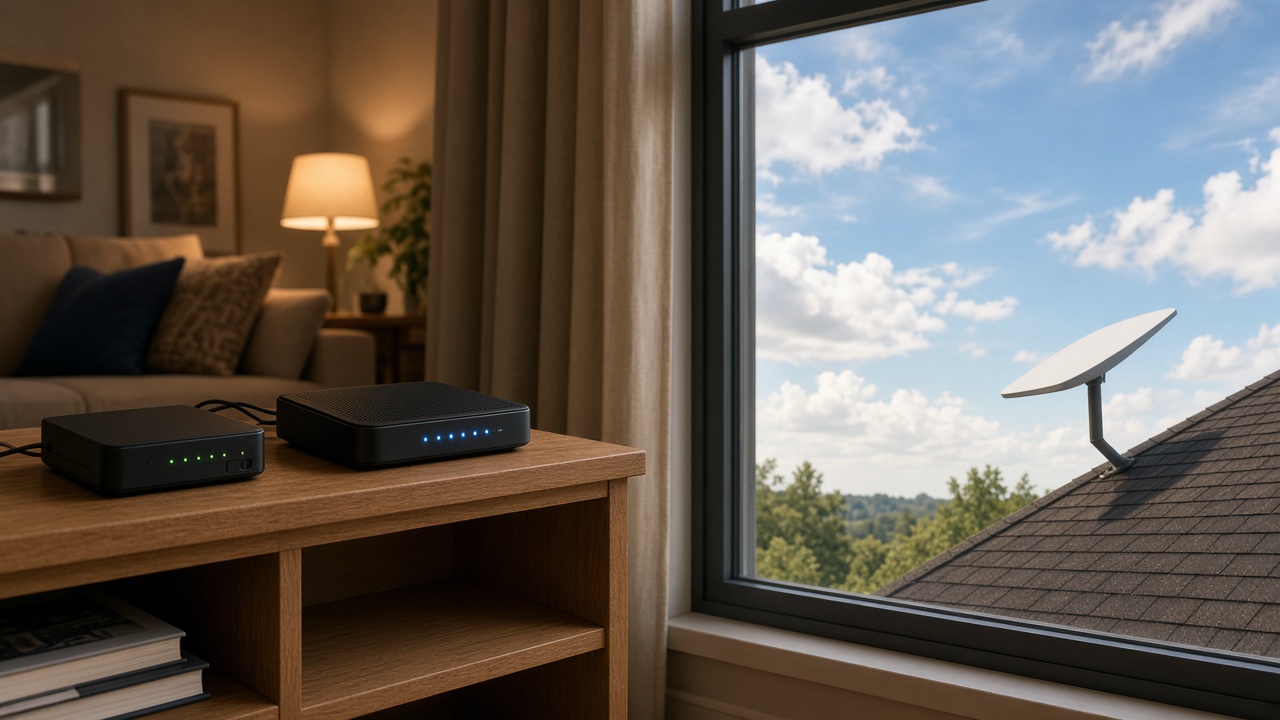
Home internet options in the U.S. have traditionally centered around four major players: cable, DSL, fiber, and conventional satellite services. Each has its own advantages and limitations. Cable and fiber connections dominate urban and suburban areas, offering high speeds and stability. DSL lags behind in performance but remains accessible in many regions. Meanwhile, legacy satellite internet has served remote areas, though with limited bandwidth and high latency that often frustrate users.
Enter Starlink—a low-Earth orbit (LEO) satellite internet service developed by SpaceX. Unlike geostationary satellite systems, Starlink uses a vast and growing constellation of satellites to deliver broadband-level speeds with much lower latency. Designed to provide seamless internet access globally, it's particularly appealing for regions where traditional ISPs fail to provide competitive service.
With the demand for stable, high-performance internet surging due to remote work, digital learning, and streaming, especially in rural and underserved zones, many now question: can Starlink actually replace conventional home internet? This post breaks down the technical, financial, and logistical arguments to provide a definitive answer.
Inside Starlink: The Satellite Network Powering a New Era of Internet Access
Satellite Internet, Reinvented by SpaceX
Starlink represents SpaceX’s ambitious leap into telecommunications, built from the ground up to challenge traditional internet delivery systems. Unlike geostationary satellite providers that operate 35,786 km above Earth, Starlink uses a low Earth orbit (LEO) constellation—satellites positioned approximately 550 km above the surface. This creates a dramatic reduction in signal travel time and increases potential bandwidth.
Developed and operated by Elon Musk's aerospace company SpaceX, Starlink was first made public in 2015. The goal: deliver high-speed, low-latency internet to users across the globe, especially to those living in areas where terrestrial ISPs have limited or no presence. By May 2024, Starlink had launched over 5,000 satellites, with plans to expand the constellation to 42,000 in the coming years, according to filings with the International Telecommunication Union (ITU).
From “Better Than Nothing” to Global Coverage
The initial rollout of Starlink began with a public beta test in late 2020, cheekily dubbed “Better Than Nothing Beta.” Early adopters experienced download speeds ranging from 50 to 150 Mbps and latencies between 20 and 40 milliseconds. This marked a significant shift in expectations for satellite internet, often associated with sluggish connections and high ping rates.
By 2023, the service transitioned from beta to full commercial availability in dozens of countries, including the United States, Canada, Australia, parts of Europe, and expanding regions in Africa and South America. SpaceX now serves residential homes, businesses, maritime vessels, RVs, and even aircraft through specialized versions of the service like Starlink Maritime and Starlink Aviation.
Targeting the Underserved
Traditional ISPs favor densely populated regions where the cost per mile of infrastructure installation can be justified by high user density. Starlink flips that equation by using space-based infrastructure that reaches anywhere with a clear view of the sky. This model gives it immediate advantages in rural, mountainous, island, and other hard-to-wire locations.
- Remote villages without access to fiber
- Farms and ranches miles away from the nearest cable node
- Disaster zones where ground networks are damaged or inaccessible
With LEO satellites providing blanket coverage from above, Starlink fills connectivity gaps that conventional cable, DSL, and fiber networks leave behind.
Starlink Internet Speed and Performance: Expectations vs. Reality
Starlink’s internet performance has evolved significantly since its initial beta phase in 2020, and recent data highlights how well it stands up against traditional ISPs. By leveraging a growing constellation of low Earth orbit satellites, the service aims to deliver broadband speeds that rival cable and DSL, and in some cases approach fiber.
Download Speeds in Real-World Conditions
Download speeds on Starlink typically range from 50 Mbps to 250 Mbps, depending on location, network congestion, and satellite visibility. In late 2023, Ookla's Speedtest Intelligence reported a median download speed of 66.63 Mbps in the U.S. This number fluctuated by region—Starlink users in rural parts of Washington state saw readings near 189 Mbps, while urban regions often recorded lower figures during peak hours.
Real-world testing by independent reviewers such as Ars Technica and CNET highlighted speeds of 100–200 Mbps in optimal conditions, with brief dips below 50 Mbps during heavy network usage or obstructions from trees and buildings. These fluctuations remain one of the key performance factors limiting Starlink’s consistency.
Upload Speeds and Connection Stability
Upload performance typically averages between 10 Mbps and 20 Mbps. In the same 2023 Ookla data set, Starlink’s U.S. median upload speed was reported at 9.57 Mbps. Users uploading large files, streaming content, or making frequent video calls will find this speed acceptable, but it trails significantly behind fiber or high-end cable connections, which can provide symmetrical speeds.
Connection reliability continues to improve as SpaceX adds satellites. However, intermittent brief dropouts—lasting 1 to 3 seconds—still occur, particularly during satellite handoffs, though newer software updates have minimized their frequency.
Starlink vs Fiber, Cable, and DSL
- Fiber: Offers symmetrical speeds of 500 Mbps to 1 Gbps or more with sub-10 ms latency. Starlink doesn't match fiber’s bandwidth or stability in fixed-line infrastructure zones.
- Cable: Typical download speeds of 200–500 Mbps with upload speeds capped around 20–35 Mbps. Peak-hour slowdowns are common, making Starlink competitive in some regions.
- DSL: Often limited to 10–50 Mbps down and 1–10 Mbps up. Starlink outperforms DSL consistently, particularly in bandwidth-constrained rural environments.
Peak vs Average Performance
Under optimal conditions—clear skies, low network congestion, and unobstructed views—Starlink can hit speeds close to 250 Mbps. Independent testers in rural Montana measured peak downloads above 210 Mbps in early afternoon tests. That said, during high-demand evening hours, the average user often sees a dip to the 50–80 Mbps range, with occasional drops below that threshold in highly saturated cells.
The overall experience depends heavily on network load at the time of use. Starlink’s ongoing satellite deployment and ground station expansion are gradually improving peak-to-average performance consistency.
Latency: The Decisive Factor for Gamers and Real-Time Apps
What Is Latency and How Does It Impact Your Online Experience?
Latency measures the time it takes for data to travel from your device to a server and back, expressed in milliseconds (ms). In practical terms, it dictates how quickly your actions appear on screen during a multiplayer game or how seamless a video call feels. High latency leads to lag, delayed responses, and disrupted real-time communication. For gamers, it determines whether a shot lands or misses. For professionals on VoIP calls, it influences conversational flow and clarity.
Starlink’s Orbital Altitude: The Advantage of Low-Earth Orbit
Traditional satellite internet systems, like those offered by HughesNet or Viasat, rely on geostationary satellites positioned approximately 35,786 kilometers above Earth. Signals from these systems regularly experience latency between 600 to 800 ms. Starlink uses a network of low-earth orbit (LEO) satellites, operating at altitudes ranging from 340 km to 1,200 km. This dramatic reduction in distance cuts signal travel time significantly.
According to real-world testing by users and analysis by third parties such as Ookla, Starlink consistently delivers latency between 20 to 50 ms in the United States. This brings it within competitive range of DSL and even some mid-tier cable internet providers.
Gaming, VoIP, and Video: Real-World Impact of Low Latency
- Online gaming: Starlink’s 20–50 ms latency supports fast-response genres like first-person shooters (e.g., Call of Duty, Apex Legends) and real-time strategy games where input delay directly affects outcome. While professional eSports players may still prefer fiber with 5–15 ms latency, Starlink performs well for the average competitive gamer.
- VoIP calls: Systems like Zoom, Microsoft Teams, and Google Meet experience minimal jitter and echo over Starlink. Human conversation, which becomes perceptibly awkward beyond 150 ms roundtrip delay, remains fluid under Starlink’s latency profile.
- Live streaming and video chats: Interactive livestreaming on platforms like Twitch or YouTube Live responds well to Starlink’s network timing, maintaining natural presenter-viewer interaction with delays generally under half a second.
Because latency affects all time-sensitive applications, Starlink’s performance in this area moves it closer to being a viable alternative to traditional wired home internet — particularly in locations where cable and fiber are not available.
Streaming Quality and Bandwidth Considerations with Starlink
4K and HD Streaming Compatibility
Starlink supports high-definition and 4K video streaming across major platforms such as Netflix, YouTube, Disney+, and Hulu. With download speeds ranging between 25 Mbps and 220 Mbps according to real-world user data and official SpaceX performance metrics, bandwidth is sufficient for multiple concurrent HD streams or a single ultra-high-definition stream. Netflix recommends a minimum of 15 Mbps for 4K content — Starlink frequently exceeds this threshold, even under moderate load.
Bandwidth Performance During Peak Times
During peak usage hours, network congestion can cause performance dips. According to user reports from Ookla’s quarterly Starlink analysis, speeds in the U.S. and Canada tend to decrease by as much as 30–40% during evening hours when traffic is highest. For instance, average download speeds dropped from 100 Mbps off-peak to 60–70 Mbps during peak hours in Q3 of 2023. Despite these drops, even at reduced speeds, HD streaming remains viable, though users may experience longer buffering times or brief quality downgrades.
Multiple Device Usage
The average household in North America uses 10 or more connected devices daily. Starlink handles simultaneous use across smart TVs, laptops, smartphones, and gaming consoles with moderate efficiency. In households with typical usage — one or two streams, a Zoom call, and background downloads — the service maintains fluid performance.
- Smart TVs: Stream in HD or 4K without noticeable lag under normal conditions.
- Laptops and tablets: Smooth for browsing and videoconferencing, even when other devices are active.
- Gaming consoles: Stream and download updates concurrently, but online performance may hinge more on latency than bandwidth.
When more than 5-6 data-intensive devices operate simultaneously, bandwidth limitations may surface. In such scenarios, buffering or service prioritization could impact streaming quality.
Expanding Horizons: Where Starlink Is Available Now and Where It’s Headed
Current Service Reach
Starlink currently provides service across large parts of North America, Europe, Oceania, and selected regions in South America, Asia, and Africa. The network favors connectivity in sparsely populated and underserved regions. Rural towns in the United States, Canadian Yukon communities, remote Scottish isles, and outback villages in Australia actively use Starlink as their primary internet provider.
Urban users in some metropolitan areas across the U.S., such as Seattle and Atlanta, can access the service too—but with limitations. Due to space capacity and network congestion, Starlink heavily prioritizes low-density zones. In areas where infrastructure already supports fiber-optic service, Starlink functions more as a supplementary option than a core solution.
Blueprint for Global Expansion
SpaceX has filed licensing applications in dozens of countries to broaden Starlink’s presence, targeting full global coverage. The company projects service availability for nearly every inhabited continent within the next two years. As of April 2024, Starlink is reachable in over 60 countries, with first-time launches expected soon in parts of Central Asia, sub-Saharan Africa, and Southeast Asia.
- India: Trial licenses approved; full consumer rollout projected late 2024.
- Egypt and Kenya: Regulatory clearance pending; infrastructure installations underway.
- South America: Coverage expanding deeper into Amazon Basin regions of Brazil and Peru.
The pace of this expansion hinges on licensing, local government agreements, and ground station deployment. Once regulatory barriers are cleared, Starlink’s satellite-based model allows near-immediate service launch in greenfield regions without the delay of terrestrial infrastructure builds.
Satellite Constellation and Future Availability
Starlink’s availability is powered by its growing constellation of low Earth orbit (LEO) satellites. As of mid-2024, over 5,500 operational satellites orbit the Earth. SpaceX intends to increase that number to 12,000 by 2027 under its current FCC license, and up to 42,000 in the long term with Gen2 satellites included.
This dense satellite mesh will reduce service gaps, especially in equatorial regions historically underserved by LEO coverage. More satellites also mean improved throughput, less congestion, and higher reliability per user. As polar and equatorial orbits increasingly come online, even historically disconnected areas—think Antarctic research stations and deep Pacific islands—will gain high-speed service options.
Curious whether your area is included yet? Starlink provides an up-to-date availability map on its website, letting users check real-time status by zip code or GPS coordinates. Coverage continues to evolve monthly as additional satellites deploy and ground infrastructure scales up.
What You Need to Install Starlink at Home
Starlink Equipment: Dish, Router, and Pricing
Every new Starlink user begins with a standard hardware kit, which includes a phased-array satellite dish (often referred to as “Dishy”), a Wi-Fi router, power supply, cables, and a mounting base. The full kit requires a one-time upfront cost of $599 as of June 2024.
This equipment package is engineered to be plug-and-play. The router broadcasts a Wi-Fi signal throughout the home, while the dish connects directly with Starlink satellites in low Earth orbit. The hardware uses active phased array technology to lock onto moving satellites, tracking them autonomously once powered.
Installation: Self-Setup or Hire a Professional?
Most customers opt for self-installation, which Starlink actively encourages. The kit includes illustrated instructions and has no specialized tools or technical knowledge requirements. Setup takes less than 30 minutes in typical conditions. Using the Starlink mobile app, users can scan the sky and identify the best location for their dish. The app features an AR-based obstruction checker to flag any trees, chimneys, or other structures that could interfere with the line of sight.
Still, some users—especially in multi-story homes or locations with limited mounting options—choose to hire third-party professionals. Though Starlink doesn't offer professional installations themselves, some regional contractors provide mounting services, usually charging between $150 to $300 depending on the complexity of the job and roof access.
Positioning the Dish: Clear Line of Sight is Non-Negotiable
The dish must have an unobstructed view of the sky to maintain continuous communication with the satellite network. That means placing it above tree lines, walls, neighboring houses, or high structures. Even partial obstructions may lead to brief but noticeable service interruptions—affecting activities like video calls, online gaming, and streaming.
Wall mounts, rooftop installations, or pole mounts are common solutions to ensure adequate clearance. Starlink sells optional mounting accessories separately to handle these variations.
- Standard mount: Included in the base kit; ideal for flat and unobstructed surfaces.
- Pole mount: Offers extended elevation; suitable for installations away from the house.
- Roof mount: Designed for sloped roofs; prioritizes stability and permanent placement.
Once installed and powered, the dish automatically aligns itself without user calibration. Interference from tall trees or nearby structures reduces performance, so optimal placement directly correlates with internet stability and download speeds.
Starlink Monthly Cost and Pricing
How Much Does Starlink Cost Per Month?
As of early 2024, the standard residential Starlink service charges a monthly fee of $120 in the United States. This reflects a $10 increase from the previous $110 rate. In some rural or underserved regions, especially as part of Starlink’s Regional Service Tier, the price may be discounted by up to 25%, depending on local connectivity scarcity and infrastructure conditions.
Upfront Equipment Cost: Purchase or Finance
New customers must acquire the Starlink hardware kit, which includes the satellite dish, Wi-Fi router, mounting tripod, and necessary cabling. The one-time equipment cost stands at $599. This can be paid upfront or financed through third-party providers at varying interest rates, depending on creditworthiness and region.
- Outright Purchase: $599 flat
- Monthly Financing: Approx. $25–$30/month over 24 months, not including taxes or interest
Shipping and handling fees may add an additional $50 to the initial bill, depending on the destination country.
How Starlink Pricing Compares with Fiber, Cable, and DSL
In urban markets, traditional providers often undercut Starlink. For example, major fiber-optic ISPs like AT&T or Verizon offer symmetric gigabit plans starting around $70–$80/month with minimal latency, no equipment purchase, and unlimited data. Cable providers such as Comcast or Spectrum sit in a similar range, generally offering up to 1.2 Gbps for $60–$90/month, although upload speeds remain lower than fiber. DSL services, typically slower in performance, range from $45–$70/month depending on provider and speed tier.
Contrast that with rural areas, where Starlink fills a pricing and access void. DSL in these zones often maxes out at under 25 Mbps (when available at all), and fixed wireless suffers from stability issues. In these regions, even with a higher base price, Starlink offers a compelling value proposition—speeds of 50–250 Mbps consistently outperform most local alternatives.
When examined strictly on a cost-per-megabit basis, Starlink remains less efficient for urban users but competitive in remote locales where telecom investment has stalled. The higher one-time equipment fee adds to the initial expense, but amortized over two years, the per-month overhead narrows.
Is the Cost Justified?
If you're in an area with reliable fiber or cable connections, Starlink doesn't win on price. But if your ZIP code falls off the grid, that $120 a month delivers what no legacy ISP can — broadband-grade internet where no cables reach and towers fall silent. Worth it? Depends on your coordinates.
Reliability in Rural and Remote Areas
Wired Limitations Leave Rural Homes Behind
Rural internet access has historically lagged due to the high cost of building physical infrastructure across large, sparsely populated areas. Most traditional ISPs—especially those offering cable or fiber—hesitate to invest in extending networks where customer density can't justify the expense. According to the Federal Communications Commission (FCC), as of the end of 2022, only 66% of rural Americans had access to fixed terrestrial broadband that meets the FCC's base definition of 25 Mbps download and 3 Mbps upload speeds.
DSL, the fallback in many remote locations, relies on decades-old copper lines. These lines degrade over distance, often delivering speeds well below what's required for modern applications like 4K streaming or remote work. In contrast, Starlink bypasses these limitations entirely.
Starlink Delivers What Existing Options Can't
Starlink’s satellite constellation beams high-speed internet directly to user terminals, without depending on ground infrastructure. This technology enables a consistent internet experience in places where ground-based systems can't reach. As of early 2024, Starlink reports download speeds ranging from 50 Mbps to 200 Mbps in the U.S., depending on connection density and environmental factors.
In rural Montana, for example, where fiber rollout has stalled due to mountainous terrain, Starlink users report maintaining video calls, accessing cloud tools, and streaming HD content without throttling or disruptions. These capabilities allow previously disconnected communities to participate fully in the digital economy.
Real Users, Real Stability
Starlink subscribers in remote regions of Alaska, rural Texas, and the Canadian wilderness have documented stable experiences over long periods. A 2023 customer survey conducted by Consumer Reports found that 81% of rural Starlink users rated their internet service as “reliable” or “very reliable,” compared to just 51% for rural DSL users.
- A homestead in northern Wisconsin streamed a live Twitch channel with only minimal frame drops during peak hours.
- A sheep farmer in New Zealand’s South Island uses Starlink for precision livestock tracking and to attend Zoom webinars—tasks previously impossible off-grid.
- In Canada's Northwest Territories, Starlink enables educational access for Indigenous youth in communities far from fiber lines.
These anecdotes aren't isolated. Across forums, Reddit threads, and community boards, rural users consistently describe improved quality of life and professional opportunities after switching to Starlink.
How Weather Conditions Affect Starlink Internet Performance
Satellite Signal Stability Under Rain, Snow, and Cloud Cover
Starlink's communication system relies on a direct line-of-sight between a user’s dish and satellites orbiting roughly 550 km above Earth. This means weather events in the troposphere—rain, snow, fog, and dense cloud cover—can interfere with signal clarity and strength. The phenomenon known as “rain fade” causes signal attenuation due to absorption and scattering of radio waves by water droplets, particularly at the Ku-band and Ka-band frequencies used by Starlink.
Heavy precipitation has a measurable impact. During intense storms, users may experience download speed drops or momentary service interruptions. Industry tests and user-reported data consistently show that signal degradation is most pronounced when sleet or ice accumulates on the dish, especially if dish heating is not activated or optimally positioned.
Comparing Weather Resilience: Starlink vs Fiber and DSL
Unlike satellite internet, fiber-optic infrastructure remains entirely immune to atmospheric interference. Fiber transmits data through glass strands buried underground, unaffected by snow, rain, or fog. Performance remains stable regardless of surface-level weather. DSL, while less robust than fiber, relies on physical telephone lines not impacted by precipitation, although its speed and latency are inferior even under ideal conditions.
When comparing Starlink with wired services, weather emerges as a clear differentiator. Consistency during storms favors ground-based systems. However, in areas where fiber or DSL isn’t available, this tradeoff comes with the benefit of accessibility rather than speed or reliability.
Starlink's Mitigation Strategies Against Weather Disruptions
- Heated Dishes (Dishy McFlatface): Every Starlink user terminal includes a built-in snow melt function. When enabled, it prevents snow and ice from accumulating on the dish surface. This heating capability automatically activates when temperatures drop, maintaining a clear signal path.
- Strategic Dish Placement: Elevating the dish or mounting it where physical obstructions, including snowfall drifts and tree limbs, are minimal reduces the chances of disruption. A clear sky view from horizon to zenith ensures better satellite handovers.
- Rapid Satellite Switching: Starlink terminals automatically connect to the nearest available satellite, and as the constellation grows, user access during poor conditions improves. More satellites mean more alternate paths during inclement weather.
Though Starlink dishes adapt to changing conditions and the constellation’s density helps mitigate short-term dropouts, weather-induced signal variance remains part of the satellite internet experience. Fiber and DSL offer steadier performance during these conditions, but they don’t serve where Starlink does: remote areas far beyond wired infrastructure.
Starlink’s Place in the Evolving Home Internet Market
Across performance benchmarks, availability, and user experience, Starlink shows real potential to function as a competitive home internet provider—especially in areas underserved by fiber, cable, or reliable DSL. Speeds generally fall within the 50–250 Mbps download range, latency ranges between 20–50 ms for most users, and responsiveness continues to improve with satellite constellation expansion.
For rural households far from terrestrial ISP infrastructure, Starlink offers an immediate leap in speed and reliability. Equipment setup remains user-friendly, and although initial hardware costs are higher than traditional cable setups, ongoing monthly fees have aligned closer to mid-tier ISP plans without data caps. Urban users, however, may still experience congestion due to limited satellite availability in high-density areas, which can lead to speed throttles during peak hours.
Selection of an internet provider rarely has a one-size-fits-all answer. Households relying heavily on real-time applications like competitive gaming or frequent 4K multi-streaming might still lean toward fiber connections, which offer lower latency and symmetrical speeds. Others seeking mobility, off-grid connectivity, or a dependable backup connection for unreliable local ISPs will find that Starlink fills a gap no wired provider can reach.
The satellite internet landscape is advancing rapidly. Project Kuiper (Amazon), OneWeb, and Telesat are all gearing up for large-scale low earth orbit deployments in 2024–2027. These entrants will push competition further—driving innovations in throughput, latency, pricing, and service models. Starlink sits at the forefront, but it won’t stand alone for long.
Curious about practical use-cases? Read Best Internet Options for Rural Homes or explore the Step-by-Step Guide to Setting Up Starlink.
Want updates on next-gen satellite internet? Subscribe to our tech bulletin and get exclusive insights, product news, and network progress delivered monthly.