BlueBorne 2026
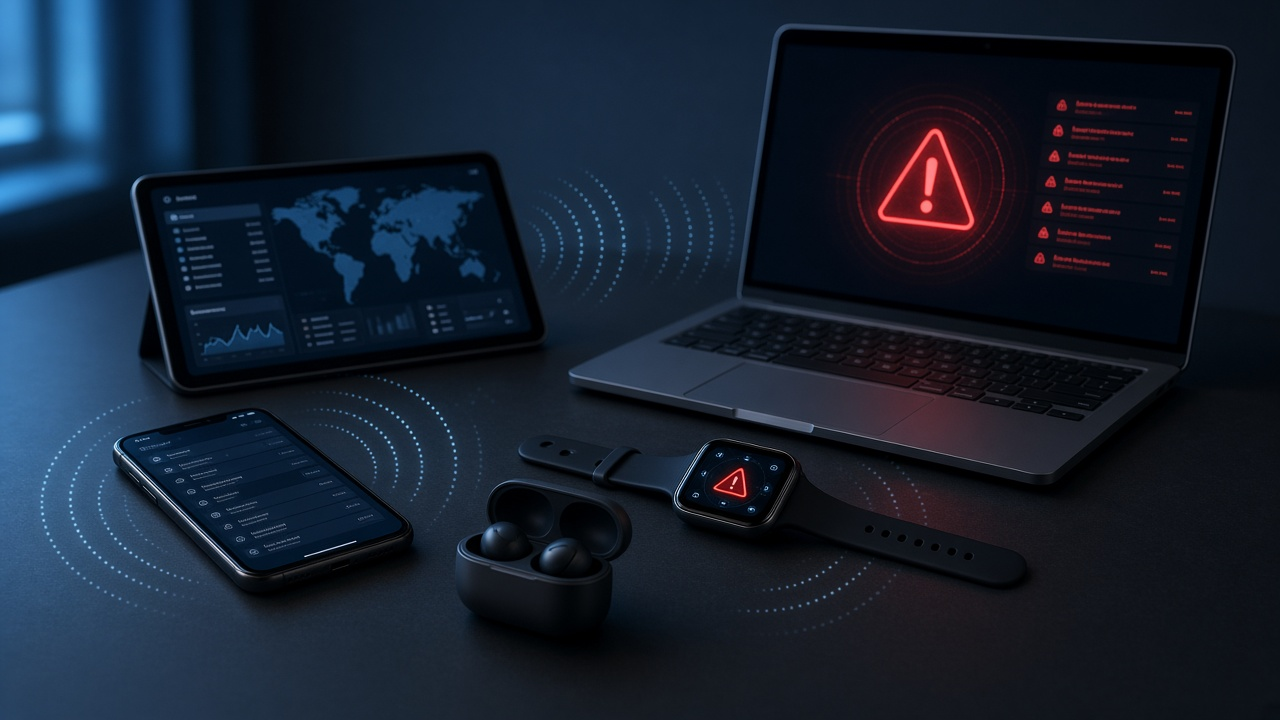
Bluetooth has revolutionized how devices communicate, but its convenience comes with security risks. BlueBorne is a set of vulnerabilities that allows attackers to take control of devices wirelessly—no pairing required. This flaw affects billions of smartphones, laptops, and IoT devices, making it a serious cybersecurity concern.
Cybercriminals exploit vulnerabilities like BlueBorne to infiltrate systems undetected, steal data, install malware, or even control devices remotely. Unlike traditional cyberattacks that require a phishing link or malware download, BlueBorne spreads silently through Bluetooth connections. A single infected device can compromise an entire network.
With attackers constantly developing new methods, patching software and implementing proactive security measures have become non-negotiable. Companies and individuals must stay ahead by updating firmware, disabling unneeded Bluetooth connections, and using security software designed to detect unauthorized attempts to access their devices.
The Nature of BlueBorne
Vulnerability Specifics: What Is BlueBorne and How Does It Operate?
BlueBorne is a set of vulnerabilities that allows attackers to penetrate devices via Bluetooth connections without authentication or user interaction. This exploit affects a wide range of operating systems, including Android, iOS, Windows, and Linux. Discovered by Armis Labs in 2017, it enables remote code execution, man-in-the-middle attacks, and unauthorized data access.
Attackers leverage BlueBorne by scanning for active Bluetooth connections within range. Once a target device is identified, they exploit specific protocol weaknesses to gain control. This happens without pairing requests or device discovery alerts, making detection nearly impossible through conventional security measures. Once compromised, a device can be used to infiltrate networks, steal data, or spread malware to nearby systems.
Bluetooth as an Attack Vector: Why Is It Uniquely Dangerous?
Bluetooth presents a particularly attractive attack surface due to its widespread adoption and continuous background activity. Unlike Wi-Fi or cellular networks, which require explicit user permissions for most connections, Bluetooth devices often accept incoming communication as part of their standard operation. Many systems have Bluetooth enabled by default, increasing the number of potential targets.
- Bluetooth operates over short distances but has no inherent network segmentation, allowing attackers to move laterally between devices.
- Many Bluetooth implementations lack proper security patches because manufacturers fail to provide timely updates.
- Exploits can execute silently without user interaction, unlike phishing or other social engineering attacks.
- Unlike network-based attacks, which may trigger firewall or intrusion detection system alerts, Bluetooth attacks often leave little trace.
By exploiting these characteristics, attackers can compromise laptops, smartphones, IoT devices, and even critical infrastructure components that rely on Bluetooth. The silent and non-interactive nature of BlueBorne makes it especially dangerous in public areas where multiple devices continuously broadcast their Bluetooth presence.
Devices and Operating Systems Vulnerable to BlueBorne
BlueBorne exploits a set of vulnerabilities in Bluetooth implementations, affecting millions of devices worldwide. Any device with Bluetooth capabilities and an unpatched OS remains at risk. The attack does not require pairing or user interaction, making it exceptionally dangerous for connected environments.
Impacted Device Categories
BlueBorne affects a broad spectrum of technologies, making it a critical security concern across industries. Vulnerable devices include:
- Smartphones and Tablets: Android, iOS (pre-iOS 10 with Bluetooth enabled), and Windows mobile devices.
- Personal Computers: Windows desktops and laptops, Linux-based machines running affected distributions.
- IoT and Embedded Systems: Smart TVs, wearable devices, medical equipment, and industrial IoT gadgets relying on outdated Bluetooth protocols.
Many outdated and unsupported devices remain exposed as manufacturers discontinue security updates. Legacy hardware in corporate and consumer environments continues to pose a significant security risk.
Operating Systems Affected
BlueBorne’s impact varies across different operating systems due to inconsistencies in Bluetooth stack implementations. The following platforms contained exploitable vulnerabilities before patches were deployed:
- Android: All versions prior to Google's security update in September 2017. The vulnerabilities, tracked under CVE-2017-0781, CVE-2017-0782, CVE-2017-0783, and CVE-2017-0785, allowed remote code execution and information leakage.
- Linux: Versions running the BlueZ stack were susceptible, with distributions using kernel versions prior to 3.3 proving particularly vulnerable. The issue, listed under CVE-2017-1000251, enabled remote code execution.
- Windows: Versions from Windows Vista to Windows 10 before Microsoft's security update in September 2017. CVE-2017-8628 documented the flaw, which allowed attackers to perform man-in-the-middle attacks.
- iOS: Devices running iOS 9.3.5 and earlier remained vulnerable, but iOS 10 and later were not affected due to Apple’s transition to a new Bluetooth stack.
Despite patches released by operating system vendors, unpatched and outdated devices continue to be at risk.
Implications for IoT and Embedded Devices
IoT and embedded systems remain among the most vulnerable targets due to their long operational lifespans and infrequent updates. Smart home devices, medical equipment, and industrial controls running compromised Bluetooth stacks serve as potential entry points for attackers. Given that many embedded devices lack robust security patching mechanisms, vulnerabilities may persist indefinitely.
Organizations relying on IoT for automation and remote access should evaluate their infrastructure for affected components, especially when dealing with legacy devices integrated into critical operations.
Technical Breakdown: How BlueBorne Exploits Bluetooth Connections
Attack Vector: Unauthorized Bluetooth Communication
BlueBorne exploits vulnerabilities in the Bluetooth stack of various operating systems. Attackers initiate the process by scanning for devices with active Bluetooth signals, identifying potential targets without requiring explicit pairing or user interaction. This makes unpatched devices susceptible to compromise simply by being within Bluetooth range of an infected device.
Exploitation occurs through malformed Bluetooth packets. These packets take advantage of flaws in the implementation of Bluetooth protocols, allowing attackers to execute arbitrary code on the targeted device. Unlike traditional attack methods relying on phishing or malicious downloads, BlueBorne spreads without any user engagement.
Execution and Data Compromise
Once access is gained, attackers can execute malicious code with high privilege levels. Since many Bluetooth-compatible devices integrate deep into system resources, BlueBorne exploits enable unauthorized control over core functionalities. This includes access to personal data, network activities, and system processes, creating a severe security risk.
Attack Methodology: Step-by-Step Process
- Scanning for Bluetooth Devices: The attacker identifies nearby devices with active Bluetooth signals, assessing which ones run vulnerable versions of the Bluetooth stack.
- Exploiting Bluetooth Vulnerabilities: By sending specially crafted Bluetooth packets, the attacker manipulates memory handling mechanisms, triggering remote code execution.
- Privilege Escalation: After gaining limited access to the system, further exploitation grants administrative privileges, allowing deeper system control.
- Data Extraction and Malware Deployment: Attackers exfiltrate sensitive data such as credentials and communication logs or deploy secondary malware to maintain persistent access.
- Propagation to Other Nearby Devices: If configured for lateral movement, the malware spreads to additional devices in the vicinity, creating cascading infections.
Stealth and Evasion Techniques
BlueBorne attacks leave minimal forensic evidence. Unlike conventional cyberattacks that involve file execution or external communication, BlueBorne operates entirely within memory. This makes detection difficult for traditional antivirus and security monitoring tools. The absence of overt actions such as app downloads or URL redirections further reduces visibility in standard security audits.
Implications for Air-Gapped Systems
Devices previously thought to be secure due to network isolation, like air-gapped systems, become vulnerable when equipped with Bluetooth. A compromised device brought into proximity can serve as an entry point, exposing data that would otherwise remain unreachable.
Conclusion
BlueBorne exploits inherent flaws in Bluetooth communication, leveraging remote execution to bypass security restrictions. Its methodology enables silent infiltration, rapid propagation, and persistent control over vulnerable devices. Without direct user interaction, attackers can compromise personal, enterprise, and IoT devices, demonstrating the widespread risks tied to unsecured Bluetooth implementations.
The Role of ARMIS Labs
ARMIS Labs identified BlueBorne and exposed its potential threat to billions of devices. Their research team analyzed the Bluetooth-based vector, mapped its attack surface, and demonstrated how attackers could exploit it to execute remote code or launch Man-in-the-Middle attacks. Without their discovery, this vulnerability could have persisted undetected for years.
Unveiling a Silent Threat
Unlike many cybersecurity threats that require user interaction, BlueBorne operates silently, spreading through networks without the need for device pairing or user permission. ARMIS Labs highlighted this unique attack mechanism and detailed how it bypassed security measures, making it particularly dangerous for unmanaged and unpatched systems.
Coordinated Disclosure and Response
After uncovering BlueBorne, ARMIS Labs coordinated a responsible disclosure process. They notified affected operating system vendors, including Google, Apple, Microsoft, and Linux maintainers, well before going public with their findings. This approach gave manufacturers time to develop patches and issue security updates, limiting the vulnerability’s potential impact.
To further raise awareness, ARMIS Labs published a comprehensive report outlining BlueBorne’s technical details, risk factors, and attack methodology. They also released proof-of-concept demonstrations, illustrating how attackers could exploit the vulnerability in real-world scenarios.
Driving Industry-Wide Security Improvements
Beyond identifying BlueBorne, ARMIS Labs helped organizations assess their exposure by developing scanning tools capable of detecting vulnerable devices. Enterprises used these tools to audit networks and identify security gaps in their Bluetooth-enabled infrastructure.
Their research also served as a catalyst for strengthening Bluetooth security standards. Security professionals and industry stakeholders used these findings to advocate for improved security protocols in wireless communications, paving the way for new best practices in IoT security.
User Impact and Response
Direct Impact on End Users
BlueBorne enables attackers to take full control of a vulnerable device without any user interaction. A compromised system can be exploited for data theft, cyber espionage, or deployment of further malware. Devices left unpatched remain susceptible to remote code execution, enabling attackers to manipulate network traffic, eavesdrop on communications, or introduce additional security threats.
Because BlueBorne spreads via Bluetooth, any device with the protocol enabled—whether actively paired or not—is at risk. Users in crowded public spaces, such as airports, cafes, and offices, face higher exposure. Since infection occurs without prompts or notifications, victims remain unaware of the breach until malicious activity manifests.
Steps to Secure Devices
Mitigating the risks associated with BlueBorne requires a combination of system updates, configuration changes, and vigilant security practices.
- Install Security Patches: Software updates from operating system vendors address the BlueBorne vulnerability. Apply available patches as soon as they are released.
- Disable Bluetooth When Unused: Turning off Bluetooth when not in use reduces exposure to remote exploits.
- Use Trusted Networks: Avoid pairing with unknown devices or using public Bluetooth connections that may serve as attack vectors.
- Monitor Device Behavior: Unexpected activity, connectivity issues, or degraded performance may indicate compromise. Investigate anomalies promptly.
- Employ Security Software: Endpoint protection solutions detect and block exploit attempts targeting Bluetooth vulnerabilities.
Updating all connected IoT devices, using firmware patches from manufacturers, enhances defense against BlueBorne’s exploitation methods.
Industry and Community Response
Software Patching Strategies After BlueBorne
Following the discovery of BlueBorne in 2017, major technology companies accelerated their patching processes to address the vulnerabilities. Microsoft released security updates as part of its September 2017 Patch Tuesday. Google deployed fixes for affected Android versions through its monthly security updates, while Apple addressed the issue in iOS 10. Bluetooth chipset manufacturers, including Qualcomm and Broadcom, also issued firmware updates to mitigate risks at the hardware level.
Linux distributions faced a more fragmented response due to varied maintainers and package management systems. While security advisories were published, users had to rely on individual distributions to push updates. Embedded Linux devices, particularly those no longer maintained, remained vulnerable due to a lack of official patches.
Enterprise cybersecurity teams re-evaluated their security patching policies, ensuring faster deployment of critical updates in response to emerging threats. Organizations with mobile device management (MDM) systems implemented strict update enforcement for corporate devices to reduce exposure.
Common Vulnerabilities and Exposures (CVEs) for BlueBorne
The discovery of BlueBorne led to the creation of several CVEs detailing affected protocols and attack vectors:
- CVE-2017-1000251: Remote code execution vulnerability affecting Linux kernel’s Bluetooth stack (BlueZ).
- CVE-2017-0781: Information disclosure vulnerability impacting Android’s Bluetooth implementation.
- CVE-2017-0782: Remote code execution vulnerability targeting Android’s Bluetooth stack.
- CVE-2017-0783: Man-in-the-middle attack vulnerability affecting Bluetooth network encapsulation protocols on Android.
- CVE-2017-0785: Remote code execution flaw in Android’s Bluetooth service.
- CVE-2017-8628: Vulnerability in Windows Bluetooth stack, allowing an attacker to execute code remotely.
These CVEs provided structured documentation for security teams, enabling them to assess risk levels and prioritize system updates accordingly. Security researchers and penetration testers referenced these identifiers when developing exploit detections and verifying patch effectiveness.
The cybersecurity community extensively documented the impact of BlueBorne, influencing vulnerability reporting practices. Security conferences and industry panels discussed the long-term implications of Bluetooth security flaws, fostering collaboration between software vendors and hardware manufacturers in strengthening wireless communication protocols.
Prevention and Mitigation
Securing Devices Against BlueBorne Exploits
Organizations and individual users can implement multiple layers of protection against BlueBorne exploits. The most effective measures include security patch management, Bluetooth usage policies, and network segmentation.
- Apply Security Updates: Manufacturers release patches to address vulnerabilities. Devices running Android, Windows, Linux, and iOS must receive and apply the latest security updates promptly.
- Disable Bluetooth When Not in Use: Keeping Bluetooth off reduces exposure. Attackers require active Bluetooth to exploit the vulnerability, making this a simple yet powerful precaution.
- Implement Device-Level Security Controls: Mobile device management (MDM) solutions allow organizations to enforce security configurations, ensuring devices are running secure firmware and restricting unauthorized Bluetooth connections.
- Monitor Network for Anomalous Traffic: Network intrusion detection systems (NIDS) can identify unusual Bluetooth-based activities, triggering alerts when a potential exploit attempt is detected.
- Segment Networks: Vulnerable devices should not have unrestricted access to corporate or critical systems. Network segmentation limits an attack’s lateral movement, containing potential breaches.
Long-Term Strategies for Wireless Threat Mitigation
Mitigating BlueBorne-like threats requires a forward-thinking approach. Organizations must anticipate vulnerabilities and enforce wireless security policies at the hardware, software, and network levels.
- Adopt Zero-Trust Architectures: Every device is a potential risk. Enforcing authentication and restricting access based on strict policies reduces the chances of an attacker exploiting vulnerabilities.
- Improve Embedded Systems Security: Bluetooth stack implementations should undergo continuous security assessments. Firmware integrity checks and runtime verification mechanisms can prevent unauthorized alterations.
- Encourage Secure Development Practices: Manufacturers must integrate secure coding principles into Bluetooth stack implementations. Code reviews, static analysis, and automated vulnerability detection tools help catch flaws early.
- Push for More Frequent Security Patching: IoT and embedded device vendors should commit to periodic security updates. Vendors supporting over-the-air (OTA) updates can mitigate vulnerabilities faster.
- Promote Industry Collaboration: Bluetooth security must evolve through shared intelligence. Security researchers, vendors, and policymakers should exchange insights, ensuring faster identification and resolution of emerging threats.
Future-Proofing Wireless Technology
New wireless standards, including Bluetooth 5.0 and upcoming revisions, must integrate hardened security protocols to counter evolving attacks. Mandatory encryption, authentication improvements, and dynamic key exchange mechanisms will shape the next generation of Bluetooth security.
Real-World Incidents: BlueBorne Exploits in Action
Cyber attackers have exploited BlueBorne vulnerabilities in multiple scenarios, targeting unpatched systems through Bluetooth connections. Though specifics are scarce due to the difficulty in attributing attacks, researchers have identified several plausible cases where BlueBorne played a role.
2017: Theoretical to Practical Exploits
Shortly after ARMIS Labs disclosed the BlueBorne vulnerability in September 2017, cybersecurity researchers demonstrated real-world exploitability. They showed how threat actors could use BlueBorne to infiltrate air-gapped networks by infecting Bluetooth-enabled devices. Reports from security teams suggested that certain organizations experienced suspicious Bluetooth-based intrusions around this time, though direct attribution remained inconclusive.
Healthcare Sector: Potential Targeted Attacks
Hospitals rely on Bluetooth-enabled equipment for patient monitoring and system integration. In late 2017, select healthcare institutions reported unauthorized access to medical devices, raising concerns about BlueBorne as a potential attack vector. Security teams discovered unpatched Android devices with active Bluetooth connections, highlighting a plausible exploit path. Post-incident investigations led to rapid security patches and stricter Bluetooth usage policies.
Corporate Espionage: Compromising Enterprise Networks
Cybersecurity firms later observed anomalous network activities in corporate environments where attackers may have used BlueBorne to pivot from compromised mobile devices to internal systems. A particular case in 2018 involved an enterprise where an executive's smartphone, running an outdated version of Android, reportedly facilitated unauthorized access to confidential files. Security audits pointed to Bluetooth-based infection as a likely cause, prompting the company to enforce mandatory patching and device monitoring.
Aftermath: Evaluating Security Measures
Organizations responded to potential BlueBorne exploits by implementing several defensive strategies. The most effective measures included:
- Disabling Bluetooth when not in use: Organizations mandated disabling Bluetooth on unmanaged devices in high-security environments.
- Enforcing rapid patch deployment: IT departments prioritized applying firmware updates and security patches as soon as vendors released them.
- Strengthening endpoint security: Companies integrated mobile threat detection solutions to monitor Bluetooth activity for anomalies.
- User awareness campaigns: Employees received training on securing their Bluetooth-enabled devices to minimize attack surfaces.
While these measures significantly reduced exploitation risks, BlueBorne underscored the broader challenge of securing ubiquitous wireless communication technologies.
Learning from Past Vulnerabilities
The Importance of Zero-Day Exploit Awareness and Rapid Response
Zero-day exploits like BlueBorne reveal security flaws before developers can issue patches. Attackers exploit these gaps to infiltrate systems silently. Organizations that lack proactive detection mechanisms remain vulnerable for extended periods.
BlueBorne demonstrated that passive reliance on traditional patch cycles fails against rapidly evolving threats. The time between a vulnerability discovery and its exploitation can be minimal. Security teams must establish real-time monitoring, threat intelligence sharing, and immediate remediation workflows.
Google, Microsoft, and Apple released patches for BlueBorne within weeks of its disclosure, but millions of unpatched devices remained at risk. Outdated firmware, unsupported devices, and gaps in user awareness prolonged exposure. These factors highlight the need for automated threat mitigation, enforced device deprecation policies, and enhanced security-by-design approaches in hardware.
- Threat intelligence integration: Organizations implementing continuous vulnerability assessments reduce exposure windows.
- Automated patch deployment: Systems with centralized update mechanisms contain threats faster.
- Security-first product design: Hardware and software vendors incorporating security from the development phase mitigate systemic weaknesses.
- Incident response preparedness: Rapid containment planning minimizes exploit impact.
How BlueBorne Informs Current Cybersecurity Strategies and Threat Modeling
BlueBorne reshaped Bluetooth security considerations across enterprise and consumer sectors. Traditional network-bound security models failed against its airborne vector. Security teams now integrate wireless attack surfaces into broader risk assessments.
Threat modeling frameworks adapted in response. Industry security workflows incorporate proactive Bluetooth vulnerability checks alongside network and application assessments. Enterprise security strategies now mandate Bluetooth usage policies, including disabling unnecessary connections and enforcing encryption.
Several cybersecurity frameworks evolved based on BlueBorne’s implications:
- Zero Trust Architecture (ZTA): Policies now extend beyond network perimeters to scrutinize device-to-device interactions.
- Bluetooth security frameworks: Manufacturers refine protocol-level security measures, addressing insecure pairing mechanisms.
- IoT firmware update mandates: Vendors increase efforts toward remote update capabilities, reducing prolonged device susceptibility.
- Airborne attack defense strategies: Security teams incorporate environmental scanning tools to detect anomalous Bluetooth activity in protected spaces.
Lessons from BlueBorne continue influencing cybersecurity best practices. The approach to wireless vulnerabilities now emphasizes proactive mitigation, minimizing reliance on reactive patching strategies.
Securing Devices Against BlueBorne and Future Threats
BlueBorne demonstrated how Bluetooth vulnerabilities can expose millions of devices to remote exploitation. Attackers exploited unpatched security flaws to gain unauthorized access, emphasizing the risks associated with wireless connectivity.
Key Takeaways from BlueBorne
- Unpatched Bluetooth vulnerabilities allowed unauthorized device access without user interaction.
- Billions of devices running Android, Windows, Linux, and iOS (before version 10) were susceptible.
- Patching vulnerabilities promptly remains the most effective defense.
Staying Informed on Cybersecurity Threats
New vulnerabilities emerge regularly as attackers refine their methods. Monitoring security advisories from organizations like MITRE, ARMIS Labs, and major OS vendors ensures awareness of evolving threats. Subscribing to cybersecurity newsletters and following trusted sources helps users and IT professionals stay ahead.
Proactive Device Security Measures
- Regularly install security updates for all connected devices.
- Disable Bluetooth when not in use to reduce exposure.
- Use endpoint protection solutions that detect unauthorized Bluetooth activity.
Securing personal and enterprise devices against emerging threats requires continuous vigilance. Updating systems, monitoring security developments, and applying best practices reduce the risk of compromise. Ongoing awareness and proactive measures strengthen defenses against evolving attack vectors.