Amazon Satellite Internet Oklahoma 2026

Oklahoma’s broadband landscape faces persistent gaps—particularly outside metro hubs like Oklahoma City and Tulsa—where traditional infrastructure struggles to keep pace with statewide needs. In many rural counties, fewer than 60% of households report having a fixed broadband connection, according to NTIA data. These underserved regions continue to experience slower speeds, limited providers, and higher costs.

This is where Amazon steps in with Project Kuiper, a satellite-based initiative designed to deliver high-speed, low-latency internet from orbit. By deploying a constellation of over 3,200 low Earth orbit (LEO) satellites, Amazon plans to cover isolated areas across the U.S., including Oklahoma's disconnected zones.

Why is satellite internet gaining momentum? Unlike fiber or cable networks that demand ground infrastructure, satellite systems bypass difficult terrain and sparsely populated zones. That flexibility translates into expanded access for the 30% of Oklahomans living in rural communities. As Kuiper prepares to begin service rollouts, it signals a direct path toward reliable connectivity for schools, farms, small businesses, and households long left waiting.

Project Kuiper: Amazon’s Vision for Global Broadband

Shaping the Future with Satellite Connectivity

Amazon’s push into space-based internet delivery hinges on its ambitious satellite initiative: Project Kuiper. Announced in 2019, the project carries the backing of Amazon's vast technological and financial resources, with a commitment of more than $10 billion to build a low Earth orbit (LEO) satellite constellation capable of beaming broadband across the planet.

Unlike terrestrial internet infrastructure that requires costly digging, laying fiber, and constructing towers, Kuiper satellites will orbit Earth at approximately 590 kilometers. From this altitude, they’ll deliver low-latency internet to locales out of reach of traditional broadband—remote farms, rural schools, tribal lands, and underserved neighborhoods across Oklahoma included.

What Amazon Intends to Achieve

Project Kuiper carries a clear mandate: connect the unconnected. Amazon’s stated goals target three core outcomes:

The service model aligns to Oklahoma’s broadband challenges. In 2023, over 20% of rural Oklahomans still lacked access to high-speed wired internet, according to FCC’s Broadband Data Collection. With no need for ground-based infrastructure buildouts, Kuiper will offer an alternative broadband pathway—and potentially reshape the state’s connectivity landscape.

Satellite Deployment Status: Building the Constellation

As of Q1 2024, Amazon has regulatory approval from the Federal Communications Commission to deploy 3,236 satellites. The company launched its first two prototype satellites—KuiperSat-1 and KuiperSat-2—on October 6, 2023, using United Launch Alliance’s Atlas V rocket.

Initial testing demonstrated strong signal acquisition and consistent data throughput, confirming Kuiper’s system architecture. Mass production of satellites at Amazon’s Kirkland, Washington facility is now underway, with full-scale deployment scheduled through 2025. Amazon has secured launch contracts with Arianespace, Blue Origin, and ULA, positioning it for one of the most aggressive launch cadences in commercial space history.

Oklahoma’s Role in the Kuiper Equation

Kodiak farmlands, Choctaw communities, and backroads of Osage County—areas traditionally underserved due to sparse population density—stand at the center of Kuiper’s value proposition. With fixed wireless and fiber proving too costly in these regions, Kuiper's satellite internet gives Amazon a direct avenue to plug digital holes statewide.

Oklahoma’s public schools, where roughly 28% of students in rural districts lacked home broadband during the pandemic's peak (based on data from the Oklahoma State Department of Education), are poised to benefit as well. Project Kuiper’s infrastructure bypasses telco bottlenecks and offers uniform service quality, regardless of zip code.

Project Kuiper Launch Plans: Timeline for Satellite Internet in Oklahoma

Satellite Launch Schedule: Laying the Foundation

Amazon plans to deploy 3,236 low Earth orbit (LEO) satellites through Project Kuiper to deliver high-speed internet globally, including underserved regions in Oklahoma. The Federal Communications Commission (FCC) has mandated that at least half of the satellites must be launched by July 2026, with the rest deployed by July 2029. Amazon committed to launching the first two prototype satellites — KuiperSat-1 and KuiperSat-2 — in fall 2023 as part of its system validation phase.

Starting in 2024, full-scale production and deployment accelerates. Amazon signed multi-launch agreements worth billions of dollars with ULA (United Launch Alliance), Arianespace, and Blue Origin. The agreement covers up to 92 heavy-lift launches, making it the largest commercial procurement of launch capacity in history. These launches will use rockets like ULA's Vulcan Centaur, Blue Origin's New Glenn, and Arianespace’s Ariane 6.

Service Rollout Across Oklahoma: Timing and Availability

Oklahoma does not yet have a set activation date, but Amazon has stated that customer pilots will begin once the first 578 operational satellites are in orbit. These initial deployments are expected by mid-to-late 2025. Given Oklahoma's mix of rural and suburban regions, early rollout will likely prioritize areas with the lowest existing broadband penetration, including parts of western Oklahoma, the Panhandle, and tribal lands.

Counties such as Cimarron, Harmon, and Pushmataha — where broadband access falls below 30% of households per FCC 2023 Broadband Data Collection — are projected to be among the early beneficiaries of Kuiper’s service expansion.

Availability Contingent on Launch Milestones

Availability of Amazon satellite internet in Oklahoma will be directly tied to Kuiper’s launch velocity and satellite activation pace. Each launch inserts dozens of satellites into operational orbits. With every deployment, Amazon expands the constellation’s geographic coverage area. The network's beamforming and spectrum reuse capabilities allow it to dynamically allocate bandwidth, but full state coverage won’t be immediate.

Curious about when your county will come online? Watch Amazon’s satellite launch cadence closely—faster deployments will correlate with earlier service availability.

Satellite Internet in Rural Oklahoma: The Connectivity Challenge

Internet Access in the State's Underserved Regions

A persistent digital divide runs through Oklahoma’s rural heartland. According to the Federal Communications Commission (FCC) 2022 Broadband Deployment Report, over 28% of rural Oklahomans lack access to fixed broadband service with minimum speeds of 25 Mbps download and 3 Mbps upload. In contrast, only 1.5% of urban residents face the same limitation. This disparity creates a pressing need for dependable high-speed options beyond traditional infrastructure.

While metropolitan areas like Oklahoma City and Tulsa enjoy competitive fiber and cable choices, expansive counties such as Pushmataha, Ellis, and Beaver fall behind. Long distances between service points and low population density significantly drive up the cost of fiber deployment, leading to service gaps that no terrestrial ISP currently plans to close at scale.

Dependency on Satellite Solutions

In places where fiber hasn’t reached and likely won't for the foreseeable future, residents and businesses are turning to satellite internet. Traditional satellite solutions like HughesNet and Viasat have served these areas for years but often with speed and latency issues that restrict their effectiveness for video conferencing or large data transfers.

With Amazon’s Project Kuiper entering the scene, the reliance on satellite as an alternative to fiber could shift dramatically. The promise of low Earth orbit (LEO) satellites providing consistent, low-latency internet to underserved areas aligns directly with Oklahoma's rural connectivity profile.

Oklahoma’s Escalating Need for High-Speed Internet

Rural economies in Oklahoma depend more than ever on digital connectivity. Consider this: more than 600,000 students enrolled in K-12 schools statewide require internet access for assignments, virtual learning platforms, and standardized testing—yet many homes outside city limits still rely on mobile hotspots or DSL. In sectors like telehealth, the demand is no less urgent; the Oklahoma State Department of Health reported a 700% increase in telemedicine usage during the early stages of the COVID-19 pandemic.

Without fiber, and with DSL or 4G as unreliable stand-ins, satellite becomes not just an option but the only bridge. These gaps define the scope of Amazon's opportunity — and its obligation — in Oklahoma’s broadband future.

Amazon vs Starlink: Battle of the Satellite Titans

Two Different Blueprints for the Same Goal

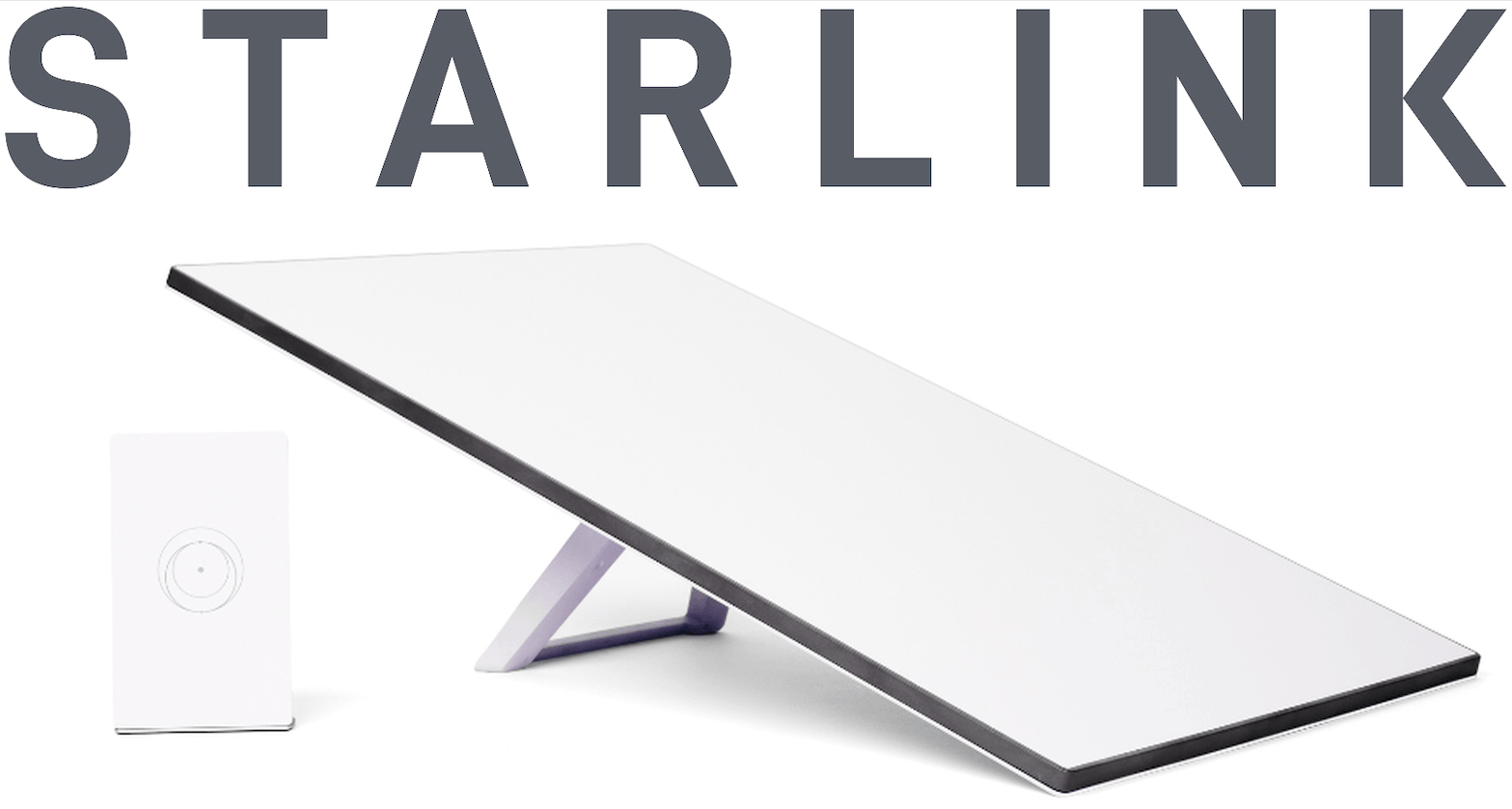
Amazon’s Project Kuiper and SpaceX’s Starlink are tackling the same mission: democratize access to high-speed internet across remote and rural areas. But they’re doing it with fundamentally different strategies. Kuiper, still in the pre-deployment phase, aims to launch and operate a constellation of 3,236 satellites in Low Earth Orbit (LEO). Starlink, already serving customers in Oklahoma, has deployed over 5,500 satellites as of early 2024, with new launches adding to its constellation every month.

Latency and Speed: Current Reality vs Future Promises

Starlink currently delivers real-world download speeds between 25 Mbps to 220 Mbps, with latency hovering around 25 to 50 milliseconds. These figures vary based on location, weather conditions, and network congestion. In Oklahoma, many rural users consistently report performance that rivals traditional cable internet.

Kuiper, still in its testing phase, projects similar performance targets: median download speeds of over 100 Mbps and latency under 50 milliseconds. However, no consumer data is available yet. Full commercial service is expected after Amazon launches at least 50% of its planned satellite network by 2026.

Pricing Models: Transparency vs Speculation

Satellite Architecture: Dense vs Distributed

Technologically, the two systems diverge sharply. Starlink uses smaller satellites with onboard phased-array antennas and optical inter-satellite links, allowing rapid data transfer and network optimization. The typical Starlink satellite weighs around 260 kg and orbits at altitudes between 340 km and 550 km.

Amazon’s Kuiper satellites weigh approximately 500 kg and will fly at three discrete layers: 590 km, 610 km, and 630 km. Though slightly higher in altitude than Starlink, Kuiper's design also leverages phased arrays and planned inter-satellite laser links to drive down latency. Amazon is expected to lean heavily on its cloud infrastructure (AWS) to route and compute data, potentially creating faster backend processes.

Which Path Serves Oklahoma Better?

For residents in Oklahoma who need access today, Starlink holds the functional lead with tested performance and available service. But once Kuiper enters the market—backed by Amazon’s logistical power, AWS integration, and possible pricing advantages—the story could shift. A race once defined by launch cadence may soon evolve into a contest of service quality, network management, and rural optimization. Which satellite titan will win over Oklahoma’s isolated homes and farms? That outcome depends on more than orbit trajectories—it depends on execution, reliability, and local reach.

Shifting the Landscape: Internet Service Competition in Oklahoma

Current Landscape of Internet Providers in Oklahoma

Oklahoma’s broadband market includes a mix of national players and localized providers offering a range of access options—from fiber optic and cable in urban centers to DSL and fixed wireless in less connected regions. AT&T and Cox Communications dominate in metropolitan areas like Oklahoma City and Tulsa, while Sparklight, Vyve Broadband, and local cooperatives like OEC Fiber operate in smaller towns and rural corridors. Satellite providers such as HughesNet and Viasat supplement access where terrestrial options fall short.

Data from the Federal Communications Commission (FCC) shows that as of 2023, approximately 22.8% of Oklahomans in rural areas still lack access to broadband speeds of at least 25 Mbps download and 3 Mbps upload. This creates a fragmented internet landscape where availability and service quality vary dramatically by location.

How Amazon’s Entry Could Reshape the State’s ISP Market

Amazon’s Project Kuiper introduces a vertically integrated satellite internet service designed to provide low-latency, high-bandwidth connectivity across underserved regions. Its entrance could force incumbent providers to rethink their positioning, especially in rural zones where investment in terrestrial infrastructure has lagged.

Consumer Implications: Pricing, Access, and Choice

With Amazon entering the field, consumer dynamics will shift. Increased competition historically leads to more pricing flexibility; when Charter Spectrum expanded service areas in neighboring states, broadband plan costs fell by an average of 15%, according to a 2022 Brookings Institution analysis. A similar effect could apply in Oklahoma once Kuiper becomes operational.

More choice also means users might migrate from slower DSL or high-latency services to high-throughput satellite platforms. Where households once had only a single service provider—sometimes with outdated technology—Amazon’s arrival introduces a viable alternative that doesn’t rely on physical cable or fiber.

FCC Approvals and Regulatory Landscape: Navigating the Path to Launch in Oklahoma

Understanding the FCC Licensing Framework for Satellite ISPs

Every satellite internet provider operating within the United States must secure essential licenses from the Federal Communications Commission (FCC) before launching services. This includes market access authorization, spectrum licenses, and compliance with both domestic interference rules and international coordination agreements.

For non-geostationary satellite systems like Amazon's Project Kuiper, FCC requirements include a detailed orbital debris mitigation plan, proof of financial and technical capability, and strict adherence to the Commission’s milestone requirements—such as launching at least 50% of the satellite constellation within six years of license grant.

Amazon’s Regulatory Progress with Project Kuiper

Amazon cleared a major hurdle in July 2020 when the FCC granted the company approval to deploy and operate a constellation of 3,236 low Earth orbit (LEO) satellites under Kuiper Systems LLC. The authorization allows Amazon to use Ka-band spectrum—specifically the 17.7–20.2 GHz and 27.5–30.0 GHz frequency bands—for fixed-satellite service.

To maintain regulatory standing, Amazon committed to investing over $10 billion into the Project Kuiper ecosystem, including satellite development, ground stations, and customer terminals. The FCC imposed construction milestones: 50% of the satellites must be deployed by July 2026, with full deployment by July 2029. As of Q1 2024, Amazon has completed prototype testing and secured multiple launch agreements to initiate deployment.

State-Level Considerations: The Oklahoma Regulatory Landscape

While telecommunications oversight primarily falls under federal jurisdiction, satellite internet providers must also engage with state-level utilities and service commissions in Oklahoma. In particular, coordination with the Oklahoma Corporation Commission may be necessary if Amazon intends to access utility infrastructure or participate in state-level broadband programs.

Oklahoma has also aligned with the FCC’s broadband expansion goals through initiatives like the Oklahoma Broadband Office, created in 2022. This agency oversees allocation of federal broadband funds throughout the state, especially in underserved and rural communities—potential areas of strategic focus for Amazon’s satellite services.

With the FCC license secured and state engagement pathways emerging, Amazon’s Project Kuiper is positioned to enter Oklahoma’s internet market under a complete regulatory framework.

Amazon’s Project Kuiper and Broadband Expansion in Underserved Oklahoma

Transforming Internet Access Where It’s Needed Most

Large stretches of rural Oklahoma remain outside the reach of reliable high-speed internet. As of the latest FCC Broadband Deployment Report, approximately 26% of rural Oklahomans lack access to 25 Mbps/3 Mbps fixed broadband. In tribal areas, the gap is even broader. Project Kuiper positions Amazon to directly address this disparity with satellite-powered infrastructure, bypassing the need for traditional ground-based installations.

Filling the Gaps with Satellite Access

Unlike fiber or mobile networks, which require dense population centers or costly infrastructure, Kuiper’s satellite system can beam coverage across topography that has long defied upgrades. Fields, forests, plateaus—even isolated households—become digitally reachable endpoints. With plans to deploy over 3,200 low Earth orbit (LEO) satellites, Kuiper infrastructure will create a web over Oklahoma that supports both residential and commercial broadband needs. Startup terminals on the ground connect directly to satellites, enabling viable links even in counties with fewer than 10 people per square mile.

Alignment with State and Federal Broadband Policies

Oklahoma’s broadband strategy reflects coordinated initiatives between state agencies and federal programs like the Infrastructure Investment and Jobs Act (IIJA). Signed into law in 2021, the IIJA earmarked $42.45 billion nationally for broadband expansion under the BEAD (Broadband Equity, Access, and Deployment) program. The Oklahoma Broadband Office is slated to receive more than $797 million in BEAD allocations. Satellite solutions fit within these frameworks where fiber rollouts would be delayed or economically unviable.

Unlocking Synergies with Broadband Grants and Funding

Project Kuiper’s potential aligns with key eligibility criteria for both federal and state-level broadband grant initiatives:

Amazon’s partnership eligibility will likely increase as Oklahoma's public-private broadband ecosystem expands. Applications that propose hybrid connectivity models—satellite for remote homes, fiber for community hubs—stand to gain traction in competitive grant rounds.

Advanced Tech in Orbit: Inside the Kuiper Satellite Network

Low Earth Orbit (LEO): The Foundation of Kuiper’s Architecture

Amazon’s Project Kuiper operates within Low Earth Orbit, placing satellites at altitudes between 590 km and 630 km. This position ensures lower latency compared to traditional geostationary satellites, which orbit at roughly 35,786 km. The proximity allows data to travel faster between satellites and end users on the ground, creating an experience more comparable to fiber internet services. LEO also supports a more responsive network for real-time applications such as video conferencing, online gaming, and remote medical services.

Kuiper’s planned constellation will consist of 3,236 satellites, using a phased deployment approach authorized by the FCC. These satellites will form a dynamic mesh network, maintaining constant communication with users across broad geographic areas, including remote regions in Oklahoma. Coverage density increases as more satellites go live, improving speed and link redundancy.

High-Performance Antennas and Ground Infrastructure

Each Kuiper satellite is equipped with multiple phased array antennas, enabling electronic beamforming to manage multiple high-throughput connections simultaneously. On the ground, customer terminals also use advanced phased arrays, directing signals without moving parts. Amazon reports that its prototype terminals have achieved speeds up to 400 Mbps in testing environments, positioning the service as a realistic alternative to rural fiber installations where trenching costs remain prohibitive.

Ground gateways act as anchors for the satellite network. Spread across strategic locations, these facilities link the satellites to Amazon’s data infrastructure and the global internet. Using high-capacity fiber to backhaul satellite data ensures low congestion and stable performance, even during peak hours. From warehouse-like gateway stations to compact residential terminals, every component is designed for efficient data transmission and minimal delay.

Built for Scaling: Reliability and Expansion Readiness

Amazon's satellite production facility in Kirkland, Washington, is key to scaling the network rapidly. Designed to mass-produce up to five satellites per day, the factory supports continuous launches using reusable rockets from United Launch Alliance, Blue Origin, and others. The modular satellite design streamlines repairs and upgrades, allowing Amazon to replace or enhance portions of the network without service interruption.

Redundancy is baked into Kuiper’s topology. With overlapping satellite orbits and seamless satellite handoffs, connectivity remains consistent—even under partial network outages or during satellite maintenance. Coupled with AI-driven traffic routing and real-time load balancing, the system minimizes latency spikes and maintains throughput under varying demand conditions.

In contrast to fixed-line networks, where physical damage disrupts service for entire communities, Kuiper’s distributed architecture reduces single points of failure. For rural Oklahoma residents familiar with weather-related fiber outages or cellular dead zones, this architectural reliability offers a compelling advantage.

Performance Metrics: What to Expect from Amazon Satellite Internet in Oklahoma

Speed Capabilities in Rural Oklahoma

Amazon’s Project Kuiper promises broadband-class satellite internet for underconnected regions, and that includes rural Oklahoma. Early FCC filings project speeds of up to 400 Mbps for download and up to 100 Mbps for upload, depending on user load and antenna configuration. These figures place Kuiper in the upper range of current satellite services and well above the FCC’s broadband baseline of 25 Mbps download and 3 Mbps upload.

Trials conducted on early-generation satellites have demonstrated performance that competes with ground-based mid-tier cable connections. While not every user will experience maximum throughput at all times, Amazon’s phased-satellite constellation with dynamic bandwidth allocation will allow rural customers to access consistent broadband speeds during peak usage hours.

Latency: Designed for Real-Time Communication

Latency has traditionally undercut the viability of satellite internet for applications like multiplayer gaming or teleconferencing. Amazon’s low Earth orbit (LEO) configuration, with satellites positioned at altitudes between 590 km and 630 km, will significantly reduce round-trip latency. Current projections estimate a target latency of 30 to 50 milliseconds, competitive with fiber-to-the-home performance.

This range puts Kuiper miles ahead of existing geostationary satellite providers, whose latency often measures 600 ms or higher. Such low latency opens the door for seamless Zoom calls, Teams meetings, and online gaming even in isolation-prone communities.

Fiber, DSL, and Satellite: A Performance Comparison

Where fiber is available, it maintains an edge in sheer bandwidth. However, DSL struggles with both speed and latency, making satellite a practical and technically superior alternative in vast areas of Oklahoma where fiber penetration is at less than 35% according to the Oklahoma Broadband Office’s 2023 report.

Use Cases: Tailoring Performance to Real Needs

Incorporating low-latency architecture allows Amazon’s satellite internet to support advanced digital workloads. Video conferencing maintains audiovisual sync without degradation. Voice over IP (VoIP) calls occur in real time with minimal jitter. Competitive online gaming, typically off-limits to high-latency satellite users, becomes feasible with Project Kuiper's infrastructure design.

These use cases aren't theoretical. Amazon has conducted unit tests simulating live usage environments, showing stable ping rates well below 60 ms—an acceptable rate for most interactive services. Notably, consistency across different weather patterns in Oklahoma remains a core design focus, with beamforming and automated rerouting built into the performance model.

A Brighter Future with Amazon Satellite Internet in Oklahoma

Amazon’s Project Kuiper stands at the edge of a technological shift set to reshape digital access across Oklahoma. By deploying over 3,200 low Earth orbit (LEO) satellites, Amazon has laid the groundwork for a broadband network that bypasses traditional infrastructure limits. In a state where geography and low population density often hinder connectivity, this satellite-based approach offers a direct path to fast, affordable internet—regardless of ZIP code.

This shift doesn’t just mean more entertainment or smoother video calls. It ignites growth in rural businesses, supports telehealth in hard-to-reach communities, and brings equal educational opportunities to students previously held back by inadequate internet service. Rather than waiting years for fiber-optic lines to reach remote corners, Oklahoma residents can soon expect broadband from above—streaming down from Kuiper’s constellation.

So what’s next? The initial satellite launches have begun, and Amazon continues to coordinate with the FCC and local partners for deployment. But public access is on the horizon. Want priority access when the service goes live? Looking to compare plans or understand pricing? Don’t wait.

Stay informed about Project Kuiper’s arrival in Oklahoma. Sign up below to get real-time alerts on launch timing, pricing, and coverage in your area.

Sign up today and be among the first to connect with Oklahoma’s satellite-powered future.