Xfinity vs AT&T Internet: Which Provider Is the Better Deal?
Updated
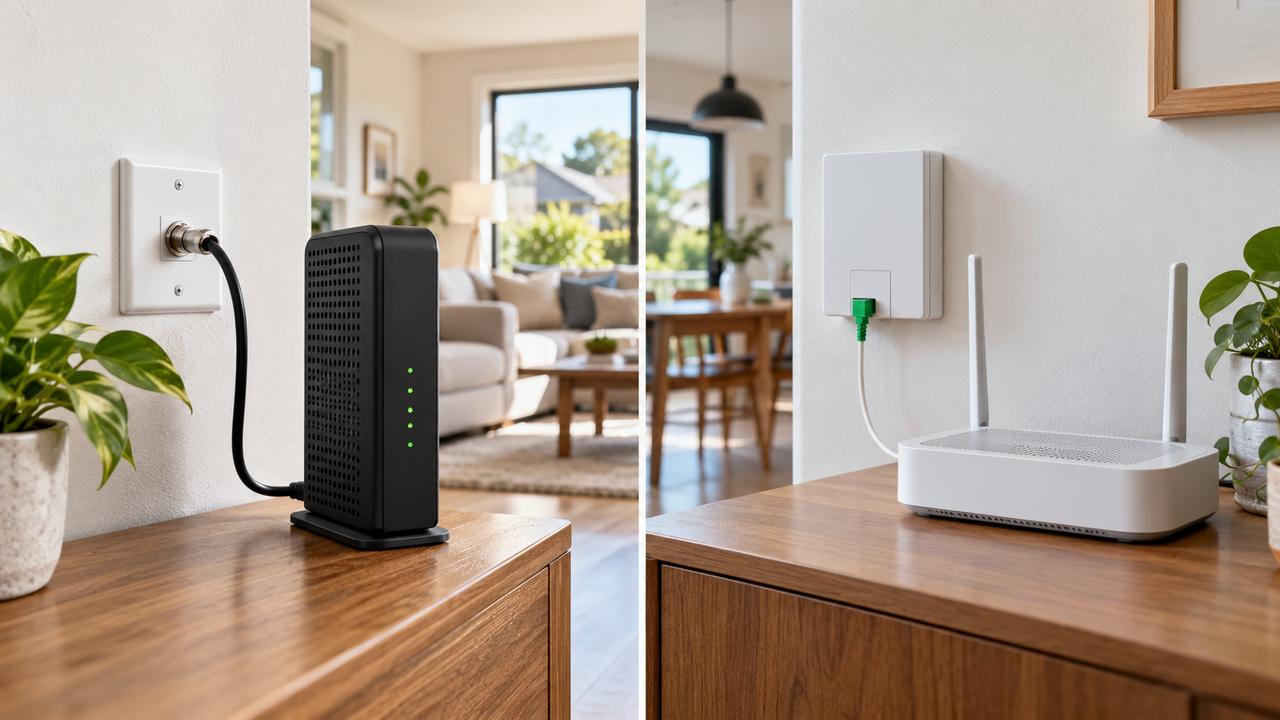
Xfinity and AT&T are two of the biggest home internet providers in the country, and in many cities you can get both. They're built differently, though. Xfinity runs a hybrid fiber-coax cable network. AT&T sells true fiber-to-the-home where it has built it, and fixed wireless or older service elsewhere. That one difference shapes almost everything else: upload speed, price structure and how your bill behaves over time.
Here is how the two compare on October 2, 2026, using the prices each company advertises on its own site.
Xfinity vs AT&T at a glance
| Xfinity | AT&T Fiber | |
|---|---|---|
| Network | Cable (fiber to the neighborhood, coax to the home) | Fiber all the way to the home |
| Entry plan | 300 Mbps for $45/mo | 300 Mbps for $35/mo (select markets) |
| Gig plan | 1 Gig for $70/mo | Priced by address |
| Top speed | Gig-class plans on most of the network | Up to 5 Gig where available |
| Upload speed | Much lower than download | Matches download |
| Price lock | 5-Year Price Guarantee on current plans | Promotional pricing, varies by market |
| Discount rules | AutoPay from a bank account plus paperless billing | AutoPay plus paperless billing |
Prices exclude taxes and fees and apply to new customers. Xfinity's current offer ends October 25.
Plans and pricing
Xfinity
Xfinity has trimmed its lineup to three main tiers: 300 Mbps for $45 a month, 500 Mbps for $60 and 1 Gig for $70. Each comes with a 5-Year Price Guarantee that locks your base rate for 60 months, and Xfinity says the rate stays the same if you move within its service area. Wi-Fi equipment and unlimited data are included, so there's no separate gateway rental or data-overage charge. Getting those prices requires AutoPay from a stored bank account and paperless billing.
Xfinity is also leaning on extras. Plans at 300 Mbps and up come with an Xfinity Mobile line free for a year, and the 1 Gig plan adds two years of Peacock Premium.
AT&T Fiber
AT&T advertises 300 Mbps for $35 a month for new customers in select markets, after AutoPay and paperless billing discounts. Faster tiers step up through gigabit service to AT&T's "hyper-gig" plans, which top out at 5 Gig in limited areas. AT&T prices those faster tiers by address, so check your exact rate and how long it lasts before you order. Customers with an eligible AT&T wireless plan can save more by bundling.
See whether Xfinity, AT&T Fiber or both reach your address
Coverage changes street by street. Enter your ZIP to compare the plans actually offered at your home.
Speed: why upload matters
For streaming and browsing, both providers' 300 Mbps plans feel similar. The gap shows up on the upload side. Fiber sends data out as fast as it brings it in, so video calls, cloud photo backups, game streaming and large file uploads stay smooth even when several people are online. Cable uploads are a fraction of the download speed, which is usually fine for a household that mostly watches, but can pinch for people who work from home, create content or back up a lot of data.
Xfinity markets its service as "fiber-powered," and it's true that fiber carries traffic to your neighborhood. The last stretch into your home is still coaxial cable, which is why the upload numbers differ. If symmetrical speed matters to you, AT&T Fiber has the edge wherever it's available.
Price stability over time
This is where Xfinity has made its strongest case. A five-year lock on the base rate is long by industry standards, and it removes the usual year-two price jump. Just remember that taxes and fees can still change, and switching plans later may reset your pricing.
AT&T's entry price is lower, but promotional pricing varies by market and offer. Before you sign up, ask what the plan will cost once any promotional discount ends, and whether the AutoPay discount depends on paying from a bank account or debit card.
Equipment, installation and contracts
Both companies include a Wi-Fi gateway with service. Xfinity says equipment is part of its current plan pricing. AT&T's hyper-gig plans include its All-Fi Wi-Fi experience, and it sells extended Wi-Fi coverage for larger homes.
Installation is different. Xfinity often lets you self-install if your home already has an active cable line. AT&T Fiber frequently needs a technician, and AT&T says a fiber install typically takes four to six hours.
Neither provider requires an annual contract on these plans.
Which should you choose?
Choose Xfinity if you want a predictable bill for years, AT&T Fiber isn't built on your street, or the free mobile line or Peacock perk tips the math for your household.
Choose AT&T Fiber if it's available at your address and you care about upload speed, work from home, want multi-gig options, or already have AT&T wireless lines that unlock bundle savings.
If you have both, compare the total monthly cost over two to three years, not just the first bill. A lower teaser rate can end up costing more than a locked rate, and the reverse can be true if you'll move or switch soon.
Want a second opinion before you switch?
Tell us how many people and devices are online at your place and we'll help you pick a speed without overpaying.
Frequently asked questions
Is AT&T Fiber faster than Xfinity?
On upload speed, usually yes. AT&T Fiber gives you matching upload and download speeds. Xfinity's cable network delivers fast downloads, but its uploads are typically much lower than its downloads.
Which is cheaper, Xfinity or AT&T?
AT&T Fiber starts lower, at $35 a month for 300 Mbps in select markets with AutoPay and paperless billing. Xfinity's 300 Mbps plan is $45 a month, but that price is locked for five years with AutoPay and paperless billing.
Do Xfinity or AT&T Fiber require a contract?
No. Xfinity's current plans have no annual contract, and AT&T Fiber is sold month to month. Check the terms of your specific offer at checkout.