Verizon vs Starlink: Fios, 5G Home Internet or Satellite for Your Home?
Updated
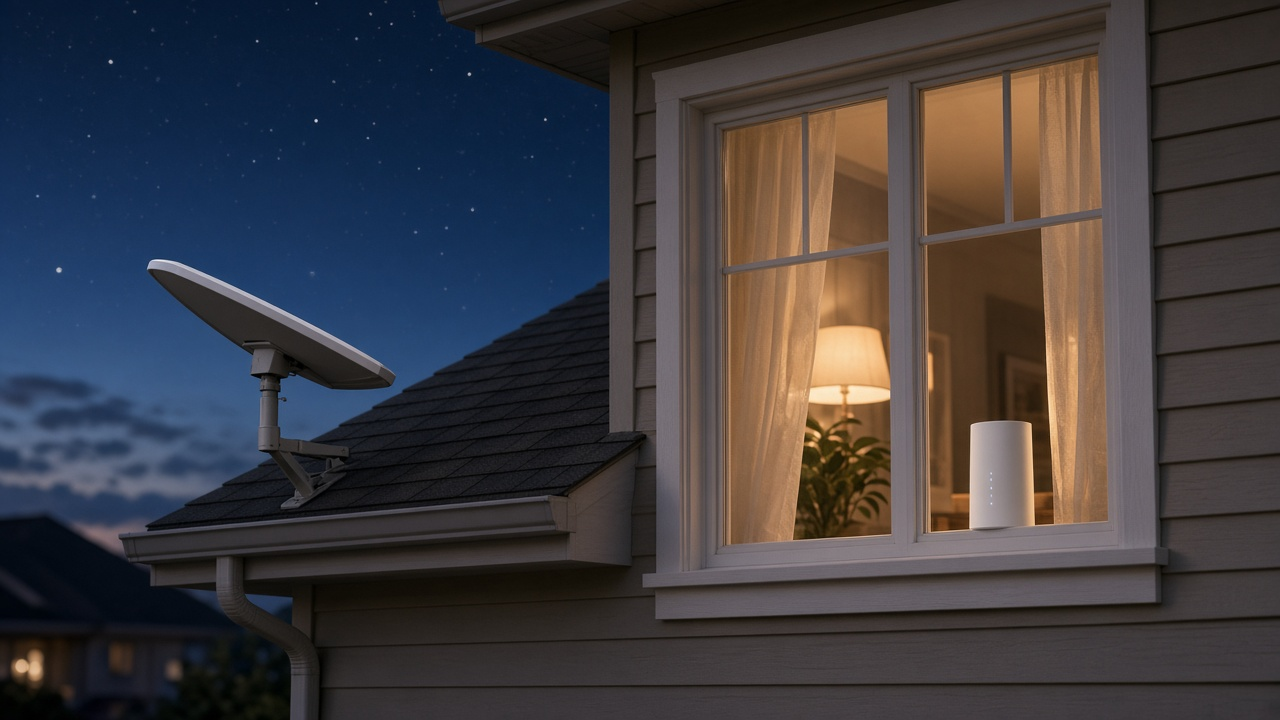
If your address can get Verizon and Starlink, you are choosing between very different networks. Verizon sells Fios, a fiber-optic service, in its fiber areas and 5G Home Internet over its cellular network in many more places. Starlink beams service from low-Earth-orbit satellites to a dish at your home. This guide compares what each one costs as of November 19, 2026, how fast each can be, and which households should pick which.
The short version
If Verizon Fios reaches your home, it is usually the stronger choice. Fiber gives you symmetrical upload and download speeds, low lag and no weather or tree problems. If you can only get Verizon 5G Home Internet, the decision depends on how strong the cellular signal is at your address. Starlink makes the most sense where neither Fios nor a strong 5G Home signal is available, or where you need a connection that does not depend on local wires or towers.
Verizon prices in November 2026
Verizon's Fios page on November 19, 2026 listed these "as low as" monthly prices. Verizon advertises its home internet plans as all-in pricing with no hidden fees or equipment charges.
- Fios 300 Mbps from $40 a month, with up to 300 Mbps download and upload.
- Fios 500 Mbps from $75 a month.
- Fios 1 Gig from $90 a month, up to 940 Mbps download and 880 Mbps upload.
- Fios 2 Gig from $100 a month and Fios 5 Gig from $110 a month.
Verizon also advertises Fios 300 from $30 a month with Auto Pay and any Verizon mobile phone plan, so households that already pay Verizon for phones can pay less. A plan table lower on the same Verizon page showed different figures for some tiers, so confirm the price shown after you enter your address.
For 5G Home Internet, the same day Verizon listed 5G Home from $60 a month, 5G Home Plus from $70 and 5G Home Ultimate from $85, and 5G Home from $35 a month with Auto Pay and a Verizon mobile phone plan. Verizon says its home internet plans have no annual contract and no equipment charges, and it advertises a multi-year price lock on eligible plans. In areas without Fios or 5G Home, Verizon also sells Home Internet Lite for lighter users.
Holiday offers were running too. Verizon was advertising two months of service credit and, on select higher plans, a TV and soundbar bundle or a gift-card reward. Read the terms, because Verizon says it can charge back the value of those rewards if you cancel within 12 months.
How Starlink pricing works now
Starlink sells three home tiers in the U.S.: Residential 100 Mbps, Residential 200 Mbps and Residential Max. The two lower tiers cap download speeds at 100 Mbps and 200 Mbps and are only offered in select areas, while Max gets the fastest speeds and highest network priority. Starlink now sets Residential prices by service address, and news coverage this month has reported both price changes based on local demand and limited-time discounts in some regions. That means there is no single national Starlink price to compare. Enter your exact address on Starlink's site to see your monthly rate and whether the dish is a purchase or a rental where you live.
Our guides to what Starlink really costs in your area and Starlink's dynamic pricing explain how the address-based system works.
Speed, lag and reliability
Fios is the clear performance leader. Fiber delivers the same or nearly the same speed in both directions and very low latency, which helps with video calls, cloud backups and online gaming. Verizon 5G Home Internet speeds vary by location, signal strength and network congestion, and Verizon says so on its own pages. A strong signal can feel close to cable; a weak one can be inconsistent in the evening.
Starlink's speeds also vary, and the lower tiers are capped. Satellite service needs a clear view of the sky, so trees, nearby buildings and heavy snow or rain can interrupt it. Latency on low-Earth-orbit satellites is far lower than on older satellite systems, but it is usually higher and less steady than fiber. See whether Starlink works through trees and how it handles heavy rain before you order.
Equipment and setup
Verizon includes a router with its home internet plans. Fios needs a professional or guided install of the fiber line and an optical network terminal, while 5G Home Internet is usually plug-and-play: you place the receiver near a window that faces a tower. Verizon says you must return its equipment within 30 days of canceling to avoid unreturned-equipment fees.
Starlink ships a dish, router and cables that you mount and aim yourself, or pay an installer. Placement matters a lot, and roof or pole mounting can add cost. Depending on your address, the kit may be a purchase or a rental with its own fees, so check the order summary before you pay.
Which should you choose?
- Pick Verizon Fios if it is available. It is faster and steadier than satellite and is not affected by trees or weather.
- Pick Verizon 5G Home Internet if Fios is not offered and Verizon's address check shows strong 5G Home service, especially if you already have Verizon phone lines.
- Pick Starlink if you live where fiber, cable and strong 5G Home signals do not reach, or you want an independent backup connection.
- Compare both if you are rural. Some rural homes qualify for Verizon Home Internet Lite or 5G Home, which may cost less than Starlink at your address, while others get a better experience from a well-placed Starlink dish.
For more context, see our comparisons of Starlink and 5G home internet for rural switchers, fiber vs 5G home internet and Starlink vs fiber.
Not sure which works at your address?
Compare Verizon, Starlink and the other providers that serve your home before you commit.
Frequently asked questions
Is Verizon cheaper than Starlink?
Usually, at addresses where Verizon is available. On November 19, 2026, Verizon listed Fios from $40 a month and 5G Home Internet from $60 a month, with lower prices for customers who also have a Verizon mobile phone plan and Auto Pay. Starlink sets Residential prices by address, so compare your own Starlink quote.
Is Starlink faster than Verizon 5G Home Internet?
It depends on the address. Both services vary with conditions. Verizon 5G Home speeds depend on signal strength and congestion, while Starlink's lower tiers cap download speeds at 100 or 200 Mbps and need a clear view of the sky.
Does Verizon charge for equipment?
Verizon says its home internet plans include a router with no equipment charges. You must return Verizon equipment within 30 days after canceling to avoid unreturned-equipment fees.
Can I get Starlink if Verizon Fios is available?
Yes, if Starlink serves your area, but Fios is usually the better value and performance choice where both are available. Starlink is strongest where wired service and strong 5G signals are not available.
Do Verizon and Starlink require contracts?
Verizon says its home internet plans have no annual contract, but some promotional rewards can be charged back if you cancel within 12 months. Starlink sells month-to-month service; read the order terms for equipment and return rules at your address.