Comcast Trials a Unified DOCSIS 4.0 Node: What It Means for Xfinity Customers
Updated · RSINC · ~6 min read
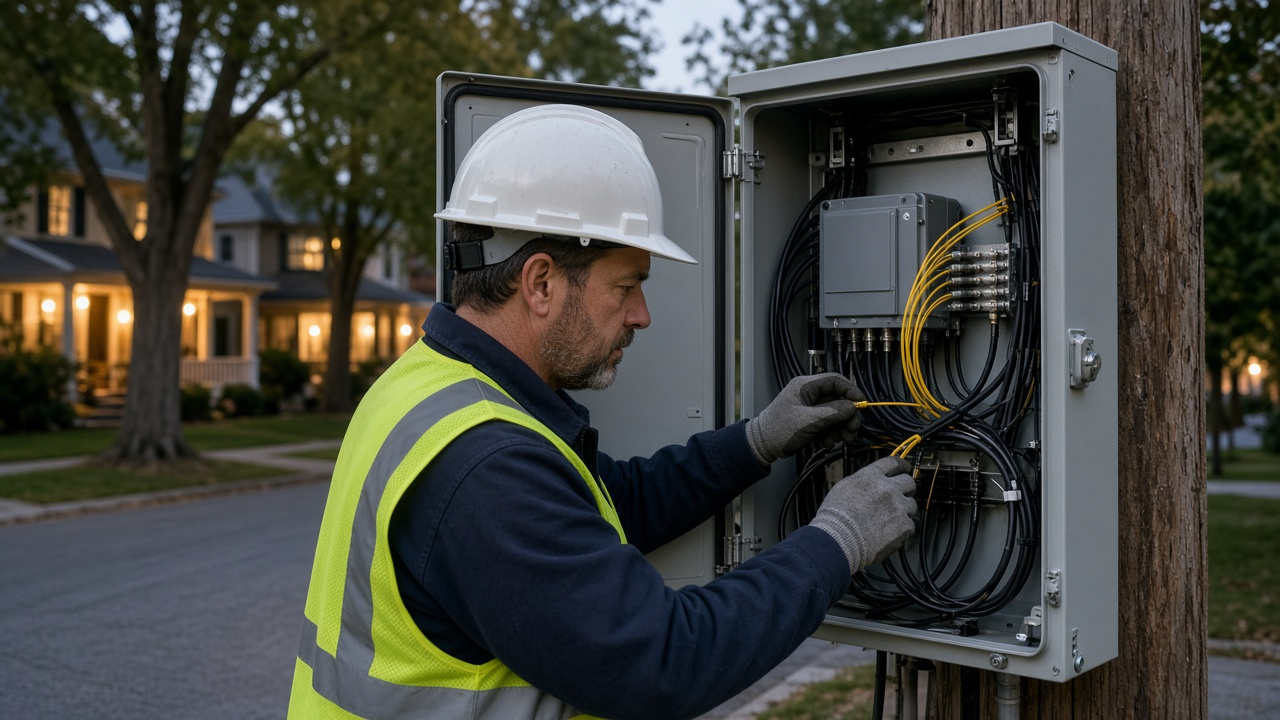
Comcast has started field trials of a new neighborhood node from Aurora Networks that can run both versions of DOCSIS 4.0 on the same hardware. The equipment, called the Unified DOCSIS 4.0 Opti Max OM6180, was announced on September 29, 2026. It is a behind-the-scenes network part, not a new Xfinity plan, but it is one more step in the upgrade that brings faster uploads and multi-gig speeds to cable internet.
If you have Xfinity internet, you do not need to do anything right now. Here is what was announced, what it could mean for your connection, and what is still unknown.
What Comcast is testing
Aurora Networks, a Vistance Networks business, makes equipment that sits out in the cable network between Comcast’s facilities and your home. Two pieces are involved in this news:
- The OM6180 node (field trial). A node is the cabinet or pole-mounted box where Comcast’s fiber meets the coaxial cable that runs down your street. The OM6180 supports both kinds of DOCSIS 4.0, Full Duplex (FDX) and Extended Spectrum (ESD), on one platform. Comcast says it will work with the FDX DOCSIS 4.0 equipment it has already deployed.
- A 1.8 GHz smart amplifier (lab testing only). Comcast has also begun lab testing Aurora’s Starline BLE Unified DOCSIS 4.0 smart amplifier, a line extender that also supports FDX and ESD, up to 1.8 GHz. It is designed to fit inside the Starline BLE amplifier housings already mounted on Comcast’s lines. Crews can upgrade the electronics without replacing the whole outdoor enclosure.
Neither company has shared trial locations, how many homes are involved, performance results, or a date for wider deployment. For now, this is a test, not a rollout announcement.
DOCSIS 4.0 in plain English
DOCSIS is the standard that lets internet travel over cable TV wiring. Most cable internet today runs on DOCSIS 3.1, which is great for downloads but usually comes with much slower uploads. DOCSIS 4.0 is the next generation. CableLabs, the industry’s research group, specifies up to 10 Gbps of downstream capacity and up to 6 Gbps of upstream capacity on a DOCSIS 4.0 network. That is total network capacity, not a speed any home plan is sold at. What it does make possible is multi-gig symmetrical service, meaning upload speeds that match download speeds.
There are two ways to get there:
- Full Duplex (FDX) lets upload and download traffic share part of the same spectrum at the same time. Think of it as using the road more efficiently. This is the approach Comcast has mainly used so far.
- Extended Spectrum (ESD) widens the usable frequency range on the coax, up to about 1.8 GHz, so there is more room overall. Think of it as building a wider road.
A unified node or amplifier supports both. For Comcast, that means one common hardware and software platform. It can keep scaling FDX today and still have room to use extended spectrum or change configurations later, without installing a separate product for each approach.
Wondering what speeds reach your address?
Cable upgrades roll out street by street. Enter your ZIP to compare Xfinity with fiber and other options near you.
Why the node matters: pushing the network closer to you
Xfinity runs on a hybrid fiber-coax (HFC) network. Fiber carries traffic to your neighborhood, and coax covers the last stretch to your home. Comcast describes its DOCSIS 4.0 work as part of a bigger network overhaul that pushes fiber deeper, uses a distributed access design, and adds AI-powered software. In a distributed access network, work that used to happen in a central facility moves out to digital nodes in the neighborhood, managed by virtualized software. Shorter coax runs and smarter nodes mean more capacity and fewer weak points between the network and your living room.
The amplifier piece matters for a practical reason. Coax lines need amplifiers along the way. Reusing existing housings is meant to cut deployment cost, shorten install time, and reduce disruption on the network. That can help upgrades reach more streets with fewer service interruptions.
What this means for Xfinity customers
- Faster uploads are the big win. DOCSIS 4.0 is about closing the upload gap with fiber. That helps video calls, cloud backups, gaming streams, creators, and security cameras. If slow uploads bother you today, see why Xfinity uploads can lag.
- Multi-gig symmetrical is already live at some addresses. Comcast says its DOCSIS 4.0 upgrades now reach millions of homes. Eligibility still depends on your exact address, not just your city. This trial is about scaling those upgrades more efficiently. It does not switch on new speeds by itself.
- No set timeline for this gear. No commercial deployment date has been announced for the OM6180 or the new amplifier. Be wary of anyone promising a specific upgrade date for your street.
- You do not need to change anything now. Your current plan and equipment keep working. When DOCSIS 4.0 tiers reach your address, getting the fastest symmetrical speeds typically requires a DOCSIS 4.0-capable gateway. If you own your modem, check Xfinity’s compatible modem list before you upgrade.
Cable vs fiber: does this change the choice?
Not overnight. Where fiber is available, it still delivers symmetrical speeds and low latency today. DOCSIS 4.0 is cable’s way to compete on uploads over wiring that is already in place, which is how Comcast can upgrade huge areas without digging new lines to every home. If both are at your address, compare the actual upload speed, the price after any promo, and equipment fees. For a closer look at the terminology, see Xfinity “fiber-powered” vs real fiber and what cable’s 10G platform means.
FAQ
Is the OM6180 a new Xfinity plan or modem?
No. It is network equipment installed in the neighborhood, not something you rent or buy. You will not see its name on your bill.
Will my Xfinity internet get faster because of this trial?
Not directly or immediately. The trial tests hardware Comcast could use to expand and improve DOCSIS 4.0. Faster tiers depend on when your area is upgraded and which plan you choose.
Can I get symmetrical Xfinity speeds today?
Possibly, if your address is already upgraded. Check the plans offered for your exact address. A symmetrical tier showing up for your city does not guarantee it at your home.
What is the difference between FDX and ESD?
FDX shares spectrum between upload and download. ESD adds more spectrum. Both are part of DOCSIS 4.0. Comcast has mainly used FDX, and unified gear supports both.
Compare Xfinity, fiber, and more by ZIP
We show what reaches your address. You confirm current prices, speeds, and equipment at checkout.
Bottom line
Comcast’s field trial of Aurora’s unified OM6180 node is a real but early step. It gives Comcast one platform that handles both flavors of DOCSIS 4.0, which should make it easier to keep expanding multi-gig, faster-upload cable service. For Xfinity customers, nothing changes today. Keep an eye on the plans offered at your address, and compare your options when it is time to switch or upgrade. Learn more about the standard in how cable is pushing the limits of DOCSIS 4.0, or compare providers at rsinc.com or 1-877-697-2926.
Based on equipment and network details announced in September 2026. Trial scope, timing, plan speeds, and availability can change and vary by address. RSINC is an independent comparison site. Xfinity, Comcast, Aurora Networks, Opti Max, and Starline are trademarks of their respective owners.
← More internet articles · Related: Xfinity guide · DOCSIS 3.0 vs 3.1 and 4.0 explained