What Is Cable’s 10G Platform? Multi-Gig Cable Speeds Explained for Shoppers
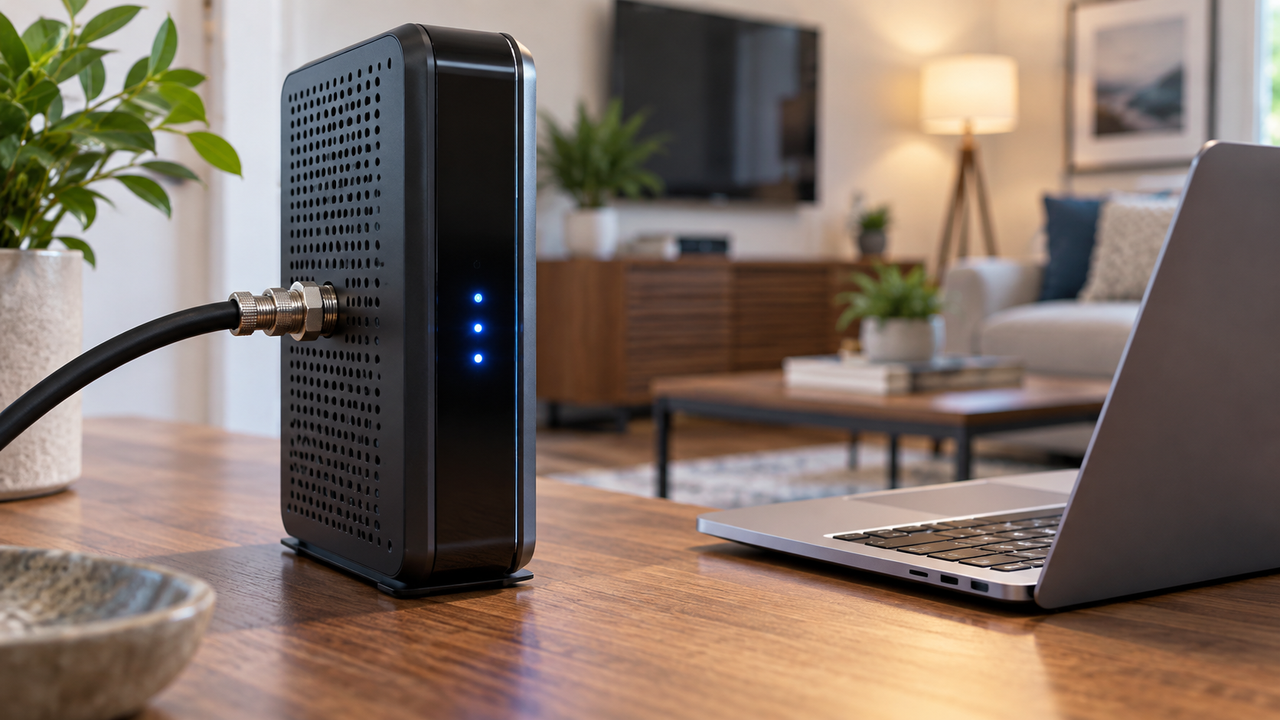
Cable’s 10G platform is not 5G wireless or a 10-Gbps plan available at every address. It is an industry technology roadmap for faster, lower-latency broadband, typically over hybrid fiber–coax networks. Some cable providers already sell multi-gigabit tiers, but the service offered at your street may be much slower than the platform goal.
If ads or store signs say “10G,” do not confuse them with a phone’s 5G icon or a pure fiber ONT. This explainer clears the naming, the DOCSIS tech behind it, and how multi-gig cable compares with fiber when you are picking a plan by ZIP.
What “10G” means for cable shoppers
The 10G platform is a development program across participating cable providers — not a single nationwide plan SKU and not a wireless generation. Goals commonly described for the platform include multi-gig (and eventually symmetrical) speeds, lower latency, and safer Wi-Fi on the home network, delivered over the existing hybrid fiber–coaxial (HFC) plant cable companies already operate. That reuse is the point: upgrades can roll across shared coax infrastructure faster than building brand-new fiber to every door.
Today’s marketed “10G-ready” or multi-gig cable offerings are typically a fraction of the 10 Gbps end goal. Seeing up to about 2 Gbps from large operators is a real step; it is not the same as having 10 Gbps to the modem in every neighborhood.
Curious if multi-gig cable or fiber is at your address?
Enter your ZIP to compare cable multi-gig tiers with fiber and other options — availability varies block by block.
10G vs 5G vs fiber (quick clarity)
- 10G (cable platform): industry push toward ~10 Gbps-class cable broadband over HFC; today you mostly shop multi-gig cable (often 1–2 Gbps) where upgraded.
- 5G: fifth-generation mobile / fixed wireless cellular service — unrelated naming even when both use a “G.”
- Fiber: dedicated (or mostly fiber) last-mile to the premises; many fiber plans already offer multi-gig and strong upload/symmetry without waiting on DOCSIS upgrades.
DOCSIS 3.1 today, DOCSIS 4.0 next
Gigabit cable has relied heavily on DOCSIS 3.1. DOCSIS 4.0 raises the technology’s shared downstream capacity to as much as 10 Gbps and upstream capacity to as much as 6 Gbps, according to CableLabs. Those are network technology capabilities, not guaranteed speeds for one household. The operator’s local plant, modem, service tier, and in-home network all have to support the upgrade.
Which providers talk about the 10G platform?
Member companies associated with the initiative include large cable brands such as Xfinity (Comcast), Spectrum (Charter), Cox, Mediacom, Midco, and others listed via CableLabs. Plan names, promo prices, and top speeds change by market. Illustrative ranges shoppers may see (confirm live at signup; prices and availability vary):
- Xfinity: tiers spanning roughly hundreds of Mbps up toward about 2 Gbps in some areas; select markets advertise more fiber-like or equal up/down profiles.
- Spectrum: broad cable speed ladder; multi-gig options depend on footprint and compatible equipment.
- Cox / Mediacom / Midco: gigabit and, in places, multi-gig cable (or fiber overlays) depending on the neighborhood.
Always verify the upload number and equipment fee on the Broadband Facts label — cable multi-gig downloads still often come with lower uploads until DOCSIS 4.0 / plant upgrades catch up.
Does anyone need 10 Gbps at home?
For most households, true 10 Gbps is future-proofing, not a must-have for Netflix and Zoom. What many homes feel first is upload pressure — cameras, cloud backups, creators, and video calls — where cable’s asymmetric tiers lag fiber. Multi-gig cable helps downloads and congestion headroom; fiber (where available) or progressive 10G/DOCSIS 4.0 upgrades aim to close the latency and upload gap without a full greenfield fiber build everywhere.
Shopper decision guide
- If you only need reliable streaming and browsing, a solid gigabit (or even lower) cable tier may be enough — ignore “10G” hype.
- If you want multi-gig downloads for large downloads / many 4K streams, ask whether your ZIP has upgraded multi-gig cable and what upload you actually get.
- If uploads, symmetry, or lowest latency matter most, compare fiber side by side before locking a cable promo.
- Confirm modem compatibility (DOCSIS 3.1 vs 4.0) so you are not renting gear that caps a faster plant.
Compare multi-gig cable and fiber by ZIP
Soft guidance only — we map what reaches your address; you confirm promo prices and equipment at checkout.
Bottom line
Cable’s 10G platform is a multi-gig cable roadmap — not 5G cellular and not fiber. DOCSIS 3.1 already enables gigabit-class cable; DOCSIS 4.0 is the bigger leap toward higher and more symmetrical speeds. Shop the real Mbps (especially upload) at your ZIP, then decide between upgraded cable and fiber. Soft next step: rsinc.com or 1-877-697-2926.
Sources: CableLabs 10G platform and CableLabs DOCSIS 4.0 overview.