AT&T Internet Air vs Verizon 5G Home Internet
Updated
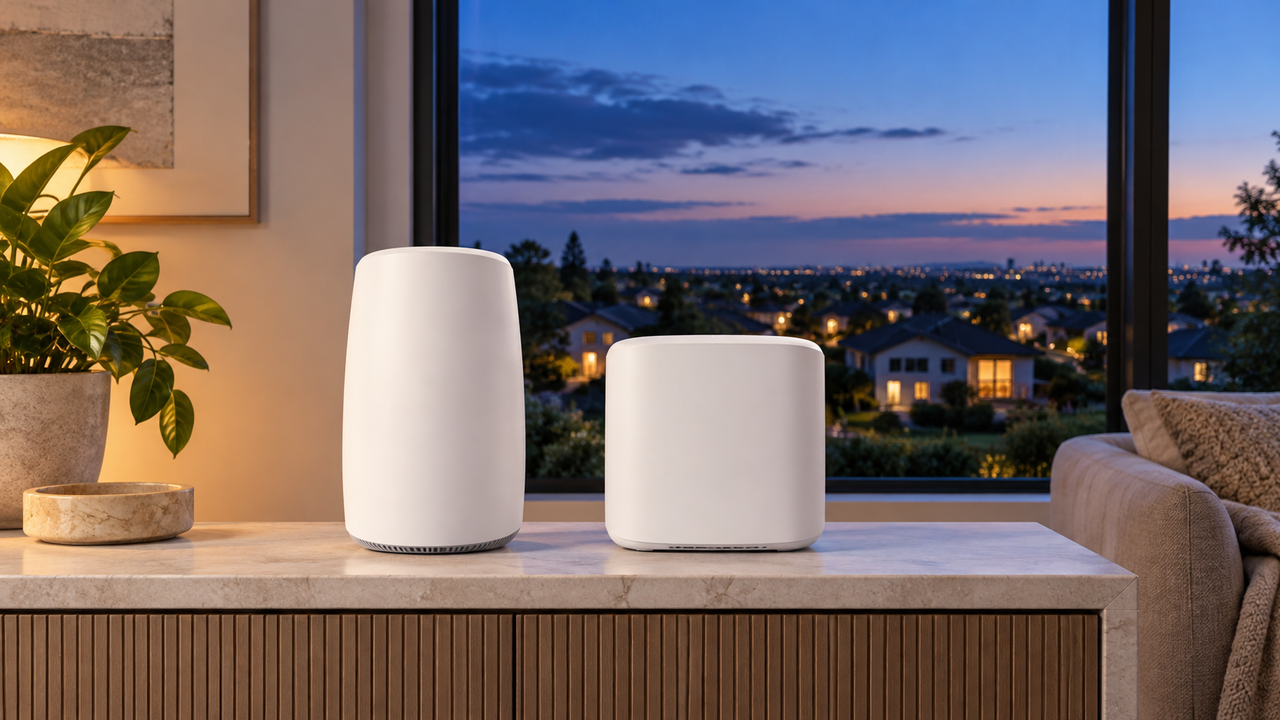
Verizon 5G Home Internet is the better deal for most households: it starts lower, includes taxes and fees in its price, locks your rate for 3 to 5 years, and offers faster tiers. AT&T Internet Air makes sense if Verizon's 5G signal is weak at your address or you want one simple plan from AT&T. Both are fixed wireless services that use a cellular network instead of a cable or fiber line. Here's how AT&T and Verizon 5G Home Internet compare.
Verizon 5G Home is the better deal for most homes: $50/mo with autopay, including taxes and fees, locked for 3 years ($35 with an eligible Verizon phone plan), with faster Plus and Ultimate tiers. AT&T Internet Air starts at $55/mo plus taxes and fees for one plan (90 to 300 Mbps expected), with no multi-year lock advertised. Pick whichever has the stronger signal at your address.
AT&T prices from att.com and Verizon prices from verizon.com, both checked October 8, 2026, with autopay.
AT&T Internet Air vs Verizon 5G Home at a glance
| AT&T Internet Air | Verizon 5G Home Internet | |
|---|---|---|
| Plans | One plan | 5G Home, 5G Home Plus, 5G Home Ultimate |
| Price with autopay | From $55/mo, plus taxes and fees | $50, $60 or $75/mo, with taxes and fees included |
| With a phone line from the same carrier | Ask whether a bundle discount applies | $35, $45 or $60/mo with an eligible Verizon mobile plan |
| Price lock | No multi-year lock advertised | 3 years (5G Home), 4 years (Plus), 5 years (Ultimate) |
| Expected download | 90 to 300 Mbps | 25 to 300 Mbps (5G Home), 50 to 500 Mbps (Plus), 85 to 1,000 Mbps (Ultimate), depending on the 5G band at your address |
| Expected upload | 8 to 30 Mbps | 5 to 75 Mbps depending on plan and band |
| Data | Unlimited; speeds can be cut for at least 30 minutes during congestion | Unlimited; data may be prioritized behind other traffic when a site is busy |
| Equipment | All-Fi Hub included | Router included (Ultimate adds a Wi-Fi extender) |
| Trial or contract | No annual contract | 30-day money-back guarantee; credit approval required |
AT&T prices from att.com as of October 8, 2026; Verizon prices from verizon.com as of October 8, 2026. AT&T speeds are AT&T's expected range (support site, updated August 25, 2026). Verizon speeds are the typical ranges in Verizon's broadband disclosures (last updated October 29, 2025). Availability and speed vary by address.
Price: Verizon is cheaper and includes taxes and fees
Verizon's base 5G Home plan is $50/mo with autopay, and Verizon describes the price as all-in, with no added taxes or fees. AT&T Internet Air starts at $55/mo with autopay and paperless billing, plus taxes and fees. Verizon also locks the price for at least three years, which AT&T doesn't advertise on Internet Air. With an eligible Verizon postpaid mobile line, the $15 Mobile + Home discount brings the base 5G Home plan to $35/mo; business, data-only and certain bundle accounts are excluded.
Our 3-year cost math
| Plan | Monthly | 3-year total |
|---|---|---|
| AT&T Internet Air | $55 + taxes and fees | $1,980 + taxes and fees (if the price doesn't rise) |
| Verizon 5G Home | $50 all-in (locked 3 years) | $1,800 |
| Verizon 5G Home with Verizon mobile | $35 all-in | $1,260 |
| Verizon 5G Home Ultimate | $75 all-in (locked 5 years) | $2,700 |
Our math: listed monthly price times 36 months, as of October 8, 2026, with autopay. Excludes promos and one-time charges. Verizon figures require eligible bank-account Auto Pay and paper-free billing. Mobile-discount figures assume an eligible postpaid phone line is maintained; its separate phone bill is not included. Confirm available plans and discounts for your address.
Which signal is stronger at your address?
Compare AT&T, Verizon and other providers by ZIP.
Speed: depends on your signal, but Verizon has a higher ceiling
AT&T expects Internet Air to deliver 90 to 300 Mbps. Verizon's speeds depend on which part of its 5G network reaches your home. On its mid-band network, Verizon's typical speeds run from 25 to 85 Mbps (5G Home) up to 85 to 250 Mbps (Ultimate). Where its high-band (mmWave) signal reaches, 5G Home Ultimate is typically 300 to 1,000 Mbps. Verizon also streams video at up to 1080p on 5G Home and Plus and at up to 4K on Ultimate.
That means the cheapest Verizon plan can be slower than Internet Air at some addresses. Check the speed each carrier quotes for your address before you choose. To get more from either service, see how to boost 5G home internet speed and what deprioritization means.
Extras
- Verizon Ultimate adds whole-home Wi-Fi with an extender and a free router upgrade after three years. It also includes a 12-month Disney+, Hulu and ESPN+ perk, which costs extra after the first year. Read about Verizon's home internet perks.
- AT&T Internet Air includes the All-Fi Hub, $0 self-setup, and AT&T's service guarantee bill credit for qualifying outages.
Who should pick which
- Pick Verizon 5G Home if you want an all-in price, a multi-year price lock, a Verizon phone discount, or gig-class speeds where its high-band signal reaches.
- Pick AT&T Internet Air if AT&T quotes a stronger signal or faster speed at your address, you're already an AT&T customer, or Verizon 5G Home isn't available.
- Also compare: AT&T Internet Air vs T-Mobile, Is Internet Air the same as fiber? and can you work from home on 5G home internet?
Want help choosing?
We can check speeds and prices at your address.
Frequently asked questions
Is Verizon 5G Home cheaper than AT&T Internet Air?
Yes. Verizon 5G Home is $50/mo with autopay, including taxes and fees, or $35 with Verizon mobile. AT&T Internet Air starts at $55/mo plus taxes and fees. Prices as of October 8, 2026.
Which is faster, AT&T Internet Air or Verizon 5G Home?
It depends on your address. AT&T expects 90 to 300 Mbps on Internet Air. Verizon's typical speeds range from 25 to 85 Mbps on its base plan over mid-band 5G up to 300 to 1,000 Mbps on Ultimate where its high-band signal reaches.
Do AT&T Internet Air and Verizon 5G Home have data caps?
Neither has a data cap. Both can slow your speeds when the network is busy.