Viasat Wins Space Force Contract With a $450 Million Ceiling
By RSINC editorial team | Updated
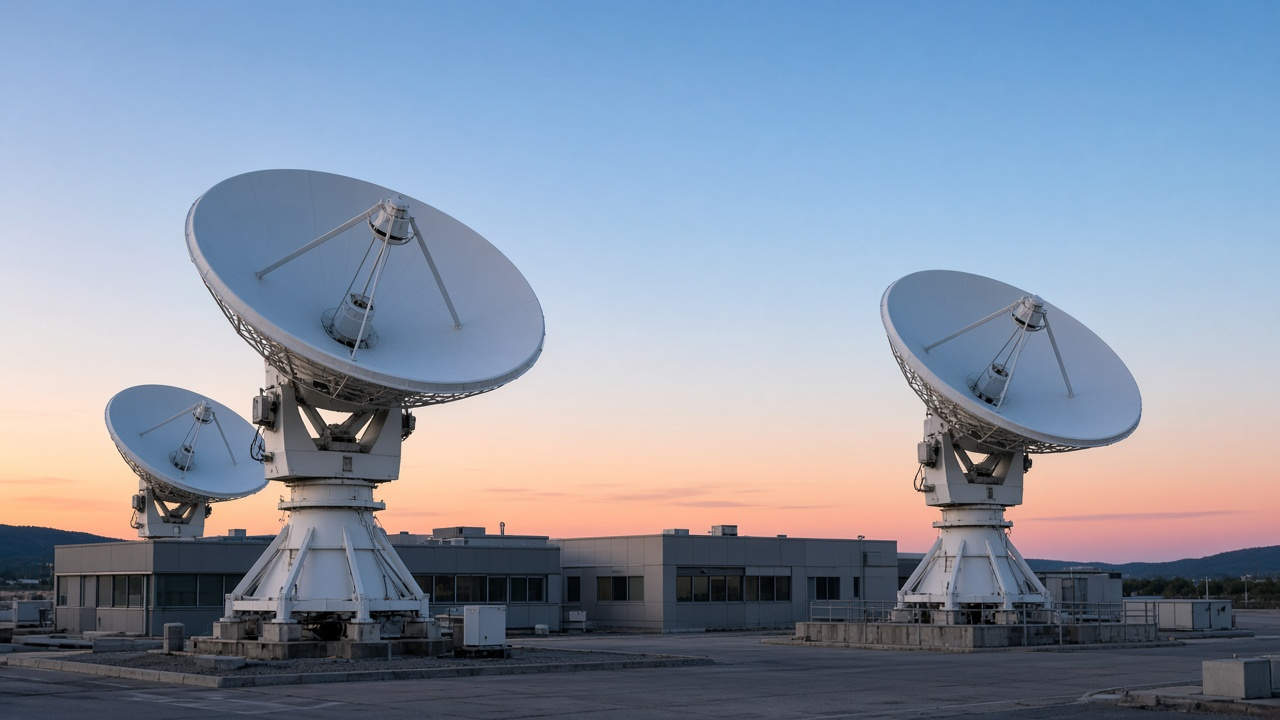
Viasat has received a Space Systems Command contract with a maximum ceiling of $450 million and an initial task order of $115 million for a Mission Operations Center supporting the Space Data Network Backbone. The November 5 announcement concerns government satellite-network integration, not a new home-internet offer.
For the separate consumer service, see our Viasat provider guide. This government award does not change household service eligibility.
The ceiling is not $450 million immediately booked as revenue or paid to Viasat. It is the maximum value of the indefinite-delivery, indefinite-quantity contract framework; the initial task order is the separately announced $115 million piece of work.
What Space Systems Command confirmed
The command’s November 5 primary release describes a competitive Indefinite-Delivery/Indefinite-Quantity award with a “maximum ceiling of $450 million” and an “initial task order of $115 million” to design, field and scale the center. GovCon Wire’s November 6 report gives the same figures.
Neither the ceiling nor a task-order value should be treated as proof that the full amount has already been paid. The public announcement establishes the contract framework and initial scope, not a cash receipt or a residential investment allocation.
What the Mission Operations Center will do
Space Systems Command says the center will bring together mission integration, network operations and data-transport management across multiple constellations and providers. Viasat will serve as the network and mission system integration partner as the command expands its open-architecture ecosystem across space-segment providers.
In plain language, this is about coordinating systems supplied by more than one company. It is not a purchase of household dishes, nor does the announcement say Viasat is replacing all other providers. The command links the effort to its Space-Based Sensing and Targeting portfolio and earlier work involving Amazon LEO for Government, Lockheed Martin, Northrop Grumman, Rocket Lab and York Space Systems.
How Golden Dome fits
The command says the work is being undertaken in partnership with Golden Dome for America, the government’s layered homeland-defense initiative. It presents the center as a step toward integrated, resilient connectivity across different systems.
Those are stated program goals, not independent proof that a completed center has delivered them. The announcement should not be mistaken for a declaration that every element of the wider network is already operational.
What this means for home-internet customers
The contract does not announce a new consumer price, a faster home-internet tier, a replacement dish program or an automatic upgrade. Government integration work and residential broadband have different customers and purposes.
It also does not establish that Viasat has restored its residential subscriber base. That separate story is covered in Viasat’s US satellite-internet subscriber decline. A company can win government work while facing different pressures in home internet.
Households can use the existing 80 Mbps minimum-speed guarantee guide and Viasat satellite-upgrade and Starlink competition coverage for those distinct consumer topics. Confirm actual service terms at the address rather than interpreting a defense-contract headline as a change to residential service.
What to watch next
Additional public task orders, delivery milestones and announcements about establishing the center would show how the program progresses. For now, the verified figures are the $450 million maximum ceiling and $115 million initial task order, with the scope defined by the command’s release.
For help comparing internet at your address, call RSINC at 1-877-697-2926 or compare local providers.
Reviewed November 7, 2026. Availability, prices and terms can change.