Starlink's U.S. Users Are Moving Beyond Rural America
Updated
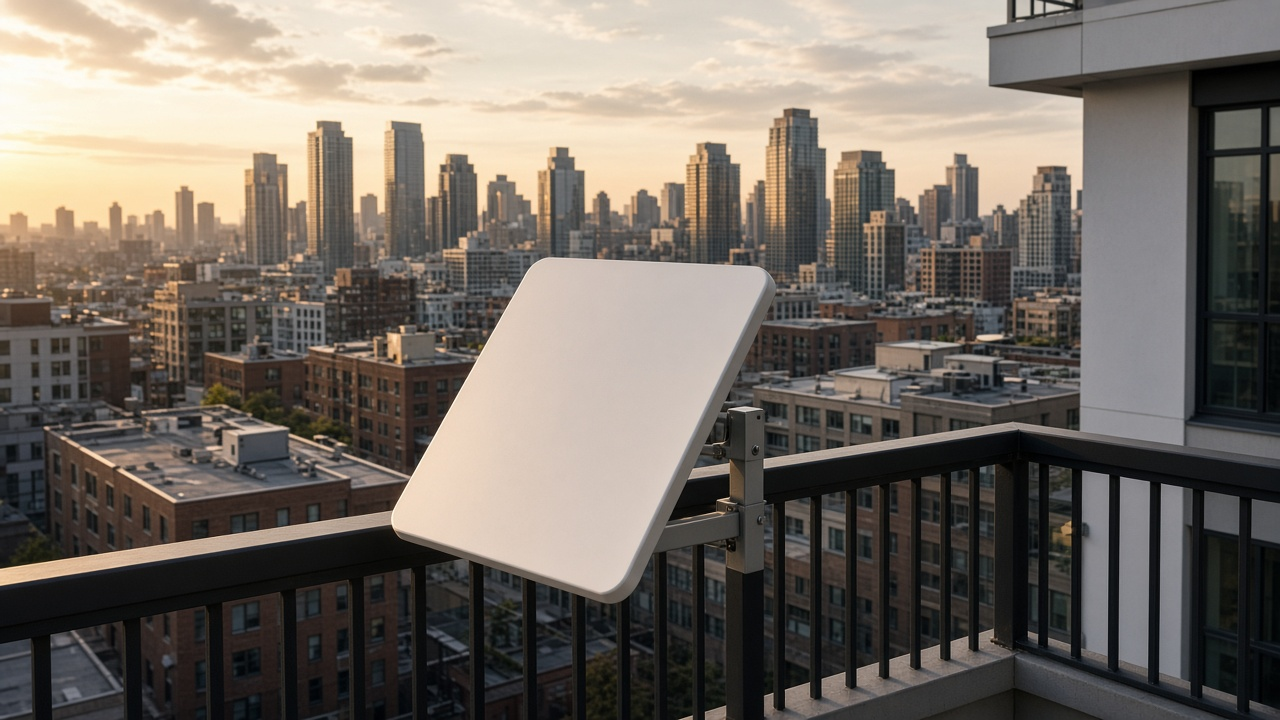
Starlink is no longer just a rural internet service. A new Ookla analysis of Speedtest data, published November 11, 2026, found that the number of Starlink users testing from urban U.S. areas grew 73% year over year in the first half of 2026, more than double the 33% growth in rural areas. Most of those new customers are leaving cable, DSL and 5G home internet. Here is what Ookla found and what it means if you are weighing Starlink against the internet service you have now.
Urban Starlink use is growing twice as fast as rural
Ookla sorted Starlink Speedtest users with the U.S. Census Bureau's urban-rural classification and compared the first half of 2026 with the first half of 2025. Urban users rose 73%, while rural users rose 33%. Urban users grew faster than rural users in every state except Alaska and Hawaii.
Ookla editorial director Sue Marek said Starlink's promotional pricing may explain part of the shift. "Many people think Starlink is only for rural users — but we are showing that isn't the case," she said. Starlink ran regional promotions during 2026, with prices between $29 and $39 a month in some areas, and added lower-priced Residential tiers capped at 100 Mbps and 200 Mbps in places with spare network capacity.
About 9 in 10 new users switched from non-fiber service
Ookla also tracked what new Starlink users were on before. Using Speedtest data from the fourth quarter of 2025 through the third quarter of 2026, it found that roughly nine in 10 new Starlink users switched from non-fiber connections: cable, DSL or fixed wireless access (FWA), the category that includes 5G home internet. "This means that legacy broadband providers are losing customers to Starlink," Marek said.
That leaves relatively few new users coming from fiber, which generally delivers higher speeds and lower latency than satellite.
Upload speeds and latency improved
Starlink's performance also improved, according to Ookla's report:
- Median U.S. upload speed rose 42%, from 14.63 Mbps in the first half of 2025 to 20.73 Mbps in the first half of 2026, and improved in all 50 states and Washington, D.C.
- Median download speed rose 12% nationally to 119.71 Mbps, though it declined in 16 states and D.C.
- Latency improved in 49 states and D.C. Illinois was flat at 37 ms, and Alaska improved the most, from 105 ms to 84 ms. The number of states with median latency under 40 ms more than doubled.
Ookla credited much of the upload gain to SpaceX's V2 Mini satellites, which carry more capacity than earlier models. Speeds were fastest in the Mountain West and Northern Plains and slowest in the Southeast, which Ookla said reflects how Starlink's orbits concentrate coverage over the middle latitudes of the Northern Hemisphere.
Starlink still trails 5G home internet on download speed
Even with the gains, Ookla found that Starlink's median download speed still trails all three major U.S. 5G home internet providers, and cable networks hold a clear speed advantage. Starlink is winning switchers on availability and price as much as on performance. For a closer look at that trade-off, see our Starlink vs. 5G home internet comparison and our guide to Starlink in cities and suburbs.
What growth could mean for capacity
SpaceX reported 13.6 million consumer Starlink subscribers worldwide at the end of the third quarter of 2026, up 1.6 million in the quarter. Ookla's Speedtest data suggests about 22% of Starlink customers are in the U.S., its largest market. SpaceX says its next-generation V3 satellites, launched on Starship, will add substantial capacity.
More users in the same area share the same satellite capacity, and Starlink has begun adjusting prices regionally based on demand. If you are considering a switch, check the price and plan offered at your exact address, and read our look at whether more users could slow Starlink and our Starlink dynamic pricing explainer.
Should city and suburban households switch to Starlink?
Starlink can make sense in town if your current cable, DSL or fixed wireless service is unreliable or overpriced, especially while promotional pricing is available. Starlink's Black Friday promotion cuts Residential service 30% or 50% in select areas for new customers who sign up by November 30; see our Starlink Black Friday deals guide. If fiber is available at your address, it is usually the stronger choice for speed, latency and consistency. Compare every option at your address before you switch.
See every internet option at your address
Enter your ZIP code to compare satellite, fiber, cable and 5G providers, or call to talk with a specialist.
Frequently asked questions
Is Starlink growing in cities?
Yes. Ookla found that Starlink Speedtest users in urban U.S. areas grew 73% year over year in the first half of 2026, compared with 33% in rural areas.
What are people switching to Starlink from?
Roughly nine in 10 new U.S. Starlink users switched from cable, DSL or fixed wireless home internet, according to Ookla's Speedtest data from late 2025 through the third quarter of 2026.
Is Starlink faster than 5G home internet?
Not on median download speed. Ookla found Starlink still trails all three major U.S. 5G home internet providers, even though its upload speeds rose 42% year over year.
How many Starlink subscribers are in the U.S.?
SpaceX reported 13.6 million consumer subscribers worldwide at the end of Q3 2026 but does not break them out by country. Ookla's data suggests about 22% are in the U.S.