Starlink Mobile's Rooftop Micro Cell Towers: How SpaceX Plans to Fix Indoor Dead Zones in 2027
By RSinc Staff | Updated
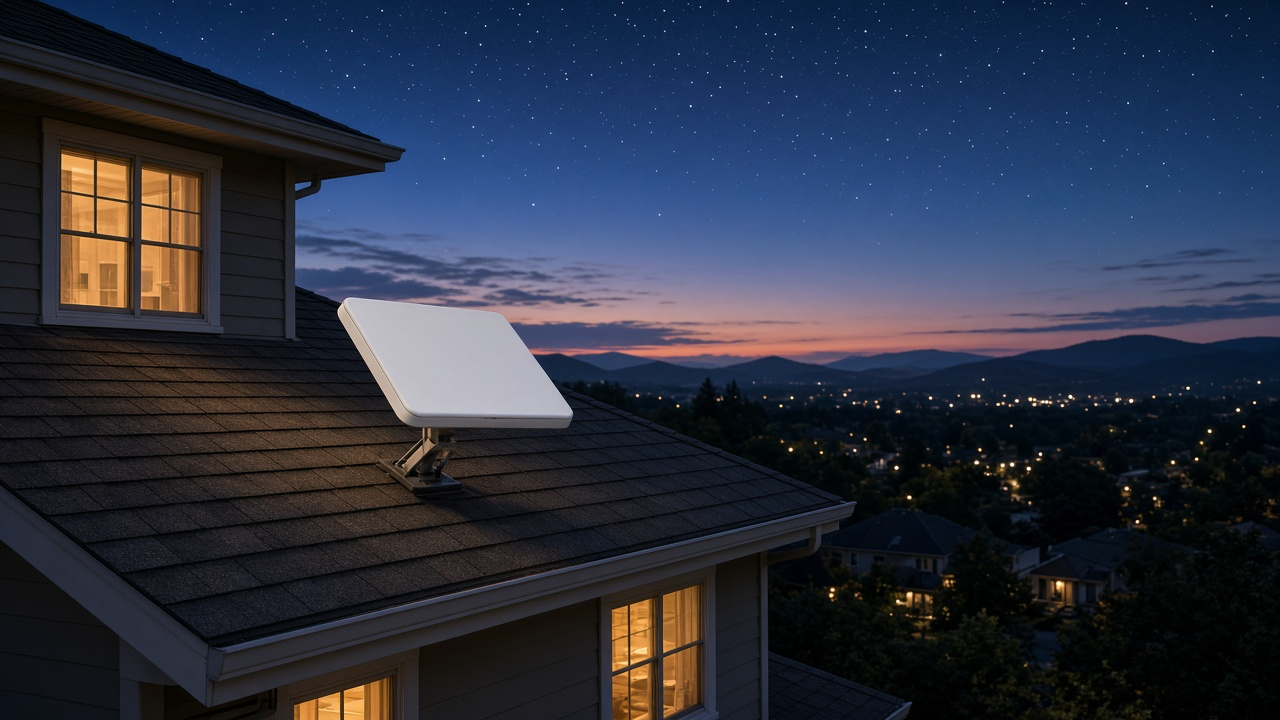
SpaceX has finished designing a small rooftop cell site that is meant to carry Starlink Mobile signals indoors, where metal or thick roofs can block a satellite. Elon Musk said in a mid-November 2026 interview that the company expects to put the devices into production in 2027. That timing is his estimate, not a confirmed shipping date.
The missing piece, as he described it, is indoor coverage. Direct-to-phone service from space can work outdoors and in lightly obstructed areas, but a building can still be a dead zone. The new hardware is a terrestrial fill-in, not a new home-internet plan.
What SpaceX says the rooftop device is
Musk described a "micro cell tower" you would put on a roof, like a Starlink dish. The idea is a compact, low-power cellular base station rather than a traditional tower. SpaceX President Gwynne Shotwell had already said earlier this year, on an August earnings call, that the company would not rely on big cell towers and would instead use small cellular base stations.
One approach Musk mentioned is bundling those small cell sites with Starlink terminals. That is a design idea, not a product you can add to an order today. There is no public price, installation process or list of homes that would qualify.
Until hardware is actually offered for sale, treat every detail about size, range, indoor performance and packaging as incomplete. A finished design is a milestone. It is not the same thing as a released product.
How this fits with Starlink Mobile and new satellites
Starlink Mobile, sometimes discussed as direct-to-cell or direct-to-device service, has been moving forward with T-Mobile since the FCC allowed SpaceX to pursue a direct-to-phone version of Starlink. Our earlier guide to the FCC's approval of 15,000 Starlink Mobile satellites covers that authorization, and our page on SpaceX direct-to-device mobile plans explains the consumer-facing service as it stands today.
Musk said SpaceX is launching its Direct-to-Cell V2 satellite constellation next year and that those satellites should increase bandwidth about 40-fold. Those figures come from his November remarks and should be read as the company's claim, not as independent test results.
Spectrum is the other half of the indoor plan. SpaceX struck a $17 billion deal with EchoStar in 2025 and, according to the same November report, agreed this year to acquire a portfolio of low-band spectrum valued at about $8 billion. Combining that licensed spectrum with small rooftop sites is how Musk said the company intends to boost signals inside buildings. For background on the EchoStar holdings, see our earlier note that more EchoStar spectrum could still be in play.
What it could mean for T-Mobile and T-Satellite users
If you already use T-Mobile's satellite messaging or Starlink Mobile features, the practical gap this hardware is trying to close is indoor reliability. A phone that can reach a satellite in the yard may still struggle in a kitchen, a barn or a metal-roofed shop. Our guide to Starlink coverage on older T-Mobile phones is about today's access rules, which this 2027 hardware estimate does not automatically change.
Nothing in the November remarks revises current T-Mobile plan prices, coverage maps or what your phone can do this week. If indoor calling is already a problem at your house, keep using Wi-Fi calling and a reliable home connection. Do not wait on a rooftop cell site that is not for sale yet.
For a broader comparison of older satellite phones and newer direct-to-cell service, see satellite phone vs. direct-to-cell.
What rural homeowners should, and should not, expect
A small rooftop cell site could matter most in places where a conventional tower is far away and a satellite phone link dies once you walk inside. It may also matter in suburban homes with metal roofs. Until SpaceX publishes eligibility, pricing and performance, that remains a possibility, not a plan you can shop for.
It is also not a substitute for home internet. A Starlink or other residential connection is a different product from a phone-coverage helper on the roof. If you are comparing household service today, start with the Starlink provider guide and an address check rather than a 2027 hardware estimate.
Musk has missed his own production timelines before, and he qualified the 2027 target ("I think, next year"). Use that date as a planning hint, not a promise that indoor dead zones will be gone by a particular month.
He also said he does not expect AT&T, Verizon or other carriers to go out of business, even if they lose some revenue, because he expects future bandwidth demand to be driven heavily by AI and robots. That is his outlook, not a reason to drop a carrier or delay a home-internet decision.
Compare home internet at your address
Rural and suburban homes still need a reliable everyday connection. Check satellite and other options by ZIP, or call for help comparing plans.
Frequently asked questions
Can I buy a Starlink Mobile rooftop cell site today?
No. SpaceX says it has finished the design. Production is estimated for 2027, and there is no public price, order page or eligibility list yet.
Why would a phone need a device on the roof?
Starlink Mobile's satellite signal can be blocked indoors, especially under a metal or thick roof. The rooftop unit is meant to be a small terrestrial cell site that brings the signal inside.
Is this the same thing as a Starlink home internet dish?
Musk described it as something you put on your roof like a Starlink dish, but it is meant to serve mobile-phone coverage, not to replace your home internet plan. One idea he mentioned is bundling the small cell site with Starlink terminals, which is not a confirmed offer.
What does this mean for T-Mobile's satellite phone coverage?
Starlink Mobile has been developed with T-Mobile for direct-to-phone service. Better indoor coverage would matter most in places where the satellite signal does not reach inside a building. Nothing about today's T-Mobile or T-Satellite plans automatically changes because of a 2027 hardware estimate.
Will this replace regular cell carriers?
Musk said he does not expect AT&T, Verizon or others to go out of business, even if they lose some revenue. Treat that as his view, not a forecast you should use to drop a carrier.