Satellite Phone vs. Direct-to-Cell: Which Do You Need?
By RSINC editorial team | Updated
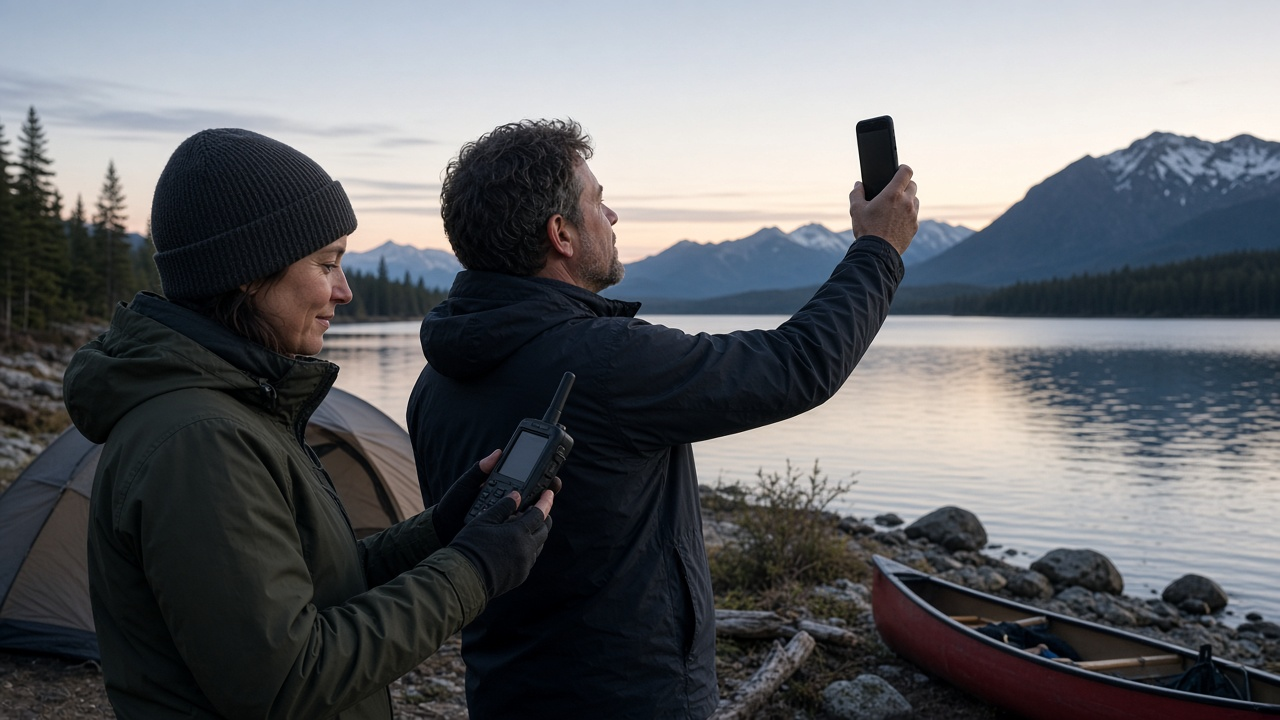
A dedicated satellite phone, a satellite messenger and satellite service built into an ordinary smartphone solve different problems. Choose around the communication you need: a voice conversation, a short check-in, location sharing or interactive emergency messaging.
Our satellite phone and messenger guide covers device categories. Start by checking the exact device, country and subscription requirements rather than assuming that any product labelled satellite provides unrestricted calling and internet.
How the options differ
| Option | Main use | What to check |
|---|---|---|
| Dedicated satellite phone | Voice communication using a separate handset and service | Coverage region, airtime, antenna requirements and local restrictions |
| Satellite messenger | Short two-way messages, check-ins, tracking and supported SOS functions | Active plan, message allowances, compatible app and emergency-service terms |
| Smartphone satellite feature | Supported messaging, emergency or selected data functions on an eligible phone | Phone model, software, carrier, country and supported applications |
A messenger is not necessarily a voice phone
Garmin inReach services use the Iridium network and offer different consumer subscription levels. Included messaging, tracking and media features vary by plan and device. A voice recording sent as a message is different from a real-time telephone conversation. Check the current US plan screen and usage charges; this guide does not quote an unverified monthly price range.
For longer trips, consider battery life, charging, weather exposure and how someone at home will reply. Practice sending an ordinary message before departure. Emergency features depend on the device and active service conditions, not simply on having purchased hardware.
What an ordinary phone can do
Some phones support satellite features through Apple, a carrier or another satellite service. T-Mobile’s T-Satellite page, for example, describes supported messaging and selected applications on eligible devices, with inclusion on certain plans or an add-on option. Check its compatibility and location rules rather than applying that offer to every phone.
A future network announcement is not the same as an available consumer plan. Our direct-to-device explainer and AST SpaceMobile coverage guide help separate rollout plans from service you can activate.
Choose around the trip
- For an occasional outdoor check-in, first examine features already supported by your phone.
- For a separate device that can travel with a group, compare a messenger’s battery, sharing and subscription limits.
- For voice conversations, verify that the actual handset and airtime plan support them.
- For remote or international travel, check destination restrictions and communicate a backup plan to someone at home.
All three options can face terrain, building, foliage or sky-view limitations. They do not provide a guarantee of rescue or connectivity everywhere. Keep essential information available offline and know the ordinary local emergency arrangements.
Home internet is a separate decision
For household browsing, streaming and work, compare fixed satellite plans from Starlink, Viasat and Hughesnet. See our home satellite comparison. A handheld emergency feature should not be budgeted as a replacement for a home broadband connection.
For help comparing internet at your address, call RSINC at 1-877-697-2926 or compare local providers.
Reviewed October 28, 2026. Availability, prices and terms can change.