Loveland, Colorado's Pulse Fiber Launches 20 Gig Home Internet: $349 Vector Fiber and Who Needs It
By RSINC editorial team | Updated
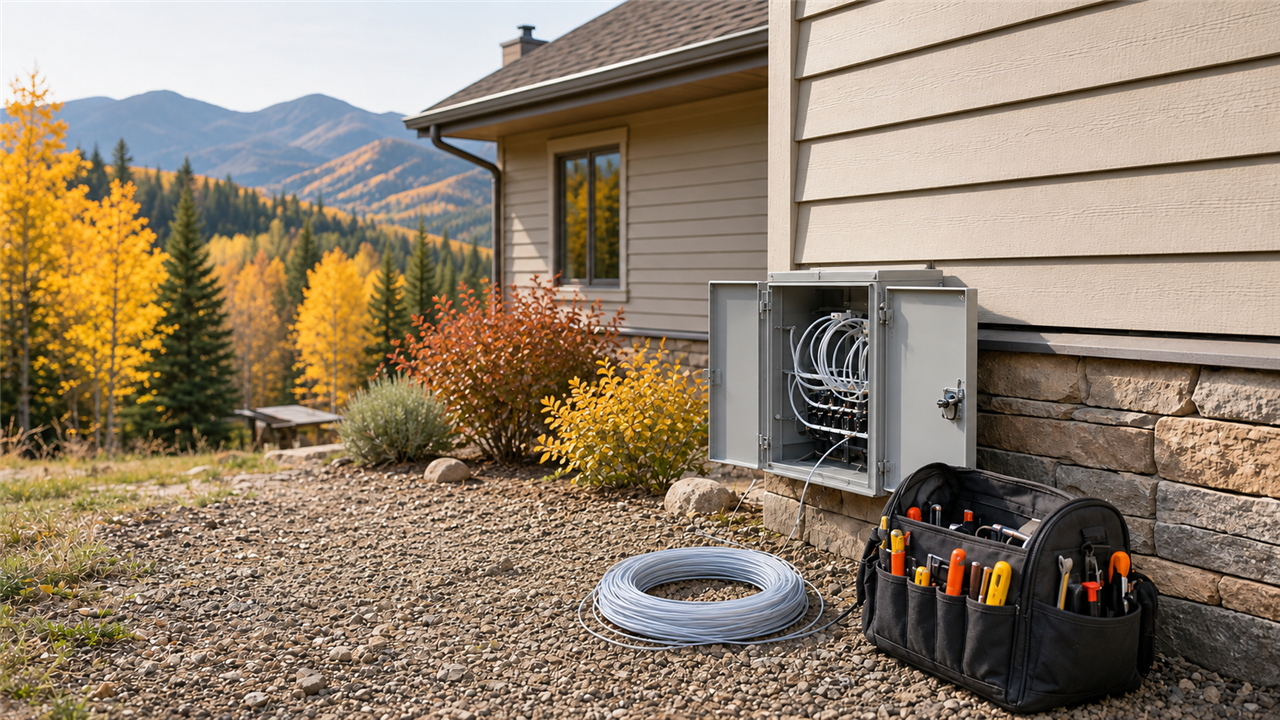
Loveland's city-owned Pulse Fiber has launched Vector Fiber, a symmetrical 20 Gig residential internet tier priced at $349 a month without ACH Autopay, or $344 with it. Pulse announced the service October 29, 2026, describing it as Colorado's first 20 Gig home connection. The offer includes a direct optical handoff and one static IPv4 address, not just a bigger download number.
As of November 7, 2026, this is a specialist option for home labs, demanding creators and home-based businesses. Most households in Loveland do not need 20 Gig for streaming, video calls or gaming. A smaller fiber plan can deliver the everyday benefits of fast uploads without the equipment expense and $349 headline bill.
What Vector Fiber actually includes
Pulse's product page lists 20 Gbps uploads and downloads, no data caps or throttling, an optical SFP28 handoff into customer-owned equipment, a static IPv4 address and elevated support with access to network engineers. The company lists service in its available areas of Loveland, Timnath and parts of Larimer County; an address check is still required.
The handoff deserves attention. A standard home router with a 1 Gig internet port cannot pass a 20 Gig connection. Pulse specifies compatible routing, switching or firewall equipment with a 25G SFP28 WAN port and offers a technical consultation before installation. That is different from ordering an ordinary gateway and expecting every phone to run twenty times faster.
The static IP can help with allowlisted work connections and self-hosted services. It is not a security product by itself. Publicly reachable servers still need proper firewall rules, updates and authentication. Confirm the provider's service terms and your employer's requirements before moving a critical workload onto a residential connection.
Pulse plans and advertised monthly prices
Pulse's public residential pages list the following prices as of November 7, 2026. The first five rates are advertised with ACH Autopay; Vector Fiber separately lists its price with and without that payment method.
- Fiber 500: 500 Mbps for $50 a month with ACH Autopay.
- Smart Fiber: 1 Gig for $75 a month with ACH Autopay.
- Power Fiber: 2 Gigs for $99 a month with ACH Autopay.
- Ultra Fiber: 4 Gigs for $129 a month with ACH Autopay.
- Future Fiber: 10 Gigs for $179 a month with ACH Autopay.
- Vector Fiber: 20 Gigs for $344 with ACH Autopay or $349 without.
Pulse advertises no contracts or data caps, and its Vector page says there are no taxes or fees on that monthly price. Ask the sales engineer to confirm your specific installation and hardware needs. Even when a service has straightforward monthly pricing, buying compatible customer-owned equipment can materially change the first-year cost.
Who can actually use 20 Gig?
A creator moving very large project files to a fast remote server might save meaningful time. A home lab with several simultaneous workloads could also use the aggregate capacity. But the other end must keep up: cloud storage limits, remote server throughput, disk performance and encryption overhead can become bottlenecks before the internet link does.
A useful planning example is a 100 GB transfer. Ignoring all overhead, 100 decimal gigabytes contains 800 gigabits. At a full 20 Gbps that is 40 seconds; at 1 Gbps it is about 13 minutes and 20 seconds. These are theoretical calculations, not promised download results. Real transfers take longer, and a destination limited to 1 Gbps will not become faster because your home connection is 20 Gig.
Everyday gaming rarely needs this much throughput. Latency, jitter and server routing matter more to responsiveness than unused bandwidth. Streaming on several televisions also does not normally justify a 20 Gig tier. If uploads are your pain point, first work out how much upload speed you need and test whether a lower symmetrical tier already solves it.
Compare available connections at your address
For ordinary household speeds, compare the full monthly price, upload performance, equipment and support. The Loveland internet provider guide is a starting point, not proof that every listed network serves every house. ZIP screening is preliminary; confirm the specific address and written order with the provider.
Compare actual Broadband Facts labels rather than assuming a competing connection has symmetrical uploads or the same equipment terms. No national competitor promotion is presented here as a Loveland address quote. A lower-speed fiber plan may already meet your needs without the expense of a 20 Gig installation.
Run this equipment check before ordering
- Confirm Pulse can serve the address and approve your proposed SFP28 equipment.
- Check firewall throughput with the security features you intend to enable.
- Check switch ports, client adapters, cabling and storage speed throughout the path.
- Identify a real workload and a remote destination capable of benefiting from the upgrade.
- Compare the total monthly and equipment cost with 2, 4 and 10 Gig alternatives.
Do not wait for a future Wi-Fi label to make this decision. Our Wi-Fi 8 and 20 Gig gateway explainer separates wireless development from internet capacity. Vector Fiber makes sense when you can describe the workload it unlocks; for everyone else, Loveland's more ordinary fiber choices remain the practical story.
For help comparing internet at your address, call RSINC at 1-877-697-2926 or compare local providers.
Reviewed November 7, 2026. Availability, prices and terms can change.