Michigan Opens $9.1 Million in Rural Health Connectivity Grants: Deadline, Who Can Apply and What It Means at Home
By RSinc Staff | Updated
The Michigan High-Speed Internet Office, working with the Michigan Department of Health and Human Services, says it will invest more than $9 million to improve connectivity and digital infrastructure for health care in rural communities. The official program page describes an award of approximately $9 million through the Rural Health Access and Connectivity Grant Program, supported by a $9,104,425 federal award from the Centers for Medicare & Medicaid Services. That money is part of Michigan's $173 million Rural Health Transformation Program.
This is a grant program for organizations that serve rural Michigan, not a new home internet plan you can order. If you live in a rural part of the state, you should not expect a free fiber drop from the announcement alone. Applications opened on November 18, 2026, and close on December 10, 2026, at 3 p.m. Eastern. The grant period runs from February 1 through September 30, 2027, which is also the final deadline for spending the money.
What the grants are meant to fund
The state says the competitive grants will support collaborative, community-based projects that expand rural residents' access to care, social services and community resources through connected systems and real-time information sharing. Projects are supposed to help close the digital divide by building digital literacy, expanding digital navigation and strengthening local infrastructure, while addressing local problems such as access barriers, fragmented care, limited service options and uneven digital readiness.
Those uses can include tools that make it easier to complete a video visit, share records or help a patient use a connected device. They are not the same as a statewide promise that every rural road will get a new wired connection. Applicants should confirm the amount currently available, and the exact eligible costs, on the state's grant portal and in the request for proposals. The official program page and the portal have listed different available totals, so the application documents are the ones that count.
Eligible organizations can find the request for proposals, application guidance and the online form on the Michigan Department of Labor and Economic Opportunity's EGrAMS grant portal. The program page also explains how to view those documents without creating an account first.
What this means if you rely on telehealth at home
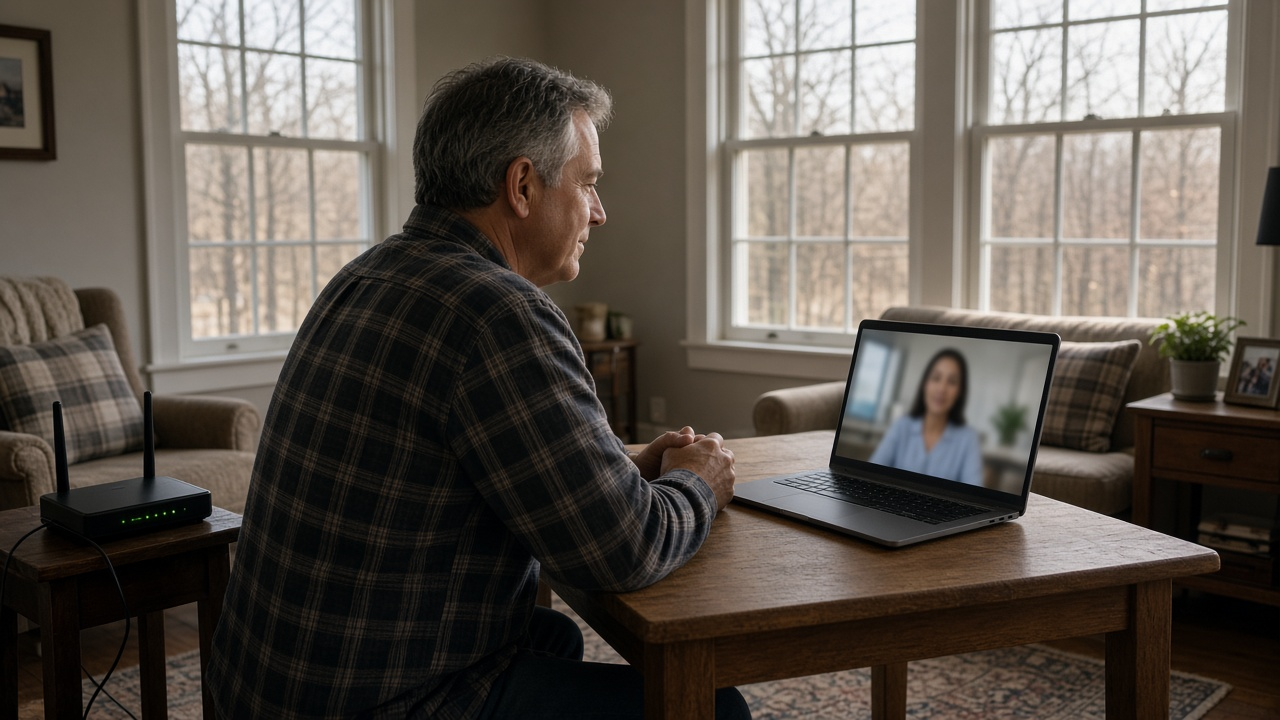
A video visit still depends on the internet connection you already have, plus whatever the clinic asks you to use. This grant program may eventually help a local clinic, library or community group improve its tools or training, but it does not, by itself, change the plan that reaches your driveway.
If a call drops or the picture freezes, start with the basics: a wired connection when you can use one, a current router, and a speed test at the time of day you usually have appointments. Our guide to internet speed for streaming is a practical way to think about video quality at home. It is not a clinical standard, and your doctor's office may have its own requirements.
If your address still has no reliable wired option, compare what is actually offered today in our Michigan internet guide and our page on Michigan's BEAD internet providers. In rural areas, Starlink, Viasat and EarthLink remain a reasonable baseline when a fiber drop is still years away. Keep any working connection until you have a dated install for something better.
The useful question, if you are a patient, is not how large the state's grant pool is. It is whether your address can support a clear video call today, and which local organizations, if any, are applying for help that might reach your community in 2027.
Check internet options in Michigan
A health-care grant is not the same as a plan at your address. Compare current providers by ZIP, or call for help.
Frequently asked questions
How much money is Michigan offering?
The official program page says the state will invest more than $9 million, or approximately $9 million, through the Rural Health Access and Connectivity Grant Program, supported by a $9,104,425 federal award. Applicants should confirm the amount currently available on the state's grant portal and in the request for proposals.
When is the application deadline?
Applications opened on November 18, 2026, and close on December 10, 2026, at 3 p.m. Eastern. The grant period is February 1 through September 30, 2027.
Can I use this grant to get fiber at my house?
No. This is a competitive grant program for organizations that serve rural Michigan, not a consumer internet offer. The announcement does not, by itself, hook up a home.
What can the money be used for?
The state says projects should improve connectivity and digital infrastructure for rural health care, including digital literacy, digital navigation and stronger local systems that help people reach care, social services and community resources. Confirm eligible costs in the request for proposals.
Will this make my telehealth appointments work better?
Only if a local project later improves the tools or training you use, and only if your home connection can support a clear video call. Check the plan you have today, and ask your clinic if it has its own connection requirements.