Texas Awarded Starlink $109 Million in BEAD Grants. The Payments Are Frozen.
Updated
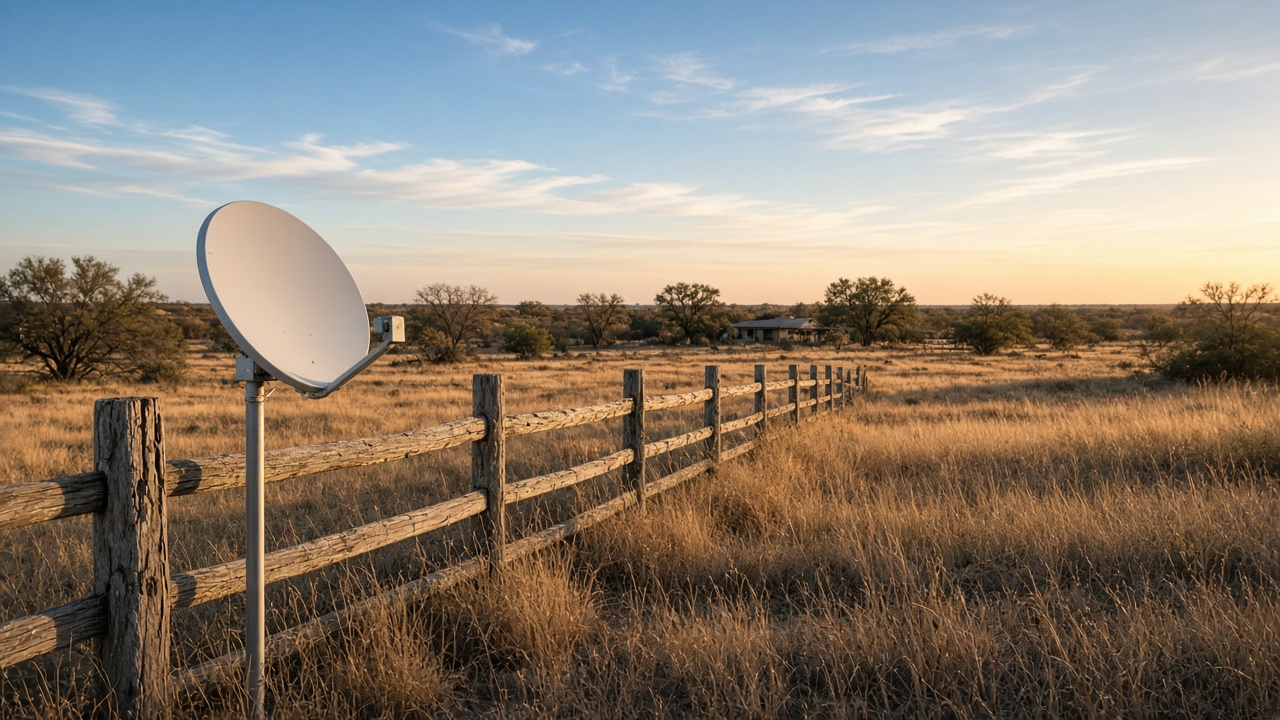
A November 17, 2026 Fortune report put a fresh spotlight on Texas's largest satellite broadband award. The state granted Elon Musk's SpaceX about $109 million in federal Broadband Equity, Access and Deployment (BEAD) funding to connect nearly 64,000 locations with Starlink, more locations than any other provider in Texas. Final contracts published earlier this year put the figure at $108,787,903 for 63,887 locations. Payments to every Texas BEAD recipient, including SpaceX, have been frozen since August. If you are waiting on a subsidized rural connection, or already shopping for Starlink internet in Texas, here is what the award is, why the money is on hold, and what it does not change about service you can buy today.
The award, in the state's own numbers
On June 4, 2026, Telecompetitor reported that the Texas Broadband Development Office had finalized BEAD subgrantee agreements with 17 providers. Space Exploration Technologies Corp., doing business as Starlink Services LLC, was listed at $108,787,903 for low-Earth-orbit satellite service to 63,887 locations. That is the precise contract figure behind Fortune's "about $109 million" and "nearly 64,000 locations."
Fortune noted that Texas was allocated about $3.3 billion, the most of any state. The state's earlier plan, approved by federal regulators in 2024, called fiber "the preferred technology" and classified satellite internet as "non-reliable," to be used only as a last resort. After the Trump administration changed BEAD rules, ending the fiber preference and directing states toward the lowest-cost proposals, Texas rewrote its plan as "technology-neutral" and made Starlink its largest winner by location count.
The June contract list was smaller than the earlier provisional awards. Telecompetitor found that final awards totaled about $1.07 billion for 208,873 locations, down from provisional awards of about $1.27 billion for 240,205 locations. Several provisional winners, including Amazon's satellite unit, did not appear on the final list. When later stories round the program to about $1.26 billion or roughly 243,000 locations, they are describing the earlier plan, not the signed contracts.
Why the grants are under scrutiny
Fortune reported that the reversal is now under review by state senators of both parties, the State Auditor, and the Democrats who take over the governor's office and the attorney general's office in January 2027.
Lawmakers have focused on whether the broadband office tilted payment terms toward low-Earth-orbit satellite providers. At a June 24 hearing, Sen. Charles Schwertner, the Republican chair of the Senate Business and Commerce Committee, said the office had increased the share of grant money satellite companies could collect up front, while other providers were paid in installments. Other applicants, he said, were asking for "the sweetheart deal that was given to the LEOs."
Under questioning by Sen. Nathan Johnson, then a Dallas Democrat, office director Bryant Clayton testified that the change came at the urging of Gov. Greg Abbott's office, Fortune reported, citing KUT. Abbott's office has denied favoring SpaceX, saying the broadband office made the call to align with other states, and has defended low-Earth-orbit satellite service as a cost-effective way to reach rural areas.
Fortune also reported that SpaceX challenged award results in Wisconsin, Colorado, Louisiana and Virginia, and sent state broadband offices a proposed contract rider seeking exemptions from performance, payment, penalty, reporting, labor and insurance requirements, and asking that 50% of payments to satellite providers be made immediately, about $365 million nationally, according to StateScoop. The National Telecommunications and Information Administration advised states not to sign the rider. Commerce Secretary Howard Lutnick later told a Senate committee the rider was "outside of our guidelines, it is outside the statute, and it is rejected by us."
Speed tests are part of the debate
Starlink is already a major satellite internet option in Texas, one of its largest markets, according to Ookla as cited by Fortune. That is not the same as meeting the federal speed benchmark used to judge BEAD-funded service. Fortune, citing Ookla tests from the first half of 2026, reported that about one-third of Starlink users in Texas who ran speed tests reached the FCC's minimum broadband speed, compared with about 70% of wired users.
Drew Garner, director of policy engagement at the Benton Institute for Broadband & Society, told Fortune: "BEAD is supposed to build infrastructure that delivers real broadband, and taxpayers shouldn't pay for service that doesn't meet the government's own standards. If Starlink takes the money, states need to test its performance and claw funds back when it falls short." For what speeds look like in practice, see our guide to a normal Starlink speed test.
Payments have been frozen since August
In July, Lt. Gov. Dan Patrick and House Speaker Dustin Burrows asked the State Auditor to review the broadband office. Weeks later, the office, which sits in the state comptroller's office, put all BEAD payments, including SpaceX's, on hold "until further notice," according to an email obtained by The Texas Tribune. Fortune, writing on November 17, said no money was flowing and that the freeze had been in place since August.
The political calendar is now part of the story. Fortune reported that Gina Hinojosa, then the Democratic nominee for governor, sued in October for unredacted communications between Abbott's office and Musk and his companies. A judge ordered Abbott's office to let her inspect the records, but an appeals court stayed that order. OpenSecrets data reported by NPR found that Musk steered at least $225 million into Texas races this cycle. On November 3, Hinojosa unseated Abbott, and Johnson won the attorney general's race. During the campaign, Johnson told The Dallas Morning News he would investigate the Starlink grants as part of an anti-corruption plan. "I am not declaring that corruption was at work in this instance. I am saying that it sure looks like it," he said.
Fortune reported that legislative leaders have said they will act on the auditor's findings in the session that opens in January, the same month Johnson and Hinojosa take office. Until then, the rural locations the awards were meant to serve are still waiting to learn what kind of connection they will get, and when.
What this means if you need internet in Texas now
A frozen grant does not turn Starlink off, and it does not by itself change the retail price you are offered today. Starlink already sells service in Texas. BEAD funding, if it is eventually paid, is meant to support connections at unserved and underserved locations, not to rewrite every existing residential bill. If you are deciding whether to order a kit now, compare current pricing and terms for your address rather than waiting on a grant timeline that has no public restart date. Our guides on how much Starlink costs in your area, rural internet options, and AT&T vs. Starlink are a starting point, as is the Texas internet providers directory and the Starlink provider page.
Fiber, fixed wireless, and other satellite options may already be available at your address. See Starlink competitors and alternatives, Starlink vs. 5G home internet, and the Viasat and EarthLink provider pages, then confirm what is actually offered at your ZIP code.
Need internet in Texas while BEAD funding is on hold?
Compare the satellite, wireless and wired providers that serve your address today.
Frequently asked questions
How much BEAD funding did Texas award Starlink?
Texas's final BEAD subgrantee agreements, reported by Telecompetitor on June 4, 2026, listed $108,787,903 for Starlink Services LLC, a SpaceX company, to serve 63,887 locations with low-Earth-orbit satellite service. Fortune, writing on November 17, 2026, described that as about $109 million for nearly 64,000 locations, more locations than any other provider in the state.
Is the money being paid out?
No. Fortune reported on November 17, 2026 that payments to every Texas BEAD grant recipient, including SpaceX, have been frozen since August. The Texas Tribune earlier reported that the Texas Broadband Development Office paused disbursements until further notice.
Does this change Starlink service I can buy today?
No. Starlink already sells residential service in Texas. The BEAD award is a government grant to connect unserved and underserved locations. Because payments are on hold, those subsidized connections are waiting on the audit, the legislature and incoming state officials. Compare current plans and speeds for your address before you buy.
How does Starlink's Texas speed performance compare with wired internet?
Fortune, citing Ookla speed tests from the first half of 2026, reported that about one-third of Starlink users in Texas who ran tests reached the FCC's minimum broadband speed, compared with about 70% of wired users.
When could payments start again?
Fortune reported that no money was flowing as of November 17, 2026, and that legislative leaders have said they will act on the state auditor's findings in the session that opens in January 2027, the same month the new governor and attorney general take office. There was no public restart date.