Starlink V4 Lasers vs. Undersea Cables: Musk’s Targets
By RSINC editorial team | Updated
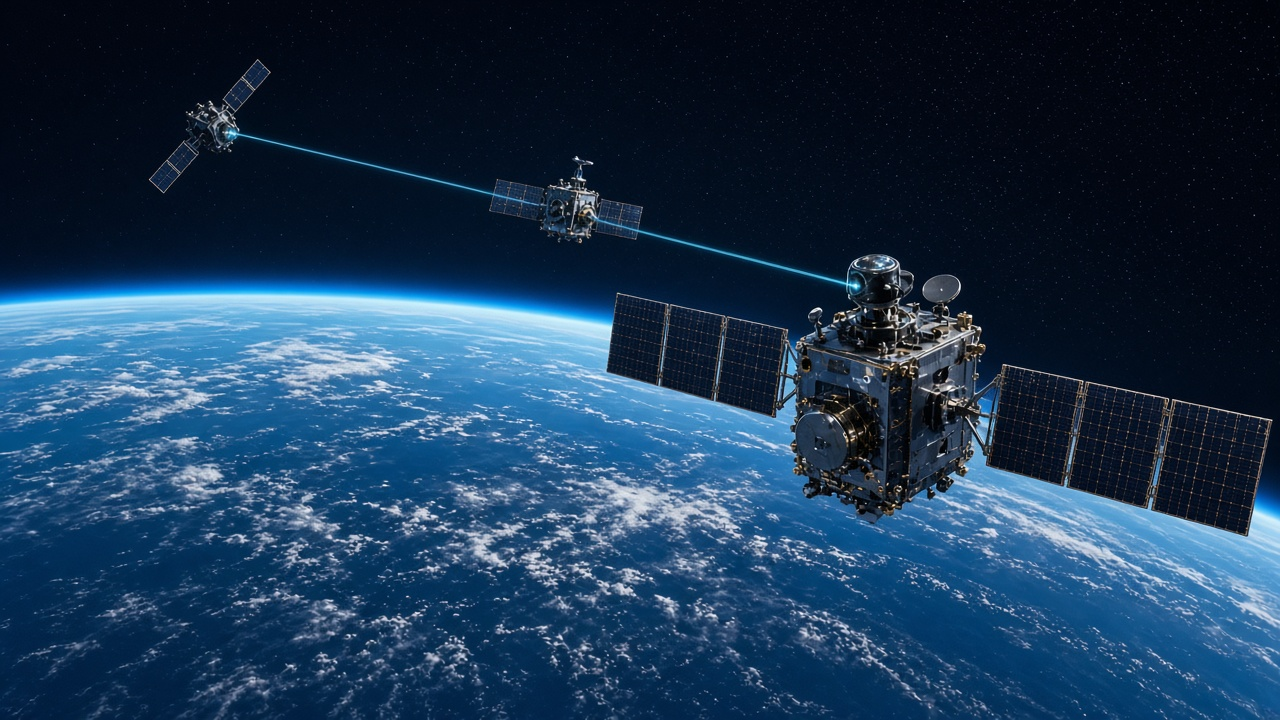
Elon Musk has described ambitious laser-link targets for a future Starlink network. His November 6 statements concern an orbital backbone, not a finished V4 production specification or a new household internet speed tier. The distinction matters when comparing those targets with undersea fiber.
What Musk wrote about an orbital backbone
In a November 6 X post timestamped 2:32 p.m. ET, Musk proposed roughly 100 lasers per satellite, each operating above 10 terabits per second, across more than 100,000 satellites. He argued that a network at that scale should be able to compete with undersea cables. Those figures describe his proposed future scale; they are not a count of satellites already operating with that design.
The materials reviewed here do not establish a final SpaceX V4 specification sheet or a confirmed first-launch date. A proposal by the company’s chief executive is relevant, but it does not by itself demonstrate production hardware, deployment or end-to-end network performance.
Ten lasers and a conditional target of a hundred
A separate November 6 clip post by Sawyer Merritt quotes Musk describing V4 as having ten times V3’s capability, especially for long-distance laser links. Merritt’s accompanying quotation describes next-generation links at 10 terabits per second, calls that a hundredfold improvement, and quotes Musk saying, “And we’ll put 10 of them on.” This review verified the original clip-post text; it did not independently transcribe the interview video.
Musk’s later written proposal mentions roughly 100 lasers per satellite. In his own follow-up reply timestamped 8:03 p.m. ET, he made that larger number conditional on smaller laser hardware, an assumption of tenfold closer proximity and small gimbal angles for links within an orbital plane. He concluded that “maybe we can get to 100 lasers/sat.” That is an engineering target with conditions, rather than a locked production specification.
The broad satellite-generation comparison and the individual-link comparison are also different claims. They should not be combined into a new subscriber-speed promise. This guide does not treat a secondary report’s description of current laser speeds as an independently verified specification.
Backbone bandwidth is not a home download offer
Inter-satellite links move data between spacecraft. A complete connection also needs working user equipment, capacity into and out of the orbital network, ground access and routing onward to the destination. A proposed crosslink rating does not specify the download speed available to an individual customer.
Adding satellite counts, laser counts and proposed link ratings gives a hardware-capacity calculation, not a measurement of usable end-to-end throughput. Such a calculation can count both ends of a shared link, while traffic may traverse several links before reaching its destination. Network design, demand and ground connections all affect the useful result.
Compare like-for-like cable capacity
TeleGeography distinguishes a submarine cable’s potential capacity from its lit capacity. Potential capacity describes what could be supported with the available equipment installed; lit capacity describes what is equipped and operating. A comparison that mixes one measure with another can mislead.
The public FAQ reviewed here does not provide a single worldwide capacity total that validates Musk’s proposed comparison. This article therefore makes no claim that a future Starlink network has already exceeded all undersea cable capacity. Demonstrated routes and deployed performance would be more useful evidence than simply multiplying proposed terminal ratings.
Latency needs a complete route
Musk’s post also argues that light travels about 40% faster through space than through cable and that orbital paths can be more direct than routes following land masses. Those are his stated reasons for a possible long-distance advantage; they are not a demonstrated percentage reduction in a customer’s latency.
A full comparison must include travel up to orbit, spacecraft hops, the return to Earth, network processing and any onward terrestrial route. Different locations and routing choices can produce different outcomes. The post does not demonstrate the result for every pair of endpoints.
Different failure paths can improve resilience
TeleGeography explains that cable operators distribute capacity across multiple cables so traffic can continue when one is damaged. A satellite route can offer another type of physical diversity when sufficient capacity and working ground access are available. It does not make the existing practice of using multiple cable routes obsolete.
Satellite service still depends on equipment, power and the wider network. This article does not claim immunity from congestion, interference or infrastructure failures. For households, Musk’s statements do not announce a 10-terabit residential plan, an immediate service upgrade or new prices. See the Starlink provider guide for the separate task of comparing service and address eligibility.
Frequently asked questions
Are 100 lasers a final Starlink V4 specification?
The statement reviewed here is a conditional target. Musk’s follow-up explicitly discussed design changes and used “maybe” when describing the larger laser count.
Does this announce a 10-terabit home internet plan?
No. The quoted target concerns links between spacecraft, not the download speed or plan available to a household.
Has Starlink already replaced undersea cables?
The statements reviewed here do not establish that result. The article distinguishes proposed hardware targets from deployed network performance and does not claim that satellites have replaced the cable network.
For help comparing internet at your address, call RSINC at 1-877-697-2926 or compare local providers.
Reviewed November 9, 2026. Availability, prices and terms can change.