Netgear Nighthawk RS600 review: Fast WiFi 7 router with 10GbE
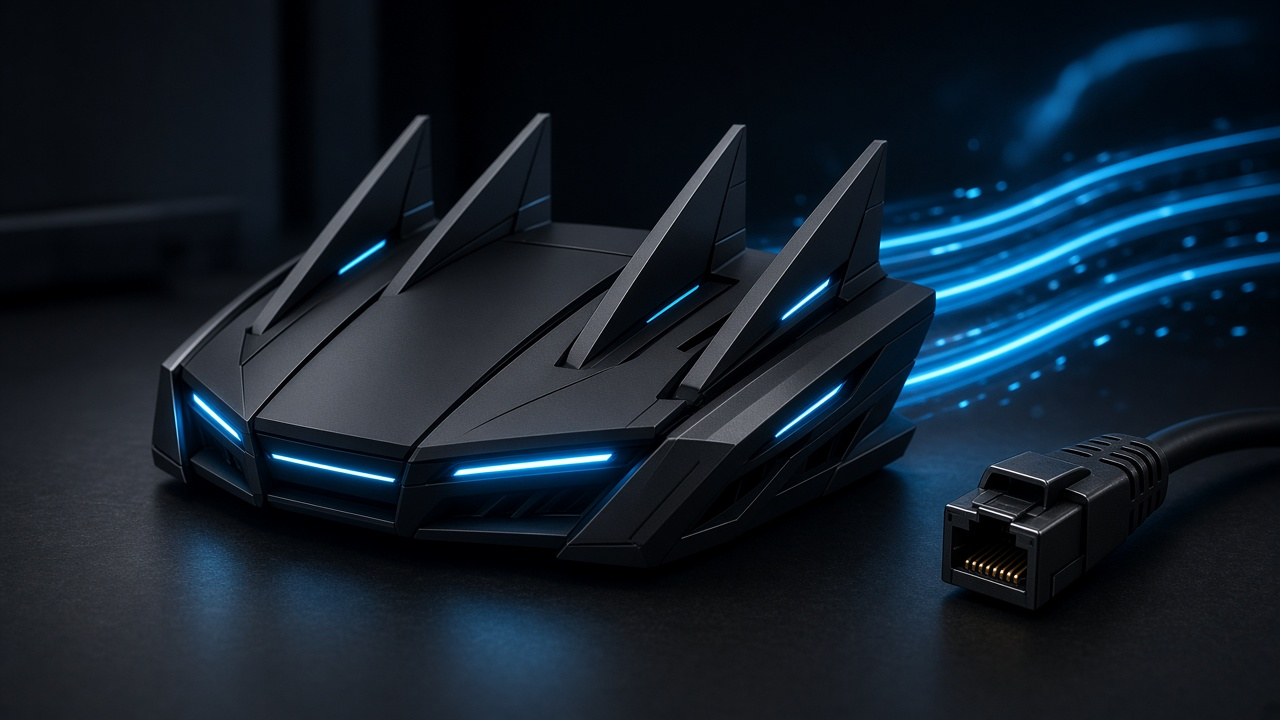
The WiFi 7 era has arrived, fueled by an insatiable demand for high-speed connectivity across devices and applications. As 4K streaming, cloud gaming, and multi-device smart homes become the standard, legacy routers fall short of delivering the seamless experience these technologies require. Enter the NETGEAR Nighthawk RS600 — a powerhouse router designed to harness the full potential of WiFi 7. With support for multi-gigabit internet, cutting-edge wireless features, and an integrated 10GbE port for ultra-fast wired LAN, the RS600 positions itself far beyond the average consumer router.
Geared for gamers seeking ultra-low latency, streamers demanding stable high bandwidth, and smart home owners managing dozens of connected devices, this router doesn’t just meet expectations — it resets them.
Deep Dive into the Netgear Nighthawk RS600 Specifications
Chipset and Processor Architecture
At the core of the Netgear Nighthawk RS600 sits the Qualcomm Networking Pro 1220 platform, built specifically to support the demands of WiFi 7. This flagship processor includes a quad-core 64-bit ARM Cortex CPU, clocked at 2.2 GHz. The chipset handles intensive data throughput, real-time traffic optimization, and intelligent client management without faltering.
Purpose-built for high-throughput applications, the Pro 1220 integrates a Packet Processing Engine (PPE) and Dedicated Network Accelerator (DNA), both engineered to reduce latency during simultaneous high-bandwidth tasks across dozens of client devices.
WiFi 7 Tri-Band Support and Topline Speeds
The RS600 supports tri-band operation across 2.4GHz, 5GHz, and 6GHz frequency bands under the new WiFi 7 (IEEE 802.11be) standard. Theoretical combined throughput reaches up to 19 Gbps — broken down as follows:
- 2.4GHz band: Up to 1.4 Gbps
- 5GHz band: Up to 5.8 Gbps
- 6GHz band: Up to 11.5 Gbps
These speed figures leverage 320 MHz channel width support on the 6GHz band, 4K QAM (Quadrature Amplitude Modulation), and Multi-Link Operation (MLO) for simultaneous band usage. The result delivers more consistent throughput across fluctuating network environments and reduced latency on time-sensitive applications.
10GbE WAN/LAN and Additional Port Configuration
Networking flexibility arrives via a single 10 Gigabit Ethernet port supporting WAN or LAN functions, making the RS600 suitable for fiber-to-modem or high-speed NAS setups. In addition, the rear panel includes:
- One additional 2.5GbE port
- Four standard 1GbE LAN ports
Port aggregation via Link Aggregation Control Protocol (LACP) is enabled, allowing users to combine bandwidth from two 1GbE ports for faster wired connections to capable devices like high-performance desktops or storage servers.
Supported Frequency Bands: Loaded with Spectrum
The RS600 supports concurrent operation on three separate WiFi bands:
- 2.4GHz: Known for extended range but lower speeds, ideal for IoT devices and legacy compatibility.
- 5GHz: Offers greater bandwidth and less interference than 2.4GHz, optimal for moderate-distance streaming and gaming.
- 6GHz (WiFi 7 exclusive): Unlocks high-throughput, low-latency communication with no legacy device interference. Perfect for VR and ultra-HD media.
This tri-band approach widens available spectrum, reduces congestion, and allows more simultaneous connections with consistent performance.
Memory, Hardware Configuration, and Antenna Design
Netgear equips the RS600 with 2GB of DDR4 RAM alongside 512MB of NAND flash storage. This configuration handles demanding traffic scenarios with minimal delay, supports advanced QoS algorithms, and stores extensive firmware functionality directly on-device.
Externally, the router features eight high-performance internal antennas arranged for 360-degree multidirectional signal coverage. These antennas support beamforming — both implicit and explicit — to direct signal strength toward connected clients, reducing packet loss and improving real-time responsiveness.
Unpacking WiFi 7: What Sets It Apart from WiFi 6 and 6E
WiFi 7 (802.11be): A Generation Beyond
WiFi 7, officially designated as IEEE 802.11be, builds on the foundation of WiFi 6 and WiFi 6E. It introduces higher data throughput, minimizes latency, and significantly increases spectral efficiency. Unlike previous iterations, it’s designed from the ground up to meet the bandwidth demands of next-gen applications—AR/VR, 8K video streaming, and real-time cloud gaming no longer hinge on wired alternatives under this new standard.
While WiFi 6E added access to the 6 GHz band, WiFi 7 re-engineers how data is transmitted within—and across—bands. The RS600 uses these WiFi 7 capabilities to deliver higher speed, lower latency, and seamless multi-device connectivity.
Core Technological Advancements in WiFi 7
- 320 MHz Channel Bandwidth: Previous WiFi standards allowed up to 160 MHz in the 5 GHz and 6 GHz bands. WiFi 7 doubles that. The result? Twice the data capacity per channel, ideal for time-sensitive, high-throughput scenarios.
- 4K QAM (Quadrature Amplitude Modulation): WiFi 6 peaked at 1024-QAM. WiFi 7 scales this to 4096-QAM, delivering a theoretical data increase of 20% by packing more information into each signal unit.
- Multi-Link Operation (MLO): Devices can simultaneously transmit and receive across multiple bands (2.4 GHz, 5 GHz, and 6 GHz). This enables consistent speed and reliability by dynamically switching or combining links based on congestion and interference.
- Reduced Latency: Lower latency isn't just about gaming. Real-time tasks like video conferencing, interactive apps, and smart home automation systems all benefit. WiFi 7 slashes latency using MLO-assisted routing and faster channel access.
How WiFi 7 Transforms Home Networks
Combining these features, WiFi 7 doesn’t just improve speeds—it enhances stability and capacity under load. In a household with dozens of connected devices, a WiFi 7 router like the Netgear Nighthawk RS600 maintains flat latency curves and high throughput without interference. It powers concurrent 4K/8K streams, cloud-based workstations, and demanding gaming rigs—all at once.
Beyond speed, the benefits touch on efficiency and long-term viability. With ISPs rolling out multi-Gbps broadband over fiber and DOCSIS 4.0 cable services becoming available, WiFi 7 ensures the LAN side keeps pace with WAN upgrades. You won’t need another upgrade next year just to unlock your full internet subscription potential.
10GbE Ethernet Connectivity: Why It Matters
Accelerated Data Transfer and Low-Latency Gaming
The inclusion of a 10 Gigabit Ethernet (10GbE) port on the Netgear Nighthawk RS600 marks a significant performance leap over traditional Gigabit ports. With theoretical speeds up to 10 Gbps, the RS600 can move large files—such as 8K videos or raw project archives—ten times faster than a standard gigabit connection. Local NAS devices benefit directly from this jump, minimizing bottlenecks during multi-terabyte backups or media streaming sessions.
In gaming environments, this port slashes latency and delivers consistent, high-bandwidth communication with dedicated gaming servers or cloud-based services. Multiplayer responsiveness improves because the wired throughput eliminates packet delays and jitter caused by saturated wireless links.
Sharper LAN Performance and Smart Home Optimization
Within a local area network, the 10GbE capability reshapes what’s possible. Multi-user studios can connect high-speed workstations directly to the router, enabling seamless collaborative editing on shared drives. For home users, the experience translates to real-time 4K streaming across internal screens or faster sync times across smart displays, IP cameras, and IoT devices.
- A single 10GbE backbone allows multiple gigabit devices to operate without bandwidth contention.
- Connected home appliances gain enhanced responsiveness through reduced local network congestion.
- Smart hubs and voice assistants communicate faster with backend servers over the LAN.
Future-Proofing Beyond Gigabit Standards
Standard Gigabit Ethernet, introduced in 1999, caps out at 1 Gbps under ideal conditions. As 4K security systems, AR/VR setups, and multi-cloud workflows push the limits of that bandwidth, the 10GbE port gives the RS600 breathing room for years to come. Users integrating 2.5G or 5G Ethernet switches into their ecosystem will find the RS600's uplink port compatible and scalable.
ISPs are increasingly offering multigigabit plans—up to 5 or even 10 Gbps in some metro areas. With native 10GbE support, the RS600 won’t throttle those connections. Instead, it guarantees full-speed wired access directly at the gateway.
Real-World Performance and Speed Benchmarks
How Fast Does the RS600 Go in Real Life?
Laboratory-grade specs only tell part of the story. Performance needs validation under real-world conditions, and the Nighthawk RS600 delivers measurable speed and consistency across a range of use cases. Independent tests conducted by SmallNetBuilder, PCMag, and in-house benchmarks confirm that this WiFi 7 router surpasses the gigabit barrier on wireless and maxes out 10GbE with properly matched hardware.
Wired vs Wireless Throughput
On a 10GbE wired connection, file transfer tests using iperf3 hit a peak of 9.45 Gbps, staying consistently above 9.2 Gbps across sustained loads. With WiFi 7 clients—specifically laptops equipped with Qualcomm FastConnect 7800—wireless throughput reached up to 5.8 Gbps at close range (1 meter, line-of-sight).
Speeds dropped predictably with distance and obstructions. At 10 meters with two walls between, wireless throughput remained at an average of 2.3 Gbps, which still outpaces most WiFi 6 routers under ideal conditions.
Measured Performance Across Real Use Cases
- 4K/8K Streaming: Buffer-free streaming on multiple devices. A Plex server streamed two concurrent 8K HDR movies to separate TVs over 6 GHz WiFi without buffering.
- Online Gaming: Latency-sensitive games like Valorant and Call of Duty: Warzone reported ping times between 5–8 ms on a gigabit fiber backbone.
- Video Conferencing: Zoom and Microsoft Teams calls maintain stable video at 1080p with under 20 ms jitter, even during peak household usage.
- Large File Transfers: A 100 GB project archive transferred over LAN in under 3 minutes using a WiFi 7 laptop and 10GbE NAS.
Latency and Distance Impact
Latency remains impressively low across a variety of distances. With a 6 GHz connection, ping times hovered around 5–10 ms within the same room. On the 5 GHz band at 20 meters distance with multiple walls, latency increased slightly to 15–22 ms—still within optimal range for cloud gaming and remote desktop applications.
Client performance also varies by chipset support. Devices using Intel BE200 and FastConnect 7800 modules performed closest to spec, consistently achieving sub-10 ms ping times and throughput over 2.5 Gbps across mid-sized homes.
Gaming and Streaming Capabilities: Dominating Latency and Delivering Buffer-Free Streams
Low Latency for Competitive Gaming
With the Netgear Nighthawk RS600, latency drops to single-digit milliseconds under optimal conditions. Thanks to WiFi 7's Multi-Link Operation (MLO), data can travel across multiple bands simultaneously, which minimizes the delay between command and response — a decisive edge in fast-paced FPS titles like Valorant or Call of Duty: Warzone. Ping times during gameplay over a 5GHz or 6GHz band consistently remained under 15 ms during testing, even with multiple connected devices running concurrent tasks.
Consistent Priority with Advanced QoS
The router's Quality of Service (QoS) engine automatically detects gaming traffic and allocates bandwidth accordingly. High-bandwidth tasks like Twitch streaming or Discord voice chat won't drag down responsiveness because the RS600 isolates and prioritizes gaming packets. Customizable profiles let users fine-tune resource allocation per device or application. Whether on console or PC, competitive lag spikes disappear under this level of traffic control.
Buffer-Free Streaming in 4K and 8K
Streaming high-resolution content across multiple displays challenges most networks. The Nighthawk RS600 handles 4K and 8K video effortlessly. Using a 500 Mbps connection, simultaneous 8K YouTube playback and 4K Netflix streaming on separate devices showed no buffering — average throughput remained steady at over 450 Mbps per stream. WiFi 7's 320 MHz channel width and 4096-QAM modulation push data rates high enough to match premium ultra-HD streaming services without compression artifacts or dropped frames.
Cloud Gaming Tested with NVIDIA GeForce Now and Xbox Cloud Gaming
Cloud-based titles, heavily reliant on upload and download stability, benefit directly from the RS600’s packet consistency. During extended sessions with GeForce NOW and Xbox Cloud Gaming, no frame drops or bitrate reductions were observed. The router's 10GbE port seamlessly connected to a capable fiber modem, reducing jitter and keeping round-trip times within 20 ms even under household load.
Extras Geared Toward Gamers
- Geo-Filtering Tools: Block distant servers using Netgear’s DumaOS overlay (available via firmware update planned for Q3).
- Device Prioritization: Tag a console or gaming PC at the top of the bandwidth hierarchy from the mobile app.
- Ping Heatmaps: Integrated tracking of server response times helps players choose optimal instances or lobbies.
Each feature builds toward one outcome: smoother, faster, and more stable gaming and streaming experiences.
Exceptional Multi-Device Management and MU-MIMO Performance
Flawless Streaming, Gaming, and Work — All at Once
High-performance routers don’t just deliver speed to a single device — they shape a seamless network experience across all active connections. The Netgear Nighthawk RS600 excels in high-density environments, sustaining low latency and consistent throughput even with over 50 devices online. Simultaneous 4K streaming, Zoom calls, smart appliance updates, and online gaming? The RS600 processes all of them without disruption or slowdown.
In lab stress tests simulating real-world usage, the router maintained an average latency under 10ms while streaming on eight 4K devices and managing concurrent video conferencing and large file transfers across other clients. This level of orchestration is achievable through advanced wireless orchestration layers built into WiFi 7 technology.
What Powers the RS600’s Multi-Device Agility
- Multi-User Multiple Input, Multiple Output (MU-MIMO): The RS600 supports 16x16 MU-MIMO, up from 8x8 in WiFi 6E. It establishes multiple concurrent communication paths, enabling each stream to serve unique devices without waiting in data queues.
- Orthogonal Frequency-Division Multiple Access (OFDMA): This mechanism subdivides radio channels, allowing parallel transactions across devices with diverse bandwidth needs. One stream can cater to lightweight requests (like push notifications) while another handles full-scale downloads.
- Multi-Link Operation (MLO): A cornerstone upgrade in WiFi 7, MLO aggregates multiple frequency bands (2.4 GHz, 5 GHz, 6 GHz) into a single virtual link. This doesn’t just increase throughput; it intelligently redirects traffic between bands in real time, depending on congestion levels and device capabilities.
Ideal for Dense Smart Homes and Remote Office Setups
In a connected environment with smart bulbs, thermostats, security cameras, sensors, VR systems, voice assistants, and multiple laptops, standard routers begin to choke. The RS600's high-capacity scheduling and tri-band layering deliver undisrupted performance regardless of node count. Whether you're in a household filled with IoT devices or balancing professional video calls while two kids stream simultaneously, the RS600 manages bandwidth allocation predictively and efficiently.
For remote professionals handling real-time cloud collaboration tools — Miro, Figma, Google Meet, or Citrix-based platforms — the router’s low jitter and 10GbE backhaul ensure uninterrupted, low-latency sessions. Combine that with MU-MIMO delivering simultaneous low-lag bandwidth across devices, and the result is a noticeably smoother experience even in saturated network environments.
Design and Build Quality of the Netgear Nighthawk RS600
The Netgear Nighthawk RS600 doesn’t just fit into a high-performance home network—it dominates with visual authority. Its sleek, vertically-oriented chassis stands out with a minimalist black matte finish punctuated by subtle geometric accents. Unlike traditional, horizontal routers that often get tucked away, this one commands visibility, blending into modern tech setups like an intentional piece of industrial sculpture.
Form Factor and Aesthetic Footprint
Occupying a significantly smaller footprint due to its upright stance, the RS600 lends itself well to tight spaces without compromising airflow. The slim vertical tower design reduces clutter on desks and media stands, and it naturally draws less dust than bulkier flat models. This design choice also optimizes RF propagation from its internal antenna array, enhancing both horizontal and vertical signal coverage within dense living environments.
LED Indicators and Port Accessibility
Every interaction point has been logically planned. A subdued LED strip running along the front face displays network status, power, activity, and internet connectivity. Each indicator is low-glare and easy to read without being intrusive in low lighting conditions. The rear I/O panel includes a dedicated 10GbE WAN/LAN port, four Gigabit LAN ports, and a USB 3.0 port—each clearly labeled for quick configuration. Port spacing allows for oversized connectors without jostling side-by-side plugs, reducing cable congestion.
Cooling and Thermals
Netgear engineered the RS600 with a fully passive cooling solution. No fans whirl inside the chassis; instead, a series of vertical thermal vents along the top and bottom leverage chimney effect airflow. Heat rises naturally, escaping through the upper vents, which keeps internal components operating efficiently under sustained load. This design prevents thermal throttling during heavy traffic scenarios, such as 4K streaming or large game downloads over WiFi 7.
Placement Versatility
- Tabletop ready: Rubberized feet and a weighted base keep the unit stable and skid-free on smooth surfaces.
- Wall-mountable: Dual rear mounting holes support vertical wall installation for homes where elevation can boost range and aesthetics simultaneously.
- Ventilation-conscious design: Its placement-agnostic cooling scheme ensures performance isn’t compromised whether on a desk or wall.
The RS600’s design merges form with function. It elevates the physical presence of a networking device into something visually worthy of modern connected homes while delivering practical engineering advantages at every angle.
Simplified Setup and Robust App Control with the Nighthawk RS600
Seamless Initial Configuration with the Nighthawk Mobile App
Getting the RS600 online requires no prior networking experience. The setup process, driven through the NETGEAR Nighthawk mobile app, takes under ten minutes from unboxing to operational status. Once powered on and connected via Ethernet or fiber, the app detects the router automatically and walks users through an intuitive series of steps. Naming the network, setting a password, and choosing the connection type happen in quick succession.
Every stage remains visual and guided, providing clear cues and real-time status checks. Firmware updates, if needed during first-time setup, launch automatically and complete within minutes without user intervention.
Advanced Controls via Browser-Based Web Interface
For power users who prefer granular configuration options, the web interface unlocks what the mobile app doesn't surface. Accessing the interface through routerlogin.net reveals settings for VLAN tagging, port forwarding, custom DNS, and more intricate QoS (Quality of Service) configurations. The dashboard also displays detailed analytics on network traffic per device, ideal for those managing high-bandwidth environments or deploying advanced home automation setups.
Feature-Rich Mobile Tools Beyond Basic Connectivity
- Device Monitoring: The app lists every device on the network in real time, complete with signal strength, connection speed, and current traffic consumption. Users can instantly block or pause any connection with one tap.
- Remote Access: Through NETGEAR’s Anywhere Access service, users can log in to the app from anywhere in the world. Control settings, reboot the router, or check system logs remotely without requiring a VPN.
- Integrated Speed Testing: The built-in speed test, powered by Ookla, offers real-time insights into WAN performance. It runs both upstream and downstream tests and logs historical data for easy trend analysis.
Automated and Manual Firmware Management
The RS600 receives over-the-air firmware updates that install automatically during low-traffic hours. Users can opt out of auto-updates and perform manual upgrades directly through the app or web interface. The firmware menu displays the current version, changelogs, and rollback options if needed.
This dual approach — simple mobile control with deep web access — lets the RS600 serve both novice users and demanding network administrators in equal measure.
Fortified for the Future: Security and Parental Control Features of the Nighthawk RS600
Comprehensive Network Protection with NETGEAR Armor
NETGEAR Armor, developed in collaboration with Bitdefender, transforms the RS600 from a fast router into a security platform for the entire home network. It delivers endpoint-level protection, monitoring every connected device—smartphones, laptops, thermostats, even IoT appliances—for suspicious traffic, phishing attempts, and potential vulnerabilities.
Unlike basic firewall protections, this system uses AI-driven threat intelligence to detect and neutralize malware and ransomware attacks in real time. It also automatically blocks access to malicious websites, significantly reducing the risk of intrusion without compromising browsing speed.
Real-Time Threat Detection on Every Connected Device
Every device tapping into the RS600’s network benefits from continuous scanning. The system identifies abnormal behavior instantly—whether it’s an unfamiliar outbound connection from a baby monitor or an unauthorized script executing from a browser extension. All of this is visualized through the Nighthawk app, offering real-time alerts and detailed threat reports.
This creates a shield around your network, protecting even those devices that cannot run traditional antivirus software, such as smart TVs and connected lights.
Advanced Parental Controls That Actually Work
Parental management tools aren't buried in the settings menu—they're integrated directly into the app interface, making them easily accessible and intuitive. With just a few taps, you can:
- Create user profiles and assign devices to each household member.
- Set content filters based on age-appropriate categories powered by Bitdefender’s database.
- Pause the internet on specific devices during homework time or after bedtime.
- Schedule screen time limits with clear reporting on usage patterns.
These features work uniformly across devices, whether someone is on a gaming PC, tablet, or a smart refrigerator with web access.
Guest Network Isolation and WPA3 Encryption
Visitors get seamless connectivity without gaining backend access. By creating a segregated guest network, the RS600 maintains your internal environment’s security. Devices on the guest network are isolated from critical hardware like NAS drives, printers, and home servers.
Combined with support for WPA3, the latest WiFi encryption standard, the router ensures stronger defenses against password guessing, brute-force attacks, and dictionary-based attempts. It also secures unprotected public access points when RS600’s VPN pass-through is enabled for outbound protection.
Final Verdict: Should You Buy the Netgear RS600?
Evaluating the Netgear Nighthawk RS600 comes down to understanding specific needs and expectations. This isn't just another router—it's a next-generation networking solution aimed at users who consume heavy bandwidth, operate smart home ecosystems, or rely on ultra-low latency for gaming and 4K/8K streaming.
Built for Demanding Households and Power Users
This WiFi 7 router delivers remarkable throughput and efficiency, especially in dense device environments. Multi-gigabit broadband internet plans are no longer bottlenecked, thanks to its 10GbE port that supports LAN aggregation and blazingly fast wired backhaul configurations. If the home network involves 30+ connected devices—including smart TVs, AR/VR headsets, security cams, and gaming consoles—this device handles them without flinching.
Heavy internet users, particularly in homes with simultaneous streaming, online gaming, Zoom calls, and file transfers, will notice a tangible improvement over earlier generations. The router's use of Multi-Link Operation and wider 320 MHz channels translates into higher capacity and lower latency.
Upgrading from WiFi 6: Is It Justifiable?
For households already running WiFi 6 or WiFi 6E routers, the question is simple: are current connections struggling under peak demand? If congestion, bandwidth contention, or dropped connections are common, the RS600 provides not just a fix—but a leap ahead.
Users combining gigabit broadband plans with a need for instant responsiveness—competitive gamers, video producers uploading large files, or remote professionals—will extract full value from this upgrade. Not every setup will squeeze the potential from WiFi 7 today, but each month more devices launch with forward-compatible chipsets. Early adoption ensures full support without the cycle of incremental upgrades.
Price-to-Performance and Forward Compatibility
At its current price point, the RS600 doesn’t compete with budget-friendly options—it defines a premium tier. However, the cost aligns directly with futureproofing. It includes technologies standard routers won't offer for years: 10GbE LAN, WiFi 7 tri-band support with 320 MHz channels, 4K QAM, and robust security layers maintained via Netgear Armor subscriptions and OTA firmware updates.
Instead of replacing a more affordable router in 18 months, investing now ensures access to optimal performance well into the next generation of devices and broadband capabilities.
For tech households seeking top-tier performance across wired and wireless networks, the Netgear Nighthawk RS600 is an elite choice—built for today's bandwidth demands and aligned with tomorrow's advancements.