How Many Americans Lack Home Internet? Household and Person Measures Explained
By RSINC editorial team | Updated
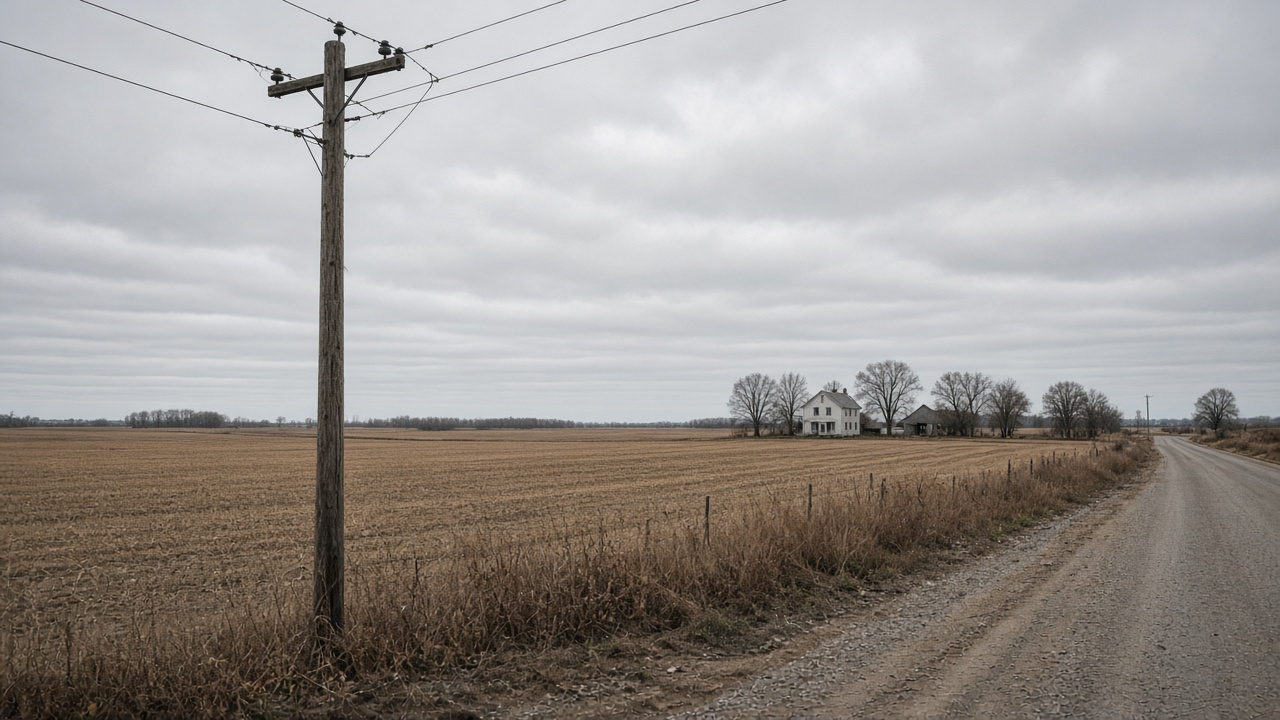
Two official yardsticks still matter in 2026: how many U.S. households subscribe to broadband at home, and how many people live in homes with no Internet connection of any kind. They measure different gaps. This hub uses Census Bureau American Community Survey figures and the NTIA Internet Use Survey and points to practical low-cost options when price is the barrier.
How many households lack a broadband subscription?
The Census Bureau’s 2024 American Community Survey 1-year table S2801 reports that 93.2 percent of U.S. households had a broadband subscription of any type. This category includes cellular data plans as well as cable, fiber, DSL and satellite. It does not mean every household had a fixed home connection.
Subtracting that rounded percentage from 100 gives about 6.8 percent without a broadband subscription. The table separately reports 6.7 percent without any Internet subscription. Those are different measures: dial-up-only subscriptions are outside the broadband category. Neither figure is a count of people, and no national total in millions is inferred here.
How many people still live offline at home?
NTIA’s November 2023 Internet Use Survey, summarized in NTIA’s June 6, 2024 analysis, found that 12 percent of people lived in households without any Internet connection, down from 14 percent in 2021. The same release reported that 83 percent of people ages 3 and older used the Internet in some fashion in 2023, up from 80 percent in 2021, and that 72 percent lived in households with both fixed and mobile Internet connections, up from 69 percent.
NTIA’s person-level estimate of homes without any connection and the ACS household subscription figures use different surveys, years and denominators. Smartphone-only service counts as broadband in the ACS measure. Do not treat either survey as a direct measure of the other or as a new 2026 estimate.
Income still shapes who gets both fixed and mobile
NTIA’s 2023 results show the adoption gap by income clearly. Internet use among people in households making less than $25,000 a year rose from 69 percent in 2021 to 73 percent in 2023, yet remained well below higher-income groups. Only 54 percent of people in those lowest-income households had both fixed and mobile connections, compared with 80 percent of people in households making $100,000 or more.
Device gaps track the same pattern. NTIA reported that 25 percent of Hispanics, 22 percent of American Indians and Alaska Natives and 16 percent of Black Americans were smartphone-only Internet users, versus 12 percent each among White non-Hispanics and Asians. Desktop, laptop or tablet use was 72 percent for White non-Hispanics and 71 percent for Asians, versus 62 percent for Black Americans, 57 percent for American Indians and Alaska Natives and 54 percent for Hispanics.
Comparing the cost of getting connected
A national share of income spent specifically on home Internet is not stated here. For your own budget, compare the full recurring bill, equipment, installation and the price after any temporary discount against your household income.
For state-level bill context already on RSINC, see the average Internet bill in California, how much Internet costs per month in Wisconsin and the broader real cost of Internet analysis. RSINC’s Wi-Fi statistics and U.S. adoption trends page covers related connectivity patterns.
Where rural households still look for a path online
When no cable or fiber reaches the road, households commonly weigh satellite and fixed wireless. Check Starlink, Viasat and Hughesnet at the exact location, including trees, mounting rules and data policies. Viasat’s speeds and terms are address-specific and are not described here as guaranteed. RSINC’s guide on what to do when no Internet provider serves your area walks through next steps.
Practical help when price is the barrier
Affordability programs change often, so verify eligibility on the provider or agency site before you apply. RSINC keeps a living set of low-income explainers, including how to get free, low-income or cheap Internet, Astound Internet First plans, Starlink low-income options, Xfinity low-income Internet, Spectrum low-income Internet and AT&T low-income Internet. Lifeline remains a federal discount program administered through USAC; check current eligibility and participating providers with USAC.
BEAD and related state builds are expanding fiber maps over multi-year schedules. They do not replace an address check today. Pair this national stats hub with a ZIP search when you need what actually sells at a specific home in November 2026.
For help comparing internet at your address, call RSINC at 1-877-697-2926 or compare local providers.
Reviewed November 9, 2026. Availability, prices and terms can change.