Cheaper BEAD, Slower Builds: Why Maryland and Minnesota Say Rural Internet Is Taking Longer
By RSinc Staff | Updated
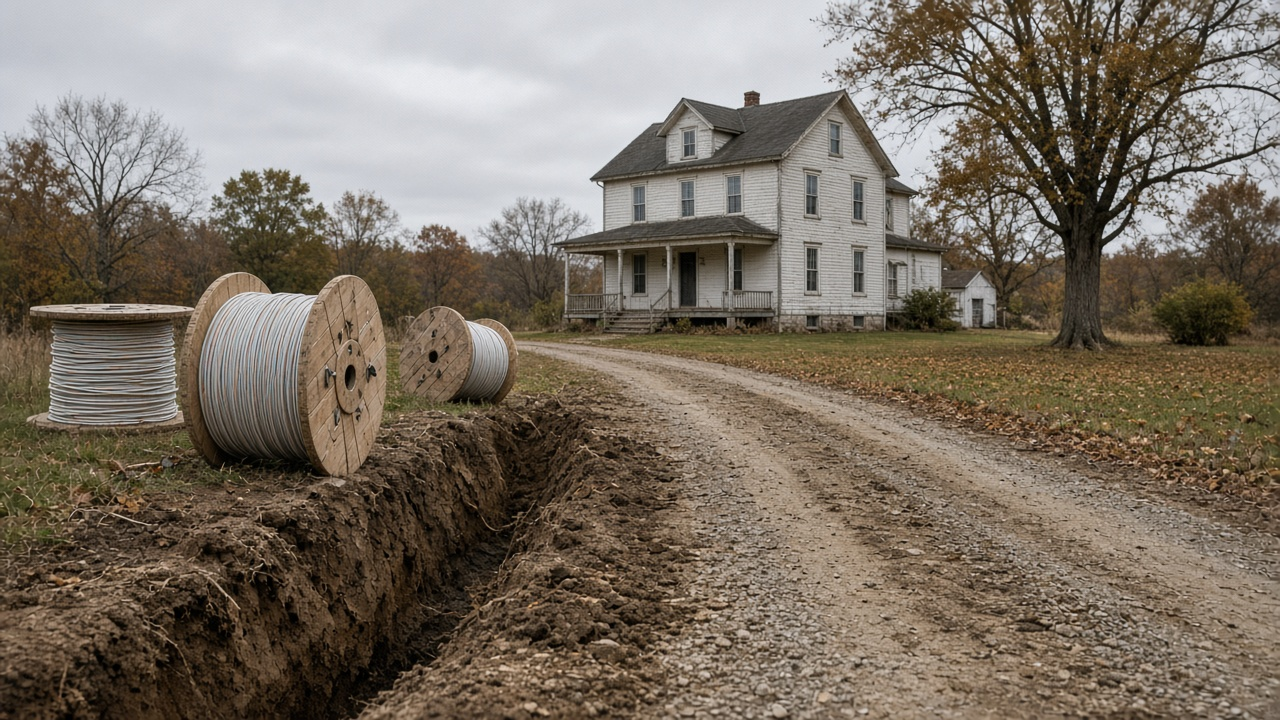
Federal broadband grants were rebuilt in June 2025 to drive down the cost of reaching each unserved home. In mid-November 2026, broadband officials from Maryland and Minnesota said that approach is now colliding with higher construction costs and slow federal reviews, which can delay the day a rural address actually gets hooked up.
If your house is on a BEAD map, that delay is the practical issue. A provider may have been selected, but a signed contract, a federal waiver or a revised list of addresses can still be outstanding. Until those pieces are done, you should treat the award as a plan, not as a scheduled install. Our guides to BEAD cleanup-round locations and BEAD low-cost plan rules explain how later funding rounds work in general.
What Maryland officials reported
Ronnie Hammond, director of Maryland's Office of Statewide Broadband, said construction costs have risen 40% since the June 2025 restructuring, and in some cases 70%. The lowest subsidy per location became the main test for choosing providers, which he said lowered costs and cleared away unnecessary rules. Whether that produces networks that last, he added, is a separate question.
As of that mid-November update, Maryland had signed contracts with two of its five selected providers. Hammond said one of the remaining three had not responded to repeated inquiries, and another disputes which addresses its award requires it to serve. Nearly every remaining project will need its scope revised, and he said the federal agency had accepted none of those revisions so far.
Maryland has also received the federal list of locations for a new bidding round covering places the first round missed. If you live in Maryland and think your address should be in a BEAD area, watch the state broadband office for updated maps and challenge windows rather than assuming a 2025 selection is final. Our Maryland internet guide is a starting point for what you can get today.
What Minnesota officials reported
Bree Maki, executive director of Minnesota's Office of Broadband Development, said the federal agency has denied every waiver the state has requested, including requests on construction costs and other grant rules. The office had one signed contract, and another fiber provider withdrew from a Minnesota award that same week. Those withdrawals force the state to file a formal change to the already-approved deployment plan.
Minnesota submitted a scope change in June and was still waiting for approval, Maki said, and it cannot file the next one until that clears. The state's approved plan covers more than 74,000 locations, and she said she expected to sign several more contracts before winter. Providers that leave, including some cooperatives, have pointed to construction costs, difficulty securing fiber and repeated changes in program requirements.
The approved plan is statewide in scope, not a promise that construction has started on your road. Check the Minnesota broadband office for the status of your address, and use our Minnesota internet guide to see current providers.
What to do if your address is in a delayed BEAD area
Look up your location on the state broadband map and write down whether it is listed as unserved, awarded or already served. If a provider has been selected but no contract has been signed, ask the state office whether your address is still in the award and whether an install timeline exists. Do not cancel a working connection on the strength of a grant announcement alone.
While you wait, compare any wired or fixed-wireless service that already reaches your road. In rural areas, Starlink, Viasat and EarthLink remain a reasonable baseline when a fiber drop is still years away. A temporary plan can be replaced later if a BEAD-funded network actually arrives. The useful question is not whether the federal program will eventually spend its money. It is whether someone will connect your house this year, and what you should use until then.
Compare internet options while you wait
A delayed grant is not a connection. Check what is available at your address today, or call for help comparing plans.
Frequently asked questions
Why do Maryland and Minnesota say BEAD projects are moving slowly?
Maryland's broadband director said construction costs have risen sharply since the June 2025 program overhaul, and needed project revisions had not been accepted by the federal agency. Minnesota's broadband director said the state has had every waiver denied and is still waiting on a June scope-change approval.
How many Maryland BEAD contracts have been signed?
As of the mid-November 2026 update, Maryland had signed contracts with two of its five selected providers. One of the others had not responded to repeated inquiries, and another disputes which addresses it must serve.
What happened in Minnesota?
The state had one signed contract, and another fiber provider withdrew from an award that same week. Minnesota submitted a scope change in June and was still waiting for federal approval before it can file the next one.
Does a BEAD award mean I will get fiber this year?
Not by itself. An award or an approved state plan is a funding decision. Construction can wait on contracts, waivers, revised address lists and materials. Check your state map and ask whether an install timeline exists for your address.
What can I use while I wait?
Keep any working connection you already have. Compare local wired or fixed-wireless options, and in rural areas consider Starlink, Viasat or EarthLink until a BEAD-funded network is actually ready to install.